


If any of the messaging you hear about Men’s Health Week invites you to search the question “as a man, what type of health checks do I need” then it has done its job.
When life gets busy, it can be all too easy to push health aside while focusing on the daily grind and other responsibilities. Yet we know that proactive and regular health checks can be one of the most powerful tools for preventing disease and supporting vitality.
The Australian Men’s Health Forum notes that nearly two-thirds of Australian men delay seeing a doctor when they notice a health concern, often choosing to manage it themselves or waiting until it gets worse. This hesitation can lead to missed opportunities for early intervention, allowing minor issues to develop into more serious and difficult-to-treat conditions.
In functional medicine, although we focus on identifying the root causes of illness, often long before any diagnosis, we’re also strong advocates for each of our patients to find a good GP. Someone they can partner with long-term for routine screenings, acute health issues, and access to broader medical care.
In recognition of Men’s Health Week 2025, here’s a snapshot of seven key areas to consider when it comes to your health.
1. Check your numbers
Waist-to-hip ratio
Your waist-to-hip ratio (WHR) estimates the fat distribution in your body, especially visceral fat, which can affect your overall health and metabolic function.
When to check: You can check this ratio any time from your 20s.
How to check: Learn how to calculate at home and see our recommended reference ranges here.
Blood pressure
Blood pressure is the force of blood pushing against the walls of arteries as the heart pumps. Knowing your blood pressure is important because it helps detect and prevent conditions like heart disease, stroke, and kidney problems by monitoring your heart and artery health.
When to check: Once you’re 18 or over, you should have your blood pressure checked by your doctor at least every 2 years.
How to check: You can ask your GP, visit us for a Healthspan Physical Assessment, see your local pharmacist for a free check, or purchase a personal device to use at home. See our reference ranges below:
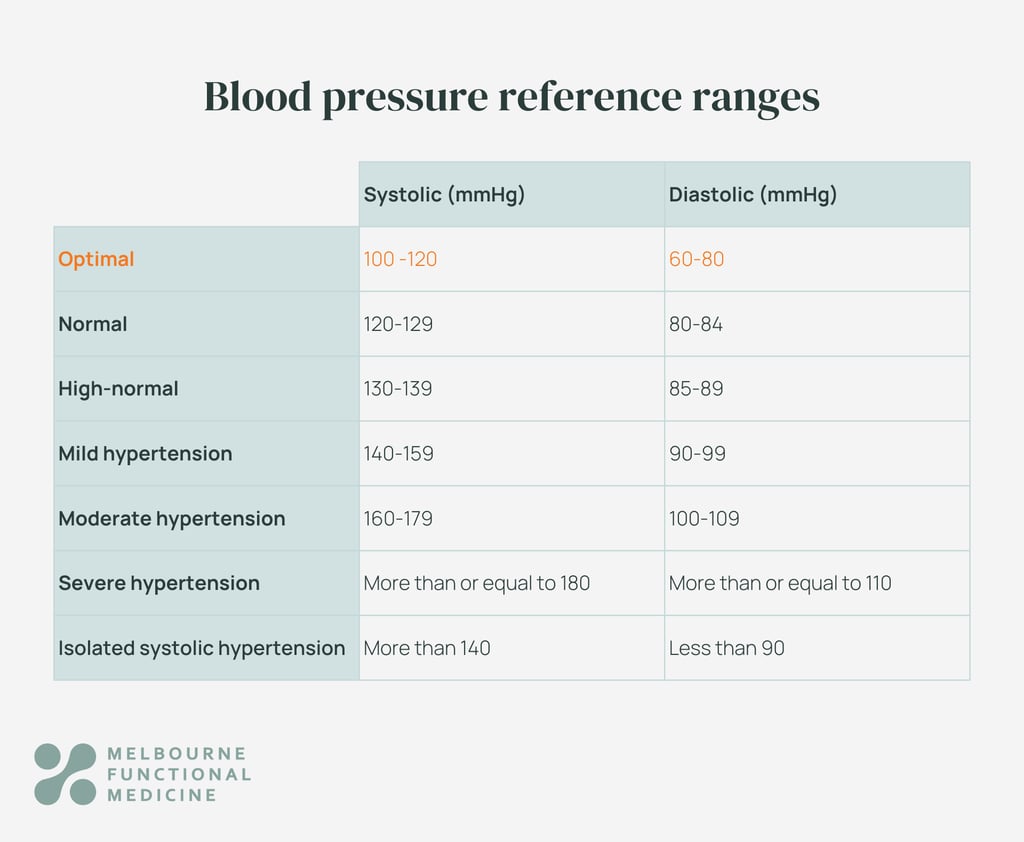
Did you know 1 in 10 young men under 35 years old have high blood pressure? If getting to a health clinic is tricky, just start with a visit to a free SiSu health station.
Cholesterol
Cholesterol is important for the production of steroids, sex hormones, bile acids, and as a component of all cell membranes. Our bodies only require a small amount of cholesterol to perform these important functions, and when blood lipid levels become altered, there is an increased risk of cardiovascular disease and development of cardiometabolic disease.
When to check: This blood test is usually recommended every 5 years, starting from 45 years. Testing should start at 35 years for Aboriginal or Torres Strait Islander people. Depending on your health profile, your doctor may also suggest more regular testing.
At Melbourne Functional Medicine, we recommend beginning testing earlier, in your 30’s, and including additional markers such as Lipoprotein(a) and Apolipoprotein B. Early detection of elevated levels can enable earlier, more effective interventions to support your long-term cardiovascular health.
How to check: Visit your GP for a Medicare-covered standard lipid panel, or speak to us at Melbourne Functional Medicine about an advanced Cardiovascular Lipid Profile that provides a deeper insight into your lipid health and risk factors for cardiovascular disease.
Blood sugar
Glucose is a sugar that supplies energy for your body. Blood glucose tests measure the amount of glucose in your blood. Maintaining stable blood glucose levels is essential for health. If blood glucose is chronically too high or too low, or swings between both, it can lead to problems.
When to check: Whilst there is no set age at which all Australians should routinely undergo a blood glucose test we do know that nearly one in four adults over the age of 25 in Australia has either diabetes or pre-diabetes, so it can be a good idea to start talking to your doctor about this in your 20s.
How to check: Visit your GP for a Medicare-covered blood test, or ask us at Melbourne Functional Medicine if access to a Continuous glucose monitor might be helpful.
It’s never too early to get curious about your numbers, and the good news is that many of these checks are quick, accessible, and sometimes even free. Tracking these measurements over time gives you a clearer picture of your baseline health and helps you spot patterns or changes early, before they become bigger issues. With this insight, you’re better equipped to make informed decisions, take preventative action, and stay on top of your long-term health.
2. Check your senses
Eye test
Routine eye examinations support not only good vision but can also reveal early indicators of health issues such as diabetes, hypertension, and glaucoma.
When to test: Medicare in Australia covers a free comprehensive eye test every three years for adults. If you have certain health conditions or experience changes in your vision, you may be eligible for more frequent tests. If you’re aged 65 and older, you’re eligible for a free eye test every year.
How to test: Book an eye test at any optometrist, and bring your Medicare card.
Hearing test
Hearing tests are vital for several reasons, impacting not just your auditory health but your cognitive health, social health, safety and quality of life.
When to test: If you’re under 50 with no hearing concerns, aim to test your hearing every 2-3 years. Once you’re over 50 – or if you’ve noticed any changes – it’s wise to check annually. Regular hearing assessments help catch changes early, making it easier to take action and preserve your hearing health. Medicare offers rebates for hearing tests when you have a referral from a medical practitioner, such as a GP, ENT specialist, or neurologist.
How to test: Find an audiology clinic near you and make a booking. Whilst you do not need a referral to book a hearing test, you may be eligible for a Medicare rebate if you do have a referral.
You can get started for free by accessing the Lions Hearing Clinic Online Hearing Test.
Dental check
Did you know your mouth often reflects your overall wellbeing? Oral health issues can be early indicators of deeper imbalances in the body, such as inflammation, nutrient deficiencies, or chronic conditions. In particular, gum health is closely connected to systemic health, with growing evidence linking poor oral hygiene to heart disease, diabetes, and even cognitive decline.
When to check: Most dental professionals in Australia recommend having a dental check-up every six months from childhood. Whilst Medicare does not cover dental checks for adults, private health insurance often does, so check your inclusions.
How to check: Find a dentist you trust. If possible, look for an integrative or holistic dentist – someone who considers the connection between oral health and your overall wellbeing. You may also consider testing your oral microbiome with us which can have a significant effect on your systemic health.
3. Check down under
Health below the belt is an important topic. Let’s run through four important health topics to consider:
STIs
Sexually Transmitted Infections can often go unnoticed, yet infections like chlamydia, gonorrhoea, and syphilis continue to rise in Australia.
When to test: Whilst most cases tend to occur in younger age groups, particularly those aged 15–29, we recommend speaking to your doctor about how often you should be testing.
How it’s tested: Rest assured, most testing is a non-invasive urine or blood sample via referral from your GP, or visit your local sexual health clinic which may offer free testing and treatment if required.
Erectile dysfunction
ED is a common yet often overlooked condition affecting Australian men. Addressing ED holistically not only improves sexual health but can also uncover and manage broader health issues such as cardiovascular disease, diabetes, and depression. If you notice problems, please see your GP.
Testicular cancer
Thankfully, testicular cancer is quite rare, although it is still the second most common cancer in men aged 20-39 years.
When to check: There is no recommendation for routine screening for testicular cancer in the general population in Australia, but men are advised to self check to know the usual shape, size, and feel of their testicles so they can notice any changes (lump, swelling, heaviness, aching, or any other change) early.
How to check: Start with regular self-examinations. Check out this guide from Better Health.
Prostate cancer
Prostate cancer is the most commonly diagnosed cancer in Australia, with an estimated 26,368 new cases in men in 2024, making up about 16% of all cancer diagnoses nationally and nearly one in three cancers diagnosed among men. The good news is there is a high survival rate thanks to early detection and effective treatments.
When to check: Australia does not recommend routine screening for prostate cancer. Instead, men are encouraged to make an informed decision about testing. If you decide to be tested, PSA (prostate-specific antigen) blood tests are recommended every two years from age 50 to 69, or from 40 if you have a family history.
How to check: Ask your GP for a simple PSA blood test to see if you’re at risk and need to be sent for further tests. You can also access this blood test via us at Melbourne Functional Medicine if you prefer.
You might also feel a tad more relaxed to know that the digital rectal examination (DRE) test is no longer routine practice for GPs and is generally only used if you’re sent to a specialist.
4. Check for cancer
We’ve already covered the two male-only cancers being testicular and prostate, but let’s cover off screenings for other common cancers.
Bowel cancer
If you’re over 45, please take advantage of the Australian Government’s Bowel Cancer screening kit. See information about the National Bowel Cancer Screening Program on how to access a kit.
Skin cancer
Skin cancer is the most common cancer in Australia, with men at higher risk than women. 2 in 3 Aussies will get some form of skin cancer in their lifetime, so screening is a non-negotiable. We recommend getting a skin check every year from your 20s, but risk peaks in your 60s.
How to get a skin check:
Your GP – all GPs can perform a skin check. You might wish to book a long appointment or select a GP with a special interest or additional training in skin checks.
Dedicated clinics – you can visit places like MoleMap offering national locations or search for a “skin cancer /screen clinic near me”.
Get a free skin check if you’re in a rural town, check dates here for the mobile diagnostic skin clinic.
Self-check – this is an important piece of the puzzle as you know your skin better than anyone (oh, and if your partner remarks about a new, strange-looking mole, be sure to thank them and get to the GP as a priority).
As a general rule, if you notice any lumps or bumps, aches and pains, bleeding or other changes in your body, just get checked.
5. Check your heart
Heart disease is the biggest killer of Australian men, with 30 Aussie men a day losing their lives. More broadly referred to as Cardiometabolic disease, please do not wait for chest pain before you prioritise your heart health.
When to check: If you’re over 45 (30 years and over for Aboriginal and Torres Strait Islander peoples) you can ask a GP for a free Heart Health Check on Medicare. It takes about 20 minutes and includes a check of the four numbers we mentioned in check number 1. You can have this check annually.
How to check: Visit your GP. You can also access comprehensive labs (also looking at inflammatory and oxidative markers) as well as a physical assessment at Melbourne Functional Medicine.
Or, if you love your sport, why not have a go at the Shane Warne Legacy Health Check available for free at major sporting events. In just 4 minutes, check your blood pressure, BMI, Heart Age and more. Find a location here.
6. Check your head
In Australia, around 1 in 5 men experience mental illness, and suicide remains a critical issue. Mental health can change gradually over time. A person might feel unsettled for a few days before returning to a sense of wellbeing. In some cases, however, those unsettled feelings can deepen into more serious struggles, at which point seeking professional support is a good idea.
How to get help: You can access online mental health screening tools for a private and free way to learn about any warning signs. They’re a good first step, but we recommend speaking to a trusted friend or seeing your GP.
7. Check your habits
People who adopt healthy habits tend to live longer, even if they make changes later in life. That’s because lifestyle factors that are in your control are linked to the leading causes of ill health and early death.
Sleep, nutrition, movement, stress management, and connection form the core pillars of lasting health. By prioritising these essentials, you create an environment where your body can heal in order to thrive. Follow our recommendations for healthy foundations.
Where to start?
We’ve covered seven important health checks for men, but the ones most relevant to you will depend on your age, lifestyle and family history. If you’re in your 20s and sexually active, STI screening is important. In your 30s, it’s a good time to review habits like food choices and alcohol use.
By 40, a heart health check is worth considering. At 50, bowel and skin cancer screening becomes a priority. In your 60s, have your hearing assessed, and by your 70s, monitoring prostate health is recommended.
A simple way to stay on top of things? Choose one month each year to book in with your healthcare providers for any recommended checks. It’s a time investment that pays off, now and well into the future.
For more helpful resources to champion men’s health in your neck of the woods, head over to the Know Your Man Facts hub today to access more information.