
What is hypothyroidism?
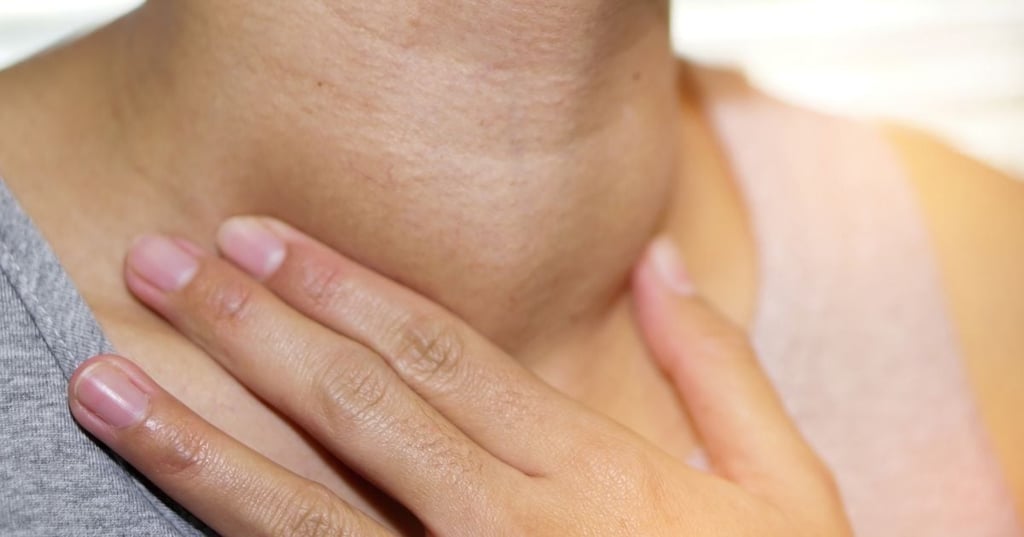
Hypothyroidism occurs when the thyroid gland produces less thyroid hormone than the body needs. The thyroid is a small butterfly-shaped gland at the base of the neck that produces hormones that control how quickly your cells convert food into energy. When output falls short, that conversion slows across nearly every system.
The resulting symptoms are wide-ranging and often develop gradually: fatigue, weight gain, cold intolerance, hair thinning, slowed digestion, low mood, and difficulty concentrating. Because these symptoms overlap with many other conditions, hypothyroidism is frequently missed or put down to something else. It is also significantly more common in women than men.
Types of hypothyroidism
Hypothyroidism presents differently depending on where in the hormonal pathway the problem originates and how far it has developed.
Subclinical hypothyroidism
Subclinical hypothyroidism occurs when TSH is elevated, but free T4 remains within range. Symptoms may be absent or mild, and in conventional medicine this stage is often monitored rather than treated. Many people at this stage do have symptoms and are told their results are normal. Immune or nutritional activity affecting the thyroid is often already underway, and symptoms can be troubling well before blood tests pick up a problem. Without treatment, subclinical hypothyroidism can progress to primary hypothyroidism, particularly when thyroid antibodies are raised.
Primary hypothyroidism
Primary hypothyroidism originates within the thyroid gland itself. The most common cause in Australia is Hashimoto’s thyroiditis, an autoimmune condition in which the immune system progressively damages thyroid tissue. In other cases, the gland may have insufficient nutrients to make hormones properly, or thyroid output is impaired for other reasons. TSH is typically elevated as the pituitary attempts to compensate.
Secondary hypothyroidism
Secondary hypothyroidism occurs when the thyroid gland receives an insufficient signal to produce hormone. The pituitary produces TSH to stimulate thyroid output, so when that signal is weak, hormone production falls even if the gland itself is intact. In rare cases, the problem originates further back. Thyrotropin-releasing hormone, released by the hypothalamus, fails to prompt the pituitary properly, so the whole signalling chain breaks down before it reaches the thyroid.
Symptoms of hypothyroidism
The most common symptoms of hypothyroidism are persistent fatigue, unexplained weight gain, and cold intolerance, often accompanied by a general sense of physical and mental sluggishness that does not improve with rest.
Symptoms may include:
Energy and cognitive function
- fatigue that is present regardless of how much sleep you get
- difficulty concentrating or a sense of mental fog
- low mood or depression
- forgetfulness
Weight and metabolism
- gradual weight gain, particularly around the abdomen
- difficulty losing weight despite dietary effort
- fluid retention and bloating
Skin, hair, and tissue changes
- dry skin and brittle nails
- coarse or thinning hair, including loss from the outer third of the eyebrows
- a hoarse or thickened voice
- slow heart rate
- generalised body aches
- visible enlargement of the thyroid gland at the base of the neck, known as goitre
Digestive and reproductive health
- constipation
- heavy or irregular periods
- difficulty conceiving
- increased risk of miscarriage
Cold intolerance is also common and is one of the more distinctive features of the condition. Many people notice one or two changes and do not connect them to thyroid function until the picture becomes more complete.
What causes hypothyroidism?
Hypothyroidism most commonly develops when the immune system begins attacking thyroid tissue, a condition known as Hashimoto’s thyroiditis. This is the most prevalent cause in Australia and results in progressive inflammation and gradual destruction of thyroid cells, reducing the gland’s capacity to produce hormones.
Other causes and contributing conditions include:
- Iodine deficiency: iodine is a direct building block of thyroid hormone; without adequate levels, production falls regardless of gland health
- Nutrient deficiencies: several nutrients are required for hormone production, conversion, and receptor function: selenium is required to convert inactive T4 into active T3, zinc supports hormone synthesis and receptor binding, vitamin D supports hormone synthesis and immune regulation, vitamin A is required for T3 receptor activation; low levels can block T3 from binding effectively
- Gut dysfunction: increased intestinal permeability reduces absorption of the nutrients required for hormone production and impairs the immune regulation that keeps autoimmune activity in check
- Elevated cortisol: persistently high cortisol from chronic stress suppresses T4 to T3 conversion and can reduce receptor sensitivity
- Prior thyroid treatment: surgery, radioactive iodine, or medication used for hyperthyroidism can permanently reduce thyroid capacity
- Postpartum thyroiditis: immune activity often rebounds sharply after delivery, triggering transient autoimmune inflammation that can leave thyroid function reduced
- Pituitary dysfunction: in secondary hypothyroidism, insufficient TSH output means the thyroid receives too weak a signal to produce adequate hormone
- Genetic predisposition: a family history of autoimmune thyroid conditions increases risk
- Radiation exposure: previous radiation to the head, neck, or chest can impair thyroid tissue directly
- Other autoimmune conditions: having one autoimmune condition raises the likelihood of others affecting the thyroid
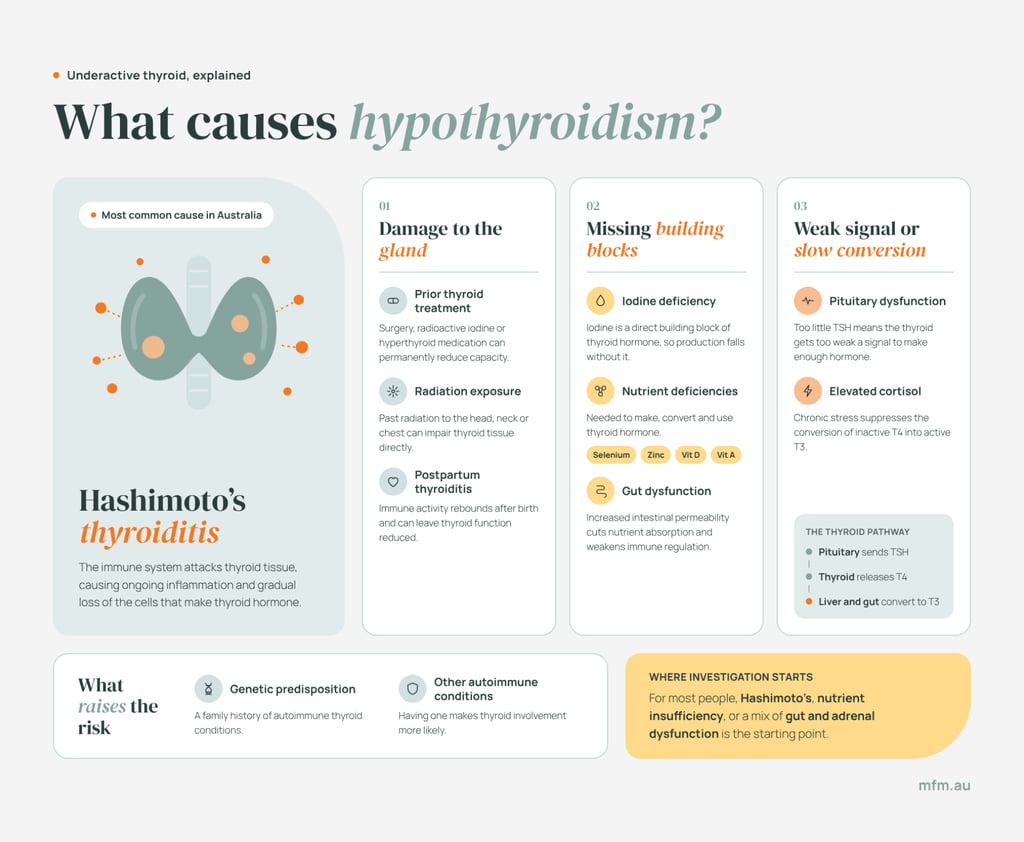
For most people who have hypothyroid symptoms, Hashimoto’s, nutrient insufficiency, or a combination of gut and adrenal dysfunction is the starting point for functional investigation.
How is hypothyroidism diagnosed and assessed?
Hypothyroidism is diagnosed with blood tests, usually when TSH (thyroid-stimulating hormone) is raised and free T4, the main hormone the thyroid releases, is low. When TSH is raised but free T4 is still normal, the result is called subclinical hypothyroidism.
TSH comes from the pituitary gland in the brain. When thyroid hormone levels drop, the pituitary releases more TSH to push the thyroid to work harder, so a high TSH is usually the first sign of an underactive thyroid.
In Australia, testing usually starts with TSH alone, and free T4 and free T3 are generally only added when TSH falls outside the reference range. TSH is a useful first test, but on its own it can miss problems with how your body converts T4 into T3, or early immune damage to the thyroid.
TSH naturally varies and can change after illness or pregnancy, so an abnormal result is usually repeated six to twelve weeks later before a diagnosis is made. If you take biotin, often found in hair, skin and nail supplements, stop it a few days before testing, as it can distort some thyroid results.
A fuller thyroid panel measures:
- TSH, the pituitary’s signal telling the thyroid to make more hormone
- free T4, the main hormone the thyroid releases, which the body later converts to its active form
- free T3, the active form of thyroid hormone that your cells use
- reverse T3, an inactive form the body makes more of during stress or illness, which may compete with active T3
- thyroid antibodies (listed as TPO and TgAb on your results), which show whether the immune system is attacking the thyroid, the hallmark of Hashimoto’s disease
You can still have symptoms with a TSH in the normal range. Common reasons include your body converting too little T4 into active T3, antibodies being raised before hormone levels have dropped, or a TSH in the upper part of the range, where some people already feel unwell.
Blood tests show what your thyroid is doing, but your history helps explain why. A practitioner will ask about:
- your symptoms, when they started and whether they’ve changed
- recent pregnancy or a major stressful event
- family history of thyroid or autoimmune conditions
- medications that can affect the thyroid, such as lithium and amiodarone
- any past thyroid surgery or radioactive iodine treatment
A functional medicine practitioner will also look at what may be affecting how your thyroid makes hormone and how well your body converts it. This often includes:
- iodine, selenium and zinc, which the thyroid needs to make hormone and convert it to T3
- vitamin D, which helps regulate the immune system and is often low in people with Hashimoto’s
- ferritin (iron stores), as low iron reduces how much hormone the thyroid can make and how much is converted to T3
- inflammatory markers, as ongoing inflammation can slow conversion to T3
- liver function, since the liver converts much of the body’s T4 into T3
- gut health through stool testing, as the gut also converts some T4 into T3 and gut problems can reduce nutrient absorption
Why hypothyroidism symptoms can continue after treatment
Hypothyroidism symptoms often continue because standard treatment replaces the hormone the thyroid is no longer producing, without addressing why production declined in the first place.
Levothyroxine, the medication most commonly prescribed, provides synthetic T4. For many people, it stabilises TSH and reduces some symptoms. But if the underlying issue is an autoimmune process continuing to damage thyroid tissue, the required dose tends to increase as that damage progresses. If the problem is poor conversion of T4 to T3, adding more T4 may not resolve the fatigue or cognitive symptoms that depend on adequate T3 activity.
There are several reasons why symptoms may continue or return:
- Ongoing autoimmune activity: if Hashimoto’s is the cause, the immune response is still active and continues to affect thyroid tissue
- Impaired T4 to T3 conversion: this conversion occurs largely in the liver and gut; if either is compromised, T3 levels remain low regardless of T4 input
- Nutrient insufficiency: selenium, zinc, and iron are all required for hormone conversion and receptor function; deficiencies leave these pathways working below capacity
- Adrenal and cortisol load: elevated cortisol suppresses T3 production and receptor sensitivity, meaning available hormone is less effective
- Suboptimal dosing or reference ranges: some people feel well only when their levels sit in the upper part of the optimal range, not merely within the conventional normal range. Functional medicine practitioners commonly use a TSH target of 0.5–2.5 mIU/L, which is narrower than the broad population reference range used in standard care
When the root reason for reduced output is not identified and addressed, treatment manages the number on a test but does not change what is producing that number.
Treating hypothyroidism: a functional medicine approach
A functional medicine approach to hypothyroidism begins by asking why the thyroid is underperforming, not simply confirming that it is.
This means extended investigation across several areas: autoimmune activity, how efficiently your body converts thyroid hormone into its active form, nutrient status, gut health, adrenal function, and liver capacity. The aim is to build a specific picture of your thyroid physiology before deciding how to support thyroid hormone levels naturally.
Depending on what’s found, treatment may include:
- Addressing autoimmune activity: where Hashimoto’s is present, dietary change and gut repair can help reduce the immune response damaging your thyroid
- Supporting conversion and hormone activity: correcting nutrient gaps such as selenium, zinc, iron, vitamin D, and vitamin A can help your body convert and use thyroid hormone effectively
- Reducing adrenal and stress load: supporting sleep and nervous system regulation can improve how effectively your body uses the thyroid hormone it has
- Gut and liver support: since both organs help convert and recycle thyroid hormone, dietary and microbial support may be recommended depending on what testing shows. Altered gut bacteria in hypothyroidism is consistently linked to a weaker intestinal barrier, higher circulating endotoxin levels, and reduced nutrient absorption
- Medication where appropriate: thyroid hormone replacement may be necessary alongside these strategies, adjusted as your conversion capacity improves
We support people with hypothyroidism to optimal health
Reclaiming your health starts with understanding what’s contributing to your symptoms. Start your care journey today.
When to seek support
See your GP or a practitioner if you have:
- Persistent fatigue, low mood, or cold sensitivity without a clear cause
- Unexplained weight changes
- Standard results that have come back within range, but your symptoms remain
- A diagnosis of hypothyroidism where current treatment isn’t helping how you feel
- A family history of thyroid or autoimmune conditions, or symptoms that began after pregnancy or a period of significant stress
- Severe fatigue, confusion, or a noticeably slowed heart rate, which requires prompt medical review
Frequently asked questions
Can hypothyroidism be cured?
Most hypothyroidism is lifelong, because its most common cause, Hashimoto’s disease, damages thyroid tissue that does not grow back. Some forms do resolve, including postpartum thyroiditis (thyroid inflammation in the year after giving birth) and some cases of subclinical hypothyroidism, where TSH (the main thyroid blood test) is mildly raised but thyroid hormone levels are still normal.
While Hashimoto’s is active, addressing the immune attack on the thyroid, nutrient gaps and gut health may slow further damage and, for some people, reduce how much medication they need.
What is the difference between hypothyroidism and Hashimoto’s disease?
Hashimoto’s disease is an autoimmune condition where the immune system attacks the thyroid, while hypothyroidism means the thyroid isn’t making enough hormone. Hashimoto’s is the most common cause of hypothyroidism in Australia, but not the only one. Early in Hashimoto’s, thyroid antibodies (markers of the immune attack) can be raised while hormone levels are still normal, so you can have Hashimoto’s without having hypothyroidism.
Can hypothyroidism affect fertility or pregnancy?
Yes, hypothyroidism can affect both your chances of conceiving and the health of a pregnancy. Low thyroid hormone can interfere with ovulation, and a raised TSH is linked to a higher risk of miscarriage. Your body needs more thyroid hormone in early pregnancy, so if you’re already on medication, you’ll often need a higher dose as soon as pregnancy is confirmed. Ask your GP to check your thyroid levels before you start trying to conceive.
Is T3 or natural thyroid medication better than levothyroxine?
Not for most people. Levothyroxine, a synthetic form of the thyroid hormone T4, is the standard first treatment and works well for the majority. A small group still have symptoms while their TSH sits in the normal range, often alongside low free T3 (the active form of thyroid hormone), and may feel better with added T3 under medical supervision. Desiccated thyroid, often called natural thyroid, is only available in Australia through compounding pharmacies, and its hormone content can vary between batches.
Should I avoid gluten if I have Hashimoto’s?
Avoiding gluten is essential if you also have coeliac disease, which is more common in people with Hashimoto’s. If you don’t have coeliac disease, the evidence is limited, though some small studies show lower thyroid antibodies on a gluten-free diet. Ask for a coeliac blood test before cutting out gluten, because the test can miss coeliac disease once gluten is out of your diet.
Can stress cause hypothyroidism?
No, stress doesn’t cause hypothyroidism on its own, but it can make thyroid symptoms worse. Ongoing high cortisol, the main stress hormone, slows how quickly your body converts T4 into T3, the active form of thyroid hormone. As a result, you can feel worse even when your TSH looks stable. In people already prone to Hashimoto’s, major stress is linked to the condition starting earlier and to a stronger immune attack on the thyroid.
Can hypothyroidism turn into hyperthyroidism?
Hypothyroidism rarely turns into hyperthyroidism (an overactive thyroid), but in Hashimoto’s the two can alternate. When the immune attack flares, damaged thyroid cells can release stored hormone into the blood, causing short-lived palpitations, anxiety and feeling overheated before levels fall again. If these symptoms appear, ask your GP to recheck your levels, as a medication dose that is too high can cause the same pattern.
Ready to understand what's behind your hypothyroidism?
If you’re looking for a clearer picture of what is contributing to your symptoms, learn more about our approach to hypothyroidism testing and treatment.