

What is menopause?
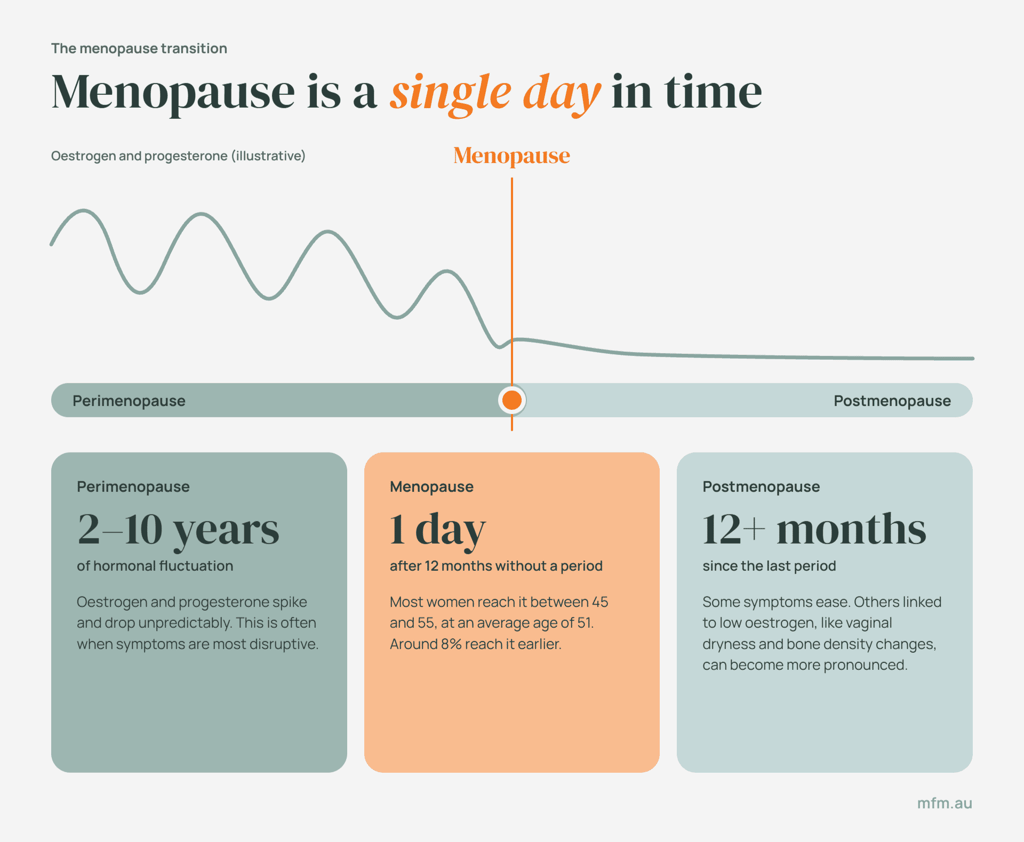
Menopause is the point at which a woman’s menstrual periods stop permanently, confirmed after 12 consecutive months without a period. It marks the end of ovarian egg production and a significant drop in oestrogen and progesterone. Most women reach this point between the ages of 45 and 55, with an average onset around 51, though around 8% of women can experience it earlier due to premature ovarian failure, surgical removal of the ovaries, or treatments such as chemotherapy.
The years leading up to menopause, known as perimenopause, are often when symptoms are most disruptive. This stage can last anywhere from two to ten years. Oestrogen and progesterone do not simply decline steadily during this time; they fluctuate, sometimes spiking higher than usual, sometimes dropping sharply. This unpredictability is why perimenopause can feel so unsettling, and why symptoms vary so much from month to month and woman to woman.
Postmenopause begins once that 12-month milestone has passed. Some symptoms ease after this point. Others, particularly those related to oestrogen deficiency, such as vaginal dryness and bone density changes, may become more pronounced if not addressed.
Symptoms of menopause and perimenopause
The most common symptoms of perimenopause and menopause are vasomotor symptoms, including hot flushes and night sweats, often occurring without warning and disrupting both daily life and sleep.
Vasomotor symptoms occur when declining oestrogen affects the body’s temperature regulation. A hot flush can range from mild warmth in the face and chest to an intense wave of heat accompanied by flushing and sweating. Night sweats are the nocturnal equivalent and frequently interrupt sleep.
Beyond these, the symptom picture is wide:
- Hot flushes and night sweats
- Mood changes, including irritability, anxiety, low mood, depression, and tearfulness
- Sleep disturbance, including difficulty falling asleep and frequent waking
- Unusual fatigue
- Brain fog, poor concentration and memory lapses
- Irregular or unpredictable periods in perimenopause
- Vaginal dryness and discomfort during sex
- Genitourinary symptoms, including frequent urination, urinary tract infections, and bladder leakage
- Joint, muscle and back pain
- Headaches, lightheadedness and palpitations
- Weight gain, particularly around the abdomen
- Reduced libido
- Dry skin and new facial hair
- Formication, a crawling or tingling sensation under the skin
Joint and muscle pain is among the most commonly underrecognised symptoms of perimenopause. Many women don’t connect this kind of pain to hormonal change, so be sure to mention it to your practitioner if it appears alongside your other symptoms.
Not every woman experiences all symptoms. Around 20% move through menopause with minimal symptoms. Up to 60% experience mild to moderate symptoms lasting four to eight years, and around 20% live with severe symptoms well into their sixties. The National Women’s Health Survey found that 17% of mid-life Australian women took an extended break from work in the last five years due to menopause symptoms.
What causes menopause?
Menopause is a natural phenomenon and will happen to all women. It is caused by the ovaries gradually exhausting their supply of follicles (the fluid-filled sacs that contain eggs), reducing the ovaries’ output of oestrogen and progesterone until menstrual cycles cease entirely. As follicle reserves run low, the ovaries also stop responding to the hormones your brain sends to stimulate them (FSH and LH), which speeds up the decline. This is a natural part of reproductive ageing, not a disease state.
Premature or early menopause, occurring before age 45, can be triggered by surgical removal of the ovaries, chemotherapy or radiotherapy, autoimmune conditions affecting ovarian tissue, or primary ovarian insufficiency where the ovaries stop functioning without a clear cause. It can often show a family trend from grandmother to mother to daughter.
Smoking is also associated with earlier onset, with long-term smokers at much greater risk of both early and premature menopause. Around 8% of Australian women experience early menopause.
Why perimenopause hits some women harder than others comes down to more than hormone levels. Oestrogen doesn’t only act on reproductive tissue. It also helps the brain regulate mood and temperature, keeps the gut lining strong, helps the nervous system manage stress, and supports bone density.
Research shows that falling oestrogen affects the connection between your gut and brain, the diversity of your gut bacteria, your mood and your thinking. If you’re already dealing with poor sleep, high cortisol, nutritional gaps or gut inflammation heading into perimenopause, you may find this transition harder because these systems have less capacity to adapt.
How is perimenopause investigated and assessed
Perimenopause is primarily a clinical diagnosis, confirmed by a woman’s age, symptom presentation and menstrual history rather than a single blood test.
Blood testing can be useful in specific circumstances. FSH rises as ovarian function declines, and an elevated result alongside symptoms may support a diagnosis, though FSH fluctuates significantly during perimenopause, so a single measurement is not always reliable. Estradiol (E2) levels also fall as ovarian output reduces, and low results can help explain the hormonal basis of symptoms. For women under 45 presenting with possible early menopause, hormone testing is recommended to clarify the picture, with premature ovarian insufficiency typically confirmed by elevated FSH on two occasions four to six weeks apart.
Functional testing offers deeper insight into what is contributing to symptoms, why they are as severe as they are, and where treatment can have the most impact. Assessment may include:
- Estradiol and FSH patterns: tracked across multiple measurements rather than as a single reading, to give a more accurate picture of hormonal transition
- Testosterone: declining levels during perimenopause can contribute to low energy, reduced libido and mood changes, so it’s often assessed alongside reproductive hormones
- Thyroid function: an underactive thyroid closely mimics perimenopause symptoms, including fatigue, weight gain and brain fog, so ruling it out early can help clarify the picture
- A dried urine hormone test: sometimes referred to as a DUTCH test provides a comprehensive picture of sex and adrenal hormones, oestrogen metabolites, cortisol patterns and melatonin in a single dried urine collection
- Nutritional status: including iron, vitamin D, magnesium and B vitamins, which influence energy, mood and bone health during the transition
- Gut health markers: a quality microbiome profile can be important given the established role of gut bacteria (sometimes called the oestrobolome) in processing oestrogen and the changes perimenopause influences in microflora diversity
- Metabolic and inflammatory indicators: fasting insulin, HbA1c, hs-CRP and lipid markers, which become increasingly relevant as oestrogen’s protective effects on cardiovascular and metabolic health decline
- Anti-Müllerian hormone (AMH): reflects remaining ovarian reserve and can help clarify where you are in your perimenopause journey
Why symptoms don’t always resolve with hormone therapy
Hormone therapy delivered by a doctor is effective for many women, but some symptoms persist because oestrogen deficiency is not always the only cause.
Menopausal Hormone Therapy (MHT)
MHT is available as oestrogen-only, progesterone-only, or combined oestrogen and progesterone therapy, with the appropriate form depending on a woman’s symptoms, history and whether she has had a hysterectomy. It is generally recommended that MHT is commenced below the age of 60 and within 10yrs of the onset of menopause with most women commencing MHT during perimenopause. In some cases MHT may be suggested for women over 60yrs based on individual needs.
MHT is the most effective treatment for vasomotor symptoms and the first-line option for genitourinary syndrome of menopause. It also helps prevent early postmenopausal bone loss. For many women, it produces significant relief, particularly when started within ten years of menopause and at the lowest effective dose.
Understanding of MHT safety has changed considerably in recent years. Much of the earlier concern came from a large US study in which women started treatment at an average age of 63, often many years after menopause. More recent evidence suggests that for most women who start MHT before 60, or within 10 years of menopause, the benefits outweigh the risks.
In late 2025, the US Food and Drug Administration (FDA) moved to remove breast cancer, cardiovascular disease and probable dementia from its boxed warnings on MHT. The Australasian Menopause Society supported the change, and the Therapeutic Goods Administration (TGA) is reviewing the same evidence. Australian product warnings have not changed yet. The right option for you depends on your health history, the type of MHT and how it is taken.
Individual risk assessment remains important, as some women face a higher likelihood of blood clots, stroke or breast cancer depending on their age, health history and the type of therapy used. Risk assessment in Australia is guided by RANZCOG and the Australasian Menopause Society, and takes into account a woman’s age, timing of menopause, route of administration (tablet, patch, gel or vaginal preparation) and individual health history.
You may find that fatigue, brain fog, anxiety, poor sleep and weight changes persist even when your oestrogen levels are restored, because oestrogen deficiency isn’t the only cause.
Poor sleep and circadian rhythm keep your cortisol levels erratic, which affects your mood and energy. Gut inflammation can get in the way of oestrogen metabolism, meaning your body may not process hormones as efficiently.
Nutritional deficiencies, particularly in magnesium, B vitamins and zinc, affect neurotransmitter production and sleep quality. When these patterns are not addressed, symptom burden can continue regardless of whether hormones are supplemented.
Progesterone
Progesterone-only therapy is particularly relevant during perimenopause, when oestrogen levels can spike unpredictably before declining. Micronised progesterone is a body-identical form now available in Australia and is associated with fewer side effects than synthetic progestins. It can help with sleep disturbance, anxiety, mood changes and irregular periods, and works in part by calming activity in the central nervous system. It can also make periods lighter, which is relevant for women experiencing heavy or unpredictable bleeding during perimenopause.
Oestrogen
Oestrogen therapy is the most effective option for vasomotor and genitourinary symptoms. Oestrogen-only therapy is appropriate for women who have had a hysterectomy; used without a progestogen (progesterone or a synthetic version of it), it can affect the uterine lining, which is why oestrogen combined with a progestogen is recommended for women with an intact uterus. Topical low-dose oestrogen is preferred for women whose symptoms are primarily genitourinary.
Bioidentical hormones
The term bioidentical refers to hormones with the same chemical structure as those produced in the body. Many standard MHT products now already meet this definition. The oestradiol in most registered MHT preparations is identical to the hormone the ovaries produce before menopause. Compounded bioidentical hormone preparations are available but are not subject to the same regulatory oversight as registered products, and the Australasian Menopause Society advises caution given limited evidence for their safety and efficacy.
Treating menopause: a functional medicine approach
A functional medicine approach to perimenopause and menopause looks further than hormone levels. The goal is to understand what is contributing to symptom severity, address it directly, and support the body through the transition, alongside conventional treatment where it is needed.
Depending on your presentation, care may include:
- Adjusting your diet: Small changes to what you eat may ease hot flushes, night sweats and mood symptoms. These can include reducing refined carbohydrates and inflammatory foods, adding phytoestrogen-rich foods (plant compounds that act a bit like oestrogen, such as soy and flaxseed), and eating more cruciferous vegetables like broccoli, cabbage and kale. These vegetables contain DIM (diindolylmethane), a compound also available in supplement form, which may help your body clear oestrogen more efficiently
- Correcting nutrient deficiencies: Targeted nutrients, including magnesium, taurine, vitamin D, B vitamins and zinc, can help with the sleep, mood, bone density and energy changes common during this transition
- Herbal medicine: Herbal medicine, including black cohosh, red clover, sage and adaptogens, can ease hot flushes and support your mood, sleep and stress resilience
- Restoring gut health: Restoring microbiome and gut health can ease inflammation and help your body manage the hormonal changes of this transition
- Calming the nervous system: Nutrients, adaptogens, and lifestyle strategies like breathwork, meditation and mindfulness can improve your sleep quality and help you manage the stress cascade that often intensifies symptoms
- Movement and metabolic health: Regular movement, including resistance and weight-bearing exercise, helps protect your bone density, heart health and metabolic function as your hormones change
Want a clearer picture of what's happening in your body?
Learn more about our approach to perimenopause and menopause support.
When to seek support
See your GP or a practitioner if you have:
- Hot flushes, night sweats or broken sleep that are affecting your work, mood or relationships
- Possible menopausal symptoms before the age of 45
- Symptoms that continue despite your current treatment
- Questions about what is happening in your body and what your options are
- Concerns about your bone density, heart health or long-term wellbeing
- Any vaginal bleeding after menopause, or very heavy or prolonged bleeding during perimenopause, which needs prompt medical assessment
Frequently asked questions
Can you still get pregnant during perimenopause?
Yes. Pregnancy is possible during perimenopause until 12 consecutive months have passed without a period, confirming menopause. Ovulation continues intermittently even when cycles become irregular, so conception remains possible. If you don’t want to become pregnant, keep using contraception throughout perimenopause, as irregular periods don’t mean your fertility has ended.
Does menopause cause brain fog?
Yes. Brain fog is a recognised symptom of perimenopause and menopause, affecting memory, concentration and word retrieval. Oestrogen supports brain function by influencing neurotransmitter activity and cerebral blood flow. As levels fluctuate and decline, cognitive sharpness can be reduced. Poor sleep makes this worse. For most women, brain fog improves once hormone levels stabilise after menopause, though addressing sleep and nutritional gaps supports recovery.
Why does menopause disrupt sleep, and what can help?
Disturbed sleep during perimenopause and menopause has more than one cause. Night sweats and hot flushes interrupt sleep directly, but even women without significant vasomotor symptoms often experience poor sleep quality. Declining progesterone reduces the calming activity it normally provides to the nervous system, erratic cortisol from disrupted sleep feeds back into the same cycle. Both the hormonal and physiological contributors need to be addressed, as outlined in the treatment section above.
How do I know if I’m in perimenopause?
Perimenopause is most reliably identified through symptoms rather than a single test. Irregular periods in a woman over 40, combined with symptoms such as hot flushes, poor sleep, mood changes or brain fog, strongly suggest the transition is underway. FSH testing may offer supporting information but is not conclusive, as levels fluctuate considerably at this stage.
Can menopause cause anxiety?
Yes. Anxiety is a recognised symptom of perimenopause and menopause, and for some women it is the most distressing part of the transition. Oestrogen helps regulate serotonin and GABA, two neurotransmitters involved in mood stability and stress response. As oestrogen fluctuates, this regulation becomes less stable, producing anxiety that can appear without an obvious external cause. Poor sleep can make this harder to manage.
Is hormone therapy (MHT) safe?
MHT is considered safe and appropriate for most healthy women under 60 who are within ten years of menopause onset. Earlier concerns about breast cancer and cardiovascular risk were largely associated with a specific combined therapy studied in the early 2000s and do not reflect current evidence. Individual risk factors are always considered, and the updated safety profile is reflected in RANZCOG guidance.
What is the difference between MHT and HRT?
MHT and HRT refer to the same treatment. HRT, or hormone replacement therapy, is the older term. MHT, or menopausal hormone therapy, is now preferred in Australia and internationally because it more accurately describes what the treatment does. Both terms appear in clinical and consumer settings, so women researching treatment options may encounter either.
Why am I gaining weight during perimenopause even though my diet hasn’t changed?
Declining oestrogen changes where the body stores fat, moving more of it toward the abdomen. At the same time, insulin sensitivity often reduces, meaning the body handles carbohydrates less efficiently. Elevated cortisol, common in women with disrupted sleep or high stress loads, further promotes abdominal fat storage. A combination of these changes can produce weight gain even when dietary intake stays the same.
Can menopause affect my bones and heart?
Yes. Oestrogen helps protect both bone density and cardiovascular health, and its decline affects both. Bone loss accelerates in the first five years after menopause, raising long-term fracture risk. Cardiovascular risk also increases as oestrogen’s support of healthy cholesterol levels and vascular function declines. Addressing both early, through appropriate treatment and weight-bearing exercise, is a substantive part of menopause care.
Ready to understand what's contributing to your symptoms?
Learn more about our approach to perimenopause and menopause support.