


What is coeliac disease?
Coeliac disease is an autoimmune condition in which eating gluten, a protein found in wheat, rye, barley, and related grains, triggers the immune system to attack the lining of the small intestine.
When someone with coeliac disease eats gluten, the immune system treats it as a threat. The resulting inflammation gradually damages the villi, tiny finger-like projections that line the small intestine and absorb nutrients from food. As they flatten, the gut’s ability to absorb iron, B12, folate, calcium, and fat-soluble vitamins drops significantly. This is called villous atrophy, and it can continue for years before anyone realises something is wrong.
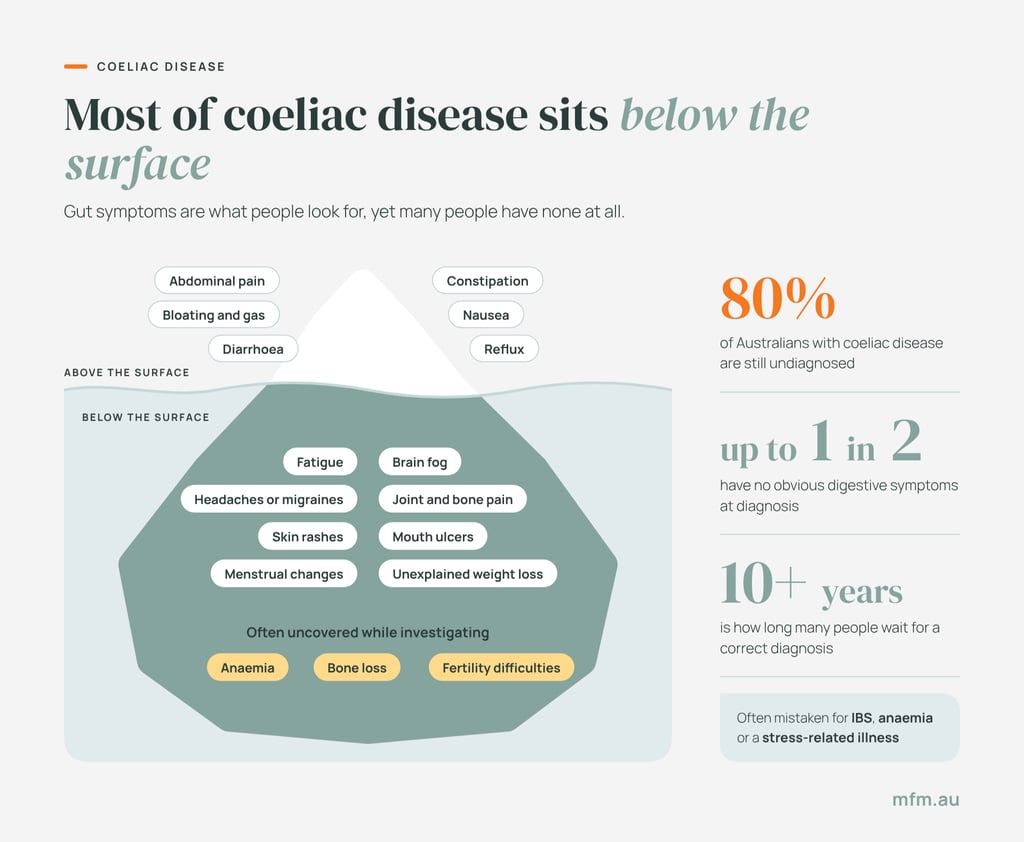
What makes coeliac disease particularly difficult to recognise is how differently it presents. Some people develop clear digestive symptoms from childhood. Others have no gut symptoms at all, and the condition is only detected after investigating something seemingly unrelated, such as anaemia, bone loss, or fertility difficulties. In Australia, around 80% of people with coeliac disease remain undiagnosed, many waiting more than a decade before a correct diagnosis is made.
Symptoms of coeliac disease
The most common symptoms of coeliac disease are abdominal pain, bloating, and altered bowel habits, often appearing shortly after eating gluten, and ranging from mild discomfort to severe cramping and diarrhoea.
Digestive symptoms are the most recognisable, but many people with coeliac disease have no gut symptoms at all. Their main symptoms are fatigue, brain fog, joint pain, or mood changes rather than anything digestive. This is sometimes called silent or atypical coeliac disease. Unlike a food intolerance or non-coeliac gluten sensitivity, coeliac disease always involves an immune response that damages the intestinal lining, regardless of whether gut symptoms are obvious.
Common digestive symptoms include:
- Abdominal pain and cramping
- Bloating and excess gas
- Diarrhoea or loose stools
- Constipation
- Nausea or vomiting
- Reflux or indigestion
Symptoms outside the digestive tract can include:
- Fatigue and low energy – most common
- Brain fog and difficulty concentrating – very common
- Headaches or migraines
- Joint and bone pain
- Skin rashes, including dermatitis herpetiformis
- Mouth ulcers
- Menstrual irregularity
- Unexplained weight loss
Because these symptoms overlap with many other conditions, coeliac disease is frequently mistaken for irritable bowel syndrome, anaemia, or a stress-related illness before the correct diagnosis is reached.
Conditions associated with coeliac disease
People with coeliac disease have a higher likelihood of developing related conditions, particularly where the disease has gone undetected for some time. These can include:
Digestive and nutritional
- Nutritional deficiencies, particularly: iron, B12, folate, calcium, and vitamin D
- Lactose intolerance, which often develops as a result of intestinal damage
- Pancreatic insufficiency and elevated liver enzymes
- Pernicious anaemia
- Dental enamel abnormalities
- Impaired growth
Bone and joint health
- Premature osteoporosis and increased fracture risk
- Polyarthritis and rheumatoid arthritis
Autoimmune conditions
- Autoimmune thyroid disease, including Hashimoto’s thyroiditis and Graves’ disease
- Type 1 diabetes
- Sjögren’s syndrome
- Lupus
- Multiple sclerosis
- Autoimmune hepatitis
- Addison’s disease
- Sarcoidosis
- Alopecia
Neurological and mental health
- Depression and anxiety
- Brain fog and cognitive changes
- Chronic fatigue syndrome
- Peripheral neuropathy, including numbness, tingling, or weakness in the hands and feet
- Epilepsy
Reproductive and hormonal health
- Menstrual irregularity and amenorrhoea
- Infertility and recurrent miscarriage
Long-term undetected coeliac disease is also associated with an increased risk of bowel cancer, which is one of the reasons early diagnosis and ongoing management are so important.
Not everyone with coeliac disease will develop these conditions, but unexplained symptoms in any of these areas are a reason to look further, particularly where coeliac disease is already diagnosed or suspected.
What causes coeliac disease?
Coeliac disease most commonly develops in people with a genetic predisposition who are then exposed to gluten at a time when the immune system responds abnormally, triggering ongoing damage to the small intestine lining.
Coeliac disease is associated with specific gene variants, particularly HLA-DQ2, HLA-DQ2.5, and HLA-DQ8, present in around 95% of those diagnosed. Around half the population carries one or more of these variants, but only a small fraction develop coeliac disease. The genes raise the risk considerably, but they don’t determine the outcome. Even among identical twins who share the same genes entirely, only around 70% share the diagnosis, which confirms that other factors play a role.
What matters is the combination of genetic susceptibility and additional triggers. These include:
- Gastrointestinal viral infections, particularly rotavirus in early life
- Changes in the gut microbiome, including early antibiotic use, caesarean birth, or formula feeding at the time gluten is introduced
- Food additives, pesticide residues, and changes in how wheat is grown and processed, which may alter how the immune system responds to gluten
- Stress, illness, or pregnancy, which can unmask the condition in people who were previously asymptomatic
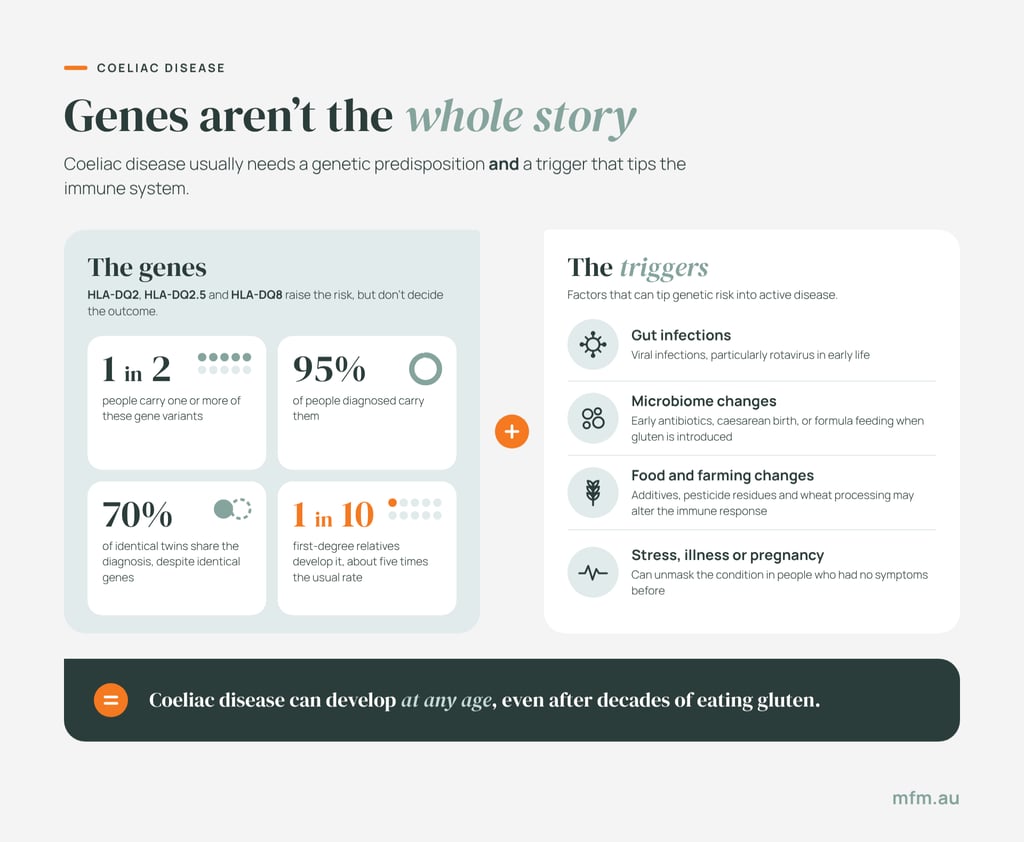
Coeliac disease can develop at any age, which is part of what makes diagnosis confusing. Someone can tolerate gluten without any problem for decades, and then find that their immune system begins reacting to it. Women are diagnosed more commonly than men, though the extent of this difference varies across studies. First-degree relatives of someone with coeliac disease have around a one-in-ten chance of developing the condition, roughly five times the general population rate.
How is coeliac disease diagnosed and assessed?
Coeliac disease is typically confirmed through a combination of blood tests and intestinal biopsy, both of which require the person to be actively consuming gluten to produce reliable results.
Initial blood testing looks for antibodies, particularly tissue transglutaminase IgA (tTG-IgA), which is elevated in most people with active coeliac disease. Some people have naturally low IgA levels, which can make this test unreliable. In those cases, IgG-based antibody testing is used instead. A positive result is usually followed by an endoscopy with small intestine biopsy to confirm damage to the gut lining.
Biopsy remains the gold standard for diagnosis, but it can only reliably confirm or rule out coeliac disease if you have been eating gluten in quantities roughly equivalent to two slices of wheat bread daily in the month or two prior. If you have already reduced or eliminated gluten from your diet, this can make diagnosis difficult to confirm.
Genetic testing for HLA-DQ2 and HLA-DQ8 can be done without consuming gluten, and is useful if you have already removed gluten before testing. A negative result makes coeliac disease very unlikely. A positive result confirms genetic risk but does not confirm the diagnosis.
A negative blood test does not always rule out coeliac disease. Some people have seronegative coeliac disease, meaning antibody levels appear normal despite confirmed damage to the gut lining. If you have already started a gluten-free diet before testing, results may also be unreliable. Your clinical history, symptom pattern, and how you responded to removing gluten all contribute to the full picture when test results are inconclusive.
Alongside conventional testing, functional assessments can help build a picture of how coeliac disease has affected your body and what needs support. These may include:
- How well the gut lining has healed
- Stool testing for microbiome changes and pathogenic organisms
- Nutrient levels, including iron, B12, folate, vitamin D, zinc, and magnesium
- Inflammatory markers and screening for secondary conditions such as SIBO
Why symptoms can continue on a gluten-free diet
Coeliac disease symptoms often continue because removing gluten stops the immune trigger but does not immediately undo the intestinal damage already present, nor does it address the nutritional deficiencies, microbiome changes, and immune activity that may keep symptoms going.
Up to 30% of people with coeliac disease continue to experience symptoms or intestinal inflammation despite a strict gluten-free diet, according to a comprehensive review from the NHS England National Centre for Refractory Coeliac Disease. A strict gluten-free diet is the correct and essential first step. For many people, though, the gut lining takes months to years to heal fully, and during that time, poor nutrient absorption continues. Even once healing is underway, nutrient absorption in people with coeliac disease tends to remain lower than in those without the condition. Low iron, B12, folate, and vitamin D are common in newly diagnosed people and can persist long after gluten has been removed.
Other reasons symptoms continue include:
- Ongoing low-level gluten exposure through cross-contamination, hidden ingredients, or labelling errors
- Refractory coeliac disease, where the immune response continues despite strict adherence to a gluten-free diet
- Secondary lactose intolerance, which develops when the damaged gut lining cannot produce enough lactase
- Small intestinal bacterial overgrowth (SIBO), which can develop in a damaged and inflamed gut
- Sensitivity to other food components, such as FODMAPs or certain food additives, which can cause symptoms independent of gluten
- Reactivity to other different gluten proteins that sit outside the standard gluten-free definition
The proteins that trigger immune reactions differ grain by grain. Many people with coeliac disease also react to structurally similar proteins in other grains, including oats, corn, rice, and millet. These proteins are technically gluten-free by food labelling standards but can cause ongoing immune activity in some people. Casein from dairy can also cross-react and is thought to affect up to 50% of people with coeliac disease. Some naturally gluten-free foods, including quinoa, buckwheat, and amaranth, can also trigger reactions in susceptible people.
If you remain unwell despite following a gluten-free diet, the question is not whether you are following it strictly enough, but what else may still be active. A thorough assessment can help identify what has not yet been resolved and where support is needed.
Treating coeliac disease: a functional medicine approach
A functional medicine approach to coeliac disease begins with a strict gluten-free diet as the non-negotiable foundation, then looks carefully at what has not resolved, and why.
A practitioner will review pathology, assess absorption and gut function, and build a picture of what is keeping symptoms active before treatment begins. For most people, that picture includes nutrient deficiencies, incomplete gut healing, and secondary conditions that developed during years of undetected damage.
Depending on your presentation, care may include:
- Nutrient repletion: iron, B12, folate, vitamin D, zinc, and magnesium are commonly depleted in coeliac disease after years of poor absorption and often don’t correct with diet change alone; targeted repletion is guided by functional testing
- Gut lining repair: specific nutrients, including glutamine and zinc, support mucosal healing, which can take months to years, depending on the degree of damage present at diagnosis
- Microbiome support: selected probiotic strains with evidence in coeliac disease, alongside assessment and treatment of secondary conditions such as SIBO that can persist independently of gluten exposure
- Dietary review: people with coeliac disease have higher rates of food allergies and sensitivities beyond gluten, which can contribute to ongoing symptoms even after the diet is well managed. Ensuring the gluten-free diet is genuinely nourishing rather than simply restrictive, and identifying sensitivities to dairy, FODMAPs, or other components that may be keeping symptoms active
- Immune and autoimmune monitoring: stress, illness, pregnancy, and hormonal changes can all affect gut health and immune activity. Coeliac disease carries an elevated risk of related autoimmune conditions, including thyroid disease and type 1 diabetes; ongoing monitoring is a useful part of long-term care
We support Coeliac's to optimal health
We’ve helped hundreds of people with Coeliac to not only reclaim their health but to enjoy life with vitality. Explore the Melbourne Functional Medicine approach to treatment.
When to seek support
Coeliac disease is significantly underdiagnosed, and the longer it goes undetected, the more the effects accumulate. Getting assessed early makes a difference, whether you’ve never been tested, you’re already diagnosed but still unwell, or a family member has recently been diagnosed.
See a practitioner if you have:
- Ongoing digestive symptoms that haven’t been clearly explained
- Coeliac disease but continue to feel unwell on a gluten-free diet
- Persistent fatigue, unexplained anaemia, or recurrent mouth ulcers
- Bone or joint pain, or fertility difficulties, and coeliac disease hasn’t been ruled out
- A first-degree relative (parent, sibling, or child) with coeliac disease and you’ve never been tested
- Uncertainty about whether your current management is working
Frequently asked questions
What is the difference between coeliac disease and gluten intolerance?
Coeliac disease is an autoimmune condition where gluten triggers an immune response that damages the small intestine lining. Gluten intolerance, also called non-coeliac gluten sensitivity, causes similar digestive symptoms but without the intestinal damage or autoimmune activity seen in coeliac disease. The distinction is important because coeliac disease carries a higher risk of long-term complications and requires strict lifelong avoidance.
Can you have coeliac disease without digestive symptoms?
Yes. Up to half of people with coeliac disease have no obvious digestive symptoms at diagnosis. The condition can present through fatigue, anaemia, bone loss, infertility, skin rashes, or neurological symptoms instead. This is one reason coeliac disease is so often missed, and why getting checked makes sense if you have a family history or unexplained symptoms in any of these areas.
How long does it take for the gut to heal after going gluten-free?
Healing time varies. Many people notice some improvement in symptoms within weeks of removing gluten, but full healing of the gut lining can take one to two years or longer. In older adults or those with significant damage at diagnosis, partial recovery may persist despite strict adherence. Regular follow-up helps track progress.
What happens if coeliac disease goes untreated?
Untreated coeliac disease is associated with progressive intestinal damage, poor nutrient absorption, and an increased risk of long-term complications. These include osteoporosis, anaemia, fertility difficulties, neurological symptoms, and a higher likelihood of developing other autoimmune conditions and intestinal cancers.
Do I need to stay gluten-free for life if I have coeliac disease?
Yes. Coeliac disease does not resolve, and there is currently no treatment that removes the need for a gluten-free diet. Even small amounts of gluten, below the threshold of obvious symptoms in some people, can continue to trigger immune activity and intestinal damage. As little as 50mg of gluten is enough to cause damage in 50% of people with coeliac disease. Strict lifelong avoidance is the current standard recommendation.
Can people with coeliac disease eat oats?
Most people with coeliac disease can tolerate certified gluten-free oats, but standard oats carry a high cross-contamination risk and should be avoided. Some people with coeliac disease also react to avenin, a protein in oats structurally similar to gluten, and experience intestinal inflammation even with uncontaminated oats. If oats are reintroduced, a gradual approach with close attention to symptoms is recommended.
Can you develop coeliac disease as an adult?
Yes. Coeliac disease can develop at any stage of life, including in people who have eaten gluten without apparent problems for decades. The condition can emerge following a period of significant stress, illness, pregnancy, or change in gut function. Many adults are diagnosed in their 40s, 50s, or later.
Is coeliac disease hereditary?
Yes. Coeliac disease has a clear genetic component, linked to the HLA-DQ2, HLA-DQ2.5, and HLA-DQ8 genes. First-degree relatives of someone with coeliac disease have around a one-in-ten chance of developing the condition. If a parent, sibling, or child has been diagnosed, testing is recommended even without obvious symptoms, as the condition frequently presents silently. Identical twins show a 70% concordance rate, confirming that genetic susceptibility is significant but not the only determining factor.
We support Coeliac's to optimal health
We’ve helped hundreds of people with Coeliac to not only reclaim their health but to enjoy life with vitality. Explore the Melbourne Functional Medicine approach to treatment.