

In clinical settings we know that people are given excellent advice, clear treatment plans, nutrition strategies, and supplement protocols, yet their health outcomes stall. Not because they don’t care, and not because they lack intelligence or motivation, but because change is hard to implement in real life.
Health coaching exists to bridge that gap between knowledge and action.
Information alone doesn’t create change. Sustainable health outcomes are built through behaviour change, nervous system safety, accountability, and support. This is especially true in functional and integrative medicine, where recommendations can be layered, nuanced, and complex.
Health coaching improves outcomes because it focuses on how people live, not just what they’re told to do. It translates complexity into action. It builds capacity rather than dependence. And when done well, it becomes one of the most powerful forces for long-term health improvement.
This is not a “nice-to-have” role. It is a professional discipline with a clear scope, growing evidence base, and increasing demand across healthcare settings. For those already working in the healthcare industry, perhaps GPs, naturopaths, nurses, physios, or really anyone who is working alongside a patient and recommending change, coaching is the ideal adjunct skill to bolster your success rates with better client outcomes. It is also a wonderful skill set on its own.
The role of a health coach
Health coaching can be misunderstood.
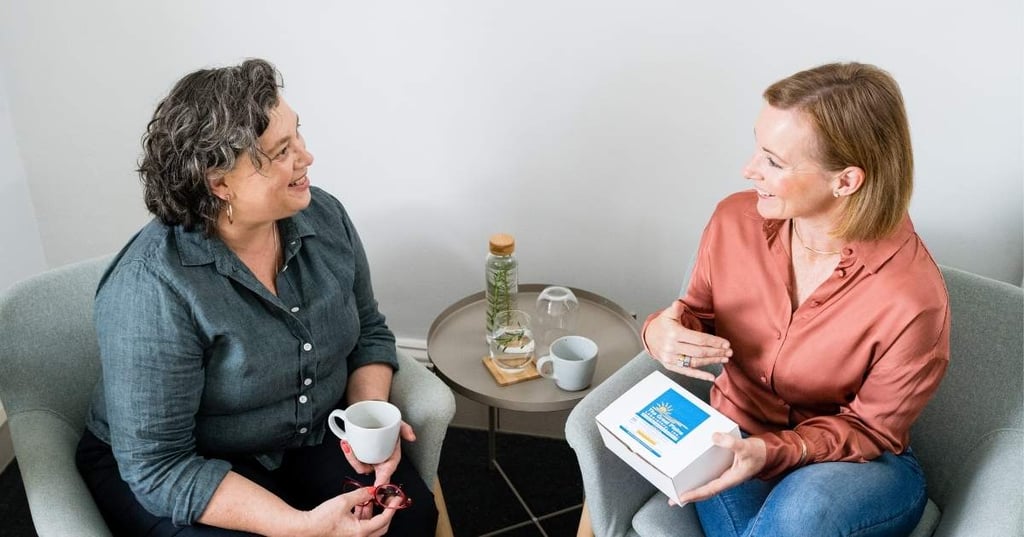
A health coach does not prescribe, diagnose, or replace clinical care. Nor is the role about cheerleading or telling people what to do. At its core, health coaching is about supporting people to make meaningful, sustainable changes. In a collaborative care model, coaching bridges the gap between instruction and implementation.
In practice, this means:
- Supporting behaviour change through conversation, reflection, and structure
- Helping clients integrate practitioner recommendations into daily life
- Building health literacy
- Identifying barriers to change – practical, emotional, relational, or systemic
- Working collaboratively with healthcare practitioners
The foundations you need before you train
Not everyone who loves health is suited to health coaching, and that’s not a criticism; it’s discernment. Many people get fired up by health, and you’ll know if this is you because it’s the topic you find yourself discussing at any and all events – family gatherings and celebrations, water filter chit chat, or with your training buddy at the gym. These passionate people are ‘tellers’, spreaders of passion and information. But this energy is not the essence of coaching because health coaching is about listening, reflecting, asking, holding space for enquiry and curiosity. It is not the right context for knowledge dumping.
Before deciding to do training, it’s worth being honest about what this work requires. Health coaching demands emotional intelligence, strong boundaries, and comfort sitting with uncertainty. It requires curiosity rather than fixing, listening rather than advising, and patience with sometimes slow change.
You also need a robust understanding of the scope of practice. Coaching is not therapy, and it is not clinical care. The ability to stay in role, collaborate with practitioners, and know when to refer is essential.
Finally, this work will invite your own growth. Coaches who avoid their own patterns, nervous system responses, or people-pleasing tendencies often struggle.
“The most effective coaches are willing to do their own inner work alongside their professional development.”
– Bee Pennington
Choosing the right training pathway
This is one of the most important decisions you’ll make.
Health coaching is currently an unregulated industry in Australia, which means the quality of training varies widely. Choosing a program aligned with recognised professional standards matters, not just for credibility, but for ethical practice, insurance, employability, and long-term career sustainability.
I strongly recommend training with an organisation that is accredited or recognised by HCANZA (Health Coaches Australia and New Zealand Association). HCANZA exists to uphold professional standards, define the scope of practice, and provide a legitimate professional home for health coaches in our region.
Being a member of a recognised professional body signals that you are committed to:
- Ethical practice
- Continuing professional development
- Working within scope
- Accountability and industry standards
HCANZA recognises several training organisations that meet these standards, including Wellness Coaching Australia and other HCANZA-aligned providers. Rather than relying on marketing claims, I encourage you to check HCANZA’s current listings and ensure any program they choose meets professional benchmarks.
This step matters more than people realise.
Certification is the beginning, not the job
Completing a certification does not make you an effective health coach, it makes you a new one.
As with most skills, competence develops through practice, supervision, feedback, and time. The early years are about learning how to hold clients without over-directing, how to manage complexity, and how to collaborate effectively with practitioners.
This is why mentoring and real-world exposure are so valuable. Coaches who work alongside clinicians in clinics or structured programs often develop faster than those who jump straight into unsupported private practice.
Health coaching is relational work, and competence sharpens through experience.
Gaining experience and finding your place in the industry
Many coaches begin by working in integrative or functional medicine clinics, allied health settings, corporate wellbeing programs, or group-based health initiatives. These environments provide structure, referral pathways, and professional support while skills are developing.
Others combine coaching with existing qualifications in health, fitness, nursing, allied health, or community services. Some eventually move into private practice, while others prefer team-based care.
The question isn’t “How fast can I work for myself?” but “Where can I develop depth, confidence, and sustainability?”
Health coaching is not a quick-win career. It is a long-term profession for people who value mastery.
Building a sustainable career as a health coach
The demand for health coaching is growing, particularly in areas such as chronic disease, women’s health, including perimenopause and menopause, stress-related illness, metabolic health, and functional medicine. Insights from a health coaching networking group I facilitated offer a useful picture of what sustainable practice tends to look like.
Many of the coaches in the group used collaborations to access existing client bases. For many, ‘going solo’ proved to be a longer, harder road. Certainly not impossible, just a steeper hill to climb. Coaches who had more success also micro-niched. They had a very clear market that they supported and were able to directly speak to that client through marketing and online presence.
Some examples of the niches are:
- Breast cancer coach
- Bariatric surgery coach
- Menopause coach
- Sleep coach
- Integrative GPs (the GP was the client, but the coach would support the GP’s patients)
- Corporate health (supporting senior C-suite leaders between roles)
The clearer the target population, the more directly care and communication can be tailored to them.
Sustainability in the field of coaching comes from:
- Staying within scope
- Ongoing education and supervision
- Clear boundaries and manageable caseloads
- Working within systems, not against them
- Collaboration
Burnout is common among coaches who overextend, undercharge, or try to be everything to everyone. Longevity belongs to those who treat this as a profession, not a passion project.
Who this path is for
Health coaching is well-suited to people who value depth over speed, relationship over performance, and integrity over hype. It attracts those who understand that change is complex and that health is lived, not implemented.
If you are drawn to supporting people through real change, patiently, ethically, and collaboratively, health coaching can be deeply meaningful work.
The most important thing is to take informed steps. Choose training carefully. Seek supervision. Stay grounded. And remember: good coaching doesn’t rush outcomes, it creates the conditions for them.
Get started today
Our expert health coaches are ready now to work with new and existing patients of Melbourne Functional Medicine. Get started today.