

What are hives?
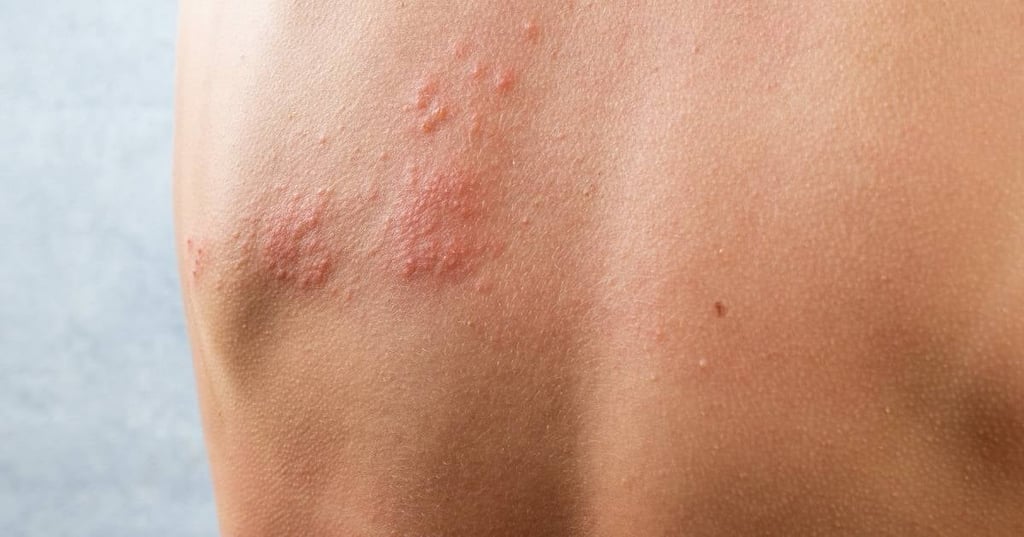
Hives, medically known as urticaria, are raised, itchy welts that form when mast cells in the skin release histamine and other inflammatory compounds into surrounding tissue. Histamine makes small blood vessels leak fluid, producing the characteristic swelling, and irritates nearby nerve endings, triggering the itch.
The welts themselves, called wheals, can range from a few millimetres to several centimetres across. They may be skin-coloured, pink, or red, and often have a pale centre. They can appear within minutes, change in shape or location, and fade entirely before returning elsewhere. Individual wheals usually fade within 24 hours, but new ones can keep appearing, so an outbreak may last days or longer.
Some people experience a single episode that resolves within days. For others, hives become a recurring or ongoing problem. When hives occur most days for six weeks or more, they are classified as chronic urticaria.
Chronic urticaria is more common in women than men, with peak onset between 20 and 40 years of age, though it can develop at any age, including in children. A family history of urticaria or related autoimmune conditions is also more common in people with chronic urticaria than in the general population.
In chronic urticaria, a single food trigger is usually not responsible. The ongoing mast cell activation is more often linked to the immune system itself, including autoimmune activity, with factors such as infection, stress and gut health contributing for some people. This is where a more thorough investigation becomes useful.
Types of urticaria
Urticaria is classified by how long it lasts and whether a specific trigger sets it off, with the main types being acute, chronic spontaneous and chronic inducible urticaria.
- Acute urticaria: wheals and/or angioedema (deeper swelling beneath the skin) lasting less than six weeks
- Chronic spontaneous urticaria (CSU): wheals and/or angioedema appearing without a specific trigger for six weeks or more, also called chronic idiopathic urticaria
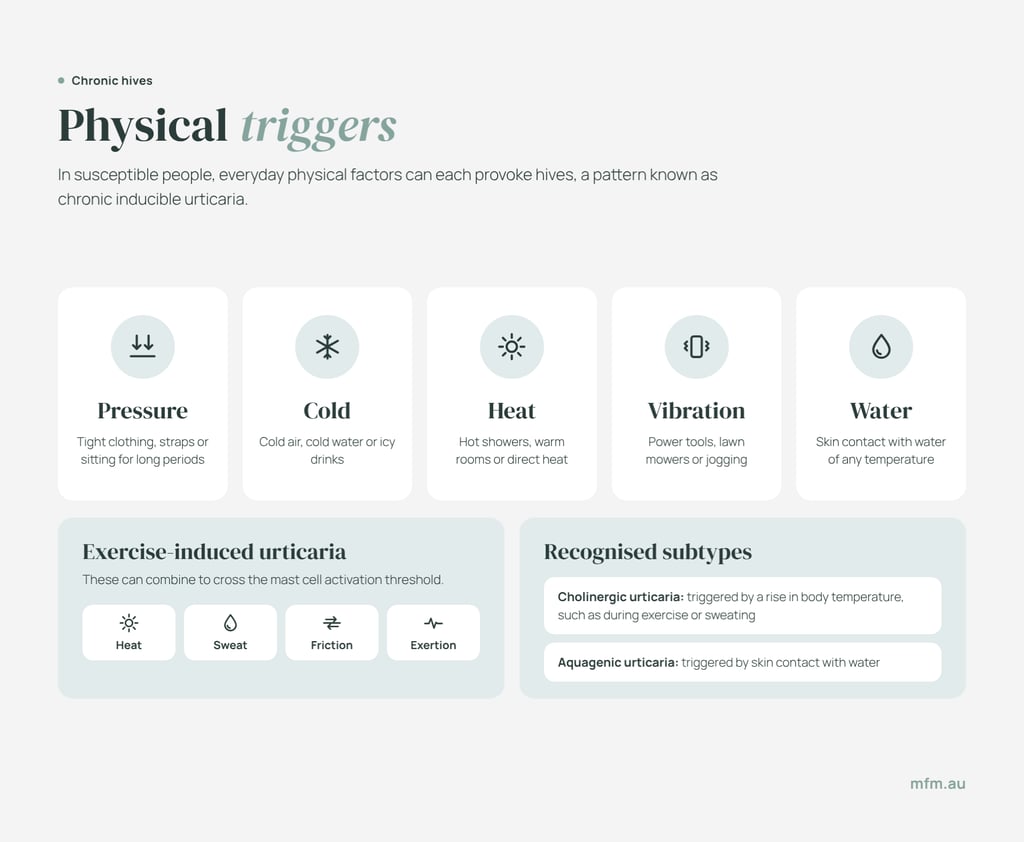
- Chronic inducible urticaria (CIndU): wheals triggered by a specific physical stimulus for six weeks or more, such as scratching or stroking the skin (dermographism), pressure, cold, heat, sunlight, vibration, water, or a rise in body temperature from exercise or sweating
- Contact urticaria: a localised reaction where the skin touches a triggering substance, considered a form of inducible urticaria
Symptoms of hives
The most common presentation of hives is batches of raised, intensely itchy welts that appear and fade within hours, often returning in new locations across the body.
Skin symptoms include:
- raised welts that are round, oval, or irregular in shape
- redness or pale colouring with a flare around the welt
- intense itch, often worse at night or after a warm shower
- burning or stinging sensation in or around the welts
- dermographism, where firm pressure or scratching leaves a raised line on the skin
Some people only discover dermographism, sometimes called skin writing, when scratching an itch leaves a raised line that lasts up to half an hour. It is one of the more distinctive patterns in urticaria and is often underreported because people assume it is simply sensitive skin.
Cholinergic urticaria appears as small, pinpoint welts brought on by heat, sweating, or exercise, and is one of the more common inducible patterns in younger adults. Aquagenic urticaria is rarer, producing small welts wherever water touches the skin, regardless of its temperature.
Angioedema occurs in around 40 per cent of people with chronic urticaria. This is a deeper swelling beneath the skin that commonly affects the lips, eyelids, hands, feet, and sometimes the throat. Unlike surface welts, it is usually painful rather than itchy and can take up to 72 hours to resolve.
Angioedema can also occur without surface welts. This needs medical assessment to rule out other causes, such as certain blood pressure medications or hereditary angioedema. Throat swelling that affects breathing or swallowing is a medical emergency: call 000.
Beyond the visible welts, chronic hives are commonly accompanied by fatigue, poor sleep, and reduced concentration. A 2025 systematic review and meta-analysis across more than 4,000 people with chronic urticaria found depressive symptoms in 37%.
What causes hives?
Hives are caused by mast cells in the skin releasing histamine. Acute hives are usually triggered by an infection, allergic reaction or medication, while chronic hives most often develop without an identifiable external trigger, a pattern classified as chronic spontaneous urticaria. In many of these chronic cases, the activation appears to be autoimmune in origin.
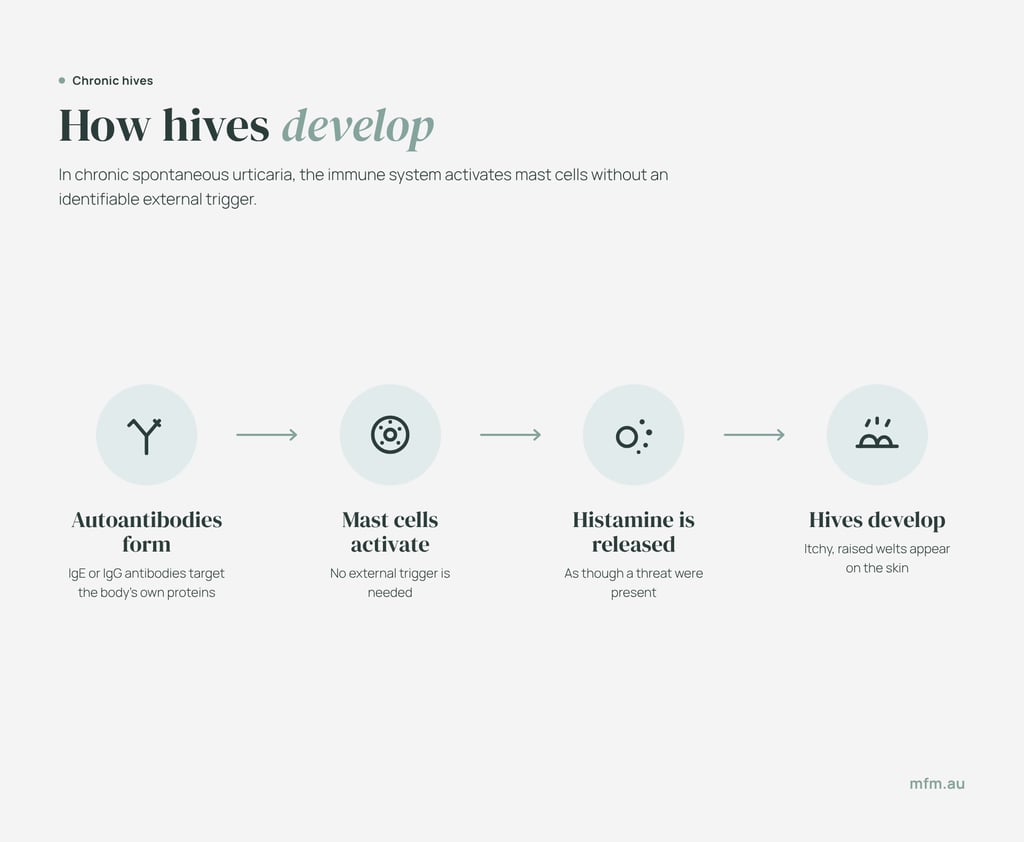
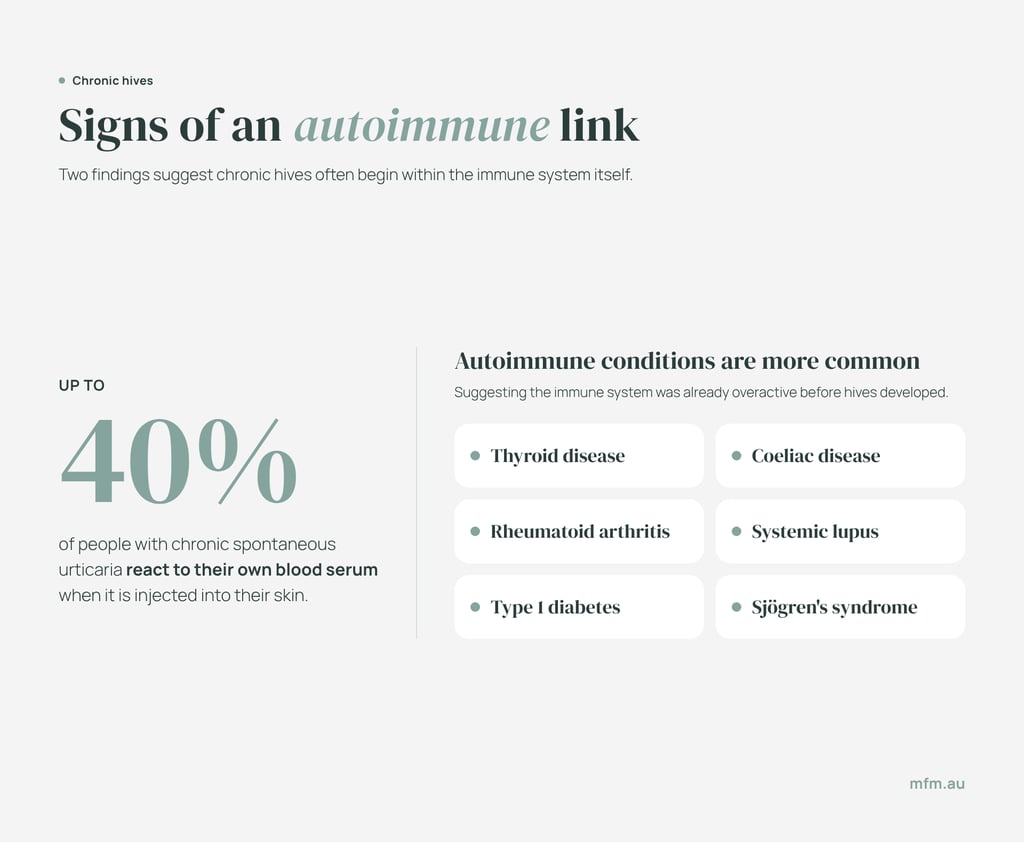
Research points to two main autoimmune pathways. In the first, IgE antibodies directed against the body’s own proteins bind to mast cells and trigger histamine release. In the second, IgG antibodies target IgE or its receptor on mast cells, producing the same result. Both pathways cause the immune system to behave as though a threat is present when none exists. This is why up to 40 per cent of people with chronic spontaneous urticaria react when their own blood serum is injected into their skin.
Autoimmune conditions such as thyroid disease, coeliac disease, rheumatoid arthritis, systemic lupus, type 1 diabetes and Sjögren’s syndrome are found at higher rates in people with chronic hives than in the general population, suggesting a shared tendency towards autoimmunity.
Other recognised contributors include:
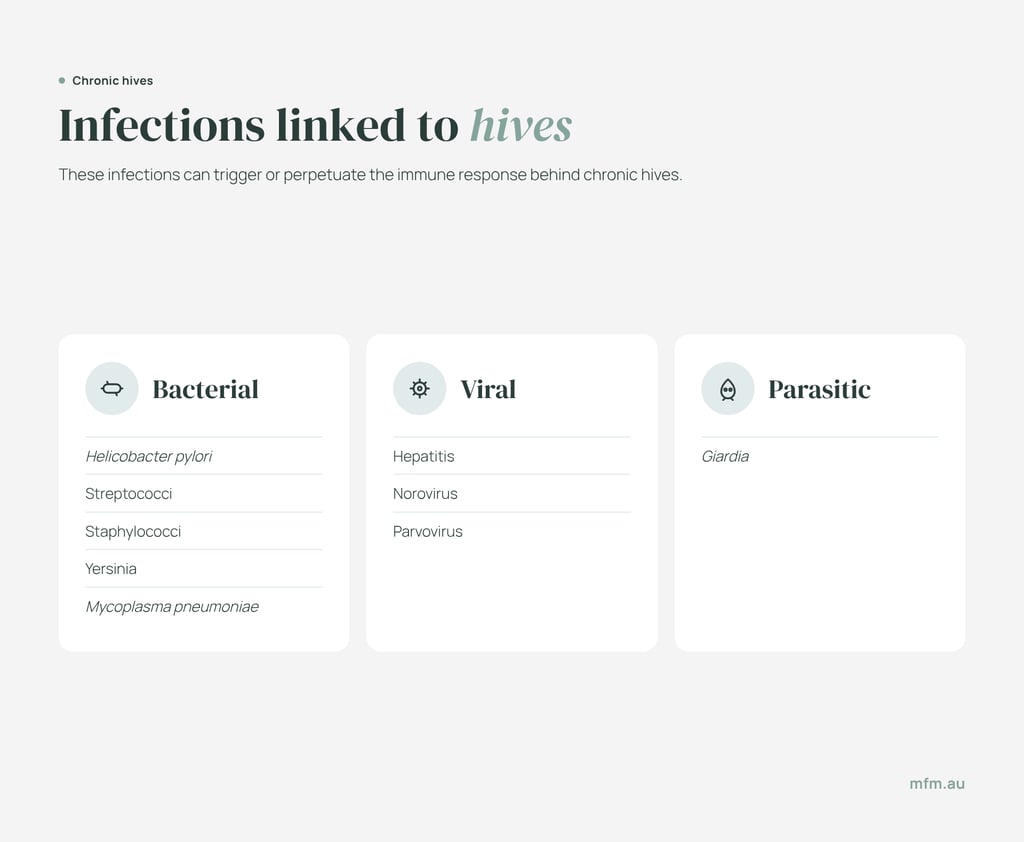
- Infections: bacterial infections such as Helicobacter pylori, streptococci, staphylococci, yersinia and Mycoplasma pneumoniae; viral infections including hepatitis B and C; and parasitic infections such as Giardia can all trigger or prolong the immune response in chronic hives
- Gut dysbiosis: altered microbial populations in the gut are found at higher rates in people with chronic hives and may keep the immune system in a heightened state
- Low vitamin D: commonly seen in people with chronic hives, and involved in regulating immune activity
- Stress: ongoing psychological stress releases stress hormones and nerve signals that can lower the threshold for mast cell activation, triggering new episodes and making existing hives harder to control
- High-histamine foods: while food allergy rarely causes chronic hives, foods that are naturally high in histamine or that trigger histamine release can push an already reactive immune state toward a visible flare
- Environmental exposures: plants, animals, insect bites and stings can each trigger an acute reaction
- Physical triggers: scratching, pressure, cold, heat, sunlight, vibration, water and exercise can provoke hives in people with chronic inducible urticaria, as outlined in the types section above
- Medications: NSAIDs such as ibuprofen and aspirin, codeine and some antibiotics are well-documented triggers for urticaria, while ACE inhibitor blood pressure medications are a recognised cause of angioedema
How are hives investigated and assessed?
Assessment for hives begins with a thorough clinical history, which is often the most informative part of the process. A practitioner will ask about the pattern and timing of outbreaks, what seems to precede them, any recent infections, medications being taken, known autoimmune conditions, and the impact on sleep and daily life.
A single episode of acute hives usually needs no testing. Where hives are chronic, standard testing typically includes:
- full blood count
- inflammatory markers such as C-reactive protein and ESR
- thyroid antibodies
- total IgE
- H. pylori and other infection testing where the history suggests it
These help identify whether an autoimmune or infective contributor is present. Allergy testing for IgE-mediated food reactions has limited value in chronic hives because food allergy is rarely the cause, but may be used if a specific food reaction pattern is clearly described. Where individual welts last longer than 24 hours or leave bruising, a skin biopsy may be needed to rule out urticarial vasculitis.
A symptom and food diary can help identify patterns across weeks or months, particularly for people with inducible hives where physical triggers need to be mapped. These triggers can be confirmed with simple provocation tests, such as holding an ice cube against the skin for suspected cold urticaria. Photographing outbreaks and noting body location and time of day adds useful information that is difficult to capture retrospectively.
Severity can also be tracked using the Urticaria Activity Score 7 (UAS7), a standardised weekly measure used to monitor symptom burden and treatment response.
Functional testing may include:
- gut microbiome assessment
- comprehensive stool analysis, including testing for parasites
- a full thyroid panel, including TSH, free T4 and free T3
- vitamin D status
Why hives can continue after conventional treatment
Hives often continue after treatment because antihistamines and corticosteroids suppress the histamine response without addressing why mast cells are being activated in the first place. When medication stops, the underlying immune activity resumes, and outbreaks return.
Antihistamines block histamine from acting on blood vessels and nerves in the skin, which reduces itch and swelling. Antihistamines don’t reduce autoimmune activity, clear an unresolved infection, restore gut health, or lower the inflammation that is priming mast cells, so where these are involved, relief may only be partial.
Short courses of corticosteroids can interrupt a flare, but they do not change the immune profile generating it. Prolonged use carries its own risks, including raised blood sugar, bone loss, weight gain and increased infection risk, which can make the underlying picture more complex.
Omalizumab, a biologic used in more resistant cases, works by binding to circulating IgE and reducing mast cell sensitivity to activation. It can produce considerable symptom relief and is an appropriate option for many people with chronic spontaneous urticaria that has not responded to antihistamines.
It does not resolve the autoimmune activity or infective contributors that are activating the immune response, which is why symptoms often return when the medication is stopped. Investigating the underlying picture remains relevant even for people responding well to it.
A 2024 review in The Lancet noted that the standard approach, moving from antihistamines to stronger medications when those stop working, doesn’t work for everyone, because the immune activity behind hives differs from person to person.
Chronic hives often resolve on their own within a few years. For others, they can continue for longer and be frustrating to live with. In those cases, it helps to explore what is keeping the immune response active.
Treating hives: a functional medicine approach
A functional medicine approach to hives begins with a thorough investigation into what’s likely activating your mast cells. From there, a personalised treatment plan is built around what that investigation finds.
Depending on your presentation, treatment may include:
- Infection clearance: underlying infections such as gut parasites or H. pylori, alongside medical eradication therapy, are addressed because they can keep the immune system on alert and lower the threshold at which mast cells release histamine
- Restoring gut integrity: a permeable gut lining and reduced microbial diversity can contribute to the immune activity that makes mast cells more reactive, so care may include dietary changes, probiotic support, and targeted nutrients for the gut lining
- Dietary strategies: dietary changes target the specific patterns keeping your immune system reactive, such as a short-term low-histamine approach or removing specific food triggers, rather than requiring a permanently restrictive diet
- Nutrient repletion: correcting deficiencies, particularly vitamin D, can influence how reactive your immune system stays, and addressing deficiency is often an early priority, with other nutrients considered based on your testing results
- Nervous system regulation: where stress is a contributor, approaches such as vagus nerve stimulation, breathwork, mindfulness and sleep support can help raise the threshold at which mast cells are triggered
- Herbal and botanical support: certain botanicals may help calm histamine release, mast cell activity and inflammation, and are prescribed by a practitioner according to what’s contributing to your presentation and any medications you take
- Autoimmune support: chronic hives are frequently linked to autoimmune activity, and where autoimmune thyroid disease, coeliac disease or other autoimmune conditions are identified, these are managed alongside your hives care, in coordination with your GP or specialist
We support people with hives to find lasting relief
We work with people at every stage of hives, and who are finally ready to stop taking antihistamines and get their skin under control.
When to seek support
See your healthcare provider if you have:
- Hives occurring most days
- Symptoms affecting your sleep, work, or daily functioning
- Regular reliance on antihistamines to manage outbreaks
- Hives continuing beyond six weeks without a clear explanation
- Throat swelling, difficulty breathing, or dizziness alongside hives, which requires immediate medical attention at the emergency department
Frequently asked questions
How long do chronic hives last?
Chronic urticaria commonly lasts between one and five years, and many people find their symptoms clear on their own within this time. For others, hives continue for longer, with some experiencing near-constant flares and others having periods of remission. Autoimmune activity tends to be associated with a longer course.
Does diet affect chronic hives?
Diet is rarely the root cause of chronic hives, but certain foods, particularly those naturally high in histamine like aged cheese, fermented products, and some seafood, can act as flare triggers rather than allergens. Because triggers differ from person to person, we’d usually work through a short, guided elimination process rather than hand someone a standard avoidance list.
Are hives the same as an allergic reaction?
Hives are not always an allergic reaction. Acute hives can follow an allergic response to food, medication, or an insect sting, but chronic hives lasting more than six weeks are rarely caused by allergy. In many of these cases, the immune activity is autoimmune rather than allergic.
Can stress cause hives to flare?
Yes, stress is a common flare trigger because stress hormones and nerve signals can make mast cells release histamine more easily. Hives can also feed the cycle: itching disrupts sleep, poor sleep increases stress, and stress lowers the threshold for the next flare. Breaking this cycle is often part of treatment.
Can hives be related to the thyroid?
Yes, thyroid autoimmunity, including Hashimoto’s thyroiditis and Graves’ disease, is found at higher rates in people with chronic urticaria than in the general population. The connection lies in shared immune activity rather than thyroid hormone levels. Some people see improvement in their skin when thyroid autoimmunity is addressed, even with normal thyroid function tests.
Can a gut infection trigger chronic hives?
Yes, H. pylori, a bacterial infection of the stomach lining, is one of the better-studied gut-related triggers for chronic urticaria. The gut houses a substantial proportion of the body’s immune tissue, so an active infection there can keep the wider immune system reactive. Identifying and treating H. pylori is often part of investigating ongoing hives.
Can hives be related to hormones?
Hormonal changes can influence hive activity. Some women notice worsening in the week before menstruation, when oestrogen and progesterone fall. Mast cells carry receptors for both hormones, and changes in these hormones can affect how readily the skin reacts. This hormonal link may partly explain why chronic hives are more common in women.
Ready to understand what's causing your hives?
If you’re looking for a clearer picture of what’s contributing to your hives, learn more about our approach to hives testing and care.