

What is rheumatoid arthritis?
Rheumatoid arthritis (RA) is an autoimmune condition in which the immune system mistakenly attacks the synovium, the tissue lining the inside of the joints. This produces ongoing inflammation that gradually damages cartilage, bone, and surrounding tissue, leading to pain, swelling, and loss of function.
It most commonly affects the small joints of the hands, wrists, feet, and ankles, and typically presents symmetrically on both sides of the body. Larger joints such as the knees, shoulders, and hips can also be affected. RA is far more common in women and most often develops between the ages of 30 and 50, though it can occur at any age.
Symptoms of rheumatoid arthritis
The most common symptoms of rheumatoid arthritis are joint pain, swelling, and stiffness, often worst in the morning or after sitting still for a long period.
Joint symptoms commonly include:
- warmth, swelling, and tenderness at the joint site
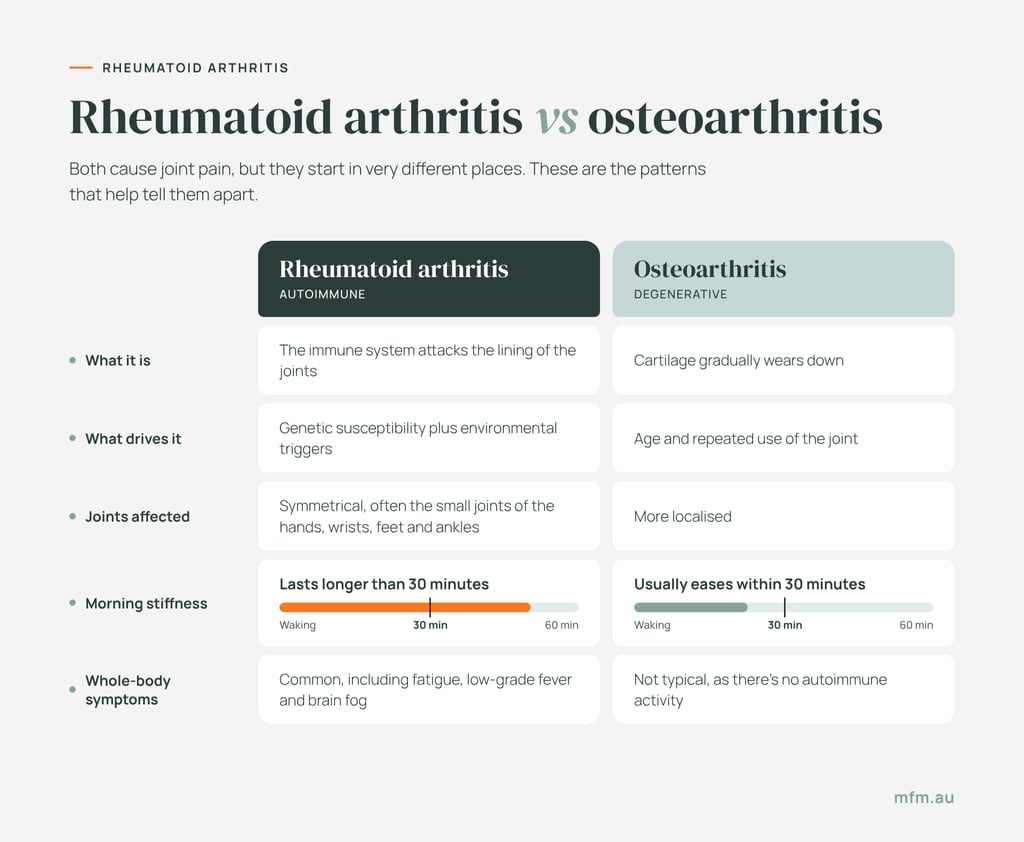
- morning stiffness lasting longer than 30 minutes, which helps distinguish RA from osteoarthritis, where stiffness usually resolves within 30 minutes of waking
- symmetrical joint involvement, typically the small joints of the hands, wrists, feet, and ankles
- joint deformity in hands and fingers with RA that’s been present for a long time
- rheumatoid nodules, small firm lumps forming at pressure points such as the elbows or knuckles
Systemic symptoms are also common and include:
- fatigue, which can precede joint symptoms by weeks or months and often feels out of proportion to activity levels
- low-grade fever and general unwellness, particularly during flares
- loss of appetite and unintended weight loss
- tingling or burning nerve-type pain that feels different from the joint pain itself, along with brain fog and low energy, particularly during flares
- in some cases, the eyes, lungs, or skin can also be affected
Symptoms can develop gradually over months, or come on more rapidly, with fatigue and stiffness appearing well before obvious joint swelling. During a flare, pain and fatigue intensify, and joints may become noticeably more swollen. Many people also notice flares coinciding with rapid weather changes or high humidity, even when no other obvious trigger is present.
What causes rheumatoid arthritis?
Rheumatoid arthritis most commonly develops when a person with a genetic susceptibility is exposed to triggers that activate the immune system in a way that then targets the joints. Several circumstances usually need to line up together before the condition develops.
In susceptible people, environmental and biological factors may contribute to modifications of the body’s own proteins, including through a process called citrullination. These changes can alter how proteins are recognised by the immune system, potentially contributing to a loss of immune tolerance and the production of autoantibodies.
Specific variants in immune-related genes, particularly those associated with HLA-DR4, increase the likelihood that the immune system will produce antibodies such as anti-CCP and rheumatoid factor. These antibodies can begin circulating years before any joint symptoms appear.
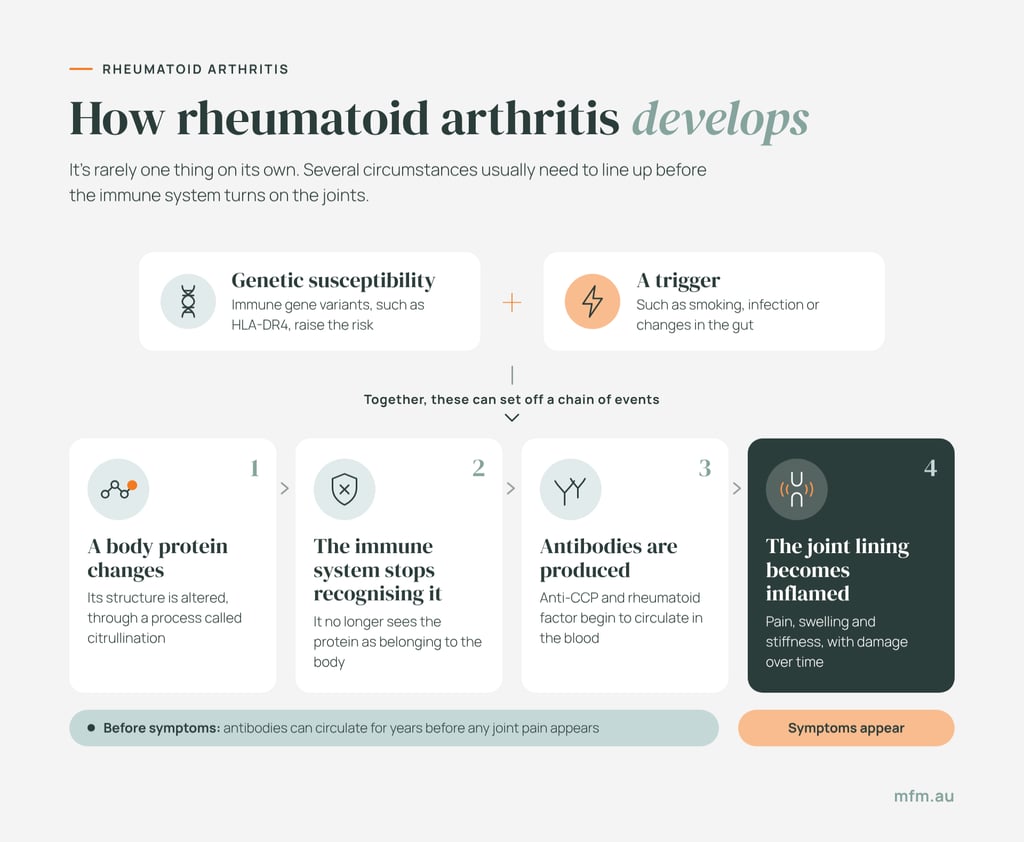
Environmental triggers appear to activate this predisposition. The most well-established are:
- smoking, which is the single strongest risk factor you can change and substantially increases anti-CCP antibody production
- changes in the gut microbiome, where certain bacterial imbalances appear to trigger immune responses that spread beyond the gut
- periodontal disease and oral infections, which involve similar bacteria and immune responses to those seen in the joints
- viral and bacterial infections that may trigger an immune response that then continues to be triggered
- hormonal changes, which may explain why women are two to three times more commonly affected than men
- significant occupational or environmental exposures, including silica dust and air pollution
- obesity, which contributes to systemic inflammation and appears to increase both disease risk and severity, and where weight loss has been shown to reduce how bad symptoms feel and flare frequency
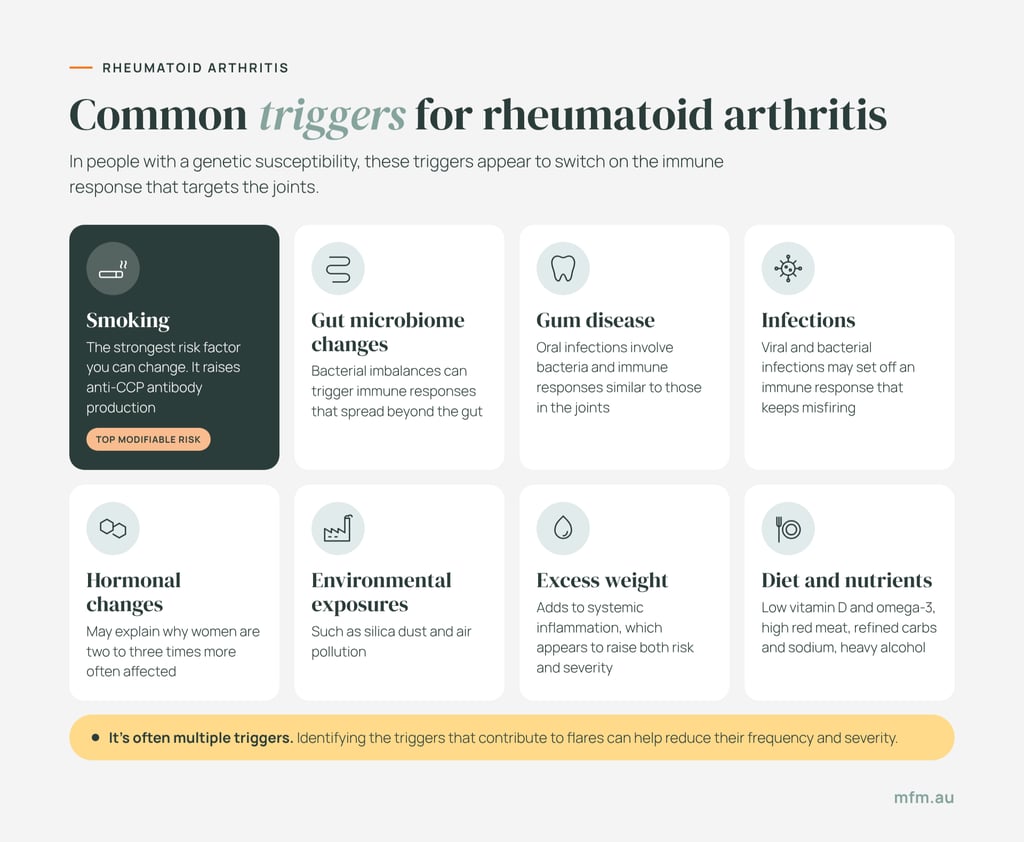
Low levels of vitamin D and omega-3 fatty acids, along with diets high in red meat, refined carbohydrates, and sodium, are linked to higher inflammation and may affect immune regulation in susceptible people. Heavy alcohol intake has also been identified as a potential trigger.
Not everyone with genetic susceptibility will develop rheumatoid arthritis. The current understanding is that a combination of circumstances is generally required, and that the timing and nature of those triggers influences both whether the condition develops and how it shows up.
How is rheumatoid arthritis diagnosed and assessed
Rheumatoid arthritis is diagnosed through a combination of clinical history, physical examination, blood tests, and imaging, because no single test confirms it on its own.
A thorough clinical history looks for the characteristic pattern of symptoms, including morning stiffness lasting more than 30 minutes, symmetrical joint involvement, and the presence of fatigue or systemic symptoms. Symptoms need to have been present for at least six weeks to meet diagnostic criteria.
Blood tests commonly used include:
- anti-cyclic citrullinated peptide (anti-CCP) antibodies, the most specific marker for rheumatoid arthritis
- rheumatoid factor (RF)autoantibodies, present in around 70 to 80 per cent of cases
- C-reactive protein (CRP) and erythrocyte sedimentation rate (ESR), which measure inflammation levels
- full blood count and other markers to assess overall immune activity
Reading the two antibody markers together is important. Rheumatoid factor on its own isn’t specific to RA, since it can also be raised in other conditions, including fibromyalgia. When both rheumatoid factor and anti-CCP antibodies are elevated, diagnostic accuracy exceeds 90 per cent. Relying on rheumatoid factor alone has, in some cases, led to a diagnosis that was later revised once anti-CCP results and joint imaging were reviewed together.
Ten to 25 per cent of people with rheumatoid arthritis test negative for both anti-CCP and rheumatoid factor. This is seronegative rheumatoid arthritis. A negative result does not rule out the condition if other symptoms still point to RA.
Anti-CCP antibodies can be present in the blood years before joint symptoms appear. In people with a family history of RA or emerging risk factors, early testing can show this early immune activity before the condition becomes established.
Your healthcare provider will also look to rule out osteoarthritis as a cause of the joint pain.
Imaging, including X-ray, ultrasound, or MRI, looks for joint erosion and synovial thickening. In early disease, imaging can appear normal even when symptoms are clearly present, so clinical assessment is also important.
A functional medicine practitioner will look beyond standard diagnosis to understand what may be contributing to the ongoing immune activation in each person. This typically includes:
- vitamin D levels, which influence immune regulation and are frequently low in people with autoimmune conditions
- omega-3 fatty acid status, since the ratio of different fatty acids in the diet affects how much inflammation the body produces
- gut microbiome assessment, typically via comprehensive stool analysis, looking at bacterial diversity and markers of a leaky gut lining that may be keeping the immune response active
- food sensitivity testing, particularly where dietary triggers appear to be linked to flare patterns
- full thyroid panel, as thyroid dysfunction commonly happens alongside autoimmune conditions and can heighten fatigue and inflammation
- homocysteine and B vitamin status, which affect how the body manages inflammation and are relevant where cardiovascular risk is also a concern
- cortisol and adrenal function, since long-term stress can affect immune regulation and how often flares occur
The goal of functional testing isn’t about repeating what your rheumatologist has already done. It’s about finding what else might be keeping the immune response switched on, so treatment can do more than manage inflammation, it can start to dampen it ongoingly
Why rheumatoid arthritis symptoms can be difficult to control
Rheumatoid arthritis symptoms can continue because conventional treatment often only focuses on bringing down immediate inflammation rather than re-regulating the immune system overall.
Conventional treatments include:
- Nonsteroidal anti-inflammatory drugs (NSAIDs) such as ibuprofen and naproxen
- Corticosteroids taken orally or injected directly into affected joints
- Disease-modifying antirheumatic drugs (DMARDs) such as methotrexate, leflunomide, and hydroxychloroquine
- Biologic agents such as adalimumab and etanercept
- Janus kinase(JAK) inhibitors such as upadacitinib and tofacitinib
NSAIDs and corticosteroids reduce inflammation and relieve pain effectively during a flare. When they are stopped, the autoimmune signalling that activates synovial inflammation continues unchanged and symptoms return. Reducing joint inflammation is not the same as changing the immune response producing it. The immune system learns the target and doesn’t forget it. Once it’s flagged those proteins as a threat, that memory stays, which is why an autoimmune condition isn’t something treatment resolves once and for all, only something it regulates.
DMARDs and biologic agents go further by modifying how the immune system behaves. They can be effective, particularly in moderate to severe disease, and for some people produce periods of stable remission. They do not, however, eliminate the antibodies central to the process, nor do they address the gut, oral, or environmental circumstances that may have helped trigger the condition in the first place.
Research into the gut-joint axis has shown that changes in the mix of gut bacteria appear in people with rheumatoid arthritis, sometimes years before diagnosis. This can maintain a mild, ongoing immune response that contributes to ongoing joint inflammation. Standard treatment does not target this.
The composition of the gut microbiome at the time of diagnosis may also predict how well a person responds to treatment, yet it is not something standard testing currently assesses.
When medication reduces symptoms without these contributing circumstances being identified and addressed, disease activity is likely to return, particularly when medications are tapered or changed.
For some people with rheumatoid arthritis, pain can continue even when blood markers such as CRP and ESR are well controlled, and imaging shows no new joint damage. This is called nociplastic pain, where the nervous system keeps sending pain signals even though the joints themselves are no longer inflamed. It is a distinct issue that anti-inflammatory and immunosuppressive treatment does not reach, and it is useful to identify because it influences what management needs to look like.
Treating rheumatoid arthritis: a functional medicine approach
A functional medicine approach to rheumatoid arthritis begins by investigating what is keeping the immune system attacking the joints, rather than focusing solely on suppressing its activity. Treatment aims to help the immune system put its own brake back on, not just hold inflammation down with medication.
Depending on your presentation, treatment may include:
- Gut health: Where increased intestinal permeability is letting proteins through the gut lining that keep the immune system switched on, dietary changes, targeted probiotics, and prebiotic fibre can help restore a healthier gut environment
- Reducing inflammatory load: An anti-inflammatory diet built around oily fish, colourful vegetables, extra virgin olive oil, and nuts and seeds, while reducing processed foods and your identified triggers, is a consistent part of management
- Nutrient repletion: Where deficiencies are identified through testing, targeted supplementation with omega-3 fatty acids, vitamin D, zinc, selenium, and magnesium may help calm inflammation and support the immune system
- Herbal medicine: Herbal medicine such as curcumin, Boswellia, and ginger may offer anti-inflammatory and immune-modulating effects, while adaptogens such as withania can help address fatigue and nervous system strain
- Oral and environmental health: Because periodontal disease shares inflammatory pathways with rheumatoid arthritis, addressing oral inflammation and reducing environmental exposures such as smoking is a relevant part of ongoing care
- Nervous system regulation and lifestyle: Since chronic stress keeps the immune system primed and reduced movement lets joint fluid pool and lubrication drop, gentle daily movement, stress management, sleep quality, and vagal nerve stimulation techniques all support a calmer, more responsive system
We support people with RA to optimal health
We help people with Rheumatoid Arthritis to not only reclaim their health but also enjoy life with vitality. Explore the Melbourne Functional Medicine approach to treatment.
When to seek support
See your healthcare provider if you have:
- joint pain and stiffness that have lasted more than a few weeks, especially if symmetrical or worse in the morning
- fatigue that feels out of proportion to your daily activity
- symptoms that keep returning despite treatment, or flares that are becoming more frequent
- an established diagnosis but feel your current treatment isn’t addressing the full picture
- a family history of rheumatoid arthritis or other autoimmune conditions
- joint pain in areas RA doesn’t typically affect, such as the lower back or spine
- symptoms in a single joint that haven’t eased within about six weeks, or the same symptoms appearing on both sides of the body at once
Frequently asked questions
What is the difference between rheumatoid arthritis and osteoarthritis?
Rheumatoid arthritis is an autoimmune condition where the immune system attacks the joint lining, causing inflammation that can affect the whole body. Osteoarthritis is a degenerative condition where cartilage gradually wears down through age or repeated use. RA tends to cause symmetrical joint involvement, prolonged morning stiffness, and systemic symptoms such as fatigue. Osteoarthritis is more localised and does not involve autoimmune activity.
Does rheumatoid arthritis affect organs other than the joints?
Yes, because rheumatoid arthritis involves systemic immune activity rather than inflammation limited to joint tissue, it can affect other organs. The lungs, eyes, heart, and skin can all be involved, particularly in more severe or longstanding disease. Rheumatoid nodules may form under the skin. People with RA also carry a higher risk of cardiovascular disease, connected to the inflammation itself rather than to joint damage specifically.
Can smoking cause rheumatoid arthritis?
Yes, smoking is one of the strongest environmental risk factors for rheumatoid arthritis, particularly in people with a genetic predisposition. It damages lung tissue, prompting an enzyme to convert arginine into citrulline within proteins. The immune system then produces anti-CCP antibodies against these citrullinated proteins, which target the joints, explaining why smokers often develop more severe RA.
Does diet affect rheumatoid arthritis?
Diet can influence the level of inflammation and the frequency of flares in rheumatoid arthritis. An anti-inflammatory dietary pattern, high in oily fish, vegetables, olive oil, and nuts, is associated with lower inflammatory markers and improved quality of life. Identifying individual food triggers can also reduce flare frequency. Dietary change is unlikely to replace medication in active disease but is a relevant part of managing the condition.
Can rheumatoid arthritis go into remission?
Yes, rheumatoid arthritis can go into remission, meaning inflammation becomes very low or undetectable and symptoms subside substantially. Remission is an achievable goal, particularly with early treatment, and can remain stable for months or years. The condition remains present and may become active again if the triggers or circumstances contributing to immune activity are not identified and addressed.
Is rheumatoid arthritis hereditary?
Rheumatoid arthritis has a genetic component, but it isn’t inherited in a simple, direct way. Having a first-degree relative with RA raises your own risk, but most people with a similar genetic profile never develop the condition without additional environmental triggers. If RA runs in your family, mentioning this to your GP or practitioner can help support earlier assessment if symptoms appear.
Can stress trigger a rheumatoid arthritis flare?
Yes, psychological and physical stress can trigger or worsen a rheumatoid arthritis flare. The nervous system and immune system are closely connected, and sustained stress activates inflammatory pathways that can increase joint symptoms. Poor sleep, which often accompanies stress, adds to this. Managing stress and supporting sleep are relevant parts of reducing flare frequency, not secondary considerations.
Can you have rheumatoid arthritis with negative blood tests?
Yes, around 10 to 25 per cent of people with rheumatoid arthritis test negative for both anti-CCP antibodies and rheumatoid factor. This is known as seronegative RA. A negative result does not rule out the condition if the clinical picture fits, including symmetrical joint involvement and morning stiffness lasting longer than 30 minutes. Further investigation is needed when symptoms are consistent regardless of antibody results.
Ready to understand what's behind your RA?
Learn more about our approach to Rheumatoid Arthritis testing and treatment.