
What is eczema?
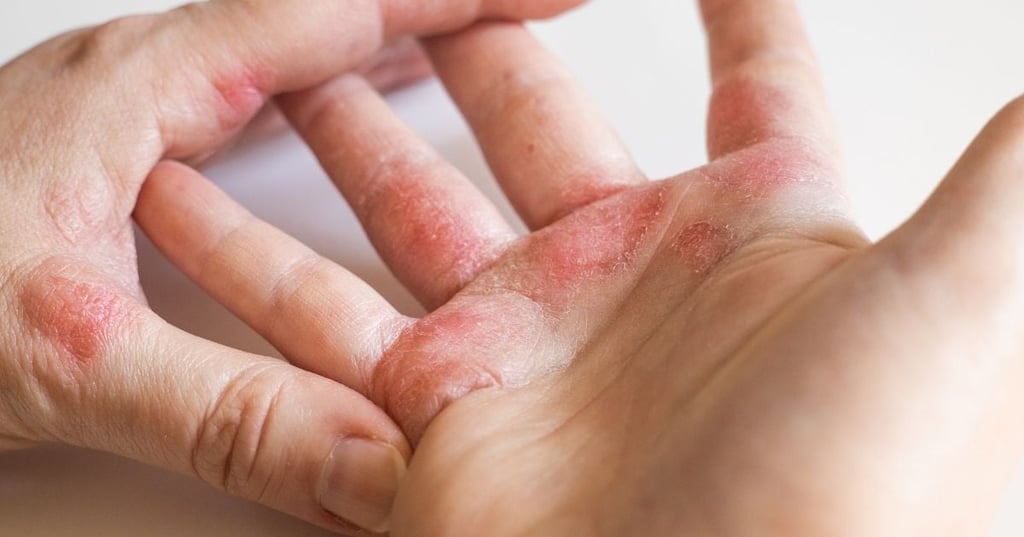
Eczema, also called atopic dermatitis, is a chronic inflammatory skin condition in which the skin barrier is structurally or functionally compromised, allowing irritants, allergens, and microbes to penetrate and trigger repeated immune responses. The result is itching, redness, and skin damage that tends to flare and return.
It is not simply a skin problem. Research points to connections between eczema and gut health, immune regulation, nutritional status, and the nervous system. How it presents, what triggers it, and how severe it becomes varies considerably from person to person.
People with eczema are also more susceptible to skin infections, including colonisation by Staphylococcus aureus, because the compromised barrier offers less protection against microbial entry. Some people experience localised patches that flare with specific triggers. Others have widespread, persistent involvement that affects sleep, work, and daily life.
Symptoms of eczema
The most common symptoms of eczema are intense itching and inflamed skin, often worse at night, during stress, or after contact with a trigger such as heat, sweat, soap, or certain foods.
The rash can vary in appearance depending on skin tone, location, and stage of a flare.
Commonly reported features include:
- dry, rough, or scaly patches
- redness or darkening depending on skin tone
- small raised bumps that may weep or crust
- cracked or broken skin, particularly in skin folds
- thickened or leathery skin in areas of repeated scratching
- swelling or tenderness during active flares
- skin prone to bacterial or fungal infection
Common locations include the inside of the elbows and knees, the wrists, neck, face, and hands, though eczema can appear anywhere on the body. In infants, the face and scalp are often affected first.
Itch is often the most disruptive symptom. It can disturb sleep, affect concentration, and create a scratch-damage cycle that keeps the skin broken and reactive.
The impact of eczema extends beyond the skin. A 2024 review in the Journal of Clinical Medicine found that adults with atopic dermatitis are more than twice as likely to experience anxiety or depression compared to those without it, with risk rising in line with disease severity. This side of eczema often goes unrecognised, both because people underreport it and because practitioners don’t always screen for it, meaning it can go unaddressed for years alongside the physical symptoms.
What causes eczema?
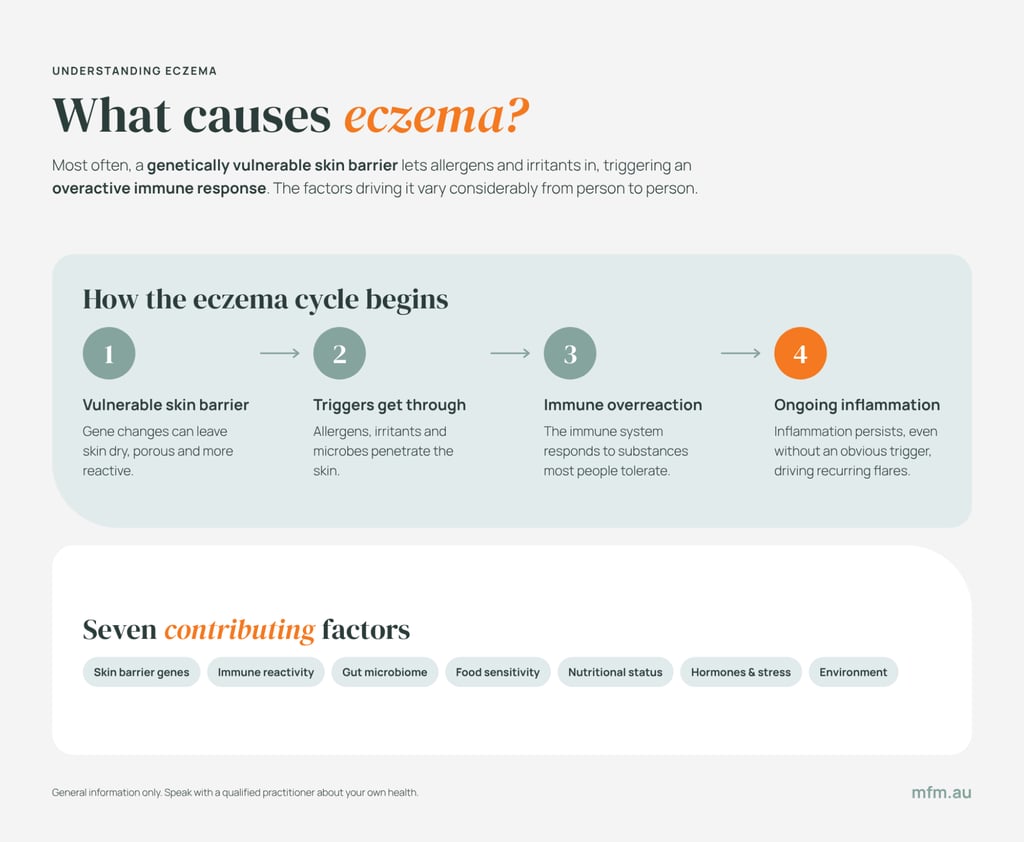
Eczema most commonly develops when a genetically vulnerable skin barrier allows allergens and irritants to penetrate and trigger an overactive immune response, though contributing factors vary considerably between people.
Skin barrier gene mutations
Mutations in the filaggrin gene are found in roughly 20% of people with atopic dermatitis.
Filaggrin is a protein that helps form the outer layer of the skin and produces natural moisture-retaining compounds. When it is not produced adequately, the skin becomes dry, porous, and more reactive to environmental exposures.
Filaggrin mutations are also associated with asthma, hayfever, and other atopic conditions, which is why these often cluster in the same person or family. If one parent carries this mutation, there is approximately a 50% chance their child will develop atopic symptoms. That rises to around 80% if both parents are affected.
Immune reactivity
In atopic dermatitis, the immune system tends to mount a disproportionate response to substances that would not trouble most people. This leads to ongoing skin inflammation even when no obvious trigger is present.
In some cases, the immune system is responding to food proteins. In others, environmental allergens, skin bacteria such as Staphylococcus aureus, or microbial imbalance on the skin surface play a significant role.
Staphylococcus aureus is not only a consequence of a compromised skin barrier. Its exotoxins can act as superantigens, activating a large proportion of immune cells simultaneously and pushing the immune response toward the Th2 pattern (the allergic-type inflammatory pathway which is characteristic of atopic dermatitis). This means Staph colonisation can make the inflammation worse and keep the cycle going.
Gut health and the microbiome
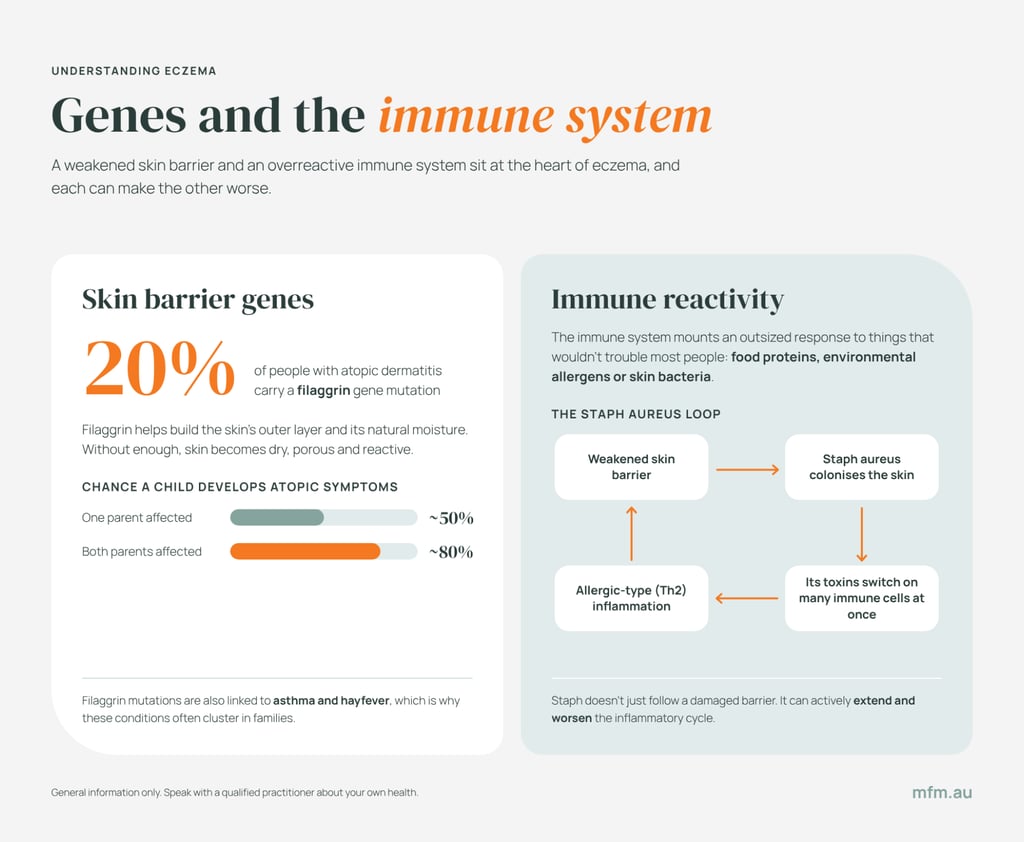
The gut microbiome appears to influence how the immune system learns to tolerate or react to external substances. Research has found that children with eczema are more likely to have altered gut microbiome composition and increased intestinal permeability compared to children without it.
When the gut lining is more permeable than it should be, partially digested food proteins and bacterial compounds can enter the bloodstream and prompt immune reactions that show up on the skin.
Certain gut bacteria produce butyrate, a compound made when they break down dietary fibre, that helps regulate how the immune system behaves at the skin. In people with eczema, the bacteria that produce it tend to be reduced, which means less of this regulatory signal reaches the immune system.
A 2024 clinical trial found that restoring gut microbiome composition through faecal microbiota transplantation improved eczema severity in adults with moderate to severe disease.
Food sensitivity and allergy
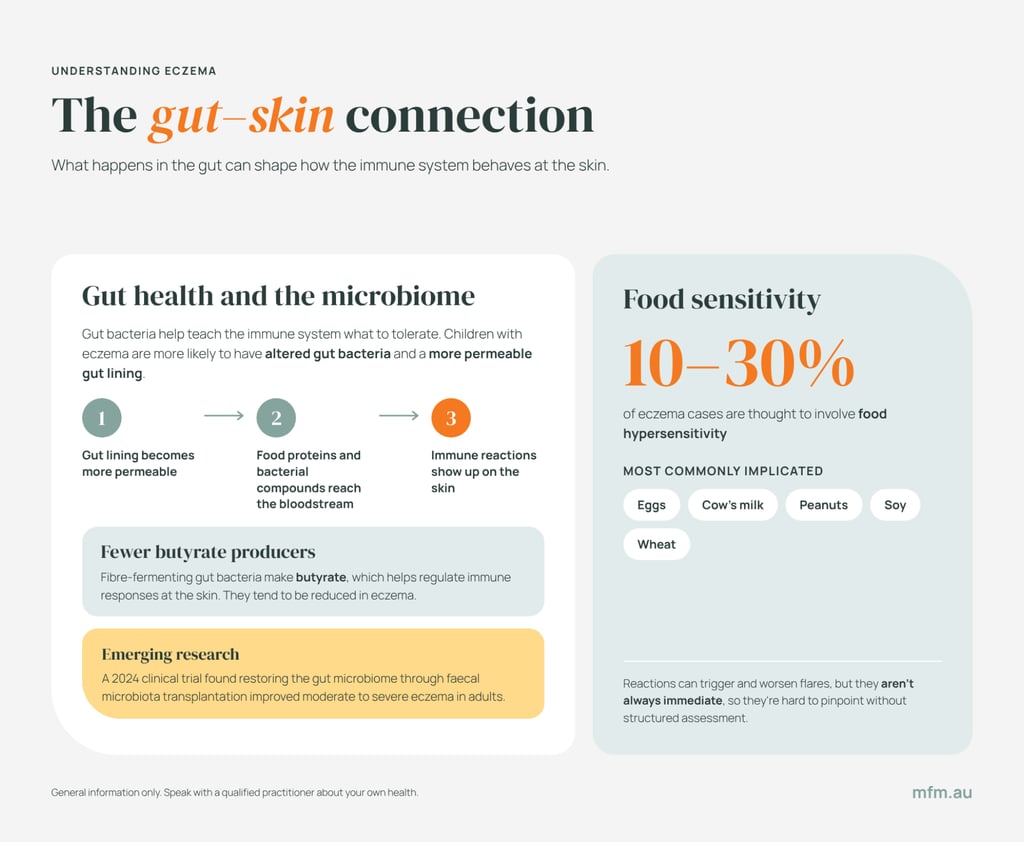
Food hypersensitivity is thought to contribute to eczema in around 10 to 30% of cases. The most commonly implicated foods are eggs, cow’s milk, peanuts, soy, and wheat.
Food reactions can both trigger and worsen flares, though the relationship is not always immediate and can be difficult to identify without structured assessment.
Nutritional status
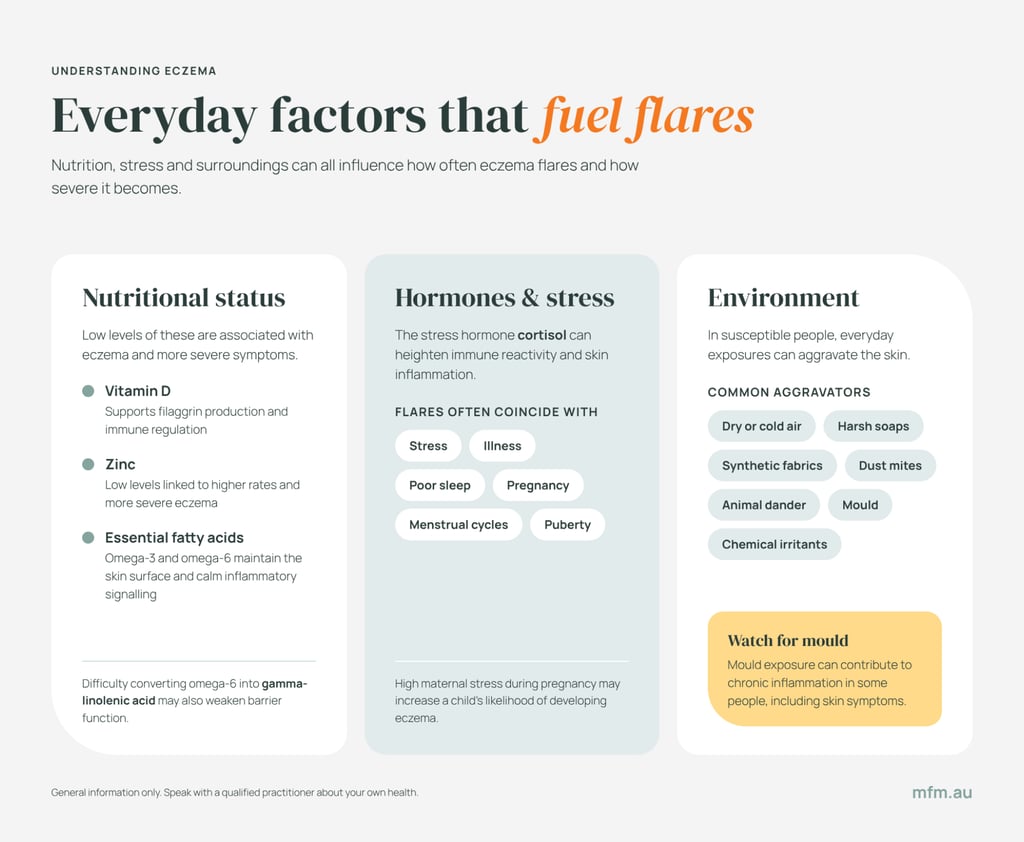
Low levels of vitamin D, zinc, and essential fatty acids have been associated with higher rates of atopic dermatitis and more severe presentation.
Vitamin D supports filaggrin production and immune regulation, while omega-3 and omega-6 fatty acids help maintain the skin surface and moderate inflammatory signalling.
Research has also found that impaired metabolism of omega-6 fatty acids to gamma-linolenic acid may reduce the skin’s capacity to maintain its barrier function.
Hormones and stress
Cortisol, released during stress, can heighten immune reactivity and increase skin inflammation, and many people notice flares coinciding with periods of psychological stress, illness, or poor sleep.
Hormonal changes during pregnancy, menstrual cycles, or puberty can also affect how frequently eczema flares and how severe it becomes. Studies have found that high maternal stress during pregnancy may increase the likelihood of atopic dermatitis in the child.
Environmental exposure
Dry or cold air, harsh soaps, synthetic fabrics, dust mites, animal dander, mould, and chemical irritants can all aggravate eczema in susceptible people. Mould exposure in particular can contribute to chronic inflammatory presentations in some people, including skin symptoms.
How is eczema diagnosed and assessed?
Eczema is diagnosed through physical examination, not laboratory testing. A practitioner assesses the rash’s appearance, distribution, and flare pattern, along with family history of atopic conditions and related symptoms such as asthma or hay fever.
Where food allergy is suspected, conventional testing may include skin prick testing, specific IgE blood testing, or patch testing to identify contact allergens. These tests do not detect the delayed food sensitivities that often contribute to eczema.
A functional medicine assessment goes further, starting with a detailed history covering:
- triggers, timing, and location of flares
- skin care products used
- diet and previous treatments
- digestive symptoms, recurrent infections, energy, and mood
Functional testing may include:
- gut microbiome composition and intestinal permeability
- dietary antigen testing
- nutritional status, including vitamin D, zinc, and fatty acid levels
- hormonal or immune markers where relevant
These tests do not diagnose eczema, but they can identify contributing issues that conventional assessment misses.
Why eczema can continue after treatment
Eczema often continues because conventional treatment reduces inflammation and itch in the short term without addressing the skin barrier weakness, immune reactivity, or gut and nutritional issues that keep triggering flares.
Topical corticosteroids work by suppressing the local immune response in the skin. They are effective at calming active flares, but when they stop, the conditions that produced those flares remain unchanged. The skin barrier is still vulnerable. The gut may still be permeable. Food sensitivities and microbiome imbalances may still be present.
Long-term or frequent use of topical steroids can also thin the skin, further compromising the barrier and increasing susceptibility to infection and flare. Some people develop topical steroid withdrawal when they reduce or stop use, which can initially make the skin appear worse before it improves.
Topical calcineurin inhibitors are sometimes used as an alternative to steroids, particularly for short-term or intermittent treatment. They work by inhibiting immune responses in the skin. However, they carry their own risks and currently include a Boxed Warning for a potential, though debated, association with lymphoma.
The Royal Children’s Hospital provides a bleach bath protocol for children with eczema, combining bath oil, pool salt, and diluted bleach in tepid water. It is designed to reduce Staphylococcus aureus on the skin and lower the rate of infection, not to address the eczema itself.
Antihistamines reduce itch by blocking histamine, but histamine is only one part of the inflammatory response in eczema. Moisturisers support the skin surface but do not rebuild a deficient skin barrier at a cellular level.
Newer biologics target specific immune signals involved in eczema and can produce more lasting improvement in moderate to severe cases. They are appropriate for some people, but they do not address what is making the immune system reactive in the first place.
“Eczema isn’t just a skin problem. It’s usually your body telling you something else needs attention. Creams can calm a flare, but they don’t explain why it keeps coming back. Once people understand what’s contributing to their skin reacting, that’s when things start to change.”
– Rebecca Hughes
Treating eczema: a functional medicine approach
A functional medicine approach to eczema looks at three connected areas: your gut, your immune system, and your skin barrier. In eczema, an overactive immune response and a compromised skin barrier often occur together, and gut health can contribute to both.
A more permeable gut lining can add to the immune reactivity that shows up as skin inflammation and food sensitivities Elevated cortisol from chronic stress, nutritional gaps, and environmental exposures can also be involved, and the combination differs from person to person.
Because eczema can stem from different combinations of these factors, treatment starts with identifying which are most relevant for you, rather than following a set protocol.
Strategies may include:
- Gut lining support: If your gut lining has become more permeable, nutritional support can help it repair and reduce the immune-stimulating load reaching your bloodstream
- Microbiome support: Prebiotics, probiotics, and dietary changes can support a gut microbiome linked to a calmer immune response, especially if you have digestive symptoms alongside your eczema
- Food sensitivity investigation: Identifying your specific food triggers through elimination or functional testing can show whether certain foods are contributing to your eczema, and how
- Nutritional support: Correcting deficiencies in nutrients such as vitamin D, zinc, and omega-3 and omega-6 fatty acids can support your skin barrier and immune regulation
- Liver support: Supporting your liver’s ability to clear inflammatory compounds and metabolise hormones and toxins can ease the pressure on your immune system and skin
- Immune modulation: Herbal medicines such as echinacea, astragalus, albizia, baikal skullcap, and therapeutic mushrooms can help balance the immune response, always under practitioner supervision
- Nervous system and stress support: Since stress is linked to skin inflammation, your care may include better sleep, lifestyle changes, or targeted nutritional and herbal support
- Skin barrier support: Topical anti-inflammatory herbs such as calendula, chickweed, and chamomile, alongside dietary support for your skin’s lipid layer, can help strengthen it, and oftentimes there may be a need for non-herbal topical applications
- Environmental assessment: Identifying and reducing your exposure to triggers such as mould, chemical irritants, and allergens can help reduce flare-ups
Listen to Rebecca talk about the functional medicine approach to skin health and natural eczema treatments in Australia below.
Ready to understand what's causing your eczema?
If you’re looking for a clearer picture of what is contributing to your symptoms, learn more about our approach to eczema testing and treatment.
When to seek support
See your GP or a practitioner if you have:
- Eczema that flares frequently, or returns quickly when treatment stops
- Symptoms affecting your sleep, work, or daily function
- Flares that have been present for years without real change
- Flares that coincide with digestive symptoms, particular foods, stress, or environmental exposures, where these connections have never been properly investigated
- An infected area of skin, with increasing redness, warmth, swelling, or discharge, which requires prompt medical review
Frequently asked questions
Is eczema contagious?
Eczema is not contagious and cannot be passed from one person to another. It arises from a combination of genetic vulnerability, immune reactivity, and environmental triggers, none of which involve an infectious agent. The skin of someone with eczema is more susceptible to bacterial colonisation, particularly Staphylococcus aureus, but the eczema itself is not something others can catch.
Does eczema go away on its own?
Eczema does not typically clear without some form of management. For some children, symptoms reduce or disappear by adolescence, though research suggests many continue to experience flares into adulthood. In adults, eczema rarely resolves without identifying and addressing what is keeping it active, whether that is skin barrier vulnerability, immune reactivity, gut health, or specific triggers.
Does eczema run in families?
Yes, eczema runs in families. This is largely down to the filaggrin gene mutation, which also raises the likelihood of asthma and hay fever appearing in the same family line.
Does stress cause eczema?
Stress does not cause eczema, but it can worsen it considerably. Cortisol released during stress adds to the immune reactivity and inflammation already active in eczema, which is why flares often cluster around stressful periods or poor sleep.
What is topical steroid withdrawal?
Topical steroid withdrawal (TSW) can occur when someone stops using topical corticosteroids after prolonged or frequent use. The skin may become red, burning, and more inflamed than the original eczema, sometimes in areas where steroids were never applied. Symptoms can persist for months. TSW is distinct from a standard eczema flare and is more likely with high-potency steroids used over a long period.
Can diet really affect eczema?
Diet can affect eczema in several ways. In some people, specific foods trigger an immune reaction that shows up on the skin, particularly eggs, dairy, wheat, soy, and peanuts. In others, diet influences eczema more indirectly by affecting gut health, intestinal permeability, and microbiome composition, all of which affect how the immune system responds.
What is the connection between eczema and leaky gut?
Eczema is linked to leaky gut, a term for increased intestinal permeability that lets partially digested food proteins and bacterial compounds cross into the bloodstream and trigger an immune response. Research has found higher rates of increased intestinal permeability in people with atopic dermatitis compared to those without it, particularly in children. Supporting gut lining integrity is one strategy a practitioner may explore as part of a broader eczema assessment.
Can adults develop eczema for the first time?
Yes, eczema can appear for the first time in adulthood, even without any childhood history of the condition. It can be triggered by a change in environment, a significant period of stress, alterations to gut health, occupational exposure to irritants, or hormonal change. The underlying susceptibility may have been present for years without being expressed.
What is the atopic march?
The atopic march describes the pattern in which eczema in infancy is often followed by food allergy, asthma, and hayfever as a child grows. It stems from shared skin barrier and immune vulnerabilities. Not every child follows this path, and early support for the skin barrier, gut microbiome, and food triggers may influence the trajectory.
Ready to understand what's causing your eczema?
If you’re looking for a clearer picture of what is contributing to your symptoms, learn more about our approach to eczema testing and treatment.