


What do acne, fatigue, depression, cardiovascular disease and IBS have in common?
At first glance, not much. But underneath, there’s often a shared process driving them – inflammation.
Conventional medicine doesn’t always recognise this, often aiming to suppress symptoms rather than address underlying causes.
To put that in perspective, think of chronic inflammation as a slow-burning fire. You could use a lot of water and energy running around putting out spot fires – or you could remove the fuel and target the blaze.
Most people think of inflammation as something that happens when you sprain an ankle or get an infection – red, hot, swollen, painful. But when that immune response doesn’t switch off properly, it can smoulder below the surface for months or years, quietly disrupting how your body functions.
In functional medicine, we recognise this kind of low-grade, ongoing inflammation – often called chronic inflammation – as one of the most common root causes of long-term health issues.
What is inflammation?
Inflammation is the body’s built-in healing response – an immune process that protects you from infection and helps repair damage when something goes wrong.
It isn’t inherently bad; in fact, it’s how the body heals. But problems arise when that response doesn’t switch off properly, turning a short-term defence into a long-term stress on the system.
When you cut your finger or catch a virus, your immune system quickly steps in. Chemical messengers signal white blood cells to the area, blood flow increases, and debris is cleared so new tissue can begin to form. Once the threat has passed, anti-inflammatory compounds move in to calm the response and restore balance.
That’s acute inflammation – short-term and self-resolving.
But sometimes, that “off switch” doesn’t work as it should. The immune system stays slightly activated, releasing a steady trickle of inflammatory molecules even when there’s no infection or injury to fight. Over time, this ongoing immune activity can start to damage healthy tissue – the lining of your arteries, the cells of your gut, your brain, or your joints.
Researchers now recognise this persistent, low-grade inflammation as a driver behind many chronic diseases – from heart disease and diabetes to depression, autoimmune disorders and even some cancers.
Chronic inflammatory diseases have become the most significant cause of death worldwide. The World Health Organisation (WHO) now ranks them as the greatest threat to human health.
In Australia, it’s estimated that one in three people live with at least one chronic inflammatory condition – and many have several that overlap. Globally, three out of five deaths are linked to chronic inflammatory diseases such as stroke, respiratory disorders, heart disease, cancer, obesity and diabetes.
Why does inflammation become chronic?
Inflammation becomes chronic when the body struggles to turn off its own repair response, leaving the immune system in a constant low-grade state of activation.
In an ideal world, inflammation flares briefly and then settles as the body repairs. But when that “resolution” phase doesn’t happen as it should, inflammation can linger – not because there’s too much of it, but because the body can’t properly switch it off.
That can happen for many reasons:
- Ongoing exposure to triggers – allergens, mould, or irritants in food or the environment
- Gut imbalances – when the intestinal barrier becomes permeable (“leaky gut”), bacteria and toxins enter the bloodstream, triggering immune responses
- Unresolved infections – chronic viral, dental, or sinus infections can keep the immune system on alert
- Toxin load – heavy metals, chemicals, alcohol, or cigarette smoke can damage tissues and mitochondria, producing inflammatory by-products
- Lifestyle stressors – poor sleep, chronic stress, and ultra-processed foods disrupt the body’s ability to regulate inflammation
- Autoimmunity – when the immune system mistakes healthy tissue for a threat and begins attacking itself
Each of these adds fuel to the fire, keeping your immune system switched on when it should be resting.
Signs you might have inflammation
The classic signs – redness, swelling, pain, heat, loss of function – are easy to spot on the surface. But the kind of inflammation that lingers in the background often works silently.
You might notice it showing up as:
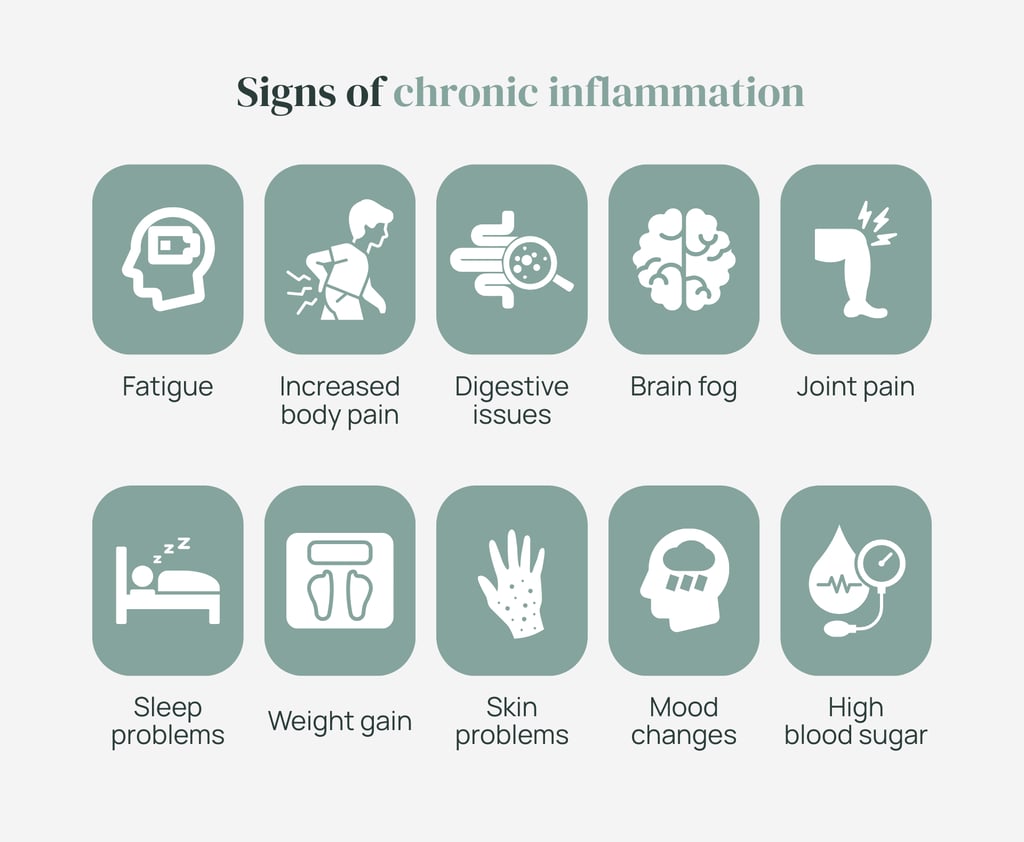
Blood tests can sometimes offer clues. Elevated levels of markers such as high-sensitivity C-reactive protein (hsCRP), homocysteine, or ferritin can suggest that inflammation is active. However, normal results don’t necessarily rule it out. Inflammation can still be present at a cellular or tissue level, or driven by immune pathways that aren’t captured in standard blood panels.
How does inflammation affect long-term health?
Chronic inflammation affects long-term health by quietly damaging cells, tissues, and organs, setting the stage for many of today’s most common chronic diseases.
Think of chronic inflammation as a slow-burning ember quietly smouldering inside the body.
Left unchecked, it can contribute to:
- Cardiovascular disease and stroke
- Type 2 diabetes and metabolic syndrome
- Autoimmune conditions
- Digestive disorders such as IBS, IBD, and coeliac disease
- Mood and cognitive issues like depression, anxiety, and “brain fog”
- Hormonal imbalances and reproductive issues
- Joint pain, fibromyalgia, and chronic fatigue
Over time, that constant low-grade activation wears the body down. The symptoms may look different from person to person, but the same underlying pattern often emerges – a gradual rise in background inflammation known as inflammaging.
What is ‘inflammaging’?
Inflammaging is the term scientists use to describe the gradual rise in background inflammation that develops with age and contributes to many chronic conditions.
As this process unfolds, the immune system drifts out of balance. Low-grade inflammation builds silently over time, even without infection or obvious illness, wearing on cells, disrupting energy production, and interfering with how the body repairs and regulates itself.
Lifestyle factors like poor diet, stress, disrupted sleep, and gut dysfunction can all accelerate this process. The good news is that by identifying and addressing these triggers early, inflammation can be eased – helping the body find steadier balance again.
Ways to calm inflammation naturally
Once we understand what’s fuelling inflammation, the next step is to help the body settle and heal. In clinic, these are some of the most effective ways we do that:
1. Restore balance through food
- Include anti-inflammatory foods: oily fish (salmon, sardines), avocado, nuts, seeds, olive oil, colourful vegetables, turmeric, garlic, rosemary, green tea
- Reduce or remove pro-inflammatory foods: refined carbohydrates, added sugars, trans fats, and ultra-processed foods (foods that come out of a packet)
- These foods influence inflammation by shaping how stable your blood sugar is, how much oxidative stress your body is under (when harmful molecules outnumber your antioxidant defences), and how well your gut microbiome functions. Together, these factors determine whether the immune system stays balanced or is pushed into a more inflammatory state.
- There are also other potentially inflammatory foods depending on your personal intolerances and allergies, which can commonly include gluten, grains, corn, soy and nuts.
2. Support gut health
- The gut and digestive system is nearly always involved in inflammatory responses in the body, and treating the gut can bring about dramatic resolutions of symptoms
- Restoring gut health can involve rebalancing gut bacteria with diet, probiotics, and prebiotics
- Repair the intestinal barrier using nutrients such as L-glutamine and zinc
- Identify and remove food intolerances that keep inflammation active
3. Prioritise sleep and stress recovery
- Even a few nights of poor sleep can increase inflammatory cytokines, and chronic stress does the same by keeping cortisol elevated. While the occasional late night probably won’t cause any long-term damage, chronic sleep disturbance can contribute to tissue-damaging inflammation leading to heart disease, autoimmune disorders, obesity and diabetes.
- Create boundaries around rest and protect your downtime
- Practise mindfulness, breathwork, or meditation to calm the nervous system
- Keep a regular sleep schedule and a wind-down routine to restore circadian rhythm
4. Move your body regularly
- Exercise acts as an anti-inflammatory signal, but it’s about consistency, not intensity
- Aim for 20–30 minutes a day of moderate movement such as walking, yoga, cycling, or swimming. Just twenty minutes a day of moderate exercise has been shown to reduce inflammatory markers
- Focus on movement you enjoy to support regularity
- Avoid overtraining, which can have the opposite effect and increase inflammation
5. Reduce environmental and chemical load
- Your liver and detox pathways play a major role in managing inflammation
- Limit or avoid alcohol: Alcohol increases inflammation by impairing gut barrier function and overloading the liver, which disrupts detoxification and immune regulation and allows inflammatory by-products to circulate more freely
- Avoid cigarettes and smoking exposure: Smoking increases inflammation when nicotine activates white blood cells called neutrophils, which release inflammatory molecules and drive ongoing tissue irritation throughout the body
- Be cautious with recreational drugs and long-term pain relievers: Many substances – including opioids and NSAIDs – can irritate the gut lining and contribute to widespread, low-grade inflammation when used regularly
- Reduce exposure to pollutants, mould, and household chemicals: Environmental toxins place additional strain on detox pathways and mitochondria, increasing oxidative stress and inflammatory signalling
- Choose low-tox personal care and cleaning products where possible: Reducing daily chemical exposure helps lighten the overall inflammatory load the body has to manage
6. Address underlying conditions
- Autoimmunity, persistent infections, hormonal changes, or metabolic dysfunction can all perpetuate inflammation
- Identify and treat the root causes rather than just managing symptoms
- Use targeted functional testing to understand what’s driving inflammation
- Combine clinical treatment and health coaching to restore balance long-term
These foundations can make a big difference on their own. But for many people, inflammation has been building quietly for years. When that’s the case, self-guided changes may not be enough to fully turn things around.
Working with a practitioner can help uncover the underlying triggers – whether they’re in the gut, hormones, immune system, or environment – and create a plan that’s tailored to your body’s needs.
A functional medicine approach to inflammation
In functional medicine, the first question isn’t how to suppress inflammation – it’s why your body is inflamed in the first place.
Through detailed testing and discussion, we look for patterns in your gut, hormones, blood sugar, stress responses, sleep, and nutrition that reveal what’s keeping your immune system switched on.
From there, your practitioner will work with you to:
- Remove inflammatory triggers
- Rebuild and nourish the body
- Restore resilience so inflammation can naturally settle
When that happens, things start to shift. Energy returns, pain eases, digestion steadies, and the mind feels clearer. The body can finally come back to equilibrium – its natural state.
When to seek support
If you’ve been living with symptoms that never fully resolve – or new ones that keep appearing without clear explanation – inflammation may be part of the story.
At Melbourne Functional Medicine, we work with people to uncover what’s driving inflammation and guide them through a personalised plan to restore balance – using advanced testing, practitioner support, and health coaching to create lasting change.
Real healing begins when you understand what’s driving inflammation and give the body what it needs to recover.