

What is hypertension?
Hypertension, also known as high blood pressure, occurs when the force of blood pushing against the artery walls stays high enough, for long enough, to strain the heart and damage blood vessels.
In Australia, it is defined as a resting reading of 140/90 mmHg or higher, though some guidelines now flag readings above 130/80 as clinically significant depending on overall cardiovascular risk.
It is one of the most common chronic conditions in Australia, affecting more than a third of adults, and one of the most frequently undetected.
Types of hypertension
Primary hypertension, also called essential hypertension, has no single identifiable cause and accounts for around 90 to 95% of cases. It develops gradually. Metabolic changes, chronic stress, poor sleep, and gut health each push blood pressure a little higher, and over years these small increases add up to a persistently elevated reading.
Secondary hypertension has a specific and identifiable cause and accounts for the remaining 5 to 10% of cases. The most common causes include kidney disease, adrenal disorders, thyroid dysfunction, obstructive sleep apnoea, and certain medications.
Isolated systolic hypertension occurs when the top reading is elevated, but the bottom reading remains normal or low. It is the most common pattern in people over 65. It results from the arterial stiffening that develops with age rather than a separate disease. It carries the same cardiovascular risks as other forms of hypertension and is assessed and managed in the same way.
Symptoms of hypertension
Hypertension usually causes no symptoms. Blood pressure can stay high for months or years without any change in how a person feels, so most people only find out when it is measured at a routine appointment.
When symptoms do appear, it is usually because blood pressure has become very high. These can include:
- headaches, often at the back of the head and worse on waking
- blurred or changed vision
- nosebleeds that are frequent or hard to stop
- shortness of breath
- a pounding heartbeat or palpitations
Long-standing high blood pressure can also reduce blood flow to the pelvis. In men, this often shows up as erectile dysfunction, and in women as reduced arousal.
A reading at or above 180/120 mmHg may indicate a hypertensive crisis. Alongside the symptoms above, warning signs include chest pain, confusion, sudden dizziness, or weakness on one side of the body. These need immediate medical attention.
Because hypertension so rarely causes symptoms, regular blood pressure checks matter most for people with known risk factors, which are covered in the Causes section below. Aboriginal and Torres Strait Islander people and people of African heritage also have higher rates of hypertension and cardiovascular disease, so regular checks are especially important.
What causes hypertension
Hypertension most commonly develops when the body’s blood pressure regulation systems are producing a higher set point than is healthy, often without a single identifiable cause.
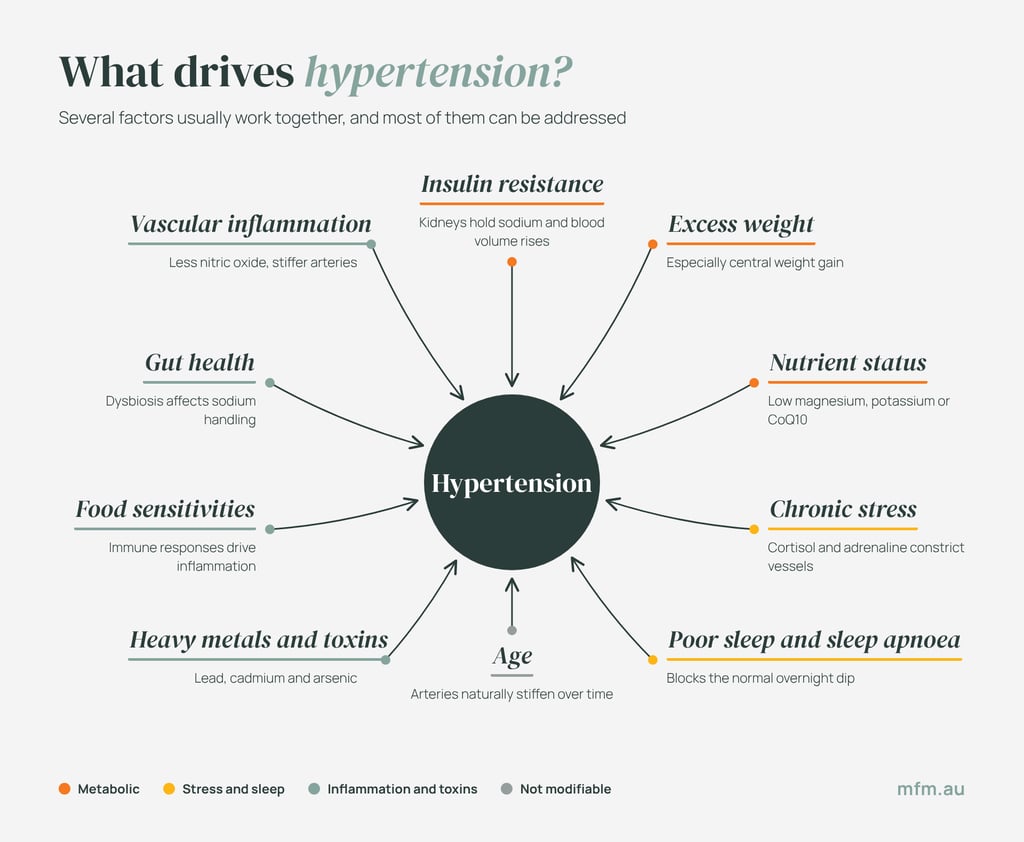
Blood pressure is controlled through three overlapping systems that work together rather than independently:
The heart’s pumping force. Each time the heart contracts, it pushes blood into the arteries. A stronger contraction moves more blood with each beat and briefly raises blood pressure. The body uses this to respond quickly to sudden changes, such as standing up from lying down.
The width of the blood vessels. Blood vessels can widen (vasodilation) or narrow (vasoconstriction). Wider vessels let blood flow with less resistance, so pressure falls. Narrower vessels increase resistance, so pressure rises. The body uses this for quick adjustments and to match blood flow to rest or physical activity.
The volume of fluid in circulation. Across hours and days, the kidneys adjust how much water and sodium they hold on to. Holding on to more fluid increases blood volume and raises pressure, while releasing more through urine lowers it. This is how the body sets blood pressure over the longer term.
In primary hypertension, the nervous and hormonal systems that regulate blood pressure gradually lose their normal control, and low-grade inflammation affecting the heart and blood vessels is present in most cases.
The most common contributing factors include:
- Age: arteries naturally become stiffer with age, even in otherwise healthy people, which increases the resistance the heart pumps against and raises blood pressure independently of other factors
- Family history: having a parent or sibling with hypertension increases risk, reflecting both inherited factors and shared eating and lifestyle habits. Rates are also higher among Aboriginal and Torres Strait Islander people and people of African heritage
- Excess weight: weight gain, particularly around the middle, is associated with hormonal and metabolic changes that push blood pressure upward; it is estimated to account for the majority of primary hypertension cases
- High sodium intake: excess salt causes the kidneys to hold on to more water, which increases blood volume and the pressure inside the arteries. Some people are more salt-sensitive than others, which is one reason the same diet affects people differently
- Physical inactivity: regular movement keeps blood vessels flexible and improves insulin sensitivity, so a sedentary lifestyle tends to mean stiffer arteries and a higher resting heart rate
- Alcohol: regular heavy drinking activates the sympathetic nervous system and affects how the body regulates fluid, both of which raise blood pressure
- Smoking: nicotine raises heart rate and blood pressure within minutes, and long-term smoking damages the lining of the blood vessels and speeds up arterial stiffening
- Insulin resistance: when insulin is less effective at moving glucose into cells, the kidneys retain more sodium and blood volume rises, while the sympathetic nervous system becomes more active, both of which push blood pressure upward
Other contributing factors are often overlooked in standard care:
- Chronic stress: prolonged elevation of cortisol and adrenaline increases heart rate and constricts blood vessels; in people under persistent psychological or occupational stress, this becomes a lasting contributor rather than a temporary spike
- Poor sleep and sleep apnoea: blood pressure typically drops during sleep; in people with obstructive sleep apnoea, repeated overnight oxygen drops activate the stress response repeatedly, preventing the normal nocturnal dip
- Vascular inflammation: when the cells lining the blood vessels are inflamed or damaged, they produce less nitric oxide, which reduces the vessel’s ability to dilate. This is followed by arterial stiffness, and blood pressure rises as the heart works against greater resistance
- Nutrient status: magnesium, potassium, and coenzyme Q10 are required for healthy vascular tone and cardiac function; deficiencies are common in people with hypertension and are frequently diet- or medication-related, including from diuretics
- Gut health: changes in gut bacteria can affect short-chain fatty acid production, influence sodium handling in the kidneys, and promote systemic inflammation, all of which may contribute to elevated readings
- Heavy metals and environmental toxins: exposure to lead, cadmium, and arsenic has been associated with elevated blood pressure through effects on vascular tone, kidney function, and oxidative stress; toxin burden is an often overlooked contributor in people who do not respond as expected to standard treatment
- Food sensitivities: in some people, chronic immune responses to specific foods contribute to systemic inflammation that affects vascular function
Complications of hypertension
The main complications of hypertension are heart attack, heart failure, stroke, kidney disease and vision loss, caused by gradual damage to the heart and blood vessels. The most serious risks include:
- Heart attack, heart failure and structural changes to the heart, including thickening of the heart muscle and valve damage
- Stroke
- Aneurysm, where a blood vessel wall weakens and bulges under prolonged pressure
- Chronic kidney disease, caused by damage to the fine blood vessels supplying the kidneys
- Vision loss, from damage to the small blood vessels in the eyes
- Cognitive decline and dementia, where damage to the brain’s small blood vessels reduces blood flow
- Progression to broader cardiometabolic disease, where the systemic inflammation underlying hypertension increases the risk of insulin resistance, type 2 diabetes, and metabolic syndrome, which can in turn raise blood pressure further
Early intervention to prevent hypertension or reduce elevated blood pressure is critical for reducing the risk of developing chronic complications.
How is hypertension diagnosed and assessed?
Hypertension is diagnosed when blood pressure readings are consistently high across repeated measurements, usually confirmed with 24-hour ambulatory monitoring or home readings.
Ambulatory monitoring records blood pressure automatically throughout the day and night. It shows whether readings are only high in the clinic, known as white coat hypertension, or high outside the clinic but normal during appointments, known as masked hypertension.
It also shows whether blood pressure drops as it should during sleep. A home monitor is useful for tracking readings between appointments.
Once elevated blood pressure is confirmed, standard assessment typically includes:
- Blood tests for kidney function, electrolytes, blood glucose, and lipid profile
- Thyroid function testing
- Urine analysis to assess kidney involvement
- An electrocardiogram (ECG) to assess cardiac effects
A functional medicine approach also takes a detailed history of sleep, stress, diet, medications, and family history. Functional testing may include:
- Gut health, including SIBO testing
- Insulin resistance and metabolic function
- Food sensitivities
- Heavy metal and environmental toxin burden
- Inflammatory and autoimmune markers
- Advanced cardiovascular risk markers, such as lipid particle analysis
Why blood pressure can stay high after treatment
Blood pressure often stays high, or rises again, because medication lowers the reading without addressing what is raising it. If insulin resistance, poor sleep, gut health, chronic stress, or other contributors remain in place, readings tend to climb again when medication is reduced or stopped.
Conventional treatment usually starts with advice on diet, weight, physical activity, alcohol, and smoking. If readings remain high, medications are added, either alone or in combination:
- ACE inhibitors and angiotensin receptor blockers, which relax and widen blood vessels
- Calcium channel blockers, which relax and widen arteries
- Beta-blockers, which slow the heart rate and reduce the force of the heart’s contractions, lowering cardiac output
- Diuretics, which lower blood volume by increasing fluid excretion through the kidneys
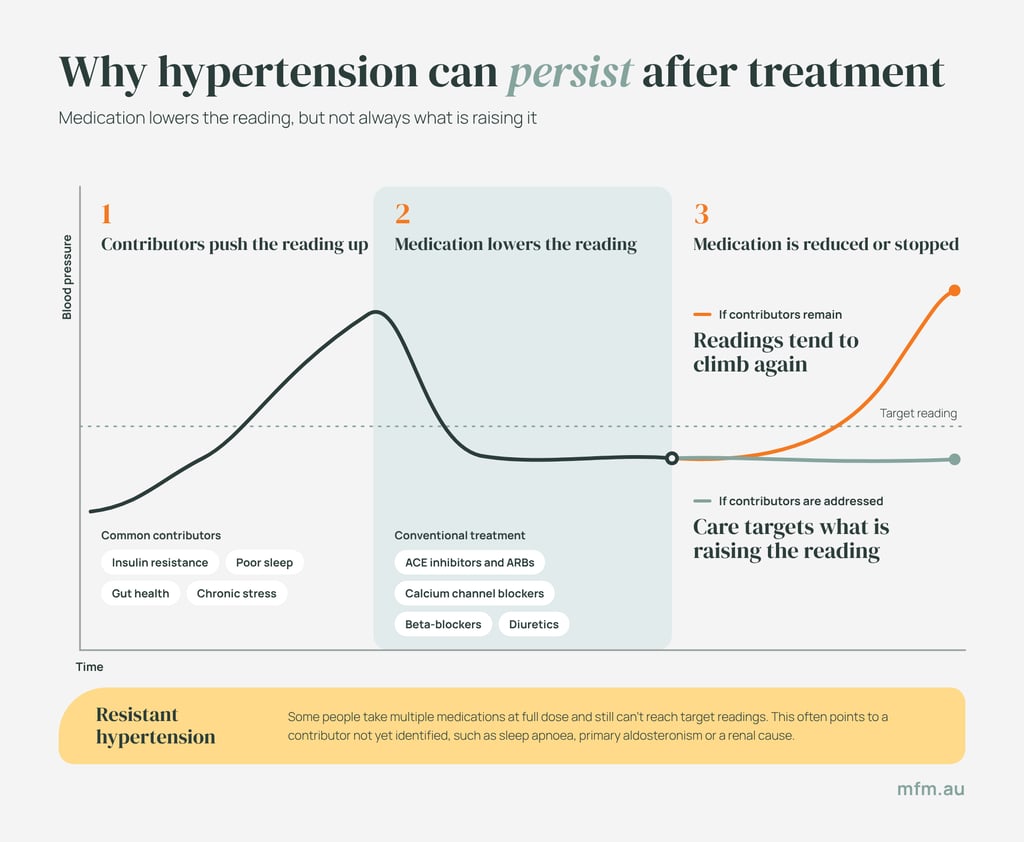
Some people take multiple medications at full dose and still cannot reach target readings. This is called resistant hypertension. It often points to a contributor that has not yet been identified, such as sleep apnoea, primary aldosteronism, or a kidney-related cause.
Treating hypertension: a functional medicine approach
A functional medicine approach to hypertension looks beyond the reading to understand what is causing it. For some people, that is insulin resistance or poor sleep. For others, it is chronic stress, gut health, or nutrient deficiencies. Treatment is built around what that investigation finds.
Depending on your presentation, care may include:
- Dietary and vascular strategy: A Mediterranean or DASH-style eating pattern lowers sodium load and supports vascular health, while foods that boost nitric oxide, such as green tea, citrus, onions, and dark chocolate, help blood vessels relax
- Stress response and vagal tone: Herbal adaptogens such as ashwagandha or rhodiola, alongside magnesium and B vitamins, help regulate cortisol patterns raising blood pressure, and vagal-toning practices like breathwork and cold exposure calm stress-related spikes
- Nutrient and herbal repletion: Magnesium relaxes the vascular smooth muscle controlling how wide blood vessels stay, CoQ10 supports cardiac energy production and vessel function, and omega-3 fatty acids promote healthy blood vessel widening
- Gut-metabolic connection: Where dysbiosis or insulin resistance is contributing to systemic inflammation, supporting the gut microbiome and regulating blood glucose can help address the metabolic contributors behind elevated blood pressure
- Toxin clearance: Where heavy metal or environmental toxin burden is identified as interfering with vascular function, a targeted detoxification protocol may be included
- Movement and lifestyle: Regular aerobic movement and reducing or quitting smoking are among the most consistently effective ways to lower blood pressure and protect cardiovascular health
We support people with hypertension to optimal health
We help people with hypertension to not only reclaim their health but to enjoy life with vitality. Start your care journey today.
When to seek support
Unfortunately, most people who develop hypertension will have no overt signs and symptoms of high blood pressure, and elevated blood pressure is only discovered by chance when blood pressure is checked. This is why it’s vitally important to have your blood pressure checked regularly, especially if you are/have:
See your GP or a practitioner if:
- Your blood pressure is consistently above 140/90 on home monitoring
- Readings above 130/80 are accompanied by other cardiovascular risk factors such as elevated blood glucose, abnormal cholesterol, or a strong family history
- You have been told your readings are borderline and have not followed up
- You are already on blood pressure medication but readings remain elevated
- You have never had your blood pressure checked and are over 40, overweight, or have a family history of cardiovascular disease or stroke
- You are Indigenous Australian or of African heritage, given the higher hereditary predisposition to hypertension in these groups
Seek urgent medical attention if you experience chest pain, shortness of breath, severe headache, or visual changes, particularly if your readings are at or above 180/120 mmHg. These may indicate a hypertensive crisis.
Frequently asked questions
Can you lower blood pressure without medication?
Yes, for some people. How much impact lifestyle change can achieve depends on what is raising blood pressure in the first place. Where insulin resistance, poor sleep, chronic stress, gut health, or nutrient deficiencies are contributing, addressing these directly can produce substantial reductions. For others, medication remains necessary, though the same changes can still reduce the dose needed.
Can high blood pressure cause anxiety, or does anxiety cause high blood pressure?
The relationship runs in both directions. Anxiety activates the sympathetic nervous system, releasing adrenaline and cortisol, which raise heart rate and constrict blood vessels. In people with frequent or chronic anxiety, this can keep readings high. At the same time, receiving a hypertension diagnosis or monitoring readings at home can generate its own anxiety, which further affects blood pressure.
Is high blood pressure more common in women after menopause?
Blood pressure often rises after menopause because oestrogen, which helps keep blood vessels flexible, declines. As arteries stiffen, the heart pumps against greater resistance and readings climb. Many women who had normal readings throughout their forties notice increasing readings in their early to mid fifties, even without other risk factors.
How does sleep apnoea affect blood pressure?
Obstructive sleep apnoea repeatedly triggers a stress response overnight, raising heart rate and blood pressure each time breathing stops and oxygen drops. This happens dozens of times a night, keeping the cardiovascular system in a persistently elevated state instead of dipping as it should during sleep. It’s most often missed as a contributor in people without obvious snoring.
Can the gut microbiome affect blood pressure?
Research suggests it can, largely through its effect on the gut lining. When the gut barrier becomes more permeable, bacterial byproducts enter circulation and promote the kind of systemic inflammation that can raise blood pressure. This is why gut health, including bacterial dysbiosis, is often included in a thorough hypertension assessment.
Can blood pressure medication deplete nutrients?
Some blood pressure medications affect nutrient levels. Diuretics, particularly thiazide types, increase urinary excretion of magnesium, potassium, and zinc, all of which are needed for healthy vascular tone, meaning depletion can work against the medication’s effect. ACE inhibitors can raise potassium, which needs monitoring. Checking nutritional status periodically on long-term medication is clinically reasonable.
What foods lower blood pressure?
Foods that support nitric oxide production and vascular tone show the strongest evidence: leafy greens, beetroot, citrus, dark chocolate, and oily fish. Cutting back on processed food also lowers sodium intake. Where insulin resistance is present, moderating refined carbohydrates can also contribute to lower readings independently of sodium intake.
What is white coat hypertension?
White coat hypertension is a term used to describe elevated blood pressure that appears during a clinical appointment but returns to normal elsewhere. It occurs because the clinical setting can trigger a temporary stress response in some people. Whether it carries long-term risk remains debated, though some evidence suggests the cardiovascular risk may be modestly higher than in people with consistently normal readings.
Ready to understand what's behind your hypertension?
If you’re looking for a clearer picture of what is contributing to your symptoms, learn more about our approach to hypertension testing and treatment.