

What is cardiovascular disease?
Cardiovascular disease is a collective term for conditions affecting the heart and blood vessels, most commonly arising when a build-up of fatty deposits, called plaque, narrows the arteries and restricts blood flow.
Cholesterol and blood pressure are usually just part of the picture. Systemic inflammation, blood sugar regulation, oxidative stress, gut health, and chronic psychological stress all contribute to how quickly arterial damage develops and how well the vessels can repair themselves.
Cardiovascular disease is also closely linked to conditions such as insulin resistance, type 2 diabetes, and fatty liver disease. They share the same physiological terrain, and each can worsen the other.
Types of cardiovascular disease
Atherosclerosis is the most common process underlying cardiovascular disease. Fatty plaques accumulate on arterial walls, the arteries stiffen, and blood flow progressively narrows. It can develop for decades without symptoms and is the primary process underlying coronary artery disease, heart attack, stroke, and peripheral artery disease.
Coronary artery disease occurs when the arteries supplying the heart muscle become narrowed or blocked, reducing blood flow to the heart. It is the most common form of cardiovascular disease and the leading cause of heart attack.
A heart attack (myocardial infarction) occurs when blood supply to part of the heart muscle is cut off, usually by a blocked artery. It is a medical emergency. Without prompt treatment, the affected muscle begins to die.
Heart failure occurs when the heart muscle can no longer pump blood effectively enough to meet the body’s needs. The most common form involves stiffening of the heart muscle, which prevents it from relaxing and filling properly between beats. In severe cases, heart failure can progress to cardiac arrest, where the heart stops pumping entirely, and the person loses responsiveness and stops breathing normally.
Hypertrophic cardiomyopathy is a related but separate condition. A genetic cause makes the heart walls thicken and stiffen, limiting how much blood the heart can take in and pump out. It can be present from birth and may go undetected for years.
Atrial fibrillation is an irregular and often rapid heart rhythm originating in the upper chambers of the heart. It increases the risk of stroke because blood can pool and clot in the atria.
Stroke occurs when blood supply to part of the brain is interrupted, either by a clot or a bleed. It is the leading cause of acquired disability in Australia.
If you notice any of these symptoms in yourself or someone else, call 000 immediately. A helpful way to identify a stroke quickly is F.A.S.T.:
F – Face drooping or numbness; ask the person to smile
A – Arm weakness or numbness; ask them to raise both arms
S – Speech difficulty, slurred or hard to understand; ask them to repeat a simple sentence
T – Time to call 000; even if symptoms seem to pass, get to a hospital immediately
Peripheral artery disease occurs when narrowed arteries reduce blood flow to the limbs, most commonly the legs. It shares the same underlying process as coronary artery disease but affects vessels outside the heart and brain.
Pericarditis and myocarditis are inflammatory conditions affecting the heart itself. Pericarditis involves the fluid-filled sac surrounding the heart; myocarditis involves the heart muscle wall. Both can be triggered by viral infection, including COVID-19, as well as vaccination, chemotherapy, radiation, environmental toxins, certain medications, and other causes.
Symptoms of cardiovascular disease
The most common symptoms of cardiovascular disease are chest pain or pressure, breathlessness, and fatigue, often appearing with exertion and improving with rest. These reflect the heart working harder to move blood through narrowed or stiffened vessels.
Symptoms vary depending on which part of the cardiovascular system is affected:
Heart-related symptoms
- Chest pain, tightness or pressure (angina)
- Palpitations or an irregular heartbeat
- Shortness of breath during activity or when lying flat
- Persistent fatigue or reduced exercise tolerance
- Swelling in the legs, ankles or feet
- Sharp, stabbing chest pain that worsens with deep breathing, coughing or swallowing. This pattern, especially when it also radiates to the back, neck or left shoulder, is more typical of pericarditis than coronary artery disease
Circulation and vessel-related symptoms
- Cold or numb feet and legs
- Cramping or pain in the legs during walking
- Slow-healing wounds on the lower limbs
- High blood pressure, often without noticeable symptoms
Neurological symptoms (related to stroke or TIA)
- Sudden facial drooping, arm weakness, or speech difficulty
- Brief vision loss in one eye
- Sudden severe headache with no clear cause
Symptoms can present differently between men and women. Men more commonly experience classic chest pain and pressure. Women and older adults are more likely to notice fatigue, nausea, or pain in the jaw, neck or back. These symptoms are less immediately recognisable as cardiac and are more frequently missed or attributed to other causes.
Many people with early cardiovascular disease have no symptoms at all. Atherosclerosis can progress for decades undetected, which is why risk and early preventative assessment is becoming more popular.
What causes cardiovascular disease?
Cardiovascular disease most commonly develops when chronic low-grade inflammation damages the inner lining of artery walls, creating conditions where fatty deposits, cholesterol, immune cells and fibrous tissue begin to accumulate as plaque.
Once the arterial lining is injured, plaque starts forming at the injury site. Over the following years, the plaque thickens, the artery wall stiffens, and blood flow narrows.
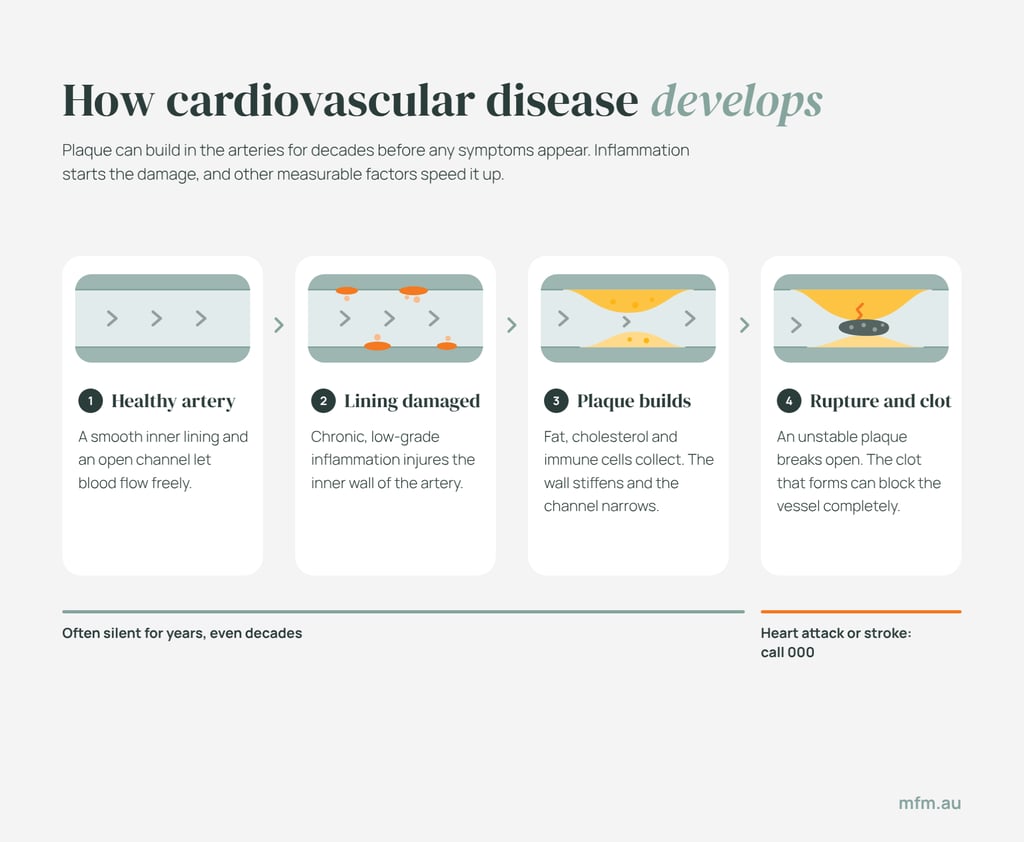
If an unstable plaque ruptures, the clot that forms can block the vessel entirely, causing a heart attack or stroke, depending on where the blockage occurs.
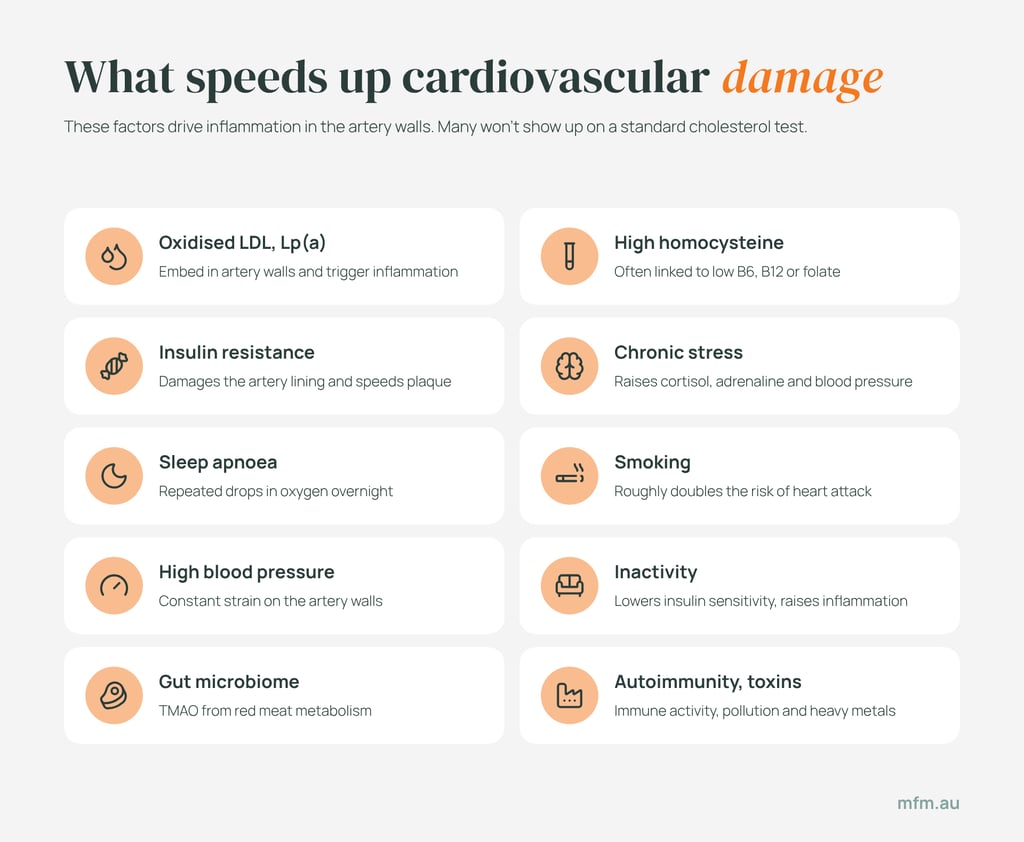
Several factors contribute to how quickly this process develops:
- Elevated LDL cholesterol, particularly oxidised LDL and lipoprotein(a), which embed in arterial walls and trigger immune responses
- Elevated homocysteine, often linked to low B6, B12 or folate, damages the artery lining and promotes clotting
Insulin resistance and blood sugar dysregulation, which damage the endothelium and accelerate plaque formation - Chronic stress, which raises cortisol and adrenaline, increases blood pressure and promotes vascular inflammation
- Obstructive sleep apnoea, which causes repeated nocturnal hypoxia, activates the sympathetic nervous system, and is independently associated with increased risk of coronary artery disease, heart attack, heart failure and stroke
- Smoking, which reduces oxygen-carrying capacity, increases platelet stickiness and roughly doubles heart attack risk
- Hypertension, which puts constant mechanical strain on arterial walls and speeds up atherosclerotic changes
- Physical inactivity, which raises blood pressure, lowers insulin sensitivity, and increases inflammation and overall cardiovascular risk
- Gut microbiome changes, including elevated trimethylamine N-oxide (TMAO) from red meat metabolism, associated with higher cardiovascular risk
- Autoimmune disease, where epidemiological evidence shows people with autoimmune conditions carry an increased risk of cardiovascular disease, likely through immune-mediated inflammation and autoantibody activity targeting vessel walls
- Environmental contributors, including air pollution, heavy metals and biotoxins, which can impair cellular energy production and promote oxidative stress
Female-specific cardiovascular risk factors include:
- Perimenopause and menopause, alongside changes in blood pressure, cholesterol, body-fat distribution and glucose regulation
- Pregnancy complications, such as pre-eclampsia, gestational hypertension and gestational diabetes
- PMOS may be associated with insulin resistance, elevated blood pressure, abnormal cholesterol and a higher risk of type 2 diabetes
For some people, the risk is largely genetic – a predisposition to high lipoprotein(a) or familial hypercholesterolaemia that can be present even in someone who eats well and exercises regularly. For others, it builds across years of high blood sugar, chronic stress, poor sleep and a poor diet.
How is cardiovascular disease investigated and assessed?
Assessment of cardiovascular disease looks at both established risk markers and the less commonly tested contributors that may be accelerating arterial damage.
Standard investigation typically includes:
- Lipid panel: total cholesterol, LDL, HDL and triglycerides
- Blood pressure monitoring: at rest and across multiple readings
- Blood glucose and HbA1c: to assess insulin and blood sugar regulation
- ECG and imaging: to evaluate heart function and structural changes
- Cardiac stress testing: to assess how the heart responds under load
These markers give a useful starting point, but a normal cholesterol result does not rule out significant cardiovascular risk. Oxidised LDL, lipoprotein(a), and homocysteine can identify risks that a standard panel will not pick up.
Homocysteine in particular is directly measurable and actionable. Elevated levels damage the endothelial lining and promote clotting, yet it is rarely included in routine testing.
Coronary artery calcium scoring offers a direct measure of plaque burden, showing whether atherosclerosis is present even when cholesterol and blood pressure results fall into a grey zone. It is now recognised in the 2023 Australian cardiovascular disease risk guidelines as a valid reclassification tool for people at intermediate risk.
A thorough clinical history covering diet, sleep, stress patterns, family history and prior health conditions remains one of the most informative parts of any cardiovascular assessment. Where OSA is suspected, a sleep assessment may be arranged, as untreated OSA places additional strain on the heart and vessels.
Functional assessment may also include:
- Cardiovascular blood markers: hs-CRP, homocysteine, oxidised LDL, lipoprotein(a) and fibrinogen
- Blood sugar regulation: fasting glucose, fasting insulin and HbA1c – fasting insulin in particular is rarely ordered in standard care but is one of the earliest indicators of metabolic risk
- Organic acid testing: markers of cellular energy production
- Gut microbiome testing: GI Map or GI 360, given the established link between TMAO, red meat metabolism and cardiovascular risk
- Heart rate variability monitoring: shows how well the nervous system is managing stress and heart rhythm
- Metabolomic studies: measure chemical by-products of cell activity that can flag cardiovascular risk patterns standard panels miss
Why cardiovascular disease can continue after treatment
Cardiovascular disease often continues because standard medications address risk markers without changing the conditions in the body that are generating the risk in the first place.
Statins lower LDL cholesterol. Antihypertensives reduce blood pressure. Antiplatelet medications reduce clotting risk. These interventions reduce the likelihood of acute cardiovascular events and play an important role in managing established disease. What they do not do is address why cholesterol is oxidising, why blood vessels are inflamed, why blood pressure is elevated, or why blood sugar regulation is poor.
When the dietary, metabolic, and stress-related contributors remain unchanged, plaque continues to accumulate, arterial stiffness continues to progress, and cardiovascular risk remains elevated despite optimised medication. People who stop medication without addressing these underlying contributors typically see risk markers return to their previous levels.
This is not a criticism of pharmaceutical care. Medication is often essential, and for many people it is life-saving. A functional medicine practitioner looks at what the medication is not reaching: the inflammatory load, the metabolic picture, the sleep quality, the stress physiology, and works to address those through nutrition, lifestyle and targeted therapeutic support.
Treating cardiovascular disease: a functional medicine approach
A functional medicine approach to cardiovascular disease starts by asking why your cardiovascular risk is elevated, not just how to manage it. By looking beyond standard markers to the metabolic, inflammatory, and lifestyle contributors specific to you, a practitioner can build a treatment plan that targets what is actually causing the damage.
Depending on your presentation, strategies may include:
- Anti-inflammatory dietary changes: Adopting a Mediterranean-style, whole-food diet, low in processed foods, refined sugars and refined vegetable oils, helps reduce the inflammation and vascular strain adding to your cardiovascular risk. A 2024 systematic review and meta-analysis found this eating pattern significantly reduced the risk of cardiovascular death, heart attack and stroke. It also addresses specific contributors like elevated blood pressure, insulin resistance, LDL cholesterol or, where relevant, elevated TMAO
- Blood sugar and metabolic regulation: Dietary and lifestyle strategies, along with targeted nutrients such as lipoic acid, chromium, cinnamon, bitter melon and goat’s rue where indicated, support healthy glucose and insulin regulation, alongside broader lipid management that looks beyond standard cholesterol markers to oxidised LDL and lipoprotein(a)
- Nutrient repletion: Magnesium, CoQ10, B6, B12, folate, key antioxidants and vitamin D are assessed and replenished where needed to support vascular tone, heart function, homocysteine metabolism and antioxidant status. A 2024 umbrella meta-analysis found magnesium produces measurable reductions in blood pressure, and research shows CoQ10 can improve heart pumping efficiency, which is particularly relevant if you’re on statins
- Herbal medicine: A range of cardiovascular-supportive herbs, selected according to your presentation and any medications you’re taking, may be used to support heart muscle tone, circulation and vascular integrity
- Nervous system regulation: Mind-body practices, breathwork and other nervous-system-focused strategies help calm the stress response that adds strain to your blood vessels and blood pressure
- Sleep quality: Sleep is addressed as part of care, including assessing and treating obstructive sleep apnoea, which independently raises cardiovascular risk, and supporting sleep quality more broadly where disturbance occurs without apnoea.
- Movement: Regular aerobic and resistance exercise supports healthy blood pressure, insulin sensitivity and vascular function, guided by your individual capacity and any existing cardiovascular diagnosis
- Smoking cessation and alcohol reduction: Quitting smoking and reducing alcohol intake lower your heart attack risk, blood pressure, triglycerides and cardiac strain
- Gut health: Where TMAO or inflammatory markers point to a gut-related contributor, your gut microbiome is tested and supported through dietary fibre, fermented foods and targeted probiotics to reduce cardiovascular risk
Supporting people with cardiovascular disease to protect their heart long term
We work with people at every stage of cardiovascular disease, from those newly flagged with elevated risk to those already on medication who want to understand what else is contributing.
When to seek support
See your GP or a practitioner if you have:
- Chest discomfort, breathlessness, palpitations, or dizziness that hasn’t been assessed
- A family history of cardiovascular disease without a recent risk assessment
- Normal test results despite ongoing symptoms
- Multiple risk factors such as high blood pressure, insulin resistance, poor sleep or chronic stress that haven’t been fully addressed
- Cardiovascular medication that hasn’t resolved how you feel, or questions about what else may be contributing
- Sudden, severe chest pain or stroke symptoms such as facial drooping, arm weakness or slurred speech, which need emergency care – call 000
Frequently asked questions
Is cardiovascular disease the same as heart disease?
Heart disease refers specifically to conditions affecting the heart itself, including coronary artery disease, arrhythmias, and heart failure. Cardiovascular disease is broader and includes any condition affecting the heart and blood vessels, such as stroke, peripheral artery disease, and hypertension. Most heart disease is a subset of cardiovascular disease.
Is cardiovascular disease reversible?
Established plaque and scar tissue generally cannot be fully reversed, but disease progression can be slowed and, in some cases, partly improved. Intensive changes to diet, blood sugar regulation, blood pressure, and inflammation have been shown to reduce plaque volume and lower cardiovascular risk. Medication combined with these changes offers the strongest outcome.
Can cardiovascular disease develop in younger people?
Yes, atherosclerosis can begin in early adulthood and progress silently for decades before symptoms appear. Insulin resistance, poor sleep, chronic stress, and a diet high in refined carbohydrates and processed fats all accelerate arterial damage regardless of age. Younger people with multiple risk factors or a significant family history need earlier assessment than standard guidelines recommend.
Is cardiovascular disease hereditary?
Genetics contribute, but they don’t determine the outcome on their own. A family history of cardiovascular disease increases risk, particularly when a first-degree relative was affected before age 60. Specific variants affecting lipoprotein(a) and LDL receptor function carry substantial risk regardless of lifestyle. For most people, though, genes interact with lifestyle factors that can be changed.
Does menopause increase cardiovascular risk?
Yes, menopause increases cardiovascular risk because declining oestrogen reduces its protective effect on blood vessel function. Women’s risk rises sharply after this transition, often converging with male risk levels within a decade. Cholesterol, blood pressure, and metabolic changes around menopause can accelerate arterial damage that was previously offset by hormonal protection.
Can anxiety or panic attacks be mistaken for a heart attack?
Yes, anxiety and panic attacks can closely mimic a heart attack, producing chest tightness, a racing heart, breathlessness, and dizziness. The overlap exists because both trigger a surge of adrenaline affecting the same physical systems. Any new or unexplained chest pain should still be assessed urgently, since distinguishing between the two safely requires clinical assessment, rather than a guess.
Can cardiovascular risk be reduced in older age?
Yes, cardiovascular risk can still be reduced substantially in older age, including for people already living with disease. Blood pressure management, muscle-preserving strength training, and attention to nutrient status become increasingly important as metabolic reserve declines with age. Addressing these alongside standard care, rather than relying on medication alone, may support better outcomes.
Ready to understand what's behind your cardiovascular risk?
Learn more about our approach to cardiovascular disease testing and treatment.