


Tried probiotic supplements but still feel bloated, sluggish, or stuck in a cycle of guesswork?
Understanding the difference between probiotics and prebiotics is one of the most empowering steps you can take toward lasting gut relief.
It’s not just about what to take, but when, how, and whether your gut is even ready for it.
In this guide, we’ll break down the difference between probiotics and prebiotics, when each is most useful, and how to choose the right options for the current state of your gut health. You’ll also learn how to read supplement labels, understand key strains, and avoid ingredients that could be making your symptoms worse.
What are probiotics?
Probiotics are live microorganisms (usually bacteria or yeasts) that provide health benefits when consumed in adequate amounts. Think of them as reinforcements for your existing gut bacteria.
Probiotics can:
- Help support a healthy digestive system
- Support immune function
- Enhance intestinal barrier function
- Impact motility
- Reduce/compete with harmful microbes (pathogens)
- Aid in nutrient absorption
- Produce beneficial compounds like vitamins and short-chain fatty acids
Common dietary sources of probiotics include fermented foods:
- Kefir: a fermented milk drink with diverse probiotic strains, often more potent than yoghurt. Contains Lactobacillus kefiri
- Yoghurt: made by fermenting milk with specific live bacteria, most commonly Lactobacillus bulgaricus and Streptococcus thermophilus. Bifidobacterium species are often added
- Sauerkraut: fermented cabbage rich in lactic acid bacteria; choose raw, unpasteurised versions. Contains Lactobacillus plantarum and Leuconostoc mesenteroides
- Kimchi: a spicy Korean ferment of cabbage and vegetables, containing beneficial bacteria and prebiotic fibres. Contains Lactobacillus plantarum and Leuconostoc mesenteroides
- Miso: a fermented soybean paste used in broths; adds beneficial microbes and umami flavour. Contains Bacillus subtilis
- Tempeh: a fermented soy product with probiotics and a high protein content
- Pickles (fermented in brine, not vinegar): offer live cultures when traditionally prepared. Contains Bacillus subtilis
- Kombucha: a fermented tea containing a symbiotic culture of bacteria and yeast (SCOBY); choose low-sugar options. Contains Saccharomyces boulardii and various Lactobacillus species
It might be surprising to learn that so far, researchers have not found a benefit to using probiotics prophylactically.
If you have a specific condition or symptoms you want to treat, specific species and strains of probiotics can be helpful, but there seems to be little evidence of benefit in healthy people.
There are thousands of probiotic strains in nature, each with its own unique properties and potential benefits.
While not all can be reproduced from supplement use, targeted probiotic supplements can deliver specific, clinically researched strains in reliable amounts. They’re especially useful for addressing particular health concerns or when getting enough probiotics from food alone isn’t practical.
What are prebiotics?
Prebiotics are types of non-digestible fibre and other compounds that feed your beneficial gut bacteria, helping them grow and thrive. They’re like fertiliser for your good bugs – helping to create a healthy, diverse microbiome.
Prebiotics can help:
- Support healthy digestion and bowel regularity
- Enhance the growth and activity of beneficial bacteria
- Regulate blood sugar and appetite
- Reduce inflammation and support immune function
Prebiotic-rich foods include:
- Garlic: rich in inulin, a fibre that feeds Bifidobacteria
- Onions: contain both inulin and fructo-oligosaccharides (FOS)
- Leeks: a gentler source of prebiotics, especially when cooked
- Legumes: beans, lentils, chickpeas, well-cooked or well-rinsed if using canned
- Asparagus: supports microbial diversity, especially when lightly steamed
- Bananas (especially green or underripe): contain resistant starch and FOS
- Jerusalem artichokes: one of the highest natural sources of inulin
- Chicory root: often used in gut-support powders due to its high inulin content
- Dandelion greens: bitter and fibre-rich, supporting liver and gut health
Without enough prebiotics in your diet, probiotics can’t function at their best – making them a key part of gut health support.
Some people experience bloating when first introducing prebiotics, especially if their gut is imbalanced or affected by conditions like SIBO.
You may also experience bloating or gas not because anything is wrong, but because it takes time for bacteria to adjust to an increase in fibre or prebiotic intake. Bacteria digest these ingredients and initially they may overproduce gas as they adjust to these new food sources. This should settle down within a week or two. (Note: pain with bloating and gas is not a normal response to an intake of additional fibre or prebiotics, so if this is your experience, discuss this with your practitioner)
That’s why it’s best to go slow – gradually increase your intake and include a variety of fibre types to give your system time to adapt.
Both probiotics and prebiotics play vital but distinct roles in gut health. Used in the right sequence, they can have a powerful compounding effect, which we’ll break down next.
When should you use probiotics vs prebiotics?
Understanding the distinction between probiotics and prebiotics makes it easier to choose what’s most helpful, especially when timing and tolerance matter.
Probiotics are live beneficial bacteria introduced through foods or supplements, while prebiotics provide the fuel that helps your existing microbiome thrive. Used together, they can support gut resilience and healing if timed and tailored appropriately.
Probiotics are most helpful when:
- You’ve recently taken antibiotics: Antibiotics disrupt both harmful and beneficial bacteria, often leading to digestive issues like diarrhoea, reduced microbial diversity, and weakened immunity. Probiotics such as Lactobacillus rhamnosus GG or Saccharomyces boulardii can help restore balance and reduce post-antibiotic symptoms
- You’re addressing loose stools or certain infections: Loose stools, traveller’s diarrhoea, or infections like C. difficile and H. pylori may respond well to targeted probiotics. Saccharomyces boulardii has anti-pathogenic properties, while Lactobacillus plantarum supports gut lining repair and immune function
- You need targeted support (e.g., constipation, diarrhoea, IBS, eczema, UTI infections, immune issues): Certain strains may support issues beyond digestion, thanks to the gut-brain-immune connection, for example, Bifidobacterium infantis and Lactobacillus acidophilus for IBS symptoms, Lactobacillus rhamnosus for eczema and allergic conditions, and Lactobacillus casei and Bifidobacterium lactis for general immune support
Choosing a targeted probiotic based on your specific symptoms, not just a generic blend, is a more strategic and effective approach.
Prebiotics are most helpful when:
- You’re focused on long-term microbiome support: Prebiotics help beneficial gut bacteria grow and thrive, supporting the production of anti-inflammatory compounds like butyrate. They’re ideal when your goal is to build lasting gut resilience rather than quick symptom relief
- You’re already tolerating fibre well: If you’re comfortably digesting a range of fibrous foods, your gut may be ready for prebiotics. A well-tolerated baseline suggests your microbiome can handle fermentable fibres without excessive bloating or discomfort
- You’re not in a flare-up or acute dysbiosis: In cases of SIBO, IBS flares, or active gut inflammation, prebiotics may worsen symptoms. Once things stabilise, slowly reintroducing prebiotics can help repopulate and nourish a more diverse microbiome with the guidance of your practitioner
How to choose the right probiotic or prebiotic
Navigating probiotic and prebiotic supplements can feel like guesswork, especially when labels blur together and every product claims to be the best for gut health.
What truly works depends on the current state of your gut – whether it’s inflamed, depleted, or ready to rebuild.
Testing your gut microbiome can provide valuable insight into which strains or fibres may be most beneficial for you, helping to move beyond trial-and-error.
The goal isn’t just symptom relief, but restoring microbiome balance in a way that lasts.
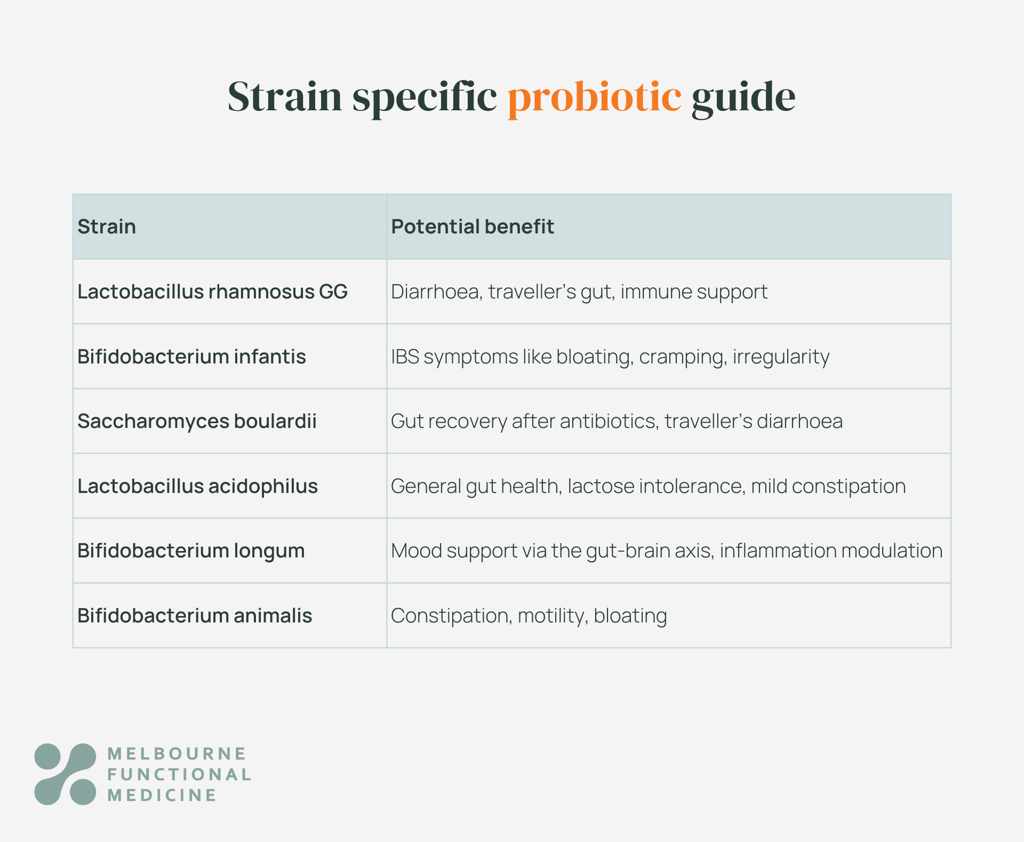
Strain-specific probiotic guide
Not all probiotics are created equal.
Each strain interacts uniquely with your gut – some reduce inflammation, others help seal the gut lining or modulate immunity.
The key is matching the strain to your gut’s current priorities, whether that’s calming reactivity or supporting deeper repair. Our practitioners specialise in probiotic therapy and understand the many strains and their varied benefits.
Here’s a simplified guide for a small sample of commonly used strains:
How to read a probiotic label
Once you know what to look for, reading probiotic labels becomes less about marketing claims and more about evidence. Here’s how to spot what matters:
- Strain specificity: Look for the full strain name (e.g., Lactobacillus rhamnosus GG), not just the species. Specific strains have unique, clinically studied effects
- CFU count: More isn’t always better. Aim for 10–50 billion CFU per dose for general support, but the ideal amount depends on your current gut health and goals
- Delivery method: Choose formats like enteric-coated or delayed-release capsules that help probiotics survive stomach acid and reach the gut alive
- Storage info: Some probiotics require refrigeration to stay viable; others are shelf-stable. Always check the label to ensure you’re getting live cultures
Watch out for vague blends or missing strain details – they often lack clinical backing.
When it comes to prebiotics, starting with whole food sources is often the gentlest approach.
Foods like garlic, onion, leeks, chicory, Jerusalem artichokes, and green bananas naturally feed beneficial gut bacteria. Prebiotic fibres such as inulin, chicory root, or FOS (fructo-oligosaccharides) are also added to many “gut health” snacks, collagen bars, and protein powders – but in concentrated amounts, they can trigger bloating if your system is sensitive.
As always, listen to your body.
Introduce new products slowly, and if something doesn’t feel right, pause and reassess.
If you’ve tried these strategies and still feel stuck, that’s when a personalised approach may be worth exploring.
The bottom line: do what works for you
Whether you’re looking at probiotics, prebiotics, or both, the best approach is the one that’s tailored to your body and your goals.
Start with whole, nutrient-rich foods, and when adding supplements, choose products backed by solid research and clear labelling. If you’re unsure what your gut truly needs, consider in-depth testing and expert guidance for a more targeted plan.
A well-nourished gut is one of the most powerful investments you can make in your overall health – today and for the years ahead.