


What is functional dyspepsia?
Functional dyspepsia is a condition where recurring pain or discomfort in the upper abdomen occurs without any ulcer, inflammation, or structural abnormality visible on investigation. It is also referred to as nonulcer dyspepsia. The stomach and upper digestive tract look normal on testing, yet the symptoms are real and often disruptive to daily life.
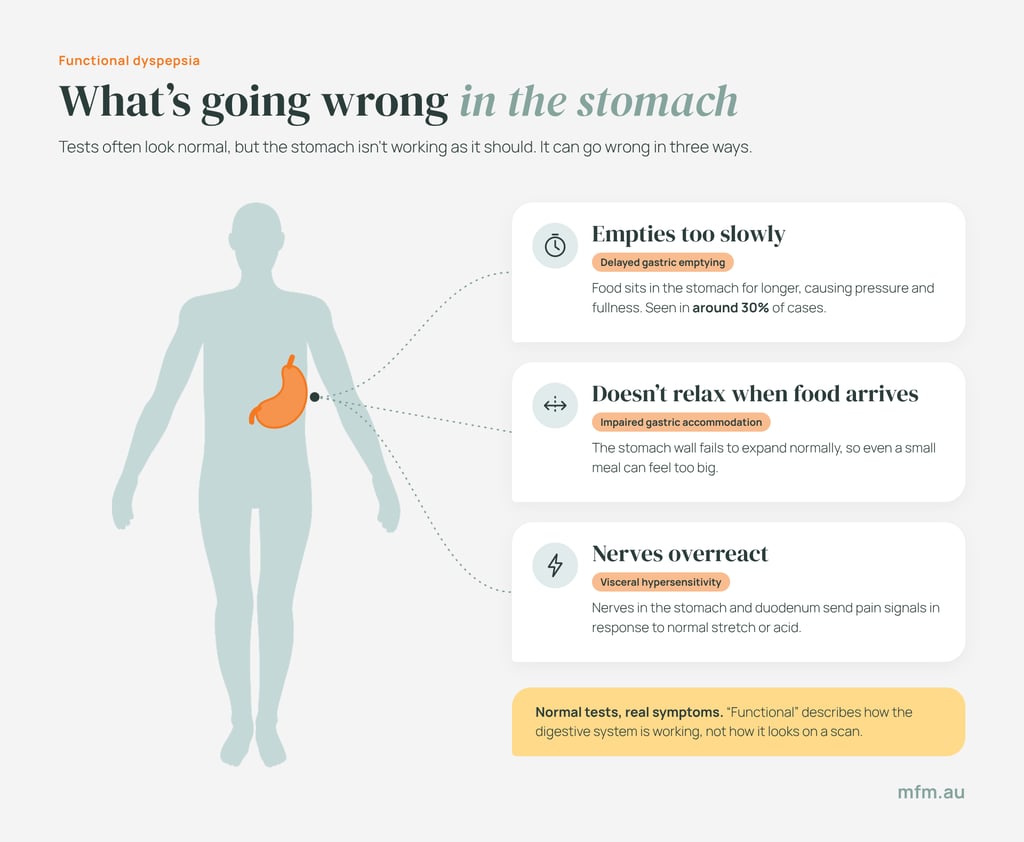
The word “functional” refers to how the digestive system is working, rather than how it appears on tests or scans. In functional dyspepsia, the stomach may empty too slowly, the stomach wall may not relax properly when food arrives, or the nerves lining the upper gut may respond to normal sensations with exaggerated pain signals.
Globally, functional dyspepsia affects around 8-10% of adults and is more prevalent in women than men. Symptoms often overlap with reflux and irritable bowel syndrome, which can make reaching a clear diagnosis more complicated. In some people, symptoms first develop following a gastrointestinal infection, and Helicobacter pylori (a bacterial infection of the stomach lining) is one recognised contributing factor.
Symptoms of functional dyspepsia
Functional dyspepsia most commonly causes pain or discomfort in the upper abdomen, often alongside bloating, nausea, or an uncomfortable sense of fullness. Symptoms vary between people and may come and go over months or years, sometimes appearing with meals and sometimes independently of eating.
Common symptoms include:
- Pain or burning in the mid to upper abdomen, below the breastbone
- Feeling full after only a small amount of food (early satiety)
- Persistent sense of fullness after eating
- Nausea
- Bloating in the upper abdomen
- Belching
- Reduced appetite
Clinically, functional dyspepsia is often described as one of two presentations:
- Postprandial distress syndrome involves meal-related fullness and early satiety. People with this pattern often struggle to finish a normal-sized meal, and ongoing discomfort can affect nutritional intake, leading to deficiencies or weight loss
- Epigastric pain syndrome (upper abdominal pain or burning) involves discomfort occurring at least one day per week for the past three months, with symptoms first present at least six months prior, and not necessarily related to eating. In some cases, eating provides temporary relief
Many people experience features of both, often alongside overlapping reflux or IBS symptoms.
What causes functional dyspepsia?
Functional dyspepsia most commonly develops when the stomach isn’t moving food properly, reacts too strongly to normal sensations, or isn’t communicating properly with the nervous system.
Impaired stomach motility
In a healthy digestive system, the stomach contracts rhythmically to mix food with acid and enzymes, then releases it steadily into the small intestine. In functional dyspepsia, this process can go wrong in two ways: the stomach may empty too slowly (gastroparesis), or the stomach wall may fail to relax and expand normally when food arrives. Both produce pressure, fullness, and discomfort.
Delayed gastric emptying affects only around 30% of people with the condition and does not reliably predict symptom severity, suggesting that impaired gastric accommodation and mucosal changes are equally important causes in many cases.
Heightened gut nerve sensitivity
The lining of the stomach and duodenum (the first section of the small intestine) contains a dense network of sensory nerves. In some people with functional dyspepsia, these nerves respond to normal levels of stretch or acid with exaggerated pain signals, a phenomenon called visceral hypersensitivity. The stomach does not need to be damaged or inflamed for this to produce noticeable symptoms.
Post-infectious changes
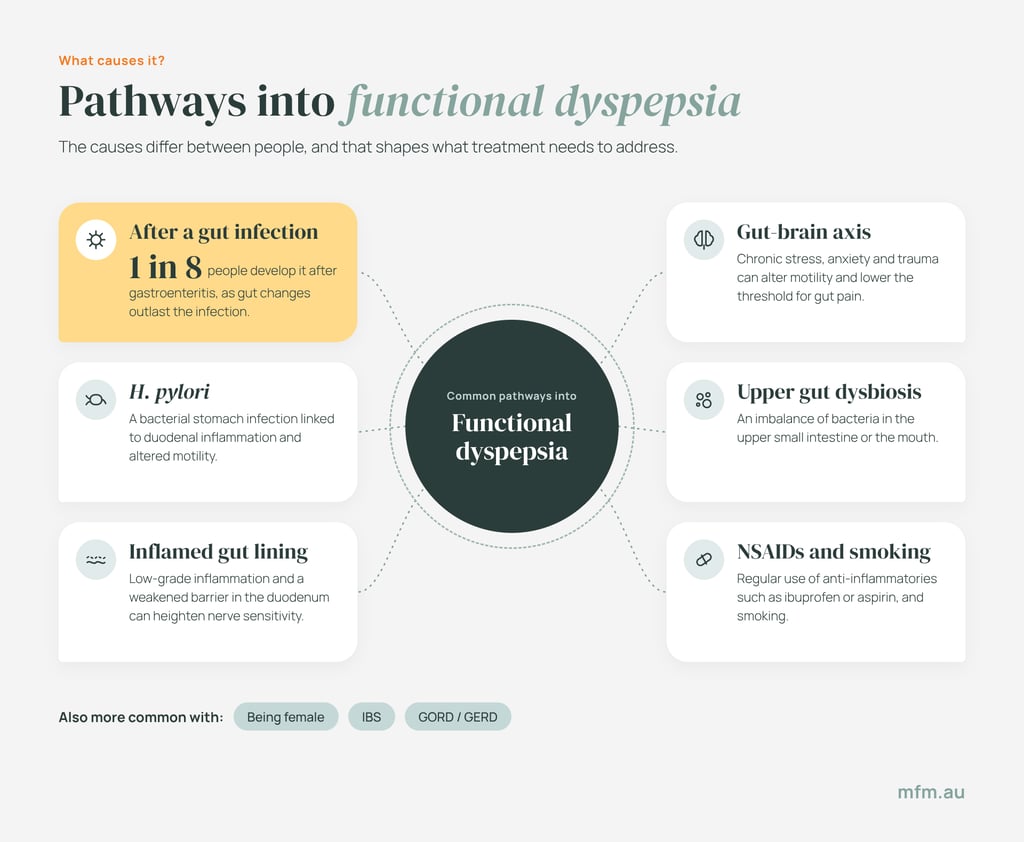
A 2024 meta-analysis in Gut found that around one in eight people who experience acute gastroenteritis go on to develop functional dyspepsia, confirming post-infectious onset as one of the most consistently documented pathways into the condition. After an acute gut infection (bacterial, viral, or protozoal), the structure and function of the upper digestive tract can change after the infection has resolved.
These changes include:
- Low-grade mucosal inflammation
- Impaired barrier function
- Altered enteroendocrine cell signalling
In some people, this immune activation shows up as increased eosinophil and mast cell infiltration in the duodenal lining. A 2022 review found this pattern is now consistently identified in FD patients and may contribute to both a weakened gut barrier and heightened nerve sensitivity in the upper gut.
These changes can keep symptoms even after the pathogen has been cleared. Helicobacter pylori is specifically associated with duodenal inflammation and altered motility, and is identified in a subset of cases.
Gut-brain axis involvement
The gut and brain communicate constantly via the vagus nerve and the enteric nervous system, the extensive nerve network embedded in the gut wall. Chronic stress, anxiety, psychological distress, and a history of trauma can alter gut motility, gastric emptying rate, and the threshold at which gut sensations are perceived as painful.
This relationship also runs in the other direction: gut dysbiosis and mucosal inflammation send signals upward to the brain via the vagus nerve, influencing stress reactivity and the nervous system’s baseline state. This shows the measurable effect that nervous system activation has on digestive function.
Other contributing factors
- Being female (functional dyspepsia is more common in women)
- Dysbiosis of the upper small intestinal or oral microbiome (an imbalance in bacterial populations of the gut)
- Inflammation of the duodenal lining
- Changes to the mucosal barrier, the protective lining of the stomach and upper intestine
- Regular use of NSAIDs such as ibuprofen or aspirin
- Smoking
- Presence of IBS or GORD/GERD
How is functional dyspepsia investigated and assessed?
Functional dyspepsia is diagnosed by first ruling out other conditions with similar symptoms, including peptic ulcers, gastritis, reflux disease, and in some cases heart or lung causes of chest discomfort. It can take more than one consultation to reach a clear picture.
Standard assessment typically involves:
- A detailed symptom and medical history
- Physical examination
- Blood tests for anaemia, infection, and coeliac disease
- Testing for Helicobacter pylori
- Upper endoscopy where clinically indicated
Endoscopy is recommended when red flag features suggest a structural cause:
- Unexplained weight loss
- Difficulty swallowing
- Ongoing vomiting vomiting
- Signs of bleeding
- Previous gastric surgery
- Family history of stomach cancer
- Onset of symptoms after age 55
The diagnosis is confirmed when typical symptoms have been present for several months and testing finds no structural cause. Standard investigation is designed to rule out structural disease, but when results are normal and symptoms continue, it doesn’t explain why the digestive system isn’t working as it should.
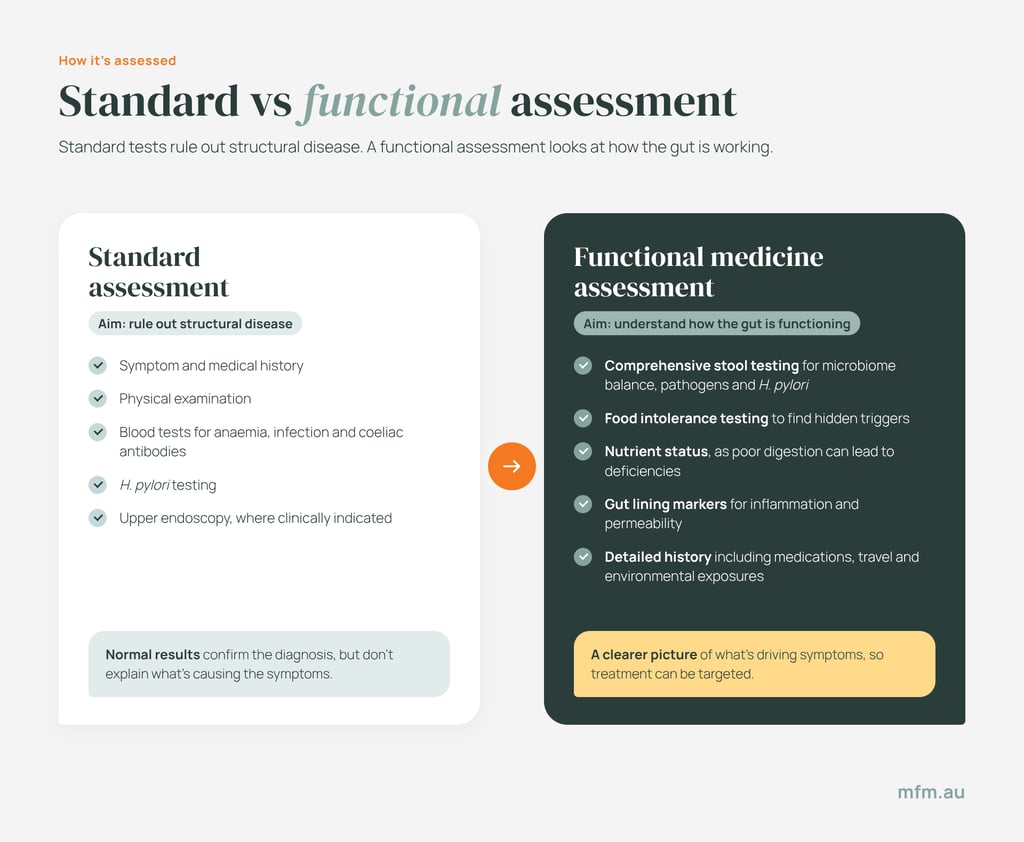
A functional medicine assessment goes deeper and may include:
- Comprehensive stool testing using DNA-based analysis to assess the microbiome and identify pathogens, including H. pylori
- Food intolerance testing to identify dietary triggers that may not be obvious from symptom history alone
- Nutrient status assessment, as poor digestion can lead to deficiencies that worsen symptoms
- Markers of intestinal inflammation and permeability, which show how well the gut lining is maintaining its protective function
- A detailed review of medications, travel history, family history and environmental exposures
These results help direct treatment towards the factors most likely to be contributing to each person’s symptoms.
Why functional dyspepsia can continue after treatment
Functional dyspepsia often continues because most treatments control acid, motility or nerve sensitivity without changing what is producing the symptoms.
- Acid-suppressing medications, including PPIs such as pantoprazole (Somac), esomeprazole (Nexium) and omeprazole (Losec), reduce stomach acid and can relieve burning and pain, but do not address slow emptying or nerve sensitivity
- Prokinetic drugs help the stomach empty faster, but do not address why motility is impaired
- Fundic relaxants such as buspirone relax the upper stomach and can reduce fullness after meals, but do not explain why it struggles to relax on its own
- Low-dose tricyclic antidepressants such as amitriptyline reduce gut nerve sensitivity, easing how symptoms are felt rather than what is producing them
- Antacids such as Gaviscon neutralise acid and can give short-term relief, but regular use can reduce absorption of some nutrients, such as iron
- Antibiotics for H. pylori, such as amoxicillin and clarithromycin, are effective at eradication but also reduce beneficial bacteria, which may leave room for dysbiosis to return
Long-term PPI use can also reduce absorption of B12, magnesium and iron, and change the bacteria in the upper gut, which may add to existing dysbiosis.
Symptoms often return once treatment stops if the original problem is still there. This might be a motility problem, nerve sensitivity in the gut, changes in the gut microbiome, or duodenal inflammation. Many people with functional dyspepsia recognise this pattern: periods of partial relief, followed by a return to how things were. A 2016 review concluded that current conventional treatments for functional dyspepsia are largely unsatisfactory.
Treating functional dyspepsia: a functional medicine approach
A functional medicine approach to functional dyspepsia looks at where digestion has gone wrong. That might be how the stomach is moving food, how well acid and enzymes are breaking it down, what’s happening in the upper gut microbiome, whether the mucosal lining is intact, or how the nervous system is influencing digestion. Much of this doesn’t show up on a scope.
Often more than one of these areas is involved, which is why treatment looks at the full picture rather than a single cause.
Depending on what assessment finds, treatment may include:
- Motility support: Herbal prokinetics such as ginger may help the stomach empty more efficiently
- Digestive support: Betaine hydrochloride or digestive enzymes may help break down food where acid or enzyme output is low
- Upper gut dysbiosis: Where bacterial overgrowth is identified, targeted herbal antimicrobials and probiotics may help restore healthy gut bacteria. Where H. pylori is found, probiotics and gut support may be used alongside medical eradication
- Stomach lining repair: Nutrients and herbal medicines, including zinc carnosine, glutamine and slippery elm, may support repair of an inflamed or damaged lining
- Vagal and stress-axis regulation: Vagus nerve stimulation and techniques such as mindfulness and breathwork may calm the gut-nervous system loop that keeps symptoms going
- Dietary and lifestyle strategies: Eating smaller meals more slowly, plus short-term elimination and reintroduction, can help identify which foods trigger your symptoms
Supporting people with functional dyspepsia to feel like themselves again
We support people with functional dyspepsia to move beyond short-term symptom control, toward feeling better for longer.
When to seek support
See your healthcare provider if you have:
- Upper abdominal symptoms for more than a few weeks without a clear explanation
- Pain or discomfort with unintended weight loss, difficulty swallowing, or vomiting
- Signs of bleeding, such as dark or tarry stools
- A recent change in symptom character or severity
- No lasting relief from standard treatment
- New symptoms after age 55 with no prior digestive history
Frequently asked questions
How long does functional dyspepsia last?
Functional dyspepsia is often a chronic, relapsing condition, though some people see it resolve, especially when symptoms are mild and linked to a specific, temporary trigger. Persistent symptoms usually continue until the underlying cause, whether that’s motility, gut lining, or nervous system function, is identified and addressed rather than just managed with medication.
Can functional dyspepsia be caused by stress?
Yes, and the link is physiological rather than purely psychological. Chronic stress activates the same nervous system pathways involved in gut motility and pain perception. On its own, stress rarely triggers functional dyspepsia, but it commonly makes existing symptoms worse. In people with pre-existing visceral sensitivity, ongoing stress can be enough to trigger a flare.
Is functional dyspepsia the same as IBS?
No, though they frequently occur together. IBS involves the lower digestive tract and is defined by altered bowel habits alongside abdominal pain. Functional dyspepsia involves the stomach and upper small intestine, producing early fullness, upper abdominal pain, and nausea. The two conditions can share some of the same underlying causes, but they’re diagnosed and treated separately.
What foods trigger functional dyspepsia?
There is no universal trigger list because food reactions vary from person to person. Commonly reported triggers include:
- Fatty meals
- Spicy foods
- Caffeine and alcohol
- Carbonated drinks
Meal size and eating pace also influence symptoms. A food and symptom diary is more useful than following a generic exclusion list.
Can functional dyspepsia go away on its own?
In some cases, yes, particularly when it follows a temporary trigger such as a short-lived infection or a course of medication, and symptoms ease as the gut recovers. Left unaddressed, symptoms more often continue on and off rather than resolving, which is why ongoing or recurring episodes usually need a proper assessment.
What is the difference between functional dyspepsia and GORD?
GORD involves stomach acid moving back into the oesophagus, producing heartburn and regurgitation felt behind the breastbone, often worsening when lying down or after eating. Functional dyspepsia produces pain and discomfort in the mid to upper abdomen, with early satiety and persistent fullness as more prominent features. Both can occur together but have different underlying physiology and require separate assessment.
Can H. pylori cause functional dyspepsia?
H. pylori can contribute to functional dyspepsia by producing inflammation in the stomach and duodenum that impairs motility and alters gut nerve sensitivity. Eradicating H. pylori resolves symptoms in some people but not all. Where eradication does not produce lasting relief, other contributing factors, including motility dysfunction, visceral hypersensitivity, or upper gut dysbiosis, need investigation.
Ready to understand what's causing your functional dyspepsia?
If you’re looking for a clearer picture of what is contributing to your symptoms, learn more about our approach to functional dyspepsia testing and treatment.