
What is gastroparesis?
Gastroparesis is a condition in which the stomach empties more slowly than it should, occurring when the nerve signals that trigger stomach muscle contractions are reduced or impaired. The name comes from the Greek for “stomach” and “paralysis,” though for most people, it presents as persistent nausea, early fullness, and discomfort that lingers well after a meal.
The underlying problem is nerve signalling. The vagus nerve runs from the brainstem to various organs, including the stomach wall, and coordinates the muscle contractions that push food forward. When that signal is reduced or impaired, the stomach doesn’t empty at a normal rate.
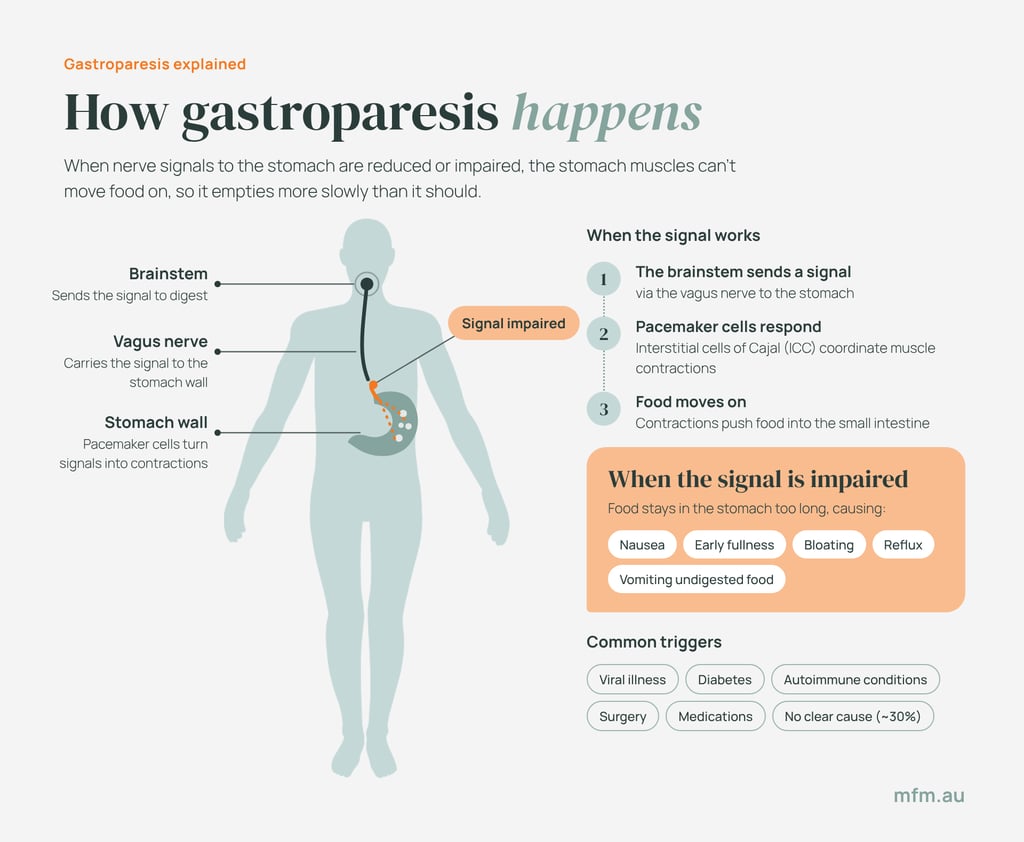
Gastroparesis can occur alongside conditions such as diabetes or multiple sclerosis, follow a surgery or viral illness, or arise without any identifiable cause. Diagnosis is usually made after a physical blockage has been ruled out.
Symptoms of gastroparesis
The most common symptoms of gastroparesis are nausea, early fullness, and bloating that build during or shortly after meals. Severity ranges from mild and manageable to severe enough to interfere with eating altogether, and this can vary as the condition progresses. Common symptoms include:
- Nausea during or after meals
- Vomiting undigested food, sometimes hours after eating
- Feeling full after only a small amount of food
- Bloating and abdominal discomfort
- Reflux or heartburn
- Poor appetite and unintentional weight loss
- Diarrhoea, often at night
Because these symptoms overlap with other digestive conditions, including functional dyspepsia, identifying the underlying cause requires assessment by a practitioner with experience in digestive health.
When gastroparesis is poorly managed, secondary complications can develop. Food sitting in the stomach too long creates conditions for bacterial overgrowth, including SIBO and large intestinal bacterial overgrowth, which can make symptoms worse. Dehydration can lead to:
- Electrolyte imbalances
- Reduced urine output
- Low blood pressure
- Muscle weakness
- Elevated heart rate and shallow breathing
- Impaired immune function and wound healing
Constipation is another complication, and in persistent cases can lead to bezoar formation. Bezoars are hardened masses of undigested food that can obstruct the digestive tract and, if untreated, require surgical removal.
For people with diabetes, gastroparesis also makes blood glucose control harder to manage.
What causes gastroparesis?
Gastroparesis most commonly develops when the vagus nerve’s signals to the stomach are reduced or impaired, slowing the contractions that move food through. This can also happen when the stomach becomes hypersensitive to those signals, or doesn’t respond to them effectively.
Research has also linked gastroparesis, including post-viral cases, to the loss of interstitial cells of Cajal (ICC), the pacemaker cells in the stomach wall that help coordinate muscular contractions. This suggests the damage may extend beyond the vagus nerve to the cells responsible for translating nerve signals into stomach muscle movement.
The main causes include:
- Idiopathic (no identifiable cause): accounts for roughly 30% of cases, and often follows a viral illness even when the connection isn’t made at the time. Idiopathic cases are less predictable in their course: some improve without a clear reason, others remain chronic
- Post-viral: a preceding gut infection can damage or inflame the vagus nerve or the nerve cells within the stomach wall
- Diabetes: chronically elevated blood glucose damages the vagus nerve gradually, making this the most common identifiable cause, particularly in Type 1 and Type 2 diabetes
Autoimmune and neurological conditions: including scleroderma, multiple sclerosis, lupus, Parkinson’s disease, hypothyroidism, and cerebral palsy - Post-surgical: vagus nerve damage can follow gallbladder surgery, bariatric procedures, vagotomy for peptic ulcers, or gastric sleeve gastrectomy
- Drug-induced: opioid pain medications slow gastric motility; proton pump inhibitors, certain diabetes drugs, and anti-rejection medications can also impair gastric emptying as a side effect, through varying mechanisms
Hormones also affect how quickly the stomach empties. Progesterone slows gastric motility, which is why many women notice symptom changes across their menstrual cycle, particularly during the luteal phase. Oestrogen affects gastric emptying too, as do ghrelin (which stimulates appetite and hunger signalling) and motilin (which triggers the contractions that keep food moving through the digestive tract).
Nutrient deficiencies, chronic stress, and gut dysbiosis can compound the problems of gastroparesis, reducing nutrient absorption, altering the gut microbiome, and slowing motility further, which makes recovery harder.
How is gastroparesis investigated and assessed?
Diagnosis typically begins with ruling out structural causes. Abdominal pain, nausea, vomiting, and early fullness can occur for many reasons, so obstruction and other structural conditions need to be excluded before delayed gastric emptying is confirmed.
Initial assessment usually involves:
- Blood and urine tests to assess hydration, nutritional deficiencies, infection, inflammation, and electrolyte balance
- Endoscopy or ultrasound to examine stomach structure and rule out obstruction or other abnormalities
- Clinical history, including symptom timing after meals, medication use, diabetes, previous infections, or surgery
Motility-specific investigations may include:
- Gastric emptying scintigraphy (the standard test), which tracks how quickly a radiolabelled meal clears the stomach
- The Smart Pill, a swallowed electronic capsule that measures transit time through the digestive tract
- Breath testing, used in some settings to estimate gastric emptying rate
A functional medicine assessment looks beyond confirming delayed gastric emptying alone and explores what else may be contributing to slowed stomach motility or worsening symptoms.
This can include assessing:
- nervous system and vagus nerve function
- microbiome disruption or bacterial overgrowth
- blood glucose regulation and metabolic health
- nutrient deficiencies involved in muscle and nerve signalling
- food reactions that may aggravate nausea, bloating, or irritation
Standard gastric emptying tests identify that delayed emptying is occurring, but do not always explain why. A broader assessment can help identify additional contributors affecting digestive signalling, stomach contractions, symptom severity, or recovery.
Heart rate variability (HRV) is one example of how nervous system regulation may be assessed. HRV measures how the autonomic nervous system regulates the body, and research has shown altered HRV can be linked to impaired vagus nerve activity in people with gut motility disorders.
Why gastroparesis can persist after treatment
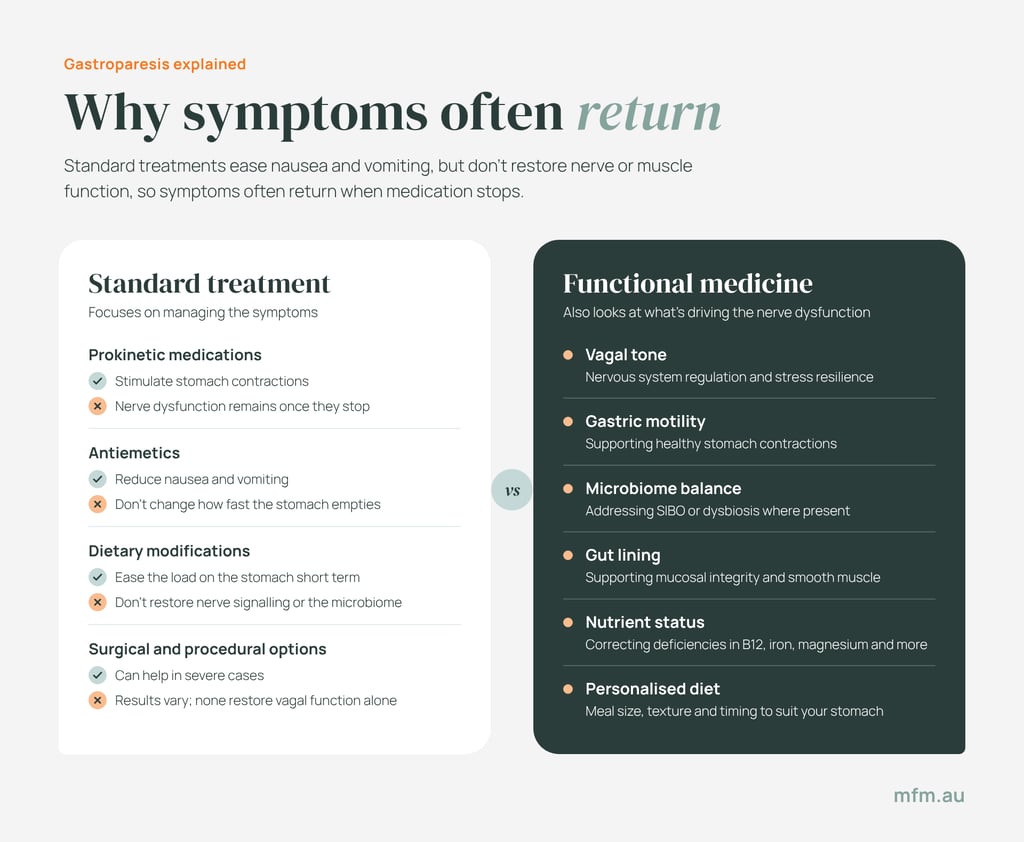
Gastroparesis often persists after treatment because standard treatments manage nausea and vomiting without restoring vagus nerve function or improving how quickly the stomach empties.
Standard treatments for gastroparesis include:
- Prokinetic medications (metoclopramide, domperidone, erythromycin), to stimulate stomach contractions
- Antiemetics (ondansetron, promethazine), to reduce nausea and vomiting
- Dietary modifications (small, soft, low-fat meals), to reduce the workload on the stomach
- Surgical and procedural interventions (botox injections into the pyloric muscle, pyloric widening, gastric electrical stimulation), for severe cases
- Enteral or parenteral nutrition, where oral intake can’t maintain adequate nutrition
Prokinetic medications bypass the missing nerve signal by stimulating stomach contractions. Once the medication stops, the underlying nerve dysfunction remains, so symptoms typically return. Long-term metoclopramide use also carries a risk of tardive dyskinesia, a potentially irreversible movement disorder.
Antiemetics reduce nausea by acting on the brain’s vomiting centre, but they don’t change how quickly the stomach empties. They control the symptom without addressing gastric motility itself.
Dietary modifications ease the load on the stomach in the short term, but they don’t restore nerve signalling or muscle function, and don’t address the microbiome changes that can develop when food sits in the stomach too long.
Surgical and procedural options can help in severe cases, but results vary from person to person, and none restore vagal nerve function on their own.
Opioid pain medications, when used for unrelated pain, add a further complication: they slow gastric motility and can worsen symptoms in someone who already has gastroparesis, alongside their own dependency risk with prolonged use.
For some people, particularly those whose gastroparesis followed a viral illness, nerve function recovers gradually, and symptoms resolve. For others, particularly those with diabetes or autoimmune disease, the underlying condition continues to affect nerve function, and symptoms remain regardless of how well medications are managed.
Treating gastroparesis: a functional medicine approach
A functional medicine approach to gastroparesis looks at what is contributing to the vagal dysfunction, alongside supporting the symptoms it produces. The vagus nerve sits at the centre of the gut-brain axis, the two-way communication pathway between the brain and the digestive system. When vagal tone is low, gut motility slows, digestive secretions reduce, and the gut’s immune and microbial environment can change.
Depending on your presentation, care may include:
- At-home vagal nerve exercises: Breathwork, cold exposure, humming, and stress-resilience practices such as meditation and Tai Chi help restore vagal tone, since chronic stress suppresses vagal output and slows your gastric emptying
- Improving gastric motility: Herbal digestive stimulants such as ginger, gentian, and globe artichoke can improve gastric motility, ease nausea, and support bile flow and gastric secretion
- Microbiome rebalancing: Where SIBO or dysbiosis is contributing to your symptoms, antimicrobial herbs such as berberine, along with precision probiotics and prebiotic fibre, help rebuild a healthier microbial environment
- Gut lining repair: Zinc, vitamin A, vitamin C, and magnesium help repair and strengthen your gut lining and support smooth muscle function, since delayed gastric emptying can compromise mucosal integrity
- Nutritional repletion: Vitamin B12, iron, thiamine, magnesium, vitamin D, and fat-soluble vitamins A, D, E, and K are commonly depleted when gastroparesis limits the volume and variety of food you can tolerate, so correcting these deficiencies is part of your care
- Dietary adjustments: Your diet is personalised around meal size and frequency, protein, fat and fibre intake, food texture, and the timing of meals and hydration to reduce the load on your stomach and ease symptoms
We support people with gastroparesis to move beyond symptom management
We help people with gastroparesis get a clearer picture of what’s affecting their digestion and build a plan to address it. Explore the Melbourne Functional Medicine approach to treatment.
When to seek support
See your GP or a practitioner if you have:
- Digestive symptoms that have persisted for more than a few weeks
- Difficulty eating or maintaining weight
- Symptoms without a clear explanation after initial medical assessment
- An existing gastroparesis diagnosis with symptoms that continue despite dietary changes or medication
- Symptoms that improve and then return
- Concerns about long-term medication use
Frequently asked questions
What does gastroparesis feel like?
Gastroparesis most commonly feels like persistent fullness, nausea, and upper abdominal discomfort that begins during or shortly after eating. Many people describe feeling full after only a few bites, bloating that does not resolve, and nausea that can last for hours. Vomiting may occur, sometimes bringing up food eaten much earlier. Symptoms vary considerably between people and can fluctuate day to day, which is part of why the condition is often misattributed to anxiety, food intolerance, or irritable bowel syndrome before a diagnosis is reached.
Can gastroparesis develop after a stomach bug?
Yes, a viral infection can damage the vagus nerve or the nerve cells in the stomach wall, interfering with the signals that coordinate stomach emptying. This is called post-infectious gastroparesis and is more common than many people realise. In some cases, nerve function recovers over months and symptoms gradually improve. In others, delayed emptying persists. It is one of the reasons gastroparesis can appear seemingly out of nowhere in someone with no prior digestive history.
Can stress make gastroparesis worse?
Yes, the vagus nerve is the primary communication pathway between the brain and the gut, and chronic stress can further lower vagal activity. Because reduced vagal tone is already part of gastroparesis, stress reliably worsens symptoms even when nothing else has changed. Calming the nervous system, through breathing techniques, gentle movement or sleep support, can ease symptoms.
Is gastroparesis a permanent condition?
Not always. Whether gastroparesis resolves depends largely on its underlying cause. When it follows a viral illness, nerve function can recover over months to years and symptoms may improve or disappear. When it is linked to longstanding diabetes, an autoimmune condition, or surgical nerve damage, it tends to be more persistent and needs ongoing management.
Why do symptoms sometimes get worse before a period?
Progesterone, which rises in the week before menstruation, slows gastric emptying. For someone with gastroparesis, this hormonal rise can noticeably worsen symptoms during that window, including increased nausea, bloating, and early fullness.
Is gastroparesis the same as having a slow metabolism?
No, metabolism refers to how the body converts food into energy at a cellular level. Gastroparesis is about how quickly the stomach empties into the small intestine. The two are unrelated, though gastroparesis can affect weight indirectly, since food sitting undigested for longer can reduce nutrient absorption and lead to weight loss or deficiencies.
Can children develop gastroparesis?
Yes, though it is less common than in adults. In children, gastroparesis is most often linked to a preceding viral illness, nerve damage after surgery, or an underlying autoimmune condition. Symptoms mirror those seen in adults, including early satiety, nausea, vomiting and abdominal discomfort, and proper assessment is important to confirm the diagnosis and rule out other causes.
Ready to understand what's behind your gastroparesis?
If you’re looking for a clearer picture of what is contributing to your symptoms, learn more about our approach to gastroparesis testing and care.