

What is diabetes mellitus?
Diabetes mellitus is a blanket term for conditions in which the body cannot maintain normal blood glucose levels, either because insulin production has failed or because cells have stopped responding to it properly. The result is persistently elevated blood sugar that gradually affects blood vessels, nerves, and organs throughout the body.
There are several distinct types. Type 1 diabetes is an autoimmune condition in which the immune system destroys the insulin-producing beta cells of the pancreas. Onset typically occurs during adolescence, and most people require lifelong insulin therapy, though some see partial regression in adulthood.
Type 2 diabetes accounts for the vast majority of cases. It develops when cells in the liver, muscle, and fat tissue become resistant to insulin, a state known as insulin resistance, and the pancreas can no longer compensate for the growing demand. Type 2 is closely associated with cardiometabolic disease.
A third category, prediabetes, sits between normal blood glucose and a formal type 2 diagnosis, and often goes unrecognised for years.
Symptoms of type 2 diabetes
The most common symptoms of type 2 diabetes are increased thirst, frequent urination, and fatigue, often noticed first at night or after meals. Because these symptoms develop gradually, many people attribute them to other causes and do not seek assessment until fasting glucose levels are already significantly elevated, typically above 6.8 mmol/L.
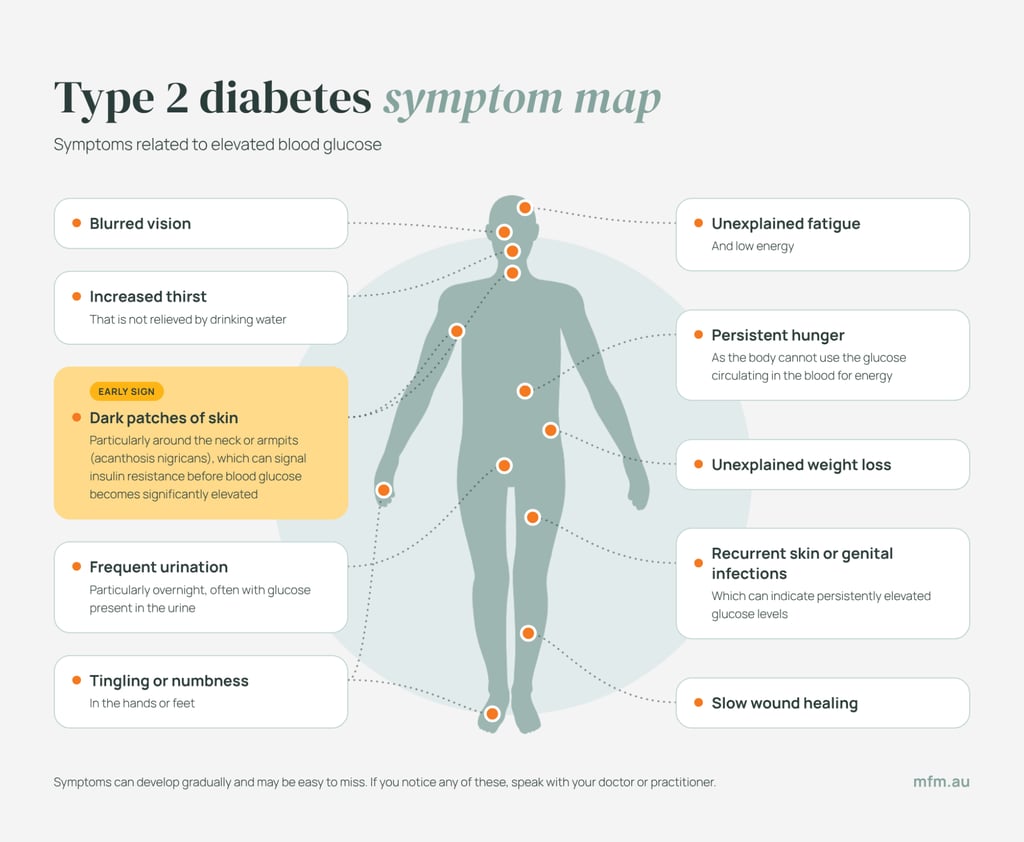
Symptoms related to elevated blood glucose include:
- Increased thirst that is not relieved by drinking water
- Frequent urination, particularly overnight, often with glucose present in the urine
- Persistent hunger, as the body cannot use the glucose circulating in the blood for energy
- Unexplained fatigue and low energy
- Unexplained weight loss
- Blurred vision
- Slow wound healing
- Tingling or numbness in the hands or feet
- Recurrent skin or genital infections, which can indicate persistently elevated glucose levels
- Dark patches of skin, particularly around the neck or armpits (acanthosis nigricans), which can signal insulin resistance before blood glucose becomes significantly elevated
What causes type 2 diabetes?
Type 2 diabetes most commonly develops when chronic, low-grade inflammation impairs the way cells respond to insulin. This is not simply a result of eating too much sugar. Refined carbohydrates and saturated fats both contribute to elevated blood glucose and inflammation, but so do stress, poor sleep, physical inactivity, gut health, hormonal changes, and environmental exposures.
The progression typically begins with insulin resistance. The body’s cells become less responsive to insulin’s signal to take up glucose, so the pancreas produces more to compensate.
For a period, blood glucose may remain within the normal range, but the pancreatic beta cells are under increasing strain. When production eventually falls, blood glucose rises. This is the transition from insulin resistance to prediabetes to type 2 diabetes.
Identifying and addressing contributing factors during the prediabetic stage can often support blood glucose regulation before a type 2 diagnosis is reached. This is one reason early assessment is important.
Contributing factors include:
- A diet high in refined carbohydrates and processed fats
- Central adiposity and excess visceral fat
- Physical inactivity
- Chronic stress and elevated cortisol
- Poor sleep and an out-of-sync circadian rhythm
- Changes to the gut microbiome and intestinal permeability
- Family history and genetic predisposition
- History of PMOS (polyendocrine metabolic ovarian syndrome) or gestational diabetes
- Exposure to environmental toxins such as BPA from plastics, phthalates from personal care products, and pesticides, which research links to impaired insulin signalling and increased risk of type 2 diabetes, independent of weight and diet
- Epigenetic influences, where diet, stress, and other daily habits affect how genes related to insulin function are expressed
Type 1 diabetes has a different origin. The immune system attacks and destroys the pancreatic beta cells that produce insulin, and the precise triggers remain an area of ongoing research. Genetic susceptibility, environmental exposures, and early viral infections are thought to be involved.
How is type 2 diabetes investigated and assessed?
Diabetes is confirmed through blood testing. Standard diagnostic tools include:
- Fasting blood glucose
- HbA1c, which shows average blood glucose across the previous three months
- Oral glucose tolerance test
What these tests do not always capture is the picture upstream of the diagnosis. Fasting glucose and HbA1c indicate where blood sugar sits, not why it got there. Assessing insulin resistance, the degree of inflammation, and other physiological factors contributing to poor glucose regulation requires additional investigation.
A functional medicine assessment of diabetes typically includes:
- Fasting serum insulin and insulin resistance index, to assess how hard the pancreas is working to compensate
- A comprehensive cardiovascular profile, screening for key cardiometabolic risk markers
- Inflammatory markers such as high-sensitivity CRP
- Thyroid function, given its relationship to metabolic rate and insulin sensitivity
- Organic acids testing, which offers a broader picture of metabolic pathway function, where this level of detail is needed
Continuous glucose monitoring (CGM) is increasingly used to track glucose patterns across the day and night, and may be relevant for some people managing type 2 diabetes or assessing their response to dietary changes.
Beyond testing, a thorough clinical history helps identify why glucose regulation has broken down in that person specifically. A functional medicine practitioner will look closely at eating patterns, sleep quality, stress load, and past diagnoses such as PMOS or gestational diabetes. They will also assess for other sources of inflammation that may be contributing, including:
- Food allergies or intolerances
- Toxic exposures
- Hormonal irregularities
- Autoimmune activity
Why type 2 diabetes can continue after treatment
Type 2 diabetes can continue to progress because standard treatment is built around controlling blood glucose levels. It does this well, but the insulin resistance and inflammation that often raised glucose in the first place can remain.
Conventional treatment usually moves through stages:
- Dietary changes to reduce simple sugars and refined carbohydrates, and increase complex carbohydrates, quality proteins and fibre
- More physical activity to help muscles use glucose and support a healthy weight
- Glucose-lowering tablets (oral hypoglycaemics) if blood glucose stays high, sometimes started alongside diet changes when levels are already elevated
- Insulin injections where tablets and lifestyle changes aren’t enough
For some people, these steps keep glucose in a healthy range for many years. In type 2 diabetes, muscle, liver and fat cells have become resistant to insulin’s signal, so the pancreas has to produce more and more insulin to move glucose out of the bloodstream. Medication brings glucose down, but those cells often stay just as resistant.
Several things can keep that resistance in place, even when diet improves. Ongoing stress keeps cortisol high, which prompts the liver to release glucose between meals. Poor sleep lowers insulin sensitivity overnight, so the body starts each day already less responsive to insulin.
Changes in the gut microbiome can keep low-grade inflammation active throughout the body, making it harder for cells to respond to insulin. Fat stored deep around the abdominal organs (visceral fat) can also release inflammatory signals around the clock, keeping nearby tissues resistant to insulin even when eating habits improve.
This is why blood glucose often climbs again when medication is reduced or dietary changes slip. Unless these contributors are identified and addressed, the conditions that led to insulin resistance can stay in place.
Treating diabetes mellitus: a functional medicine approach
A functional medicine approach to diabetes mellitus begins by asking what has made a person’s cells resistant to insulin, not just how to lower their blood glucose. By identifying the specific contributors involved, a practitioner can build a treatment plan that targets what is causing poor glucose regulation.
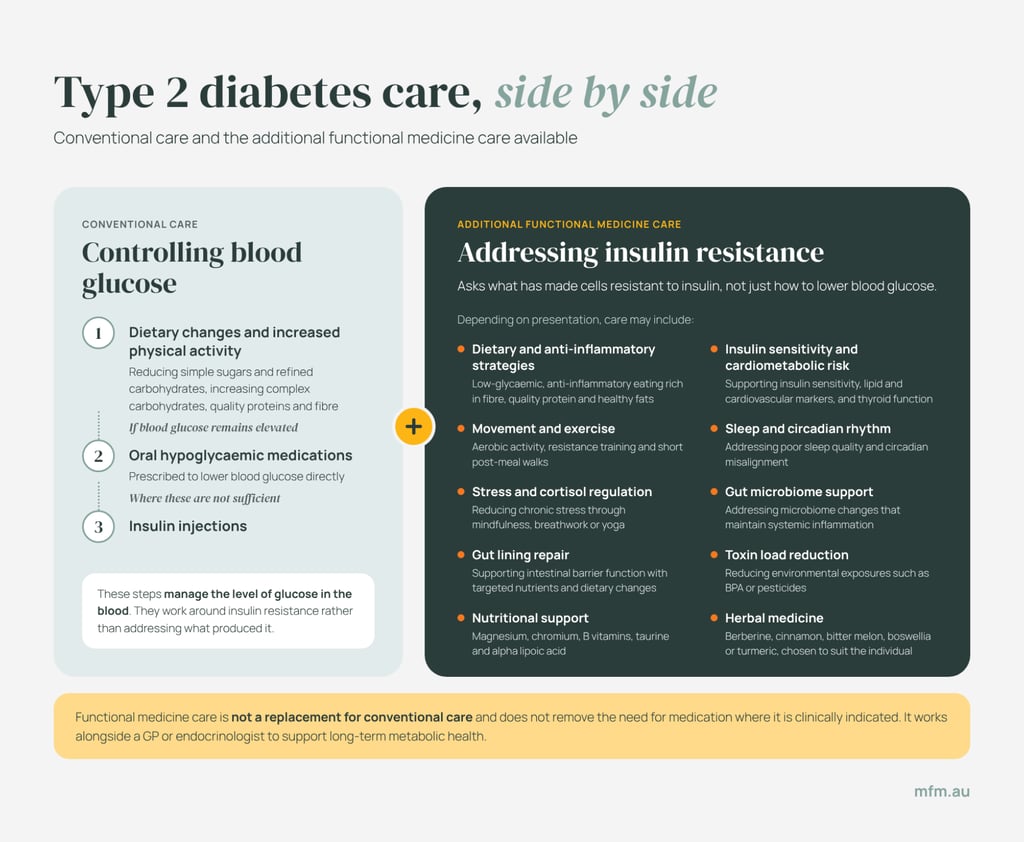
Depending on presentation, care may include:
- Dietary and anti-inflammatory strategies: adopting a low-glycaemic, anti-inflammatory eating pattern rich in fibre, quality protein, and healthy fats, while reducing refined carbohydrates and identifying dietary triggers that add to inflammatory load. As well as considering time-restricted eating where appropriate, as aligning meal timing with the body’s circadian rhythm may support glucose control and reduce inflammatory markers
- Insulin sensitivity and cardiometabolic risk: supporting insulin sensitivity through targeted dietary and lifestyle strategies, addressing lipid and cardiovascular risk markers, and managing thyroid function, since even mild thyroid dysfunction can blunt insulin sensitivity
- Movement and exercise: combining aerobic activity with resistance training and short post-meal walks to improve insulin sensitivity directly in muscle tissue
- Sleep and circadian rhythm: addressing poor sleep quality and circadian misalignment, both of which reduce overnight insulin sensitivity and raise morning cortisol
- Stress and cortisol regulation: reducing chronic stress load and building longer-term resilience through practices such as mindfulness, breathwork, or yoga
- Gut microbiome support: identifying and addressing gut microbiome changes that are maintaining systemic inflammation and insulin resistance
- Gut lining repair: supporting intestinal barrier function with targeted nutrients and dietary changes where a more permeable gut lining is adding to inflammatory load
- Toxin load reduction: reducing accumulated toxin load where environmental exposures such as BPA or pesticides are contributing to insulin resistance and inflammation
- Nutritional support: replenishing nutrients such as magnesium, chromium, B vitamins, taurine, and alpha lipoic acid, which support glucose metabolism, insulin production, and antioxidant defences
- Herbal medicine: using herbs such as berberine, cinnamon, bitter melon, boswellia, or turmeric, chosen according to individual presentation, to support glucose regulation and reduce inflammation
A functional medicine approach to diabetes is not a replacement for conventional care and does not remove the need for medication where it is clinically indicated. It works alongside a GP or endocrinologist to address the conditions that produced insulin resistance, with the aim of supporting long-term metabolic health.
Supporting people with diabetes to feel well again
We work with people at different stages of diabetes, from new diagnoses to those still searching for answers years into treatment.
When to seek support
See your GP or a practitioner if you have:
- Increased thirst, frequent urination, unexplained fatigue, or unexpected weight loss, particularly with a family history of diabetes or risk factors such as excess weight, high blood pressure, or PMOS
- Blood glucose that remains difficult to manage despite medication or dietary changes
- A diagnosis but still experience symptoms such as fatigue, poor sleep, or recurring infections
- A diagnosis described as well controlled, though you still don’t feel well
- Multiple cardiometabolic risk factors, such as high blood pressure, elevated cholesterol, or insulin resistance, that haven’t been fully addressed
- A family history of type 2 diabetes or cardiovascular disease and want a clearer picture of your own risk
Frequently asked questions
What is a normal blood sugar level, and what counts as prediabetes or diabetes?
A normal fasting blood glucose level sits below 5.5 mmol/L. Readings between 5.5 and 6.9 mmol/L indicate prediabetes, and 7.0 mmol/L or higher on two separate tests confirms diabetes. HbA1c results follow a similar pattern, with 6.5% or above used for diagnosis. Even so, a practitioner will weigh your symptoms and risk factors alongside these numbers, as they are just a guide.
Can you have type 2 diabetes without being overweight?
Yes, type 2 diabetes can develop in people at a healthy weight. Insulin resistance relates more to inflammation and where fat is stored, particularly around the liver and pancreas, than to total body weight. Some people carry this visceral fat without appearing overweight, which is why family history and metabolic testing are important even at a normal weight.
Can type 2 diabetes go into remission?
For some people with type 2 diabetes, lifestyle change can bring blood glucose back into the normal range without ongoing medication. This is called remission rather than cure, because the underlying predisposition remains. Remission is most achievable earlier in the course of the condition and is closely linked to improving insulin sensitivity and reducing visceral fat, though outcomes vary.
What foods should I avoid with diabetes?
The foods most likely to worsen blood glucose control are refined carbohydrates, sugary drinks, and processed foods high in saturated and trans fats. These raise blood glucose rapidly and add to insulin resistance and inflammation. Specific food intolerances can also contribute to a low-grade inflammatory state even when overall diet quality is good.
What are the long-term complications of diabetes?
Persistently elevated blood glucose damages blood vessels and nerves throughout the body. The most serious complications are cardiovascular disease, diabetic neuropathy, retinopathy, and kidney disease. Risk increases with duration and with how consistently blood glucose is managed. Addressing the underlying contributors to poor glucose regulation, not just the glucose level itself, is central to reducing long-term complication risk.
Does stress affect blood sugar levels?
Yes, stress raises blood sugar: cortisol and adrenaline signal the liver to release glucose into the bloodstream. In someone with insulin resistance or established diabetes, this response can produce sharp and prolonged blood glucose spikes that insulin cannot adequately buffer. Chronic stress keeps cortisol elevated, which adds to insulin resistance independently of what is eaten.
Can poor sleep worsen diabetes?
Poor or insufficient sleep impairs glucose metabolism in multiple ways. It raises cortisol, increases appetite for high-carbohydrate foods, and reduces insulin sensitivity in muscle and liver tissue, sometimes within a single night of poor sleep. For people already managing elevated blood glucose, ongoing poor sleep can make regulation significantly harder to maintain.
Is type 2 diabetes genetic?
Genetic predisposition increases the risk of developing type 2 diabetes, but genes are not the determining factor for most people. The condition develops when genetic susceptibility combines with lifestyle and environmental influences, including diet, physical inactivity, chronic stress, and sleep quality. Family history raises risk, but it does not determine whether you will develop type 2 diabetes.
Ready to understand your diabetes?
If you’re looking for a more comprehensive approach to your metabolic health, energy and blood sugar management, learn more about our approach.