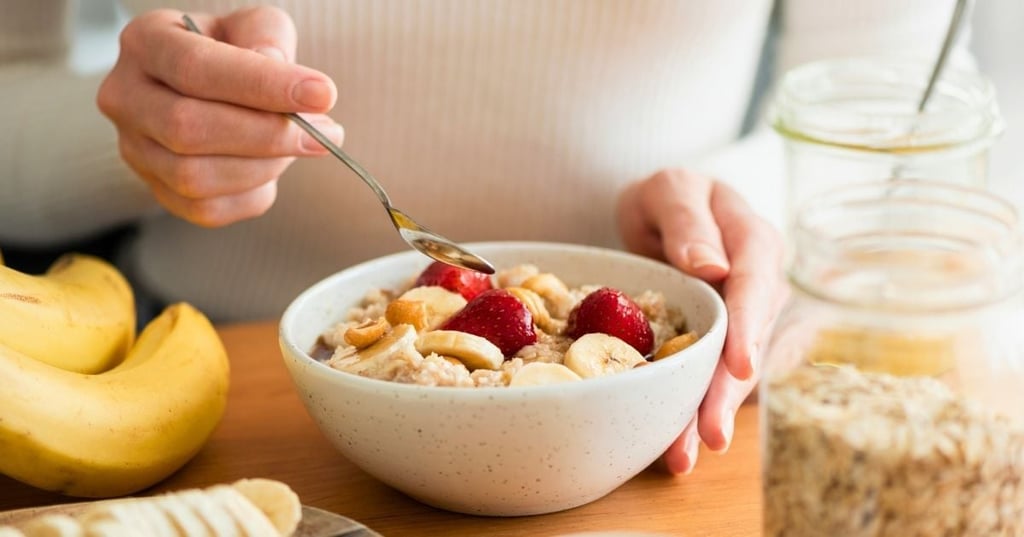


When Sarah* came to see me, she was doing everything “right.” Smoothies with spinach and chia, wholegrain bread instead of white, raw nuts instead of biscuits. Her diet looked clean and healthy – but she was still bloated, uncomfortable, and going days without a proper bowel movement.
“I don’t get it,” she said. “I eat well. I drink water. I exercise. What am I missing?”
It’s something I hear often. Because what’s “healthy” in theory doesn’t always work for a gut under stress. Nutrient-rich foods can backfire. Adding bulk when the bowel needs softness, or slowing things down when you need flow. The goal isn’t to avoid fibre forever, but to understand when and how the gut can tolerate it.
Let’s look at some common food habits that might be contributing to constipation and what to try instead.
When healthy eating makes things worse
Many people increase fibre when they’re constipated – it’s the standard advice. But if motility is already slow, adding more bulk can feel like adding traffic to a congested road. Foods rich in insoluble fibre (like raw vegetables, bran cereals, and dense wholegrains) often worsen symptoms.
The issue isn’t always the food itself, but the context it lands in – a gut that’s dehydrated, lacking bile flow, or stuck in stress mode can’t move that fibre efficiently. In these cases, soft, moisture-holding foods like cooked oats, stewed pear, or chia pudding work better.
If you’re not sure where to start, here’s a look at the foods we often troubleshoot first.
Foods that commonly slow the gut
We often see a mix of small habits combining to create sluggish digestion. These are the food types we troubleshoot most often in clinic:
1. Too dry for digestion
These absorb water from your gut and can make stool harder and more compact, especially when hydration is low.
Examples:
- Bran cereals
- Rice cakes, crispbreads, and crackers
- Protein or high-fibre snack bars
- Toast or sandwiches without spreads
- Dried fruit eaten alone
Pair dry foods with something that offers moisture and softness – like soups, smoothies, or stewed fruits – to make them easier on your gut.
2. Too low in fat
When meals are too lean, bile production and flow can slow. Bile plays an important role in keeping stool soft and moving through the bowel.
Examples:
- Skinless chicken or white fish cooked without oil
- Low-fat or fat-free yoghurt
- Egg whites only
- Fat-free salad dressings or sauces
- “Light” ready meals
Gently reintroduce small amounts of healthy fats – a slice of avocado, a drizzle of olive oil, or a whole egg – to support bile flow and get things moving again.
3. Dairy sensitivity
For some people, dairy proteins (casein) or lactose can contribute to sluggish bowels or bloating.
Examples:
- Cheese, particularly hard varieties
- Cow’s milk
- Cream
- Standard yoghurt
- Ice cream
If dairy is a regular part of your diet, consider a short two-week break. Many people find this alone helps restore more regular, comfortable bowel movements.
4. Ultra-processed foods
These foods are typically low in fibre, dehydrating, and can disrupt the balance of gut bacteria when eaten regularly.
Examples:
- White bread or pasta
- Fried or takeaway meals
- Pastries, cakes, and biscuits
- Snack chips or crackers
Replacing regular ultra-processed staples with whole food alternatives such as sourdough, brown rice, and simple home-cooked meals tends to support more consistent digestion
5. Caffeine and alcohol
Both can stimulate the bowel at first but often dehydrate the body and slow things down later.
Examples:
- Coffee on an empty stomach
- Strong black tea
- Energy drinks
- Wine, beer, and spirits
Reducing intake, or pairing caffeinated and alcoholic drinks with water throughout the day, can help offset the dehydrating effect that often contributes to sluggish transit
Food choices that slow the gut are often the starting point. Equally important is identifying what genuinely supports motility – not through dependency, but by working with the gut’s own mechanisms.
What to eat instead
1. Hydrating foods and fluids
Water alone isn’t always enough – particularly when the gut lining is irritated or transit is slow. Foods and fluids that carry electrolytes or natural sugars help hydration reach the cells rather than pass straight through.
Try:
- Stewed pear or apple (moisture + sorbitol)
- Broths and soups (add minerals for better absorption)
- Smoothies with coconut water or sea salt
- Herbal teas (peppermint, ginger, or dandelion root)
- Electrolyte formulas (low-sugar options like Sodii)
2. Healthy fats to trigger bile
Try:
- Avocado (healthy fats + magnesium)
- Extra virgin olive oil (1–2 tbsp/day)
- Fatty fish like salmon or sardines
- Whole eggs (yolks contain lecithin)
- Nuts and seeds (especially chia, flax, sunflower)
3. Bitter and tangy foods
Bitter foods are thought to support bile release and digestive enzyme activity by stimulating the vagus nerve – the branch of the nervous system involved in rest-and-digest function.
Try:
- Rocket (arugula) and radicchio in salads
- Lemon water before meals
- Apple cider vinegar – 1 tsp in warm water 15-20 minutes before eating
- Grapefruit (if tolerated) – especially useful for sluggish digestion
- Dandelion leaves – lightly sauté or mix through salads
4. Soluble fibre over roughage
Soluble fibre is gentler on a sensitive gut – it absorbs water and forms a softer bulk, which tends to be easier to pass than the roughage found in raw vegetables or bran.
Try:
- Chia pudding – soak 1–2 tablespoons of chia seeds in milk or water overnight
- Cooked oats or oat bran – warming, hydrating, and soothing for the gut lining
- Kiwifruit – contains actinidin, a natural enzyme that helps gut movement
- Stewed fruit (pear, apple, stone fruit)
- Ground flaxseed – sprinkle on porridge or yoghurt for added softness
5. Magnesium-rich foods
Magnesium helps bowel muscles contract and relax.
Try:
- Leafy greens – spinach, silverbeet, kale
- Pumpkin seeds and sunflower seeds
- Avocado – magnesium plus healthy fats
- Dark chocolate (70% or higher)
- Almonds and cashews – a regular small serve can contribute to smoother muscle function
Simple swaps that make a difference
Once you understand what’s slowing things down, even small adjustments can help the gut move more freely.
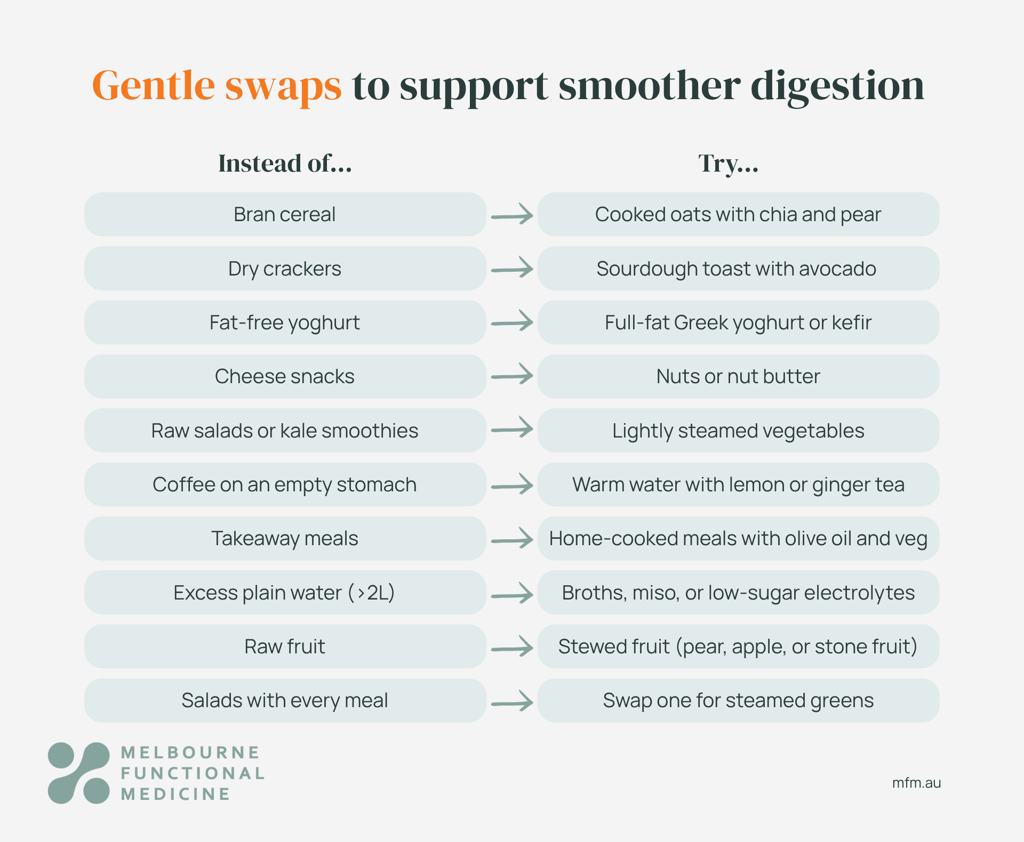
These small swaps add up – hydrating, softening, and supporting motility without bloating or dependency.
Signs your gut is improving
Change is gradual – not all-or-nothing. Watch for:
- More regular bowel movements (daily or every other day)
- Softer, easier-to-pass stool
- Less bloating and straining
- Reduced reliance on coffee or wine to “get things going”
Once digestion feels safe and supported, your body starts to let go.
When to look deeper
If you’ve made changes and are seeing some shifts, that’s a great sign. But if you’re still relying on caffeine, straining regularly, or feeling bloated after meals, it’s worth exploring what might be happening further upstream.
In clinic, we often see constipation as a signal, not a diagnosis. It tells us that something further upstream isn’t flowing well – and that can mean anything from bile sluggishness to microbial imbalance or hormonal shifts.
Areas worth exploring:
- Digestive function and bile flow – If stool is pale, sticky, or difficult to flush, or if fatty meals cause discomfort, we may assess bile production and release
- Gut microbiome balance – Dysbiosis can create gas, bloating, or alternating stool patterns. A comprehensive stool test identifies what’s out of balance
- SIBO – Early bloating or alternating constipation and diarrhoea may signal bacterial overgrowth in the small intestine
- Thyroid and hormones – Sluggish thyroid or hormonal shifts can slow motility
- Nervous system state – A body in “fight or flight” can’t digest effectively. Stress locks the gut in ‘freeze’ mode
Constipation often resolves fastest when we stop treating it as a plumbing issue and start viewing it as a communication issue – your body signalling that something needs attention. Once we understand what’s driving the slowdown, your plan becomes clearer and simpler.
Supporting healthy stool naturally
When things start to move more regularly, consistency tends to be what keeps them that way. The bowel responds well to routine – steady hydration, gentle fibre, and a nervous system that isn’t under sustained pressure. Small, repeatable habits tend to outlast periodic overhauls.
Focus on:
- Hydration: 1.5–2 L of fluids daily, including herbal teas and broths
- Movement: Gentle walking, yoga, or abdominal breathing to stimulate motility
- Magnesium and minerals: From food or practitioner-guided supplements to keep muscles relaxed
- Healthy fats and bitters: Encourage bile flow for soft, smooth stool
- Calm routine: Pause before eating, chew slowly, and avoid rushing
In clinic, we don’t treat constipation as a plumbing issue – it’s your body sending a signal that something needs attention.
If you’re still feeling stuck
Constipation is rarely a willpower issue. It’s often a signal that the gut needs gentler, more targeted support – whether that’s softer fibre sources, better hydration, improved bile flow, or a reduction in physiological stress. If symptoms have persisted despite dietary changes, it may be worth investigating what’s maintaining the pattern.
*Name changed for privacy.