
What is bloating?
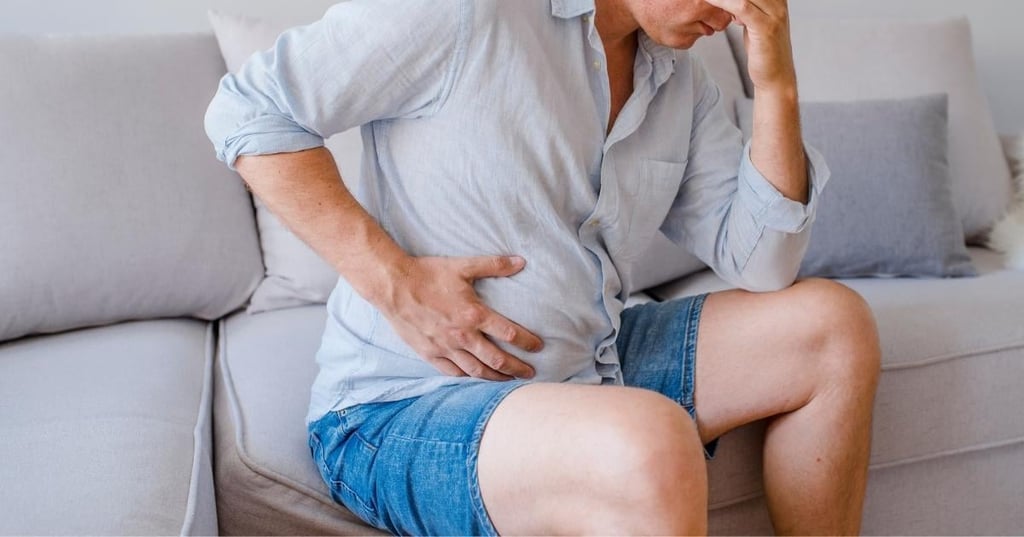
Bloating is a sensation of fullness, pressure, or tightness in the abdomen, sometimes with a visible increase in abdominal size and sometimes without. It reflects something happening inside the gut: gas accumulating, fluid building up, contents moving too slowly, or the gut wall reacting to something it finds irritating.
For many people, bloating is occasional and tied to a specific meal or food. For others, it is persistent, present most days, worsening through the afternoon, and difficult to connect to any clear trigger.
How it presents varies considerably. Some people notice it only after eating. Others find it builds across the day regardless of what or how little they have eaten. Identifying which pattern is present is usually the first useful step toward understanding what is driving it.
Symptoms of bloating
Bloating presents as a sensation of fullness, pressure, or visible abdominal swelling, and in many cases, both occur independently of each other. It affects an estimated 30 per cent of the population, and most people are unsure what is causing it.
While it’s often related to minor digestive issues, persistent or ongoing bloating should always be investigated. In some cases, it can indicate more serious conditions, including bowel cancer or ovarian cancer.
Clinically, bloating and distension are treated as two separate things.
Bloating is the sensation of fullness or pressure, while distension is a visible, measurable increase in the size of your abdomen.
The four defined symptoms include:
- A sensation of fullness or swelling in the abdomen, which may not involve any visible change in size
- Visible distension, where the abdomen increases in size, can affect how clothing fits
- Increased volume inside the gut from gas, fluid, or retained stool
- Cramping or heightened awareness of muscular activity in the abdomen
Bloating that builds across the day, often minimal in the morning and more pronounced by
evening, is common. It tends to reflect gas accumulation or slowing motility rather than a single-meal trigger.
Some people experience bloating alongside constipation, loose stools, or alternating bowel habits.
Others have distension without discomfort, or significant discomfort without any visible change, a presentation sometimes explained by visceral hypersensitivity, where the gut-brain axis registers normal levels of gas or movement as pain.
Proper diagnosis of the causes of bloating means treatment can be targeted and more effective.
What causes bloating?
Bloating most commonly develops when gas builds up faster than your gut can clear it, whether that’s from slower motility, excess fermentation, fluid retention, or swallowed air. In some cases, an underlying condition is responsible, and more than one cause can be present at once.
Slow gut motility
When the digestive tract moves contents through too slowly, food and waste accumulate and create pressure. This is often associated with constipation and can be worsened by dehydration, low physical activity, insufficient digestive enzymes, and certain medications, including opioids.
Hormonal changes also contribute: progesterone slows gut transit, which is why bloating often tracks the menstrual cycle and is particularly common in the luteal phase, the one to two weeks before your period. Changes in the microbiome also occur during perimenopause and menopause.
Gastroparesis is a condition in which the stomach empties into the small intestine more slowly than it should. It’s a specific form of motility dysfunction, and it typically produces upper abdominal bloating, early fullness, and nausea, often after small meals.
In some cases, slow gastrointestinal transit reflects a structural issue such as a bowel obstruction or a condition like diverticulitis, which requires medical investigation.
Gas retention
Gas is a normal byproduct of digestion, but when it accumulates faster than the gut can move it along, pressure builds against the intestinal walls. This happens when bacteria ferment food that has not been fully digested, often due to food intolerances, insufficient digestive enzymes, or microbiome imbalance. Overeating can also exceed the gut’s capacity to break food down efficiently, with the same result.
Fluid retention in the gut
Excess fluid in the intestinal space increases volume and can cause both bloating and loose stools. This is particularly common in IBS. Fluid retention can result from food sensitivities, hormonal changes, gut lining changes, or as a side effect of certain medications.
Swallowed air
Carbonated drinks, chewing gum, drinking through a straw, and eating quickly all introduce air into the gastrointestinal tract. This is a simpler and often overlooked contributor, but it can be significant for people who eat on the run or consume large amounts of sparkling water.
Underlying conditions
When bloating is persistent, severe, or does not clearly relate to food, an underlying condition is often involved. These include:
- Small intestinal bacterial overgrowth (SIBO)
- Irritable bowel syndrome (IBS)
- Functional dyspepsia
- Inflammatory bowel disease (IBD)
- Coeliac disease
- Food intolerances (lactose, fructose, gluten and others)
- Helicobacter pylori (H. pylori) infection
- Endometriosis
- Gastroparesis
- Diverticulitis
- Intestinal parasites
How is bloating investigated and assessed?
Assessment begins with a careful history. A practitioner will want to understand when bloating occurs, whether it relates to specific foods or meals, how it changes across the day, what other digestive symptoms you have, and what you’ve already tried.
Testing
Investigations are selected based on the clinical picture and may include:
- Blood tests to check for coeliac disease, thyroid function, and inflammatory markers
- Hydrogen breath testing for SIBO or lactose and fructose malabsorption
- Comprehensive stool analysis to assess which microorganisms are present alongside markers of digestive function and gut lining integrity
- Organic acid testing to reflect microbial metabolic activity and nutrient sufficiency
- Food sensitivity panels to identify immune-mediated reactivity to specific foods
- Imaging if structural causes are suspected
Dietary investigation
Food is often the most immediate lever. Keeping a detailed food and symptom diary can reveal patterns that neither you nor your practitioner would otherwise see.
Common triggers include dairy, wheat, legumes, high-FODMAP foods, processed foods, and carbonated drinks, though triggers are individual and what causes symptoms in one person may be well tolerated by another.
Where food intolerance is suspected, your practitioner may use a short-term elimination diet to identify which foods are responsible for your symptoms, followed by a structured reintroduction to distinguish genuine intolerance from other causes.
Why bloating can persist after treatment
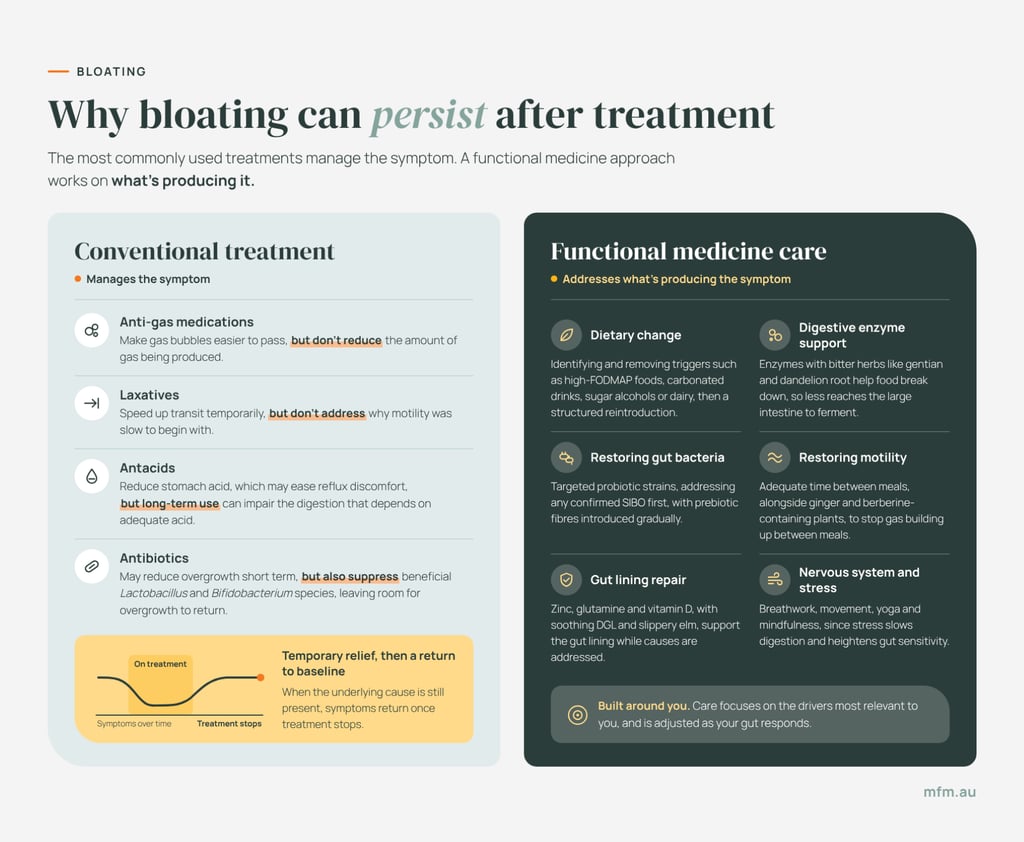
Bloating often persists after treatment because the most commonly used treatments manage the symptom rather than change what’s producing it.
- Anti-gas medications reduce the surface tension of gas bubbles to make them easier to pass, but do not reduce the amount of gas being produced
- Laxatives speed up transit time temporarily, but do not address why motility was slow to begin with
- Antacids reduce stomach acid, which may relieve some reflux-related discomfort, but long-term use can impair the digestion that depends on adequate acid
- Antibiotics may reduce bacterial overgrowth in the short term, but because they suppress beneficial bacteria, including Lactobacillus and Bifidobacterium species that compete with gas-producing organisms, they can leave conditions in place for overgrowth and bloating to return
When the underlying cause, whether that is a food intolerance, microbiome imbalance, enzyme insufficiency, or motility problem, is still present, symptoms return once treatment stops.
Treating bloating: a functional medicine approach
A functional medicine approach to bloating works by addressing what produces the symptom: the fermentation load in the gut, the composition of the microbiome, how well digestive enzymes are working, how quickly food is moving through, and whether the gut lining is doing its job. Treatment is built around which of these is most relevant to each person, and adjusted as the gut responds.
Depending on your presentation, care may include:
- Dietary change: once your triggers are identified, removing foods like high-FODMAP items, carbonated drinks, sugar alcohols, or dairy reduces the fermentation that causes gas, with a structured reintroduction process afterwards and a short-term low-FODMAP approach where it’s right for you
- Digestive enzyme support: supplementing with digestive enzymes, alongside bitter herbs like gentian and dandelion root, helps food break down properly so less of it reaches your large intestine to ferment and produce gas
- Restoring gut bacteria: since the bacteria present influence how much gas you produce and what kind, your practitioner may use targeted probiotic strains, addressing any confirmed SIBO first and introducing prebiotic fibres gradually to avoid increasing gas production
- Restoring motility: giving your gut adequate time between meals, alongside ginger and berberine-containing plants, helps clear bacteria and stop gas building up between meals
- Gut lining repair: where bacterial products are crossing into surrounding tissue and increasing your gut’s sensitivity to normal gas or movement, nutrients like zinc, glutamine, and vitamin D, along with soothing agents like deglycyrrhizinated licorice (DGL) and slippery elm, support the gut lining while underlying causes are addressed
- Nervous system and stress: since stress slows digestion and heightens gut sensitivity, managing chronic stress with things like breathwork, regular movement, yoga, and mindfulness can ease bloating alongside your other care
Supporting people with bloating to feel comfortable after meals again
We support people with bloating to move beyond short-term symptom control, toward longer, more stable periods of feeling well.
When to seek support
See your GP or a practitioner if you have:
- Bloating most days, regardless of what you eat
- A recent change in character or severity without an obvious explanation
- Bloating that’s affecting your quality of life or daily routine
- New bloating that has developed in someone over 50 with no prior digestive history
- No clear answer or lasting relief despite previous investigations or treatment
- Unintended weight loss, rectal bleeding, or persistent pain alongside bloating, which requires prompt medical review
Frequently asked questions
Is bloating the same as having a distended abdomen?
Not always. Bloating refers to the sensation of fullness or pressure, while distension refers to a measurable increase in abdominal size. Around 24% of people who experience bloating do not have visible distension, and the two do not always occur together. Some people have significant distension with very little discomfort, while others experience severe bloating without any visible change. The distinction matters because the underlying causes can differ.
Why does bloating tend to be worse in the evening?
Bloating that builds across the day typically reflects cumulative gas production from meals eaten throughout the day, combined with the natural slowing of gut motility in the afternoon and evening. Digestion is more active earlier in the day, which is why eating a larger meal in the morning and a lighter one in the evening tends to be better tolerated by people prone to evening bloating.
Can stress cause bloating?
Yes, and it’s often underestimated. Your gut has its own nerve network, called the enteric nervous system, and it communicates constantly with your brain. When you’re under chronic stress, blood flow to your gut drops, digestive enzyme secretion slows, and motility changes. Stress can also make your gut more sensitive, so gas or movement that would normally go unnoticed starts to feel uncomfortable.
Why do probiotics sometimes make bloating worse?
Probiotics are highly strain-specific, and introducing the wrong strains, or introducing them at the wrong stage can increase gas production rather than reduce it. Where SIBO is present, adding more bacteria to an already overgrown small intestine is a common reason symptoms worsen. Probiotics are most useful when selected based on the clinical picture and introduced at an appropriate point in the treatment process.
Does bloating mean I have IBS?
Not necessarily. Bloating is a symptom, not a diagnosis, and it occurs across a wide range of conditions, including food intolerances, hormonal fluctuations, dysbiosis, and structural issues, many of which are not IBS. IBS is a clinical diagnosis that requires a specific pattern of symptoms, including recurrent abdominal pain associated with changes in bowel habit. Bloating alone, even if frequent or severe, does not confirm IBS, though it is one of the most commonly reported symptoms in people who do have it.
When does bloating require urgent investigation?
Bloating accompanied by unintended weight loss, blood in the stool, a palpable abdominal mass, or significant pain should be investigated promptly. The same applies to bloating that develops suddenly in someone over 50 with no prior digestive history, or bloating that is rapidly worsening without an identifiable cause. In these situations, it is important to rule out serious pathology before focusing on functional causes.
Ready to understand what's causing your bloating?
If you’re looking for a clearer picture of what is contributing to your symptoms, learn more about our approach to bloating testing and treatment.