


What is gastritis?
Gastritis is inflammation of the stomach lining. When the stomach lining becomes inflamed, it loses its ability to protect the stomach wall from the acid and digestive enzymes it normally produces, leading to pain, irritation, and other symptoms that vary considerably between people.
Acute gastritis can develop suddenly and resolve quickly. Chronic gastritis usually develops gradually and can continue, on and off, for months or years. Some people experience noticeable upper middle abdominal pain; others have no symptoms at all and are only diagnosed incidentally during testing for something else.
Symptoms of gastritis
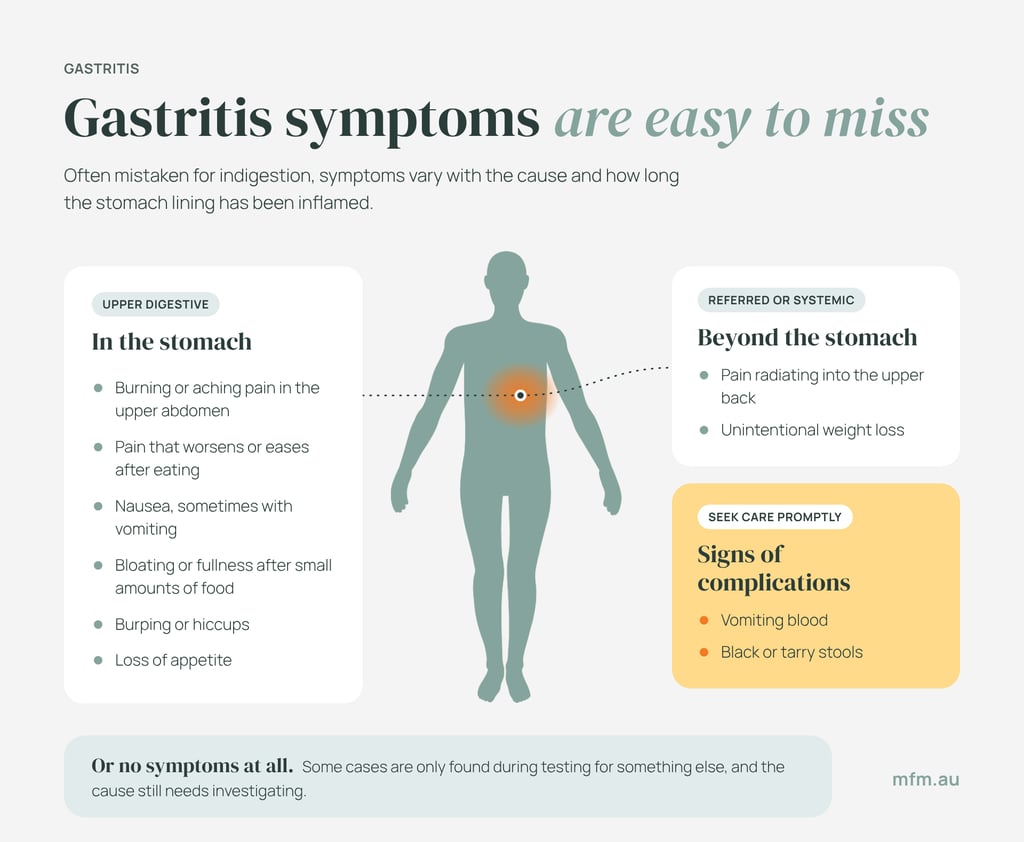
Symptoms vary depending on the cause and how long inflammation has been present. Gastritis is often mistaken for indigestion; the overlap in how it presents is part of why it goes unrecognised. The most common symptoms include:
Upper digestive symptoms
- Burning or aching pain in the upper abdomen
- Pain that worsens or eases after eating
- Nausea, sometimes with vomiting
- Bloating or a sense of fullness after small amounts of food
- Burping or hiccups
- Loss of appetite
Referred or systemic symptoms
- Pain radiating into the upper back
- Unintentional weight loss
Signs that may indicate complications
- Vomiting blood
- Black or tarry stools (melena)
Some people with confirmed gastritis have no symptoms at all.
Identifying the underlying cause of this condition is important, regardless of symptom severity, particularly where there is any risk of complications.
What causes gastritis?
Gastritis develops when something reduces the stomach lining’s ability to protect itself. That protective function depends on a layer of mucus, adequate blood flow, and the right balance of digestive secretions. When any of these are compromised, inflammation follows.
The most common causes include:
Infection
H. pylori remains the most well-recognised infectious cause, with a well-established link to gastric ulcers. It damages the mucous layer that lines the stomach wall. Viral and parasitic infections can also trigger gastritis, though less commonly. Research suggests H. pylori-related gastritis is declining in Western populations, while autoimmune gastritis is becoming more common.
Medication use
NSAIDs such as ibuprofen, aspirin, and naproxen reduce production of prostaglandins and bicarbonate, two substances the stomach uses to maintain its mucosal lining and neutralise acid. Losing both of these defensive layers can cause considerable gastric damage even without noticeable pain, especially with regular use.
Autoimmune activity
In autoimmune gastritis, the immune system attacks the parietal cells in the stomach wall. These cells produce both hydrochloric acid and intrinsic factor. Intrinsic factor is a protein the body needs to absorb vitamin B12 from food. When parietal cells are damaged, this leads to reduced acid production and B12 deficiency, and is associated with pernicious anaemia.
Microbiome and digestive contributors
- Small intestinal bacterial overgrowth (SIBO)
- Microbiome imbalance following antibiotic use
- Intestinal hyperpermeability
- Bile reflux into the stomach
- Acid reflux
- Post-surgical changes to the stomach
- Food intolerances or allergies
- Constipation, IBD, or IBS
Lifestyle contributors
- Alcohol, particularly with regular or heavy use
- Smoking
- Caffeine
- Chronic psychological stress
- Highly processed or acid-forming diets
Associated conditions
Gastritis occurs with higher frequency in people with rosacea, iron deficiency anaemia, B12 deficiency, and autoimmune conditions, including Hashimoto’s thyroiditis and Type 1 diabetes.
How is gastritis investigated and assessed?
A GP will typically begin with a clinical history and may refer to a gastroenterologist for further investigation. Standard assessment may include:
- Gastroscopy (endoscopy): A camera is passed into the stomach to directly visualise inflammation, damage or ulceration. A biopsy may be taken to check for H. pylori, atrophic changes or malignancy
- Breath testing: Used to detect H. pylori based on specific gas by-products it produces
- Blood tests: To assess red blood cell counts, iron levels, B12 and markers of immune activity
- Faecal occult blood testing: To check for microscopic blood in the stool, which may indicate gastric bleeding
Standard testing identifies structural changes and common infections well, but does not routinely assess the microbiome, digestive function, nutrient absorption, food intolerances or autoimmune activity.
Where standard testing hasn’t provided a clear answer, a functional medicine practitioner may also look at:
- SIBO hydrogen and methane breath testing
- Comprehensive gut microbiome testing
- Food intolerance and allergy testing
- Digestive function and nutrient absorption markers
- Organic acid testing
- Pathogen testing, including parasites and enterococcal species
The goal is to build a complete picture of what is contributing, not just confirm or rule out structural pathology.
What happens if gastritis is left untreated?
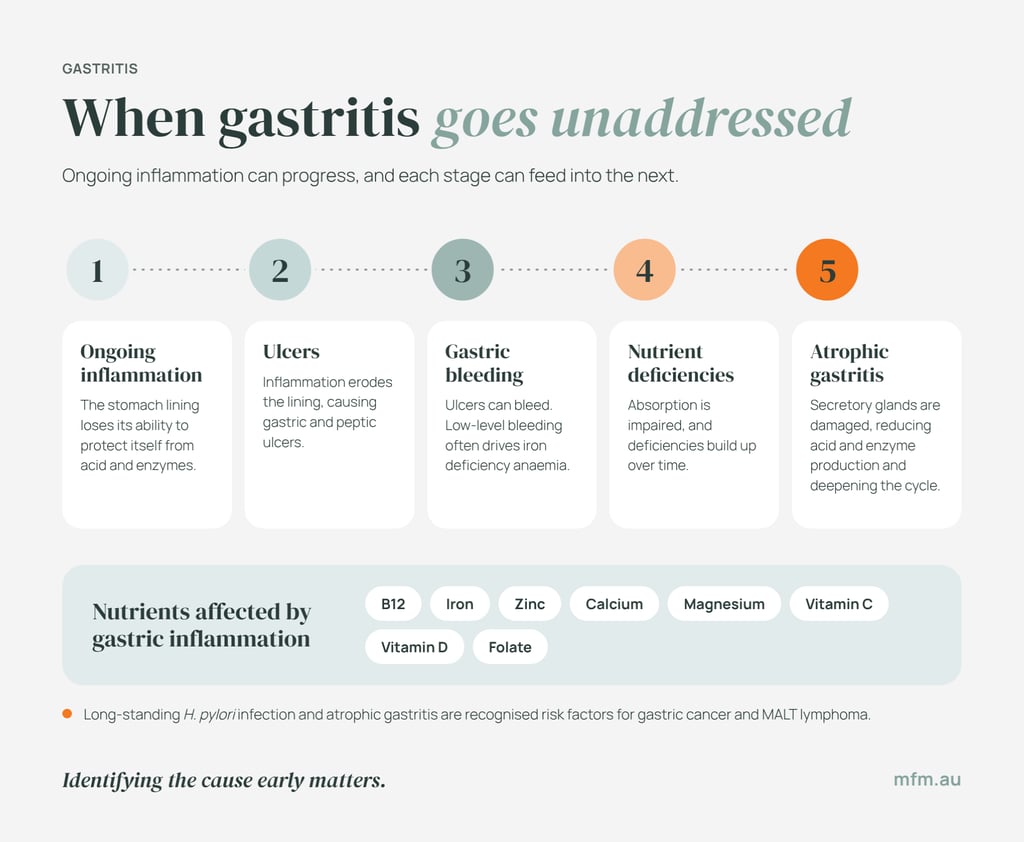
Gastritis that is not identified and addressed can progress. The most significant complications include:
- Gastric and peptic ulcers: Ongoing inflammation can erode the stomach lining, leading to ulceration in the stomach or upper digestive tract
- Gastric bleeding: Ulceration can cause internal bleeding, which may present as blood in vomit or black, tarry stools. Chronic low-level bleeding is a common driver of iron deficiency anaemia
- Nutritional deficiencies: Gastric inflammation impairs absorption of B12, iron, zinc, calcium, magnesium, vitamin C, vitamin D and folate. These deficiencies can build up and contribute to other health conditions
- Atrophic gastritis: Chronic inflammation can progressively damage the stomach’s secretory glands, reducing their ability to produce acid and digestive enzymes. This impairs protein digestion and mineral absorption, which adds to the nutrient deficiencies already caused by gastric inflammation. The longer this goes unaddressed, the harder the cycle becomes to break. Atrophic gastritis is associated with an increased risk of gastric cancer
- Gastric cancer and MALT lymphoma: Long-standing H. pylori infection and atrophic gastritis are both recognised risk factors for gastric cancer and MALT lymphoma, a rare cancer that develops in the immune tissue of the stomach lining.
Why gastritis can continue after treatment
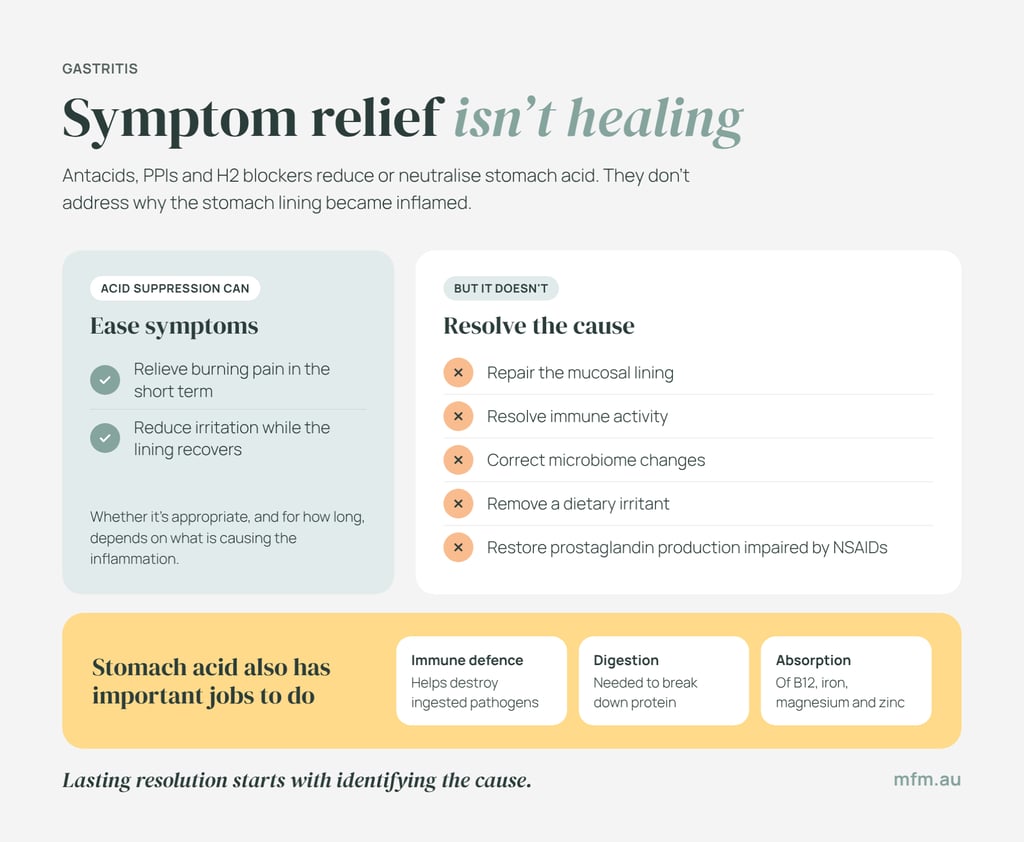
Gastritis symptoms often continue because standard treatments reduce or neutralise stomach acid without addressing why the stomach lining became inflamed. Symptom relief and healing are two different things, and most medications only achieve the first.
- Antacids neutralise stomach acid and provide short-term relief, but inhibit absorption of B12, calcium, magnesium and zinc when used regularly, and reduce the stomach’s ability to destroy ingested pathogens
- Proton pump inhibitors (PPIs) such as Somac, Nexium and Losec directly block acid production and are often effective at relieving symptoms, but do not repair the mucosal lining or resolve the underlying cause
- Long-term PPI use is common because symptoms return when people try to stop, despite manufacturers recommending no more than two weeks of use at a time. Prolonged PPI use is linked to impaired absorption of B12, magnesium, calcium and zinc, increased infection risk, and elevated fracture risk
- H2 receptor antagonists reduce the amount of acid released into the digestive tract and can ease pain, but carry similar risks to PPIs with prolonged use, including nutrient depletion and increased infection susceptibility
- Antibiotics are prescribed when H. pylori is identified and are often effective at eradication, but deplete beneficial bacteria alongside harmful ones, leaving the microbiome altered, creating conditions for further problems
Does suppressing stomach acid help gastritis heal?
Acid suppression can reduce irritation while the stomach lining recovers, and for some people it provides short-term relief. But hydrochloric acid also serves as part of the stomach’s immune defence and is required for protein digestion and the absorption of B12, iron, magnesium and zinc. Reducing it has consequences that increase the risk of other digestive dysfunction.
There is also a distinction between choosing to suppress acid as a treatment strategy, and having low acid as a result of autoimmune damage to the stomach’s parietal cells. In the second case, low acid is itself a problem that needs to be addressed, rather than a therapeutic goal. Whether temporary acid suppression is appropriate, and for how long, depends on what is causing the inflammation.
In each case, acid suppression does not:
- repair the mucosal lining
- resolve immune activity
- correct microbiome changes
- remove a dietary irritant, or
- restore prostaglandin production impaired by NSAID use.
Lasting resolution requires identifying the specific cause unique to the patient, addressing it, and supporting recovery of the stomach lining.
Treating gastritis: a functional medicine approach
A functional medicine approach to gastritis treatment starts with the question of why the stomach lining is inflamed, and works backwards from there. Rather than applying the same approach to every person, a practitioner will take a thorough history covering diet, medication use, stress patterns, past infections, family history and any associated conditions. Functional testing is often used to identify what is causing your symptoms.
From there, treatment is built around what the findings show, and may draw on several of the following strategies:
- Dietary changes: Removing common irritants like alcohol, processed food, excess caffeine, and your identified intolerances, then rebuilding your diet around fibre-rich, anti-inflammatory whole foods that support gut healing
- Herbal medicine: Herbs to soothe and coat your gastric lining (slippery elm, marshmallow root, liquorice root), ease inflammation (curcumin, boswellia), address lingering H. pylori where present (goldenseal, wormwood, pomegranate husk, thyme, garlic), and support tissue repair (calendula, yarrow)
- Restoring motility and digestive function: Prokinetic herbs like ginger and artichoke leaf, digestive bitters such as gentian and dandelion root, bile-support strategies, and addressing constipation all help keep your digestion moving and reduce ongoing irritation to your stomach lining
- Nutrient repletion: Correcting deficiencies in B12, iron, vitamin C, and vitamin A that often develop when reduced stomach acid and inflammation affect how well you absorb key nutrients
- Rebuilding your gut microbiome: Targeted probiotics, prebiotic-rich foods, and addressing any confirmed dysbiosis help restore bacterial levels affected by acid suppression, dietary restriction, or H. pylori treatment
- Stress and nervous system regulation: Vagal nerve stimulation, mindfulness practices, and adjusting meal timing and sleep help calm the stress response that can slow digestion and wear down your stomach’s natural defences
We support people with gastritis to optimal health
Move beyond guesswork and short-term fixes to lasting, more confident digestion. Start your care journey today.
When to seek support
See your healthcare provider if you have:
- Symptoms that have remained for more than a few weeks despite dietary changes
- Acid-suppressing medication that isn’t working, or symptoms that return when you stop
- Regular reliance on antacids or PPIs and no clear understanding of why
- Symptoms that could indicate complications, such as blood in vomit or black stools
- Symptoms that are interfering with eating, sleep or daily life
- A known associated condition such as autoimmune disease, B12 deficiency or iron deficiency anaemia, without having had your stomach investigated
Frequently asked questions
How long does gastritis take to heal?
Gastritis can start improving within a few weeks once the underlying cause is identified and treated. Chronic cases involving long-term mucosal damage or autoimmune activity can take considerably longer to resolve. Symptoms can also ease before the stomach lining has fully healed, so treatment is usually continued a little longer than symptoms alone suggest.
What is the difference between gastritis and reflux?
Gastritis and reflux affect different parts of the digestive system. Gastritis is inflammation of the stomach lining itself, while reflux happens when stomach contents move up into the oesophagus, which is not designed to handle acid. Both can cause similar burning discomfort in the upper abdomen or chest, and the two conditions can occur together.
Is gastritis the same as an ulcer?
No, gastritis is not the same as an ulcer, though the two conditions are closely related. Gastritis is inflammation of the stomach lining, while an ulcer is an open sore that forms once that inflammation has worn down the mucosal surface. Left unaddressed, gastritis can progress to ulceration, which is why treating the underlying cause early matters.
What foods should I avoid with gastritis?
Alcohol, caffeine, and highly processed foods are the most consistently problematic foods for gastritis. Spicy and acidic foods are also commonly cited, though tolerance varies from person to person. Personal food intolerances matter too, and specific triggers can differ depending on the underlying cause, such as bile reflux or NSAID use.
Can gastritis cause back pain?
Yes, gastritis can cause pain that radiates to the upper back, due to referred pain where nerve pathways from the stomach overlap with those supplying the back. This back pain often shares the same character as the abdominal discomfort and can worsen after eating.
Can stress alone cause gastritis?
Stress alone rarely causes gastritis, but it can be a significant contributor alongside other factors. Psychological stress reduces blood flow to the stomach lining and changes how the stomach responds to irritants, making it more vulnerable to inflammation. Stress can also worsen motility and reflux, keeping symptoms going even after other causes are addressed.
Is it possible to have gastritis without any symptoms?
Yes, gastritis can be present without any digestive symptoms at all, and some people only discover it during an endoscopy for an unrelated reason. This is particularly common with H. pylori infection, which can persist for years without obvious signs. Gastritis found this way still needs proper investigation into its cause.
Can gastritis come back after treatment?
Yes, gastritis can return after treatment, particularly when the underlying cause was not fully identified or resolved. Symptom relief from acid-suppressing medication eases discomfort but does not repair the stomach lining or address what caused the inflammation. Recurrence usually means something is still contributing, such as ongoing infection, continued NSAID use, or autoimmune activity.
Ready to understand what’s causing your gastritis?
If you’re looking for a clearer picture of what is contributing to your symptoms, learn more about our approach to gastritis testing and treatment.