

What is acid reflux?
Acid reflux is a condition where stomach contents, including acid, rise into the oesophagus. The oesophageal lining isn’t built to tolerate acid, which is why even small amounts produce the burning sensation most people know as heartburn.
At the centre of most reflux is the lower oesophageal sphincter (LOS), a muscular valve at the junction between the oesophagus and stomach. When it closes properly, stomach contents stay where they belong. When it relaxes too often or loses tone, acid moves upward relatively easily.
What makes reflux complex is how differently it presents from person to person. Diet, posture, stress, gut bacteria, medication use, and low stomach acid production can all play a part.
Symptoms of acid reflux
The most recognised symptom is a burning sensation in the chest, often behind the sternum (breastbone), that may rise toward the throat, neck, jaw, or sides of the chest. It can worsen after eating, when lying down, bending over, during exercise, or with hunger, and is often relieved by eating, antacids, or sitting upright.
Other symptoms include:
- Sour or bitter taste at the back of the throat
- Regurgitation of food or liquid
- Difficulty or discomfort when swallowing
- A sensation of something sitting at the back of the throat
- Feeling full quickly, even with small meals
Reflux can also show up without obvious heartburn, through what’s known as atypical symptoms:
- Persistent cough or throat clearing
- Hoarse voice or laryngitis
- Wheezing or bronchospasm (tightening of the airways)
- Indigestion or upper abdominal discomfort (dyspepsia)
- Or, no observable symptoms, known as silent reflux
Important: Chest pain that is new, severe, or accompanied by shortness of breath should always be assessed for cardiac causes first. Reflux is the most common cause of non-cardiac chest pain, but cardiac causes must be ruled out before assuming a digestive origin. If unsure, seek urgent medical attention.
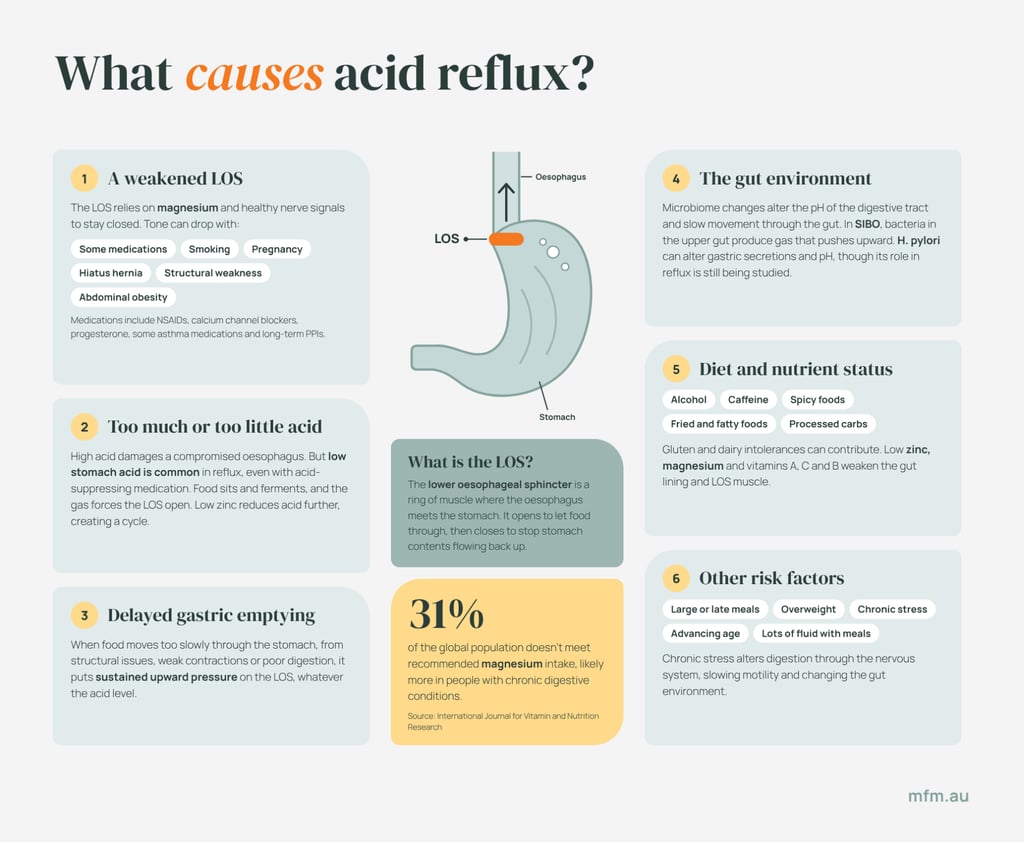
What causes acid reflux?
Acid reflux rarely has a single cause. In most cases, several factors combine to compromise the function of the LOS or disrupt the digestive environment. The most common of these are explained below.
The lower oesophageal sphincter
The LOS needs adequate muscle tone to stay closed. This depends on enough magnesium, which supports smooth muscle function, and healthy nervous system signals telling the muscle to contract.
Beyond staying closed, the LOS also has to let things through in a controlled way. The job of the LOS is to constrain the contents of the stomach so as they don’t rise into the oesophagus, whilst also permitting things to pass the other way. The LOS has frequent transient relaxations, meaning it stays closed but frequently opens for a moment. This balances pressure and gas buildup, and allows saliva and other secretions to pass out of the oesophagus.
Reflux risk increases when this frequency climbs beyond what’s typical. The frequency of these transient relaxations varies based on many factors, but the underlying things to understand here are that when the body doesn’t prioritise getting digestion right, it gets the LOS wrong, and that stomach acid levels are a part of how it gets feedback. Low acid levels can be read by the body as meaning there’s less to hold back, so the number of transient relaxations increases, resulting in it being open more of the time, and thus allowing more acid (albeit at lower levels) to pass into and irritate the oesophagus.
Separately, the LOS is also governed by the autonomic nervous system. While there are many factors that influence the LOS, ultimately it is under the control of the parasympathetic nervous system (the relax/revive side), and in our experience, much of the time it is a case of the body being too distracted by something else, with the competing sympathetic nervous system (the stress/survival side) being considered more important to get right than the side that favours digestion. Digestion suffers, vagal stimulation decreases, and reflux can result.
On top of this, several external factors can also reduce tone or trigger the LOS to relax when it shouldn’t:
- Certain medications, including NSAIDs, calcium channel blockers, progesterone, some asthma medications, and long-term PPI use
- Smoking, which slows gastric emptying and directly relaxes the sphincter
- Pregnancy, through both hormonal relaxation and physical pressure
- Hiatus hernia, where part of the stomach pushes through the diaphragm
- Genetic or structural weakness of the LOS
- Central abdominal obesity, which increases physical pressure
Stomach acid: too much or too little
High stomach acid reaching a compromised oesophagus causes damage. But clinical experience at Melbourne Functional Medicine suggests that low stomach acid is actually common in many reflux patients, including those already taking acid-suppressing medication.
When stomach acid is insufficient, food sits in the stomach longer than it should. Fermentation can occur, producing gas that creates upward pressure and forces the LOS open. Low acid also impairs protein digestion and reduces absorption of zinc, which is needed for acid production itself. This creates a cycle where low acid leads to conditions that worsen reflux.
Zinc and magnesium deficiencies are particularly relevant here. Magnesium supports over 300 processes in the body, including muscle function. An estimated 31% of the global population doesn’t meet recommended magnesium intake levels, a figure likely higher in people with chronic digestive conditions. Low zinc impairs hydrochloric acid secretion directly.
Delayed gastric emptying
When food moves too slowly through the stomach, whether from structural issues, weak muscle contractions (low peristaltic action), or poor digestion, it creates sustained upward pressure on the LOS regardless of acid levels. This can happen on its own or alongside other causes of reflux.
The gut environment
Changes to the gut microbiome alter the pH of the digestive tract and can slow movement through the gut. Small intestinal bacterial overgrowth (SIBO) is one example, where bacteria colonise the upper digestive tract, producing gas which pushes upward, contributing to reflux.
Helicobacter pylori (H. pylori), a bacterium associated with gastric ulcers, is present in some cases too. It can alter gastric secretions and pH, though researchers are still working out exactly how much this contributes to reflux itself.
Diet and nutrient status
Some foods and drinks directly trigger reflux or reduce LOS function: alcohol, caffeine, spicy foods, fried and fatty foods, and highly processed carbohydrates with little protein or fibre to buffer acid production.
Food intolerances, particularly to gluten and dairy, can be contributing factors. In children, reflux is commonly associated with dairy allergy.
Beyond specific foods, overall nutrient status matters too. Zinc, magnesium, vitamin A, vitamin C, and B vitamins all support healthy digestion, and when levels run low, the gut lining and muscle function that keep the LOS working properly can weaken.
Other contributing factors that increase reflux risk
- Eating large meals or eating close to bedtime increases pressure on the LOS
- Overweight and obesity increase intra-abdominal pressure
- Chronic stress directly alters digestive function through the nervous system, reducing gastric motility and changing the gut environment
- Advancing age is associated with reduced motility and greater oesophageal acid exposure
- Overconsuming liquids/fluids during a meal can increase reflux
Complications of untreated reflux
Left unmanaged, ongoing acid exposure can lead to progressive oesophageal and gastric damage:
- Oesophagitis and oesophageal ulceration
- Barrett’s oesophagus, a change in the cellular lining of the oesophagus often associated with an increased risk of cancer
- Gastrointestinal bleeding, anaemia, vomiting blood (haematemesis), and black, tarry stools (melaena)
Diagnosis and assessment
Diagnosis typically begins with symptom history. Where reflux is frequent, severe, or unresponsive to initial treatment, further investigation may include:
- Gastroscopy, which can identify inflammation, oesophageal damage, Barrett’s oesophagus, or hiatus hernia
- Ambulatory pH or impedance monitoring, which measures how much acid reaches the oesophagus across a day
- Positive response to acid-reducing medication, which is sometimes used diagnostically, sometimes used as a diagnostic test in straightforward presentations
Standard diagnosis identifies that reflux is occurring, but not why. It does not establish whether the LOS is failing due to low stomach acid, gut dysbiosis, SIBO, H. pylori, or nutrient deficiencies. Functional testing addresses this gap and may include a microbiome mapping stool test, breath testing for SIBO, food intolerance testing, and nutrient status assessment for zinc, magnesium, and B vitamins.
Why acid reflux can continue after treatment
Acid reflux can persist after treatment because the most commonly prescribed medications, proton pump inhibitors (PPIs) and H2 receptor blockers, only reduce how much acid the stomach produces. For many people, this relieves symptoms in the short term, but it doesn’t address what caused the LOS to fail in the first place, and may even make it more complacent.
What these medications do not change:
- Why the LOS is failing to close
- The state of the gut microbiome
- The presence of SIBO or H. pylori
- Existing nutrient deficiencies
- Gastric motility
- The nervous system’s influence on digestion
Sustained acid suppression can:
- Alter the gut microbiome
- Reduce absorption of B12, magnesium, iron, zinc, and calcium
- Increase susceptibility to gut infections
- Impair protein digestion and absorption
- Long term, it may contribute to elevated risk of osteoporotic fracture, interstitial nephritis, and gastric cancer
These risks are why GPs are now advised to limit long-term PPI prescriptions, and why many people look for an approach that addresses the underlying cause.
There is also the matter of low stomach acid. In some reflux patients, PPIs further suppress an already insufficient acid environment, which can worsen the underlying fermentation and motility issues contributing to symptoms.
Treating acid reflux: a functional medicine approach
A functional medicine approach to acid reflux looks at why your lower oesophageal sphincter is failing and what’s happening in your wider digestive environment, rather than just suppressing acid production.
Depending on your presentation, treatment may include:
- Gut environment support: where H. pylori or SIBO is contributing, antimicrobial herbs, precision probiotics, and prebiotic fibre may be used to reduce overgrowth, improve motility, and restore a healthy microbial environment
- Stomach acid and motility support: betaine hydrochloride, digestive stimulant herbs such as gentian and ginger, and zinc and magnesium repletion may be used to restore adequate acid levels and support gastric emptying
- Mucosal repair: mucilaginous herbs such as slippery elm and marshmallow, alongside zinc, vitamin A, and vitamin C, may help soothe and repair your oesophageal and gastric lining and support LOS tone
- Dietary changes: identifying and reducing food intolerances and direct triggers, alongside meal timing and portion size, may ease pressure on your LOS, with weight, smoking, and alcohol use also addressed where relevant
- Sleep positioning: lying on your left side and elevating the head of your bed may reduce nocturnal acid exposure, particularly if your reflux worsens overnight
- Stress resilience: breathwork, mindfulness, and time in nature may help regulate the nervous system response that affects your LOS tone and stomach emptying
We support people with acid reflux to optimal health
We help people with acid reflux to not only reclaim their health but to enjoy life with vitality. Start your care journey today.
When to seek support
See your GP or a practitioner if you have:
- Frequent, severe, or treatment-resistant symptoms
- Regular reliance on antacids or PPIs without knowing the underlying cause
- Difficulty swallowing, unintended weight loss, vomiting, or blood in vomit or stools
- A diagnosis of Barrett’s oesophagus or risk of oesophageal damage
- Reflux affecting sleep, diet, or daily life
FAQs
What is the difference between acid reflux, heartburn, and GORD?
Acid reflux and heartburn refer to the same condition: stomach acid rising into the oesophagus and causing a burning sensation. GORD, or GERD in American spelling, is the term used when reflux becomes frequent enough to cause ongoing irritation or damage. Left unmanaged, GORD can lead to oesophagitis and, in some cases, Barrett’s oesophagus.
Can low stomach acid cause acid reflux?
Yes, low stomach acid can trigger acid reflux. When stomach acid is insufficient, food takes longer to empty from the stomach, allowing fermentation and gas that create upward pressure. That pressure can force the lower oesophageal sphincter open, letting whatever acid is present reach the oesophagus. This is why acid suppression alone doesn’t always resolve it.
Does stress cause acid reflux?
Yes, stress is a significant contributing factor to acid reflux. The autonomic nervous system governs digestive motility and acid secretion. Prolonged stress slows gastric emptying and alters digestive coordination, making reflux more likely. For most people, stress is one of several contributing factors rather than the sole cause.
Why do antacids only provide temporary relief?
Antacids neutralise acid that has already reached the oesophagus, but do not address the conditions that allowed reflux to occur. They do not alter lower oesophageal sphincter function, gastric motility, gut bacteria, or the nutritional factors that underpin healthy digestion. When symptoms consistently return after antacid use, it generally means the underlying causes are still present and haven’t been addressed.
Can H. pylori cause acid reflux?
Yes, H. pylori can contribute to acid reflux. The bacterium alters gastric secretions to suit its own survival, which can affect stomach pH and function in ways that promote reflux symptoms. It is also associated with gastric ulcers and chronic inflammation of the stomach lining. Because H. pylori doesn’t always cause obvious symptoms, it can go unidentified in people with persistent reflux.
What is the difference between GORD and a hiatus hernia?
GORD is a physiological condition defined by chronic acid reflux and its effects on the oesophagus. A hiatus hernia is a structural change where part of the stomach pushes through the diaphragm, weakening the barrier that keeps acid down. The two often occur together, but can exist without the other.
Is it safe to take PPIs long term?
PPIs are effective for short-term acid suppression, but long-term use carries risks. These include changes to the gut microbiome, reduced absorption of B12, magnesium, zinc, iron, and calcium, and a higher risk of infections and fractures. This is why extended use needs medical supervision, and why addressing the underlying causes of reflux matters for long-term management.
Ready to understand what’s causing your acid reflux?
If you’re looking for a clearer picture of what is contributing to your symptoms, learn more about our approach to acid reflux treatment.