
What is period pain?
Period pain (dysmenorrhoea) is cramping pain in the lower abdomen during a period, caused when the uterus contracts more strongly than usual as it sheds its lining.
There are two types. Primary dysmenorrhoea occurs without any identifiable pelvic condition and is the most common form, particularly in younger women. It is sometimes called functional dysmenorrhoea.
Secondary dysmenorrhoea is pain caused by a diagnosable condition such as endometriosis, adenomyosis or fibroids. It tends to be more severe and longer lasting, and often worsens as the condition progresses. It needs proper investigation rather than being managed as routine period pain.
Symptoms of period pain
The most common symptoms of dysmenorrhoea are cramping and pain in the lower abdomen, typically starting a day before or on the first day of bleeding and easing over two to three days. Around 92 per cent of young Australian women experience period pain.
For some women, pain is felt as a dull, constant heaviness. For others, it comes in sharp, spasm-like waves, and this pattern is usually the most disabling. The pain often spreads to the lower back and upper thighs.
Other symptoms often include:
- nausea or vomiting
- loose stools or diarrhoea
- headache or migraine
- fatigue
- bloating and fluid retention
- dizziness or faintness
- When your pain doesn’t follow the typical pattern, it can be a sign that something else is adding to it. The most common causes are
- endometriosis, adenomyosis and fibroids.
Signs to look for include pain that:
- starts earlier in your cycle
- lasts well beyond the first few days of bleeding
- occurs between periods or during sex
- gets worse with each cycle
- doesn’t ease with pain relief or the pill
Changes in your bladder habits or bowel movements can also point to an underlying condition, such as needing to urinate suddenly or more often, pain when urinating or opening your bowels during your period, or ongoing bloating or constipation.
What causes period pain?
Period pain most commonly develops when the lining of the uterus releases high levels of prostaglandins as it breaks down.
Prostaglandins are hormone-like chemical messengers made by cells throughout the body. They help regulate inflammation, pain, blood flow and muscle contractions, and in reproductive health they play an important role in menstruation, labour and cervical changes.
Prostaglandins help the uterus contract so it can shed its lining. However, higher levels can cause stronger cramps and heavier bleeding. These strong contractions squeeze the blood vessels supplying the uterine muscle, cutting its oxygen supply and producing the cramping pain.
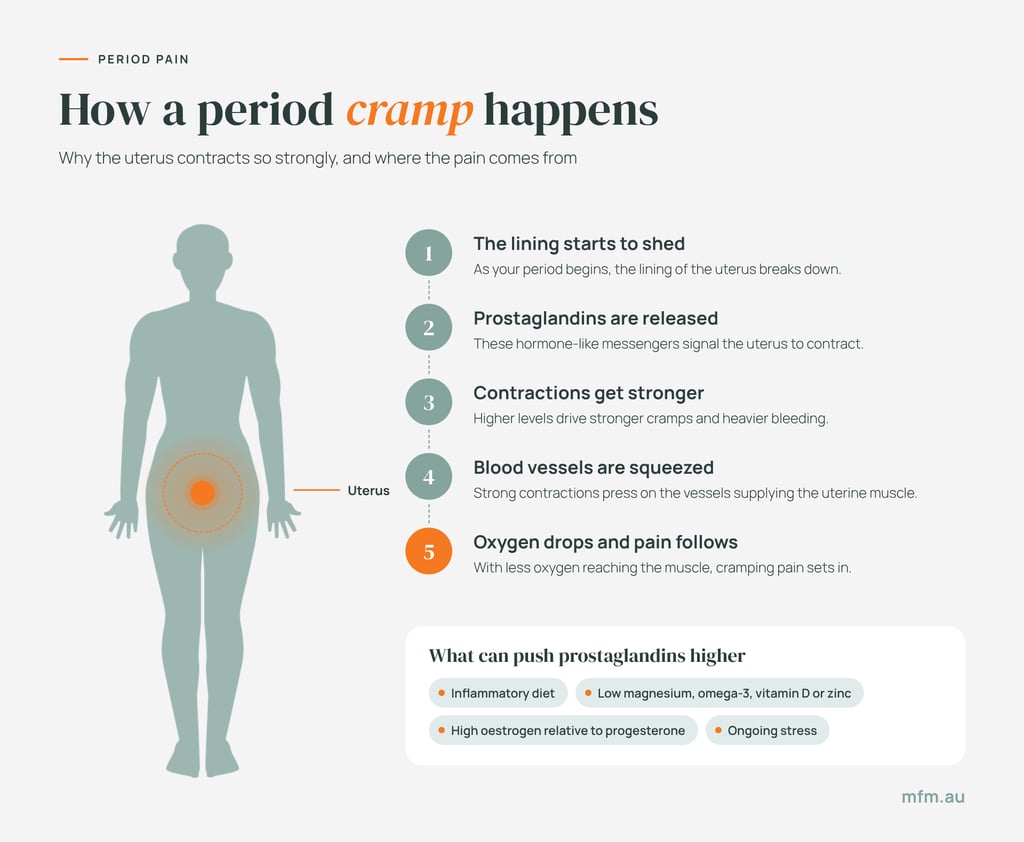
For most women with primary dysmenorrhoea, the normal hormonal changes of menstruation trigger a much stronger pain response than expected. Specific contributing factors may add to this:
- Diet and inflammation: a diet high in processed foods, refined vegetable oils and sugar can keep inflammation raised through the cycle, which pushes prostaglandin production higher and makes cramping worse
- Nutritional status: low levels of magnesium, omega-3 fatty acids, vitamin D and zinc are each associated with higher prostaglandin activity and more severe cramping
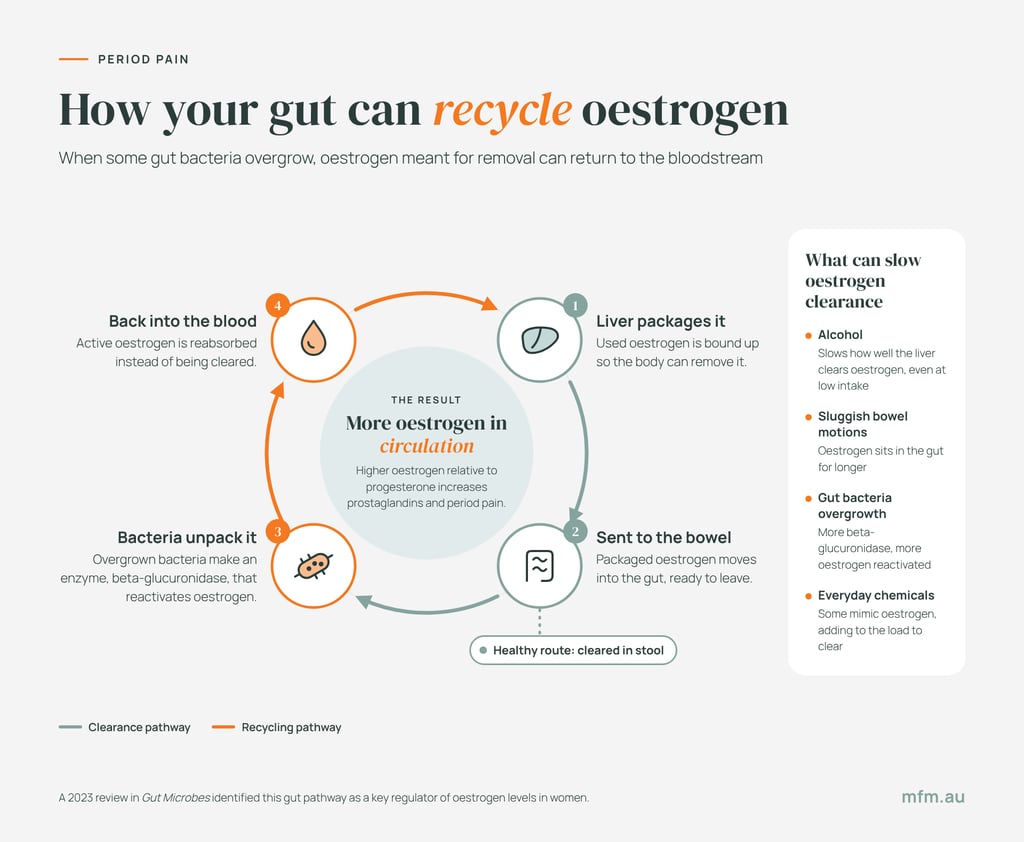
- Oestrogen and the uterine lining: oestrogen thickens the uterine lining each cycle, and a thicker lining releases more prostaglandins as it sheds. Slow oestrogen clearance by the liver, constipation and regular alcohol intake can all leave more oestrogen circulating
- Gut health: when certain gut bacteria overgrow, they produce higher levels of an enzyme called beta-glucuronidase, which reactivates oestrogen in the bowel so it gets reabsorbed into the bloodstream rather than cleared from the body. A 2023 review in Gut Microbes identified this gut pathway as an important influence on oestrogen levels in women
- Smoking: smoking is one of the best-established risk factors for more painful periods, likely by narrowing blood vessels and reducing oxygen supply to the uterus
- Stress: ongoing stress is associated with more painful periods, likely through its effects on inflammation and how strongly the body perceives pain
- Dairy: some research suggests A1 casein, a protein found in many dairy products, breaks down in the gut into a compound called BCM7 that may promote inflammation in some people, although the evidence is mixed
- Gluten: in women with coeliac disease or non-coeliac gluten sensitivity, gluten can affect gut health, and small studies suggest a gluten-free diet may ease pain linked to endometriosis
- Toxin exposure: some everyday chemicals, including pesticides, heavy metals and plastics, can interfere with hormone signalling or mimic oestrogen, adding to the oestrogen the body has to clear
Someone with low magnesium, high stress and slow oestrogen clearance is likely to experience much more severe pain than someone with only one of these factors present.
In secondary dysmenorrhoea, the pain comes from an underlying condition as well as prostaglandins. The most common causes are endometriosis, adenomyosis and fibroids. Each produces pain in its own way, which is why secondary dysmenorrhoea often doesn’t respond well to simple pain relief.
Other conditions, including pelvic inflammatory disease, ovarian cysts and interstitial cystitis (bladder pain syndrome), can also cause pain that feels like period pain. PMOS is a separate consideration: pain is not a typical symptom of PMOS, though the two can occur together.
How is period pain diagnosed and assessed?
Period pain is usually diagnosed by a GP from a detailed menstrual history, with a pelvic examination and further testing if an underlying condition is suspected.
This may include a pelvic ultrasound, testing for sexually transmitted infections, and in some cases a laparoscopy (keyhole surgery) to examine the pelvic organs. A normal ultrasound does not rule out endometriosis, which often needs specialist imaging or laparoscopy to confirm.
Standard blood testing may include:
- full blood count and iron stores, particularly where bleeding is heavy
- thyroid function
- vitamin D
- fasting glucose and general metabolic markers
A functional assessment builds on this by looking at hormones, gut function, nutritional status and inflammation together. It also takes a full history of medications, environmental exposures, stress and family history of menstrual conditions.
Functional testing may include:
- DUTCH Complete: maps sex hormones, how the body is breaking down and clearing oestrogen, and daily cortisol patterns
- Microbiome testing: assesses the diversity of gut microbes and their role in oestrogen clearance and inflammation
- Organic Acids Test: measures by-products of metabolism and gut microbes in urine, which can point to patterns in inflammation, digestion and nutrient use
- Dietary assessment and environmental toxin screening: used where the history suggests a likely contributor
- Nutritional status: magnesium, omega-3 fatty acids, vitamin D and zinc
- High-sensitivity CRP: a blood marker of inflammation associated with more severe menstrual pain
- Oestrogen and progesterone: measured at specific points in the second half of the cycle (the luteal phase), to confirm ovulation and check how the cycle is functioning
Why period pain can continue after treatment
Period pain often continues because conventional treatments focus on managing pain, which is an important part of care, but aren’t designed to address what is making it so severe.
Painful periods are frequently dismissed as normal, and many women are never investigated beyond over-the-counter pain relief, even when pain is severe enough to affect daily life.
Conventional treatments include:
- NSAIDs such as ibuprofen or naproxen, to reduce prostaglandin production and ease cramping
- the oral contraceptive pill, to suppress ovulation and reduce hormonal fluctuation across the cycle
- hormonal IUDs, implants or other contraceptive devices, which can reduce or stop bleeding and associated pain
- stronger prescription pain relief where over-the-counter options are insufficient
- for secondary dysmenorrhoea, surgery such as laparoscopy to treat endometriosis or remove fibroids
NSAIDs can considerably reduce cramping while they are being taken, but once you stop, prostaglandin production returns to the same level. Long-term NSAID use can also irritate the gut lining and may reduce the diversity of gut bacteria, which could worsen some of the contributors to pain.
The pill suppresses ovulation and reduces prostaglandin production, often providing substantial relief. But when it is stopped, the natural cycle returns, along with the same prostaglandin activity and contributing factors, such as slow oestrogen clearance or nutritional gaps, that were making periods painful to begin with. The pill can also deplete magnesium and zinc, both of which are needed to manage inflammation and regulate prostaglandins.
For women with secondary dysmenorrhoea, pain can continue or come back even after surgery if the factors that allowed the underlying condition to develop, such as oestrogen activity, chronic inflammation or an overactive immune response, are still present.
Treating period pain: a functional medicine approach
A functional medicine approach to dysmenorrhoea looks at what is making your body respond so strongly each cycle. Alongside pain relief where needed, the focus is on identifying what is raising prostaglandin activity and inflammation, and whether nutritional factors or slow oestrogen clearance are contributing, then working on those contributors.
Depending on your presentation, care may include:
- Anti-inflammatory eating: Cutting back on refined vegetable oils, processed foods, alcohol and sugar, and eating more oily fish, olive oil, walnuts, flaxseeds and leafy greens, lowers the prostaglandins that drive cramping. Foods you react to, such as A1 dairy or gluten, are removed where an intolerance is contributing.
- Targeted nutrients: Omega-3 fatty acids, magnesium, vitamin D, vitamin E and zinc may ease period pain by relaxing the uterine muscle and reducing prostaglandin production.
- Oestrogen clearance and gut health: Cruciferous vegetables, fibre, DIM, calcium-d-glucarate and targeted probiotics can help your liver and gut clear oestrogen where testing suggests clearance is slow, since excess oestrogen thickens the uterine lining.
- Thyroid function and blood sugar: Treating an underactive thyroid can reduce heavy flow, and steadying blood sugar and insulin can lower the inflammation that intensifies menstrual symptoms.
- Herbal medicine: Practitioner-prescribed herbs such as ginger, curcumin, cramp bark, peony and liquorice, chaste tree and shatavari may ease uterine spasm, calm inflammation and help regulate your cycle.
- Movement and physical therapies: Regular aerobic exercise was ranked the most effective non-drug strategy in a 2024 review comparing clinical trials. Heat, TENS and aromatherapy massage, which has systematic review support, can also reduce pain without medication.
- Stress, sleep and smoking: Yoga, meditation, better sleep and help to stop smoking can reduce period pain, because stress, poor sleep and smoking all raise inflammation and how strongly you feel pain.
This care can work alongside pain relief, the pill or other treatments prescribed by your doctor. Where secondary dysmenorrhoea is suspected, it also works alongside medical investigation and specialist care.
Supporting women to move beyond month-to-month pain relief
We support women whose period pain hasn’t eased and determine what is driving the abnormal pain
When to seek support
See your healthcare provider if you have:
- pain severe enough to affect your work, study or daily life
- pain that gets worse with each cycle
- pain during sex or between periods
- abnormal bleeding or discharge alongside pain
- pain that over-the-counter pain relief no longer manages
- concerns that a condition such as endometriosis or adenomyosis may be contributing
- sudden, severe pelvic pain, especially with fever, fainting or a possible pregnancy, which requires immediate medical attention at the emergency department
Frequently asked questions
Is period pain normal?
Some cramping is normal, but pain that stops you from working, needs strong medication or worsens each cycle is not. Typical period pain eases with heat or over-the-counter pain relief and passes within two to three days. Pain beyond that pattern needs investigating, as it may point to a nutritional gap, hormonal changes or an underlying condition.
What helps period pain quickly?
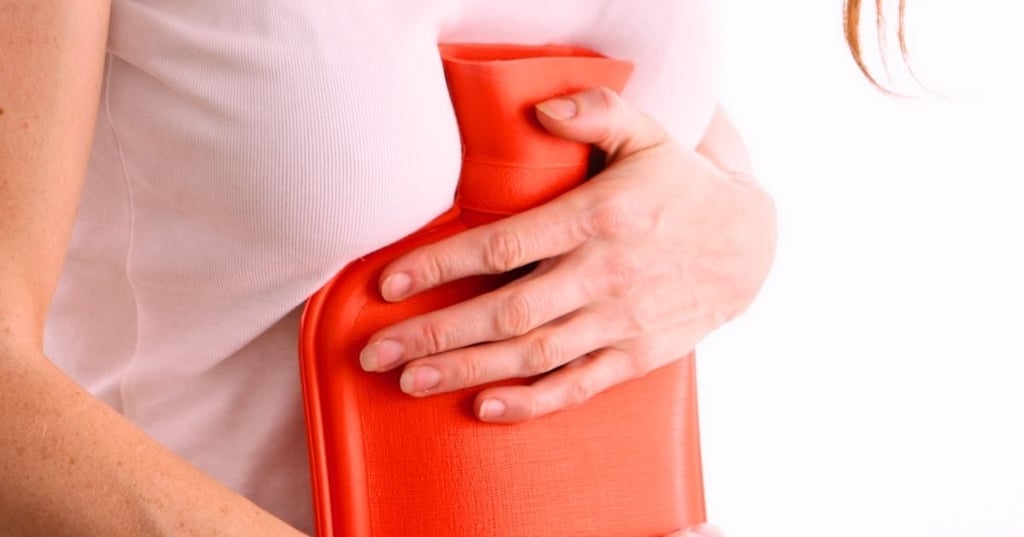
Heat, such as a hot water bottle on the lower abdomen, is one of the quickest ways to ease period pain. Anti-inflammatory medicines such as ibuprofen work best when started at the first sign of pain or just before your period, as directed by your GP or pharmacist. Gentle movement and TENS can add relief.
Is period pain linked to endometriosis?
Period pain can be a symptom of endometriosis, but most period pain is not caused by it. Endometriosis is more likely when pain is severe, worsens each cycle, or occurs during sex or between periods. Many women wait years for a diagnosis, so it helps to raise ongoing pain with your GP or practitioner early.
Why does my period pain come with diarrhoea and nausea?
Period pain often comes with diarrhoea and nausea because prostaglandins released during your period also act on the bowel and stomach. When levels are high, the bowel can contract more, which is why gut symptoms often peak on the worst day of cramping. Bowel symptoms that continue outside your period need to be addressed separately.
Does magnesium help period pain?
Magnesium may help ease period pain by relaxing the uterine muscle and helping the body regulate prostaglandins. Some trials suggest it reduces cramping compared with placebo. The right form and dose depend on your health history and any medications you take, so it is best guided by a practitioner.
Why is my period pain worse after stopping the pill?
Period pain can return or feel worse after stopping the pill because the pill suppresses ovulation and prostaglandin production without changing what was contributing to the pain. When your natural cycle returns, those contributors return with it, and any underlying condition the pill was masking can become noticeable again.
Does period pain get better with age?
Primary dysmenorrhoea often eases with age, and some women notice improvement after giving birth. Pain that begins or worsens later in life is more likely to have an underlying cause. Conditions such as adenomyosis, endometriosis and fibroids can progress without treatment, so new or worsening pain should be investigated rather than left to see if it eases.
Ready to find out why your periods are so painful?
If you’re looking for a clearer picture of what’s contributing to your period pain, learn more about our approach to period pain testing and treatment.