

What is PMS?
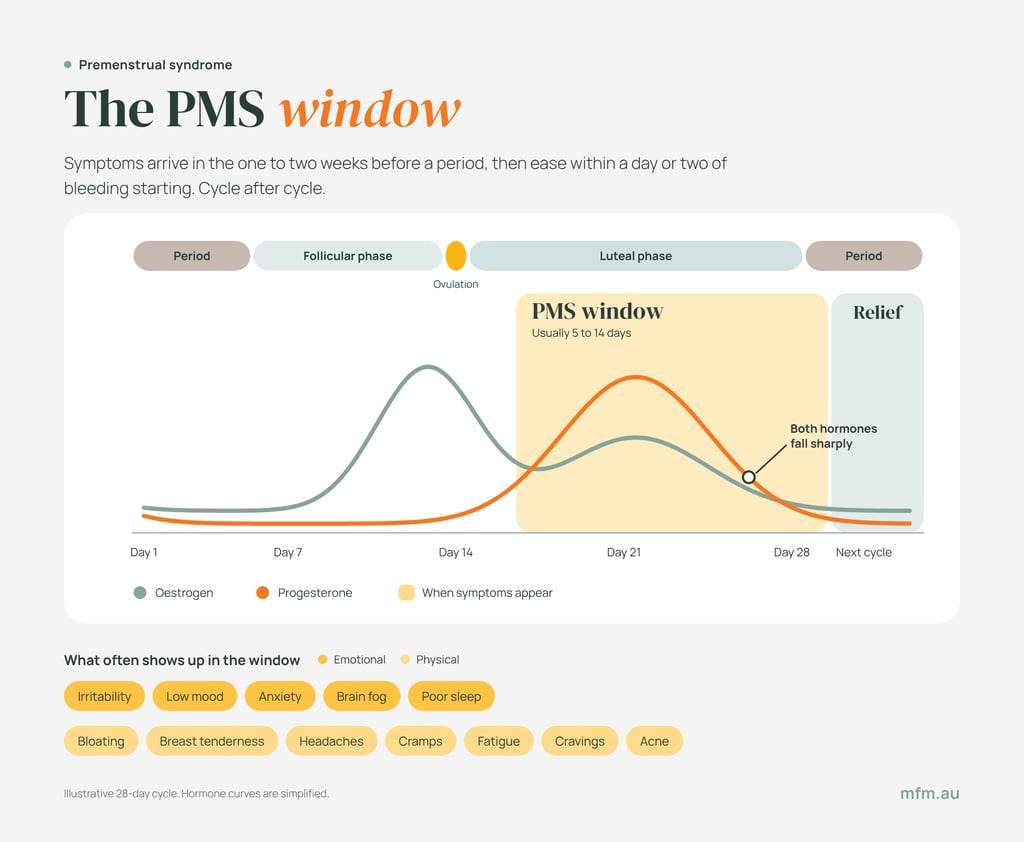
PMS, or premenstrual syndrome, is a cyclical pattern of physical, emotional and behavioural symptoms that occurs when the body reacts more strongly than usual to the hormonal changes before a period. These changes happen in the luteal phase, the one to two weeks before bleeding starts. Symptoms typically ease within a few days of bleeding starting, then return the following cycle.
Around 90% of women experience some premenstrual symptoms, and around 20 to 40% experience PMS. For some women, symptoms are mild, but for others, PMS significantly affects mood, energy, relationships and the ability to function at work and in life. When mood symptoms such as depression, irritability or anxiety are severe enough to cause marked interference with daily life each month, the condition may meet criteria for premenstrual dysphoric disorder (PMDD), a more severe form in which emotional symptoms dominate.
The way the body produces, processes and clears hormones influences how severe symptoms are each cycle. So do nutritional status, gut health, stress load and how much inflammation is present.
Symptoms of PMS
The most common symptoms of PMS are mood changes, breast tenderness, bloating and fatigue, often appearing in the one to two weeks before a period and easing within a few days of bleeding starting.
Emotional and psychological symptoms tend to include:
- irritability, anger or short temper
- low mood or weeping easily
- anxiety, tension or feeling on edge
- difficulty concentrating or brain fog
- feeling overwhelmed or unlike yourself
- social withdrawal
Physical symptoms often include:
- bloating and fluid retention
- breast tenderness or swelling
- headaches or migraines
- cramps and pelvic pain
- low back pain
- fatigue and disturbed sleep
- joint or muscle aches
- food cravings or appetite changes
- changes in libido
- acne flare-ups
- alcohol intolerance
- constipation or loose stools
Symptom timing is the clearest clue. If the same symptoms arrive in the two weeks before your period and ease once bleeding begins, cycle after cycle, this points strongly to PMS. Tracking symptoms daily over at least two cycles is the standard way to confirm the pattern, and helps distinguish PMS from conditions such as depression or migraine that can worsen before a period.
PMS and PMDD: understanding the difference
PMDD is a more severe form of PMS, characterised by intense mood symptoms including rage, profound low mood and suicidal thoughts, often making it difficult to maintain relationships and meet daily responsibilities. PMS involves a similar but milder pattern of physical and emotional symptoms that clears once bleeding begins.
PMDD is distinguished by the intensity of mood symptoms and how consistently they interfere with daily life each month. A 2024 review of global studies found it affects around 1.6 to 3.2 per cent of women and girls. An international survey of people with a confirmed PMDD diagnosis found that 34 per cent reported a past suicide attempt.
Both patterns are linked to the luteal phase and can be investigated through a functional medicine lens, but PMDD needs closer clinical involvement given the severity of symptoms. Care often includes psychological support such as cognitive behavioural therapy (CBT), and medical treatment such as antidepressants, which are well supported for PMDD, alongside functional medicine investigation.
If you are having thoughts of suicide, contact Lifeline on 13 11 14 or call 000 in an emergency.
What causes PMS?
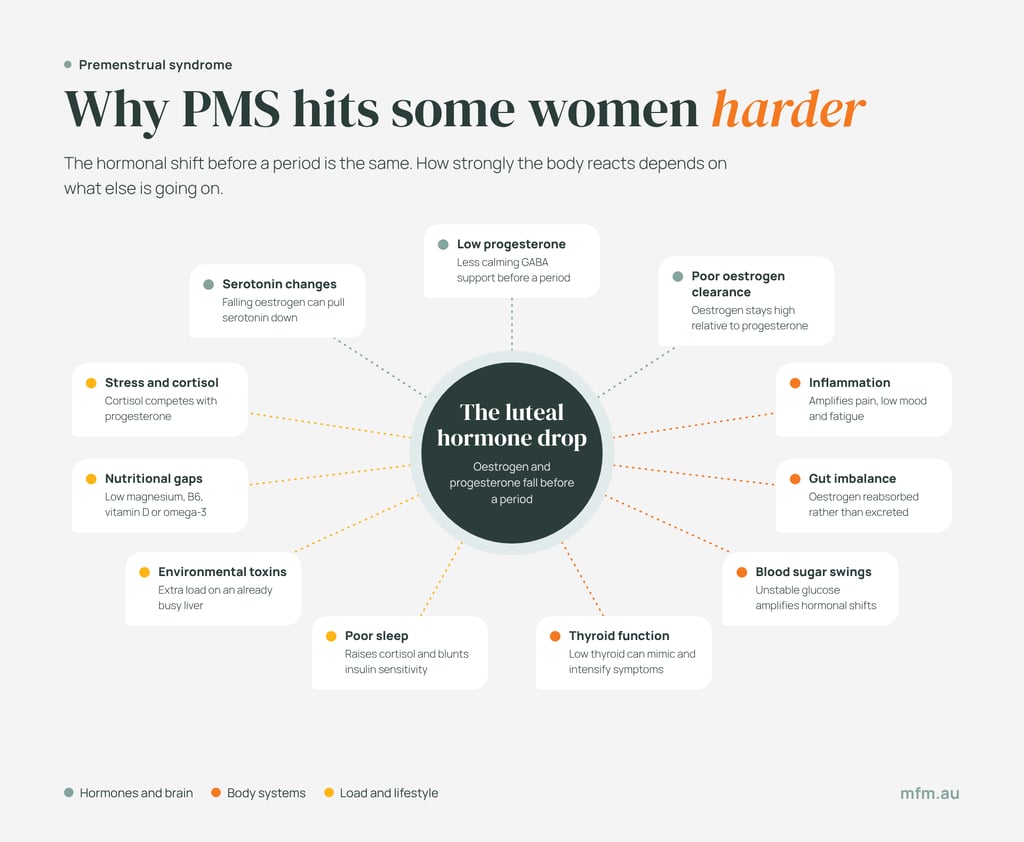
PMS develops when the body reacts more strongly than usual to the normal rise and fall of oestrogen and progesterone before a period. Research in women with PMS found they have the same hormone levels as women without it, a finding more recent reviews continue to support. What differs is how sensitive their brain and body are to these hormonal changes.
After ovulation, oestrogen and progesterone rise, then fall when pregnancy does not occur. For most women, this passes without noticeable symptoms. For women with PMS, these changes affect mood, energy and pain signalling more intensely. It is the change in hormone levels, rather than the levels themselves, that appears to trigger symptoms.
The most common contributing factors include:
- Sensitivity to progesterone: progesterone converts into a compound called allopregnanolone, which calms the brain by supporting GABA activity, the nervous system’s main calming pathway. In women with PMS, the brain appears more sensitive to changes in this compound across the second half of the cycle, and anxiety, irritability and poor sleep often worsen
- Serotonin changes: oestrogen supports serotonin production and receptor activity, so as oestrogen falls late in the cycle, serotonin activity can drop with it, contributing to low mood, carbohydrate cravings and disturbed sleep
- Stress and cortisol: ongoing stress raises cortisol and alters how the stress and reproductive hormone systems interact, so it can worsen PMS through physical effects, not only as a psychological response
- Nutritional gaps: calcium and vitamin B6 have the strongest evidence for reducing PMS symptoms, and magnesium, vitamin D and omega-3 fatty acids are also involved in neurotransmitter production and inflammation. Low levels are associated with more pronounced symptoms
- Physical activity: low levels of regular movement are associated with more severe premenstrual symptoms
- Inflammation: elevated levels of inflammatory markers have been found in women with more severe premenstrual symptoms, and inflammation can worsen pain, mood and fatigue across the cycle
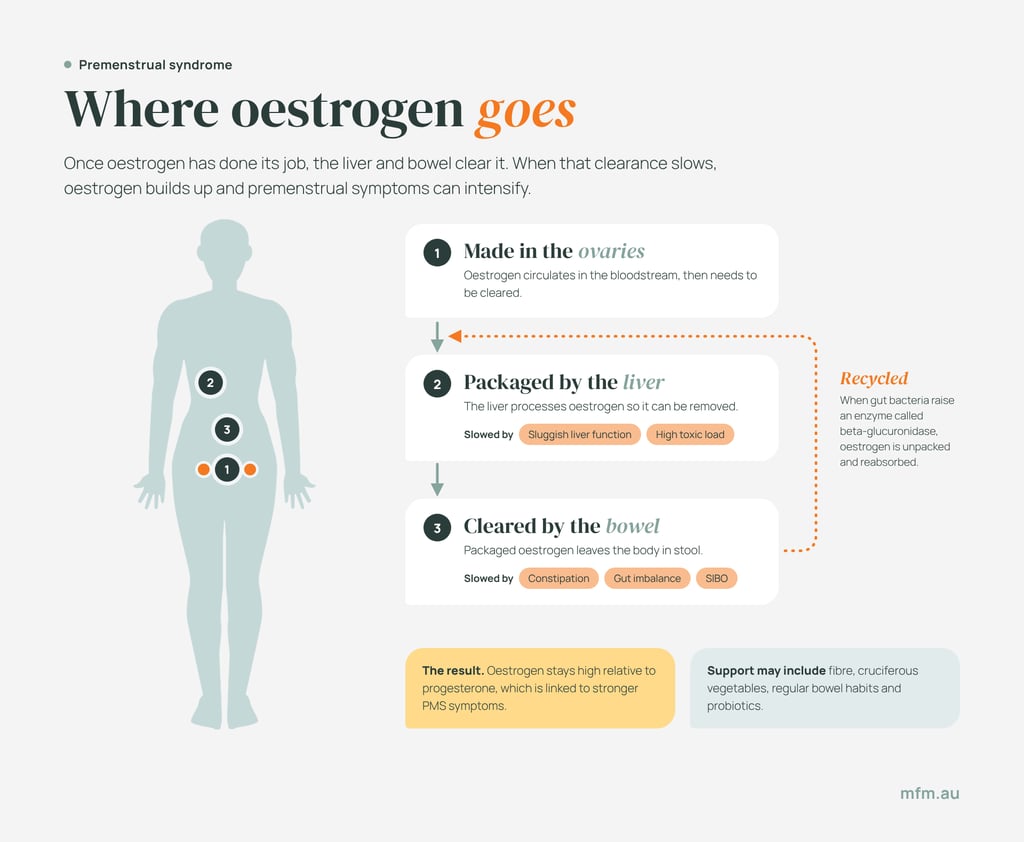
- Oestrogen clearance: when the liver is not efficiently processing oestrogen, or the bowel is not clearing it, the body may have more oestrogen to handle across the cycle. Constipation and reduced liver clearance can slow this process
- Gut health: the gut helps clear oestrogen from the body, and when the gut microbiome is disrupted, levels of an enzyme called beta-glucuronidase can rise, allowing oestrogen to be reabsorbed from the bowel rather than excreted. SIBO and bacterial or fungal overgrowth may further affect this process
- Blood sugar and insulin: unstable blood glucose and insulin resistance are associated with more severe PMS symptoms
- Thyroid function: hypothyroidism can mimic and intensify PMS symptoms, particularly fatigue, low mood and fluid retention, and should be ruled out during assessment
- Poor sleep: chronic sleep loss raises cortisol and reduces insulin sensitivity, both of which make premenstrual symptoms more likely
- Environmental toxins: some chemical exposures may add to the liver’s workload, making oestrogen clearance less efficient
Someone with low magnesium, high stress and slow oestrogen clearance is likely to experience PMS more severely than someone with only one of these factors present
PMDD and genetic sensitivity
In PMDD, sensitivity to normal hormonal changes appears to be even more pronounced. Researchers at the National Institutes of Health have found evidence of a genetic component, identifying differences in how cells from women with PMDD respond to oestrogen and progesterone. Women whose mothers have a history of severe premenstrual symptoms are also more likely to develop it. Suppressing ovarian hormone production reduces symptoms in PMDD, though the full mechanism is not yet understood.
Several personal history and lifestyle factors are associated with more frequent or more severe symptoms:
- Age between the late 20s and early 40s
- Having at least one child
- Personal or family history of mood disorders, including depression, anxiety or bipolar disorder
- Genetic differences in methylation, which can affect how efficiently oestrogen is broken down and cleared
- History of postpartum depression or postpartum psychosis
- History of trauma or significant adverse life experiences
- Other reproductive conditions, including endometriosis, PMOS or painful periods
- Elevated BMI
- High caffeine, alcohol, salt or tobacco intake
How is PMS diagnosed and assessed?
PMS is diagnosed by tracking symptoms across two to three menstrual cycles, confirming that they appear consistently in the weeks before the period and ease once bleeding begins, rather than continuing throughout the month.
Recording when symptoms appear, how intense they are, and when they ease relative to the period gives a clear picture of whether symptoms are tied to the premenstrual phase. A symptom tracking app or a written diary works well for this.
Clinicians may also use a structured tool called the Daily Record of Severity of Problems (DRSP), which records symptoms each day and supports formal diagnosis. The pattern itself is the primary diagnostic tool.
This process also helps rule out conditions that produce similar symptoms throughout the month, such as hypothyroidism, anaemia, depression and anxiety. Perimenopause can also intensify premenstrual symptoms and is considered in women in their 40s.
Standard blood testing may include:
- Thyroid function, to rule out hypothyroidism as a contributor to fatigue, low mood and fluid retention
- Iron stores and vitamin D, which are commonly low and can worsen fatigue and mood symptoms independently of hormones
- Fasting glucose and general metabolic markers
- Prolactin, where cycles are irregular or other symptoms suggest a hormonal cause
A functional assessment builds on this by looking at your hormones, gut function, nutritional status and inflammation together, to understand what may be making your premenstrual symptoms more intense. Functional testing may include:
- Oestrogen and progesterone across the cycle: measured at specific points rather than as a single reading, to confirm ovulation, check how the cycle is functioning and rule out other hormonal issues
- The DUTCH Complete test: provides a comprehensive picture of sex and adrenal hormones, oestrogen metabolites and cortisol patterns in a single dried urine collection, and can clarify how oestrogen is being processed and cleared
- Inflammatory markers: including high-sensitivity CRP, which has been associated with more severe premenstrual symptoms
- Nutritional status: calcium, magnesium, vitamin B6, vitamin D, iron and omega-3 levels, each of which influences neurotransmitter production and inflammation
- Gut health markers: gut microbiome mapping can identify microbial species and their role in oestrogen clearance
- Metabolic markers: fasting insulin and HbA1c (a measure of average blood sugar over the past three months), where blood sugar instability may be contributing to symptom severity
- Electrolyte status: low or high levels of sodium, potassium and magnesium can contribute to fluid retention, bloating and mood changes in the premenstrual phase
Why PMS can continue after conventional treatment
PMS often continues after treatment because most conventional options suppress the cycle or ease symptoms but aren’t designed to address why the hormonal changes of the luteal phase are causing such strong symptoms in the first place.
Because PMS is so widely experienced, it is frequently dismissed as normal, and many women are never offered treatment at all. Conventional treatments include:
- The oral contraceptive pill, to suppress ovulation and reduce hormonal fluctuation across the cycle
- SSRIs or antidepressants, taken either continuously or in the two weeks before the period, to support serotonin activity and reduce emotional symptoms
- NSAIDs such as ibuprofen, to manage pain, cramping and inflammation in the premenstrual phase
- Diuretics, prescribed for significant fluid retention and bloating
- Dietary and lifestyle advice, including reducing caffeine, alcohol and salt, and increasing exercise
The pill suppresses ovulation and the natural hormonal cycle, which can reduce symptoms while it is taken, particularly with continuous use or pills containing drospirenone. When it is stopped, the natural cycle resumes, and symptoms often return, because the factors making that person more sensitive to hormonal change, such as poor oestrogen clearance, nutritional gaps or inflammation, have not changed.
The pill does not suit everyone. Some women find their mood worsens while taking it, and a large Danish study found hormonal contraception was associated with higher rates of depression diagnosis, particularly in teenagers. The pill may also deplete nutrients including magnesium and vitamin B6, both involved in serotonin production.
Antidepressants are well supported for premenstrual mood symptoms and can work quickly, particularly in PMDD. They support serotonin activity but aren’t designed to address why serotonin is responding differently in the luteal phase for that person, and mood symptoms often return when the medication is stopped.
Treating PMS: a functional medicine approach
A functional medicine approach to PMS looks at why your symptoms are as severe as they are, and what is making your body respond so strongly to a normal hormonal cycle. Rather than relying on suppressing ovulation, it starts with your full history, symptom tracking and targeted testing to work out what is contributing to your particular symptoms.
That might mean supporting how the liver and bowel clear oestrogen, or calming how strongly your nervous system reacts to hormonal change through targeted nutrient and herbal support. It could mean closing nutritional gaps such as calcium, magnesium or B6, or improving gut health, since that affects how oestrogen is processed and cleared. Where more than one of these is present, which is common, care addresses them all rather than picking just one.
Depending on your presentation, care may include:
- Dietary changes: diet can influence the severity of PMS through blood sugar stability, inflammation and hormone clearance. Reducing refined carbohydrates, sugar, alcohol, caffeine and salt, increasing cruciferous vegetables, fibre and anti-inflammatory foods such as oily fish and extra virgin olive oil, and removing foods you react to, such as dairy or gluten, can help ease fluid retention and inflammation. Reducing high-histamine foods may also help, as histamine and mast cell activity may play a role in some women’s symptoms
- Nutrient repletion: calcium, magnesium, vitamin B6, vitamin D and omega-3 fatty acids are the supplements most associated with easing PMS severity, particularly if testing shows deficiencies. In a small 2020 clinical trial, 60 per cent of participants taking B6 daily for three menstrual cycles were in full remission of PMS symptoms
- Herbal medicine: Vitex agnus-castus (chaste tree berry) may ease breast tenderness, mood changes and irritability, partly by lowering prolactin, while adaptogens such as ashwagandha and rhodiola may help support the stress response. Herbs are prescribed by a practitioner, as some can interact with medications, including the pill
- Gut health: probiotics support a healthy gut microbiome, which may help the body clear oestrogen via the bowel
- Lifestyle: stress reduction practices such as breathwork and mindfulness, seven to nine hours of sleep a night, and regular exercise combining aerobic activity and strength training can help lower stress and inflammation throughout your cycle
We support people with PMS to find lasting relief
We work with people whose PMS has been dismissed as normal, as well as those who’ve tried the pill or antidepressants and are still looking for answers.
When to seek support
See your healthcare provider if you have:
- Symptoms affecting your ability to work, maintain relationships or function in daily life
- Symptoms that are worsening cycle to cycle or not improving despite lifestyle changes
- Uncertainty about whether what you’re experiencing is PMS or something else, such as thyroid dysfunction, anaemia, an anxiety disorder or perimenopause
- Ongoing use of the pill or antidepressants without a clear understanding of what’s producing your symptoms
- Thoughts of self-harm or suicidal ideation in the premenstrual phase, which needs prompt support from your GP, a practitioner or a crisis support service
Frequently asked questions
Could this be PMS or early pregnancy?
PMS and early pregnancy share several symptoms, including breast tenderness, fatigue and mood changes, but timing is the clearest way to tell them apart. PMS symptoms ease once a period starts, while pregnancy symptoms continue and intensify after a missed period. A missed period followed by ongoing symptoms is the strongest signal to take a pregnancy test.
Does PMS get worse with age or during perimenopause?
PMS can become more intense in the late 30s and 40s, as oestrogen and progesterone fluctuate more unpredictably during perimenopause. Some women notice heavier mood symptoms, worse sleep or more pronounced fatigue during this transition, even if their PMS was mild earlier in life. Tracking symptoms across several cycles helps clarify what’s changed.
How long does PMS last?
PMS symptoms usually last anywhere from a few days to two weeks, beginning up to two weeks before a period and easing within a few days of bleeding starting. The exact length can vary from cycle to cycle, depending on luteal phase length and how quickly hormone levels change. Each cycle tends to follow a similar pattern once established.
Can other health conditions get worse before a period?
Yes, migraines, asthma, irritable bowel syndrome, allergies and mood disorders including anxiety and depression can all worsen in the days before a period, as the hormonal and inflammatory changes of the luteal phase interact with these conditions. Addressing the factors behind PMS may also ease these premenstrual flares.
Can PMS affect fertility or trying to conceive?
PMS itself doesn’t usually affect fertility, since ovulation has already occurred by the time symptoms appear. However, some of the same contributors behind severe PMS, such as high stress, nutritional gaps or poor oestrogen clearance, can also affect cycle regularity and make conception more difficult for some women. A functional medicine assessment can clarify whether these apply to you.
Ready to understand your PMS symptoms?
If you’re looking for a clearer picture of what’s contributing to your symptoms, learn more about our approach to PMS testing and care.