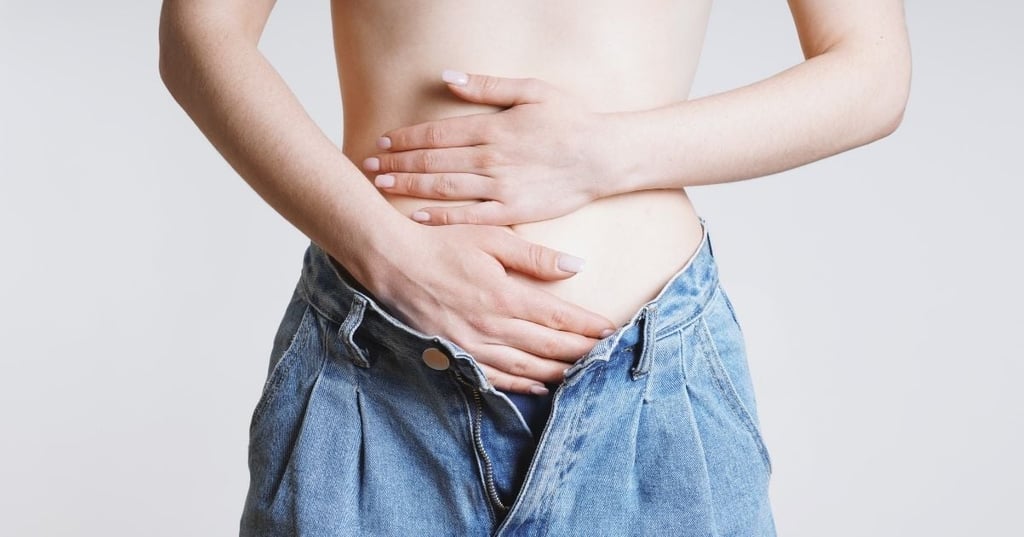


SIBO (Small Intestinal Bacterial Overgrowth) is a condition in which bacteria proliferate in the small intestine in numbers that disrupt normal function. The small intestine has its own microbiome, but it is sparse and tightly regulated. When bacterial numbers get too high, those bacteria start fermenting carbohydrates – food that should be absorbed further along. The fermentation produces gas: hydrogen, methane, or hydrogen sulphide, all before digestion has had a chance to finish.
Gas builds up, the gut lining is irritated by bacterial by-products, and the body starts absorbing fewer nutrients. In some people, bacterial activity also damages the gut lining itself. When this happens, the gut wall becomes more permeable, meaning substances that should stay inside the gut can pass into the bloodstream. This is one reason SIBO is often linked to food intolerances and sensitivities.
Symptoms of SIBO
Symptoms tend to cluster around meals and vary depending on what’s eaten, how much, and the time of day.
Digestive symptoms:
- Bloating and abdominal distension, often worse after eating
- Excessive or foul-smelling flatulence
- Abdominal pain or cramping
- Loose stools or diarrhoea
- Constipation, or alternating constipation and diarrhoea
- Belching, nausea, or reflux
- Bad breath (halitosis)
Systemic and less obvious symptoms:
- Brain fog and difficulty concentrating
- Fatigue not explained by sleep
- Skin conditions, including acne, eczema, psoriasis, rosacea, or hives
- Joint pain
- Restless legs syndrome
- Bladder irritability
- Chronic low iron or B12
- Anxiety or low mood
- Histamine intolerance
- Sleep disruption
Different gas types produce different symptom patterns.
- Hydrogen-dominant SIBO: occurs when bacteria in the small intestine ferment carbohydrates and produce hydrogen gas. The small intestine is particularly sensitive to excess hydrogen, and the result is typically bloating, loose stools, and diarrhoea
- Methane-dominant SIBO (IMO): occurs when archaea, not bacteria, colonise the small intestine. The most common is Methanobrevibacter smithii, which feeds on hydrogen produced by other organisms and releases methane as a by-product. Methane slows the movement of food through the gut directly, which is why this type presents mainly with constipation and bloating rather than loose stools
- Hydrogen sulphide SIBO: Hydrogen sulphide is produced by bacteria such as Desulfovibrio and Fusobacterium species. It is less common, often identified by a rotten egg odour, and frequently tests negative on standard breath tests because those tests measure only hydrogen and methane. A practitioner may consider this if there’s a characteristic rotten egg odour, a standard breath test has come back negative despite ongoing symptoms, or the symptom picture doesn’t fit the hydrogen or methane-dominant patterns. High concentrations of hydrogen sulphide are toxic to the intestinal lining and are associated with gut inflammation.
Bacterial activity in the small intestine can damage the tight junctions between intestinal cells. When these are compromised, partially digested proteins cross into the bloodstream and trigger immune reactions – showing up as new food intolerances or worsening skin and mood symptoms.
Bacterial endotoxins also enter circulation in greater quantities. These can directly affect the nervous system and trigger histamine reactions, both of which contribute to neurological symptoms like brain fog, mood changes, and heightened sensitivity to food and environment.
Nutrient absorption is also affected: B12, fat-soluble vitamins, iron, and calcium are particularly vulnerable. When these deficiencies go unaddressed, the effects reach well beyond the gut. Long-term low calcium is linked to bone loss; long-term low B12 is linked to nervous system damage. This helps explain why fatigue and systemic symptoms are common even when digestive complaints seem manageable.
SIBO overlaps significantly with other digestive conditions. There is a clear connection between IBS symptoms and the possibility of a SIBO diagnosis, especially with IBS-D (diarrhoea dominant), and people diagnosed with inflammatory bowel disease (IBD) are 9.5 times more likely to develop it.
Could it be SIFO?
While discussing SIBO, it is also worth mentioning SIFO (Small Intestinal Fungal Overgrowth). SIFO occurs when fungi, most commonly Candida species, overgrow in the small intestine. The symptoms can closely resemble those of SIBO, including bloating, abdominal discomfort, gas, diarrhoea, constipation, and fatigue.
Unlike SIBO, there is currently no widely available, validated test for SIFO. As a result, a skilled functional medicine practitioner will rely on a combination of symptoms, risk factors, clinical history, and functional testing to assess whether fungal overgrowth may be contributing to a patient’s presentation.
SIFO may be also considered in patients who present with persistent digestive symptoms despite appropriate SIBO treatment, particularly if there is a history of repeated antibiotic use, impaired gut motility, low stomach acid, or other factors known to disrupt the balance of the gut microbiome.
What causes SIBO?
SIBO develops when the small intestine’s normal defences against bacterial overgrowth break down. The most common causes include impaired motility, low stomach acid, ileocecal valve dysfunction, and structural abnormalities that allow bacteria to accumulate where they shouldn’t.
Reduced stomach acid is one of the more common contributors. Stomach acid kills most ingested bacteria before they reach the small intestine. Prolonged use of proton pump inhibitors (PPIs), or naturally low acid production, removes this protection – food arrives in the small intestine carrying far more bacteria than it normally would.
Impaired motility is the other major driver. The migrating motor complex (MMC) is a wave of muscular contractions that sweep through the small intestine roughly every 90 minutes during fasting, clearing residual food and bacteria forward into the large intestine. When the MMC is impaired due to chronic stress, hypothyroidism, diabetes, or nerve damage from a prior gut infection, bacteria are not cleared efficiently and begin to accumulate. Eating patterns that eliminate adequate fasting windows, like frequent snacking, grazing, or late-night eating, suppress MMC cycling independently of other causes and are a modifiable contributor that is often overlooked.
Post-infectious changes are a significant and often overlooked cause. Food poisoning from bacteria such as Campylobacter or Salmonella can trigger an autoimmune response in which antibodies mistakenly attack vinculin, a protein in the nerve cells that controls the MMC’s sweeping contractions. This damages the gut’s clearing mechanism and can persist long after the infection itself has resolved. This nerve damage can persist long after the acute infection has resolved. SIBO can develop months or years after a gastroenteritis episode, a connection many people don’t make.
Additional causes include:
- Coeliac disease or IBD (Crohn’s disease, ulcerative colitis)
- IBS
- Abdominal surgeries that alter intestinal anatomy or nerve supply
- Adhesions and scarring affecting intestinal movement
- Medications that slow gut transit, including opiates and some antispasmodics
- Ileocecal valve dysfunction, allowing backflow of colonic bacteria
- Conditions such as endometriosis, gastroparesis, or Ehlers-Danlos Syndrome
- Traumatic brain injury or concussion affecting the nerve signals that regulate gut movement
- Chronic constipation, diverticulitis, pancreatitis, or scleroderma
- Poor diet high in sugar, alcohol, or processed carbohydrates
- Mould toxicity
Conditions associated with SIBO
The relationship between SIBO and other conditions runs in several directions. Some conditions create the gut environment in which SIBO develops. Others appear to result from prolonged bacterial overgrowth. Some co-exist with it without a clear causal link.
When SIBO goes unaddressed, research has linked it to:
- Rosacea and other skin conditions
- Fibromyalgia
- Restless leg syndrome
- Chronic fatigue syndrome
- Mood disorders, including anxiety and depression
- Insulin resistance and blood sugar irregularities
How is SIBO investigated and diagnosed?
SIBO is assessed using breath testing as the primary diagnostic tool, supported by clinical history and additional functional testing to identify underlying causes.
The most commonly used tests are the lactulose and fructose breath test. After consuming a sugar solution, breath samples are collected at 20–minute intervals and measured for hydrogen and methane gas.
Breath testing is non-invasive and accessible, but has real limitations. Timing interpretation varies between laboratories. Slow intestinal transit can produce false positives. Hydrogen sulphide-producing SIBO will not register on a standard test.
Because breath testing alone doesn’t explain why SIBO has developed, a good assessment should also include:
- Detailed history of symptoms, diet, stress, medications, and prior infections
- Stool testing to assess the large intestinal environment
- Coeliac screening
- Digestive function tests (stomach acid adequacy and transit time)
- Organic acid testing in some cases
- Assessment of thyroid function, blood sugar regulation, and other systemic factors affecting gut motility
Why does SIBO keep coming back?
SIBO can persist after treatment because antibiotics reduce bacterial load without correcting the conditions that allowed bacteria to accumulate in the first place.
Antibiotic therapy, most commonly rifaximin, or rifaximin combined with neomycin in methane-dominant presentations, reduces bacterial numbers in the small intestine. But if stomach acid remains low, motility is still impaired, the nervous system is overstimulated, sleep is compromised, diet is ultra-processed, etc., the small intestine remains an environment where bacteria can re-establish. Recurrence may occur if repeated courses of antibiotics are prescribed without addressing any underlying causes.
Bacterial biofilm formation is another contributor to treatment resistance. Bacteria in the small intestine can form protective biofilm communities that reduce antibiotic penetration and allow populations to survive through a course of treatment.
For people whose SIBO developed after a gut infection, the nerve damage to MMC-regulating cells described in the causes section may persist long after the initial illness has resolved. In these cases, clearing bacteria without restoring motility is unlikely to produce lasting change. This is also why SIBO often takes longer to fully resolve than a single treatment course suggests, and why a staged approach that addresses both bacterial load and the conditions keeping it in place tends to produce more lasting results.
“My biggest learning from supporting patients through SIBO treatment is the importance of understanding why SIBO has developed in the first place.”
– Lorraine Cussen
Treatment: a functional medicine approach
A functional medicine approach to SIBO looks first at why bacterial overgrowth has developed, not just at clearing it. Someone whose SIBO developed after food poisoning needs a different approach from someone whose SIBO is linked to hypothyroidism, chronic stress, or long-term PPI use.
Depending on your presentation, the following strategies may be used:
- Restoring motility: the gut has a built-in cleaning cycle that sweeps bacteria through between meals, but in most people with SIBO, this is not working as it should. Identifying what has slowed it down, whether that is a past gut infection, thyroid dysfunction, blood sugar instability, or stress, is usually the first priority
- Supporting the nervous system: the autonomic nervous system directly influences gut movement and the acid, enzymes, and bile the gut produces to break down food. Chronic stress can slow motility and keep symptoms active, which is why nervous system support is part of treatment
- Supporting gastric acid: stomach acid is one of the body’s main defences against bacteria surviving in the small intestine. Where acid production is low, whether from long-term PPI use or natural decline, supporting it back toward a healthy level may help remove one of the conditions that allowed overgrowth to take hold
- Reducing bacterial load: targeted herbal or pharmaceutical antimicrobials are used to bring bacterial numbers down, selected according to the gas type identified on breath testing. Where bacteria have formed a protective biofilm, additional support may be needed to help antimicrobials reach them
- Repairing the intestinal lining: bacterial overgrowth can damage the gut lining, which is often what causes the food intolerances and symptoms beyond the gut that many people with SIBO experience. Specific nutrients, including zinc, vitamin A, essential fatty acids, and vitamin D, may be used to support mucosal repair
- Rebuilding the microbiome: once bacterial load has been reduced, probiotic and prebiotic support may be introduced to re-establish the beneficial species that support healthy digestion. Timing and strain selection matter, as certain probiotics introduced too early can worsen symptoms rather than help
- Addressing diet: dietary approaches such as low-FODMAP, the specific carbohydrate diet, or SIBO-specific dietary protocols can substantially reduce symptom burden while treatment is underway. The aim is to use dietary change strategically and avoid long-term restriction, which can deplete the beneficial bacterial species that recovery depends on
We support people with SIBO to optimal health
We’ve helped hundreds of people with SIBO to not only reclaim their health but to enjoy life with vitality. Start your care journey today.
When to seek support
See your GP or a practitioner if you have:
- Bloating, bowel changes, or abdominal discomfort have been present for more than a few weeks
- Symptoms returning after antibiotic treatment for SIBO
- A diagnosis of IBS without SIBO specifically investigated
- Unexplained fatigue, brain fog, or skin changes alongside digestive symptoms
- Nutrient deficiencies have been identified without a clear dietary explanation
Frequently asked questions
Can SIBO cause symptoms beyond the digestive system?
Yes. SIBO can cause symptoms well beyond the gut, including skin conditions, joint pain, brain fog, anxiety, and histamine reactions. When bacterial activity damages the intestinal lining, partially digested proteins and bacterial endotoxins enter the bloodstream, triggering immune responses and driving systemic inflammation – which can directly affect neurological function, contributing to brain fog, mood changes, and heightened symptom sensitivity. Nutrient deficiencies from poor absorption add to this, contributing to fatigue, mood changes, and impaired skin repair. This systemic picture is one of the reasons SIBO is frequently missed.
Is SIBO the same as IBS?
No, but the two are closely related. IBS is a clinical diagnosis based on symptom patterns; SIBO is a specific finding of bacterial overgrowth in the small intestine. Research suggests SIBO is present in roughly a third of people diagnosed with IBS, meaning many carry a diagnosis without an underlying cause having been identified or treated. Treating SIBO in these people often produces significant improvement in IBS symptoms.
Can a stool test diagnose SIBO?
No. Stool testing analyses the large intestine only and provides no information about the small intestine. Breath testing, or in specific circumstances, jejunal aspirate, is required to evaluate the small intestinal environment directly.
How long does recovery from SIBO take?
Recovery from SIBO typically ranges from several weeks to several months, depending on gas type, how long the condition has been present, and what underlying factors are driving it. Where intestinal permeability, nutrient deficiencies, or food intolerances have developed as secondary effects, these need to be addressed in sequence – this is one reason some people treat SIBO and don’t fully recover. Some people see significant improvement within weeks; others require several months of structured treatment.
Does SIBO always cause bloating?
Bloating is the most commonly reported symptom, but not everyone experiences it prominently. Some people present primarily with fatigue, skin symptoms, or mood changes with relatively mild digestive complaints. The absence of bloating does not rule SIBO out, particularly in methane-dominant presentations where constipation and sluggish transit are more prominent.
Can SIBO cause acne or other skin conditions?
Yes. SIBO can contribute to skin conditions, including acne, rosacea, eczema, and psoriasis in several ways. Nutrient deficiencies, particularly zinc, vitamin A, and essential fatty acids, impair skin repair and turnover. When the intestinal lining becomes permeable, bacterial endotoxins enter circulation and drive systemic inflammation. When the gut bacterial population is altered, fewer short-chain fatty acids are produced. These compounds play a direct role in maintaining a healthy skin barrier and gut lining.
Can SIBO cause weight changes?
Yes. SIBO can contribute to both weight gain and weight loss, depending on which mechanisms are dominant. Weight gain can occur through insulin resistance and inflammation linked to intestinal permeability and bacterial endotoxins entering the bloodstream. Where nutrient malabsorption is severe, weight loss occurs instead. Because these mechanisms can push metabolism in either direction, symptom presentation varies significantly between individuals.
Ready to understand what's behind your SIBO?
If you’re looking for a clearer picture of what is contributing to your symptoms, learn more about our approach to SIBO testing and treatment.