

What is diarrhoea?
Diarrhoea is the passage of loose, watery, or unformed stools, often with increased frequency and urgency. It occurs when stool moves through the colon faster than normal, leaving insufficient time for water to be reabsorbed.
Most people experience it as an occasional, short-lived event. For others, it becomes a recurring or persistent problem that gets in the way of daily life. The experience varies: some people have three to four loose stools a day, others have sudden urgency or explosive episodes, and some alternate between diarrhoea and constipation.
Symptoms of diarrhoea
The primary symptom is stool that falls into types 5, 6, or 7 on the Bristol Stool Scale: soft, mushy, or fully liquid. Three or more of these within 24 hours is generally considered diarrhoea.
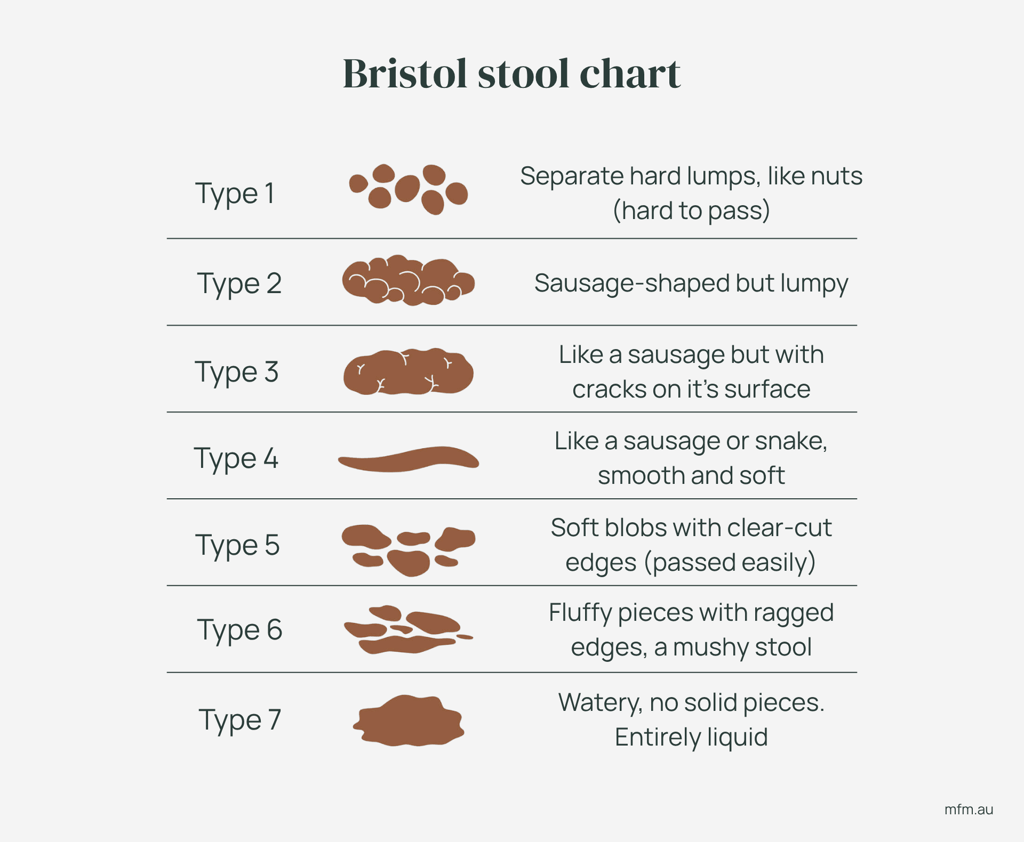
Beyond stool consistency, associated symptoms vary depending on what is causing it.
Acute diarrhoea
Signs often seen with acute or infectious diarrhoea:
- Sudden onset, sometimes explosive or urgent
- Fever, chills, or sweating
- Nausea or vomiting
- Abdominal cramping or griping
- Excessive or foul-smelling flatulence
- Fatigue and general malaise
Chronic diarrhoea
The following signs are more likely to indicate an ongoing or underlying cause, particularly when present for four weeks or more:
- Pale, floating, foul-smelling stools (may suggest fat malabsorption or coeliac disease)
- Frothy, watery stools, particularly after travel (may suggest Giardia)
- Thin, ribbon-like stools (may suggest IBS or structural bowel changes)
- Bright red blood in stool (needs prompt medical review)
- Rapid heartbeat or unexplained weight loss alongside loose stools (may suggest hyperthyroidism)
- Diarrhoea that begins or worsens with specific foods
- Symptoms that start or flare during periods of stress or anxiety
- Onset or worsening with vigorous exercise, particularly in endurance athletes
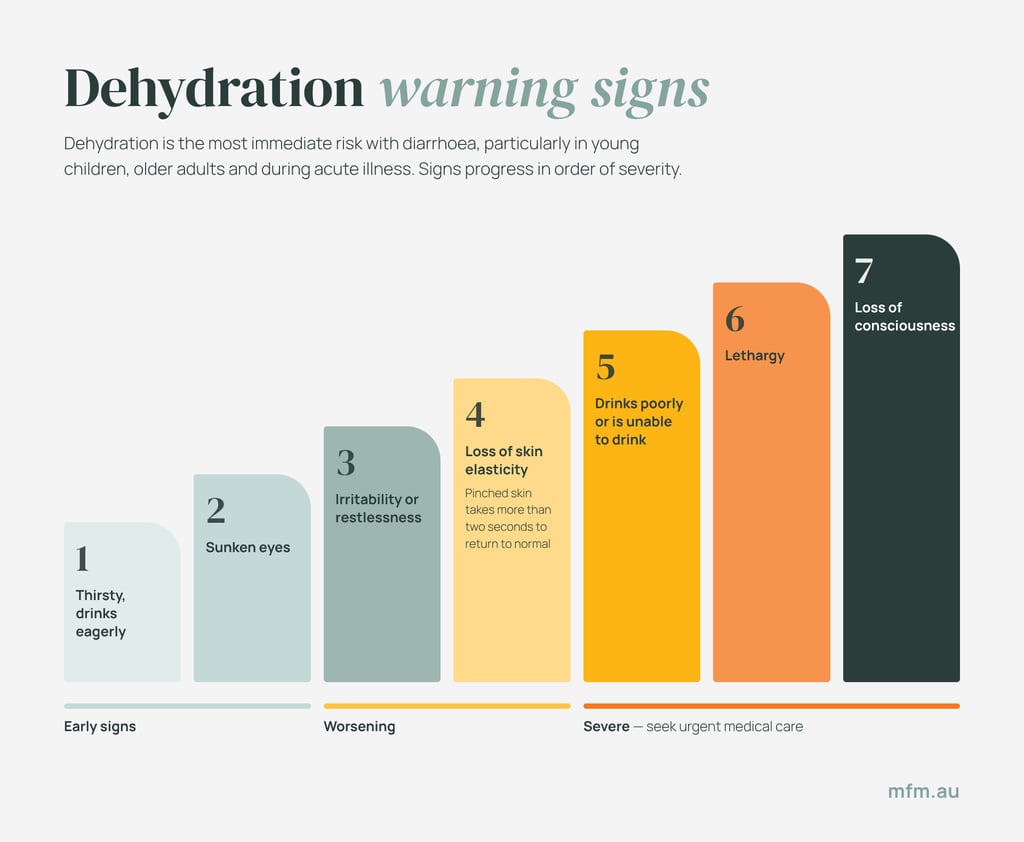
Dehydration is the most immediate risk, particularly in acute illness, older adults, and young children. Signs progress in order of severity:
- Thirsty, drinks eagerly
- Sunken eyes
- Irritability or restlessness
- Loss of skin elasticity (skin takes more than two seconds to return to normal when pinched)
- Drinks poorly or is unable to drink
- Lethargy
- Unconsciousness
What causes diarrhoea?
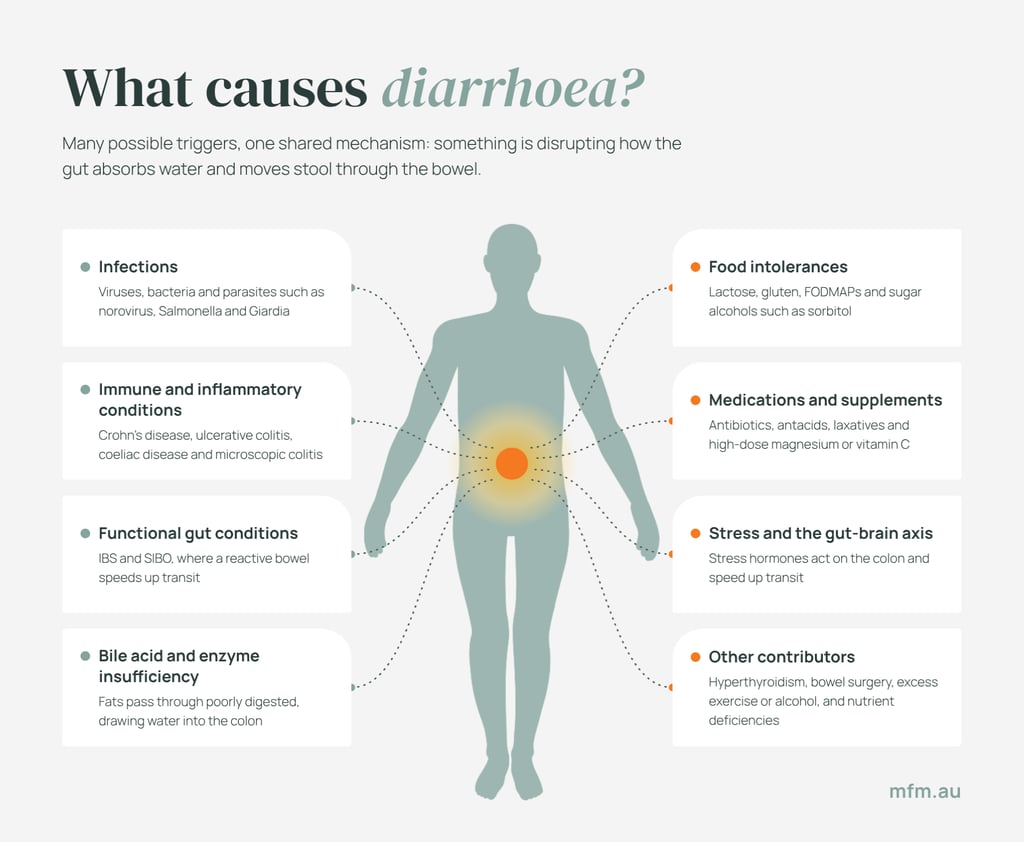
Diarrhoea has many possible causes, including gut infections, immune and inflammatory conditions, food intolerances, medications, stress, and functional disorders such as IBS and SIBO. The mechanism in each case is the same: something is disrupting the normal absorption and transit of stool.
Infections and microorganisms
Acute diarrhoea is most commonly caused by a gastrointestinal infection: viruses such as norovirus or adenovirus, bacteria such as Salmonella or Clostridium difficile, or parasites such as Giardia lamblia or Entamoeba. These organisms alter gut motility, damage the intestinal lining, or produce toxins that trigger fluid secretion rather than absorption. Some infections resolve quickly; others linger or cause lasting changes to the gut environment even after the pathogen is cleared.
Immune and inflammatory conditions
Conditions like inflammatory bowel disease (Crohn’s disease and ulcerative colitis), coeliac disease, and microscopic colitis involve immune activity directed at the gut lining. This ongoing inflammation shortens transit time, impairs absorption, and produces persistent or episodic diarrhoea that does not respond to simple dietary changes.
The migrating motor complex (the cleansing contraction that sweeps the small intestine between meals roughly every 90 minutes) may also be impaired, particularly in SIBO, allowing bacterial overgrowth that generates gas and accelerates transit.
Functional digestive conditions
In IBS with a diarrhoea pattern, the gut lining is not visibly inflamed, but the bowel is hypersensitive and reactive. Motility is faster than normal, and visceral nerve signalling is heightened, so ordinary sensations feel urgent or painful. The migrating motor complex (the cleansing contraction that sweeps the small intestine between meals roughly every 90 minutes) may also be impaired, particularly in SIBO, allowing bacterial overgrowth that generates gas and accelerates transit.
Bile acid and digestive enzyme insufficiency
Bile acids are essential for fat digestion. When they are not properly reabsorbed in the terminal ileum (the last section of the small intestine) (due to previous surgery, Crohn’s disease, or other causes), they reach the colon and stimulate water secretion and rapid motility, producing loose stools. Insufficient pancreatic enzymes mean fats and proteins pass through incompletely digested, resulting in bulky, foul-smelling, pale stools and poor nutrient absorption.
Food intolerances and dietary factors
Lactose, gluten, FODMAPs, and certain additives, including sugar alcohols (sorbitol, mannitol, xylitol), can draw water into the bowel or accelerate transit in people who react to them. The response is not always immediate, which makes identifying the trigger difficult without careful dietary investigation.
Medications and supplements
Common triggers include:
- Antibiotics (alter microbiome composition and can cause diarrhoea during and after a course)
- Antacids and osmotic laxatives
- High-dose magnesium or vitamin C
- Some cardiac, thyroid, or metabolic medications
Stress and the gut-brain connection
The gut and brain are in constant communication through a network of nerves known as the enteric nervous system. When stress occurs, the body activates the HPA axis, its central stress-response system, triggering the release of a hormone called corticotropin-releasing factor. This hormone acts on the colon, accelerating transit and contributing to urgency and loose stools.
In people with IBS or a history of recurrent loose stools, this stress response tends to be heightened. Chronic stress, anxiety, or a history of trauma can maintain altered bowel function even when other contributing factors are absent, which is why addressing the gut alone, without also considering nervous system regulation, often limits how much improvement is achievable.
Other contributing conditions
- Hyperthyroidism
- Some cancers and their treatments
- Post-surgical anatomy, particularly after bowel resection or gastric bypass
- Excessive exercise and alcohol use
- Nutrient deficiencies, particularly vitamins A, B2, and B12, which can impair gut lining integrity
How is diarrhoea investigated and assessed?
Diarrhoea is investigated by combining a thorough case history with targeted testing, going beyond ruling out serious disease to identifying the root cause of the symptoms.
Standard medical investigation may include:
- Stool testing for infection, parasites, and inflammatory markers
- Blood tests assessing thyroid function, coeliac antibodies, inflammatory markers, and nutritional status
- Colonoscopy or gastroscopy where indicated
A functional medicine assessment may additionally include:
- Hydrogen and methane breath testing for SIBO
- Comprehensive stool analysis including microbiome composition, digestive enzyme activity, and inflammatory markers
- Food sensitivity and intolerance testing
- Organic acids testing to assess metabolic and microbial activity
- Assessment of bile acid metabolism and pancreatic function where fat malabsorption is suspected
One limitation of standard medical workup is that it is designed primarily to rule out serious or structural disease. When those investigations return normal, the reason symptoms are occurring may still be unclear. A functional approach aims to identify what is functionally abnormal, even when standard tests show no pathology.
Why diarrhoea can continue after treatment
Diarrhoea often continues after treatment because most standard approaches address the immediate trigger without restoring the gut environment that was affected in the process.
The reasons vary depending on the type of diarrhoea and how it has been treated.
After acute infection: Antibiotic or antiparasitic treatment can clear the pathogen without restoring the microbiome. After a significant gut infection, populations of beneficial bacteria are reduced, intestinal permeability increases, and immune activity in the gut remains elevated. This altered landscape can persist for months, keeping motility faster than normal even after the infection has resolved.
With antidiarrhoeal medications: Agents such as loperamide reduce motility and control symptoms in the short term but do not address what is causing transit to be accelerated. When the medication stops, if the underlying driver has not been addressed, diarrhoea returns.
In chronic inflammatory conditions: Standard treatment focuses on suppressing immune activity, which can reduce the frequency and severity of episodes. It does not address why immune activation is occurring or what microbial and dietary factors are maintaining it. It also may not consider whether the intestinal barrier has been compromised in ways that keep immune reactivity ongoing. Time-limited consultations can also mean treatment is directed at managing symptoms rather than working through the full case history in the depth needed to identify contributing factors.
In IBS: Low-FODMAP diets reduce fermentation and often bring symptomatic relief, but they work by restriction rather than restoring normal function. The gut remains reactive to the foods that were removed, and sensitivity does not resolve without further intervention.
Treating diarrhoea: a functional medicine approach
A functional medicine approach to diarrhoea begins with understanding why transit has sped up, why the gut lining is reactive, and what is maintaining the pattern. Treatment is built around each person’s test results and history rather than a standardised protocol.
Depending on your presentation, treatment may include:
- Treating infection or parasitic overgrowth: Such as pharmaceutical agents or herbal options such as berberine-containing herbs, which have evidence for SIBO and protozoal infections like Giardia
- Gut microbiome support: Specific probiotic strains such as Lactobacillus rhamnosus GG, Lactobacillus plantarum 299v, and Saccharomyces boulardii, alongside prebiotic fibres and motility-supportive fibres like PHGG and psyllium husk, help rebuild your microbiome and regulate stool consistency
- Gut lining support: Nutrients including glutamine, zinc, vitamin A, and quercetin maintain tight junction integrity and calm local immune activity, while mucilaginous herbs like slippery elm and anti-inflammatory options like turmeric and bilberry coat and protect the mucosal lining.
- Dietary strategy: Dietary changes are matched to the underlying cause, such as dairy removal for confirmed lactose intolerance, a guided low-FODMAP elimination and reintroduction for IBS, or fat modification for bile acid malabsorption. A broader anti-inflammatory diet and mineral-rich broths can also support mucosal repair
- Gut-brain regulation: Because the vagus nerve governs gut motility and inflammation control, practices such as diaphragmatic breathing, mindfulness-based practices, vagal tone training, forest bathing, and herbal nervines calm nervous system signalling that can otherwise accelerate motility, with prokinetic agents added where SIBO-related motility issues are ongoing
Supporting people with diarrhoea to find lasting relief
We work with people at every stage of diarrhoea, from occasional loose stools and urgency to ongoing symptoms that haven’t improved with medication or diet changes.
When to seek support
See your GP or a practitioner if you have:
- High fever or blood in the stool
- Signs of dehydration, including reduced urination, dizziness, or low energy
- Diarrhoea in a very young child, an elderly person, or someone immunocompromised, which needs prompt medical review
- Diarrhoea lasting more than four weeks, or symptoms that return after treatment
- Loose stools affecting your sleep, energy, or daily life
Frequently asked questions
How long does diarrhoea normally last?
Acute diarrhoea typically resolves within two to four days in otherwise healthy adults. When loose stools persist beyond four weeks, it is considered chronic and is more likely to have an identifiable underlying cause. Short-lived diarrhoea usually clears up on its own, while ongoing symptoms generally point to an underlying cause that hasn’t been addressed.
Can diarrhoea persist after a gut infection has cleared?
Yes, diarrhoea can continue for weeks or months after a gut infection has cleared. The infection can alter the microbiome and leave the gut more reactive long after the illness itself has resolved, which is why symptoms sometimes continue despite a clear stool test. This pattern is often described as post-infectious IBS.
Why does stress make diarrhoea worse?
Stress worsens diarrhoea by accelerating colonic motility through the release of corticotropin-releasing factor, a stress hormone that acts on the gut. In people with a sensitised gut, this effect is heightened, producing urgency, cramping, and loose stools clearly linked to stressful periods even without any dietary change.
Is it possible to have diarrhoea and also be constipated?
Yes, alternating bowel habits, including loose or urgent stools alongside periods of incomplete emptying or constipation, are common, particularly in IBS and some presentations of SIBO. The pattern usually means the bowel is swinging between moving too fast and too slow, rather than being stuck consistently in one direction, which can be confusing for people who assume the two are mutually exclusive.
Do probiotics help with diarrhoea?
Yes, certain probiotic strains have evidence for reducing diarrhoea frequency and duration, particularly for infectious, antibiotic-associated, or IBS-related diarrhoea, though effects vary by strain rather than being a general probiotic benefit. Not all products contain strains with this level of evidence, so strain selection matters more than brand or colony count.
Can food intolerances cause diarrhoea without other obvious symptoms?
Yes, some people experience loose stools as the primary or only response to a food they react to, without accompanying bloating, pain, or reflux, often because the food draws water into the bowel or speeds up transit rather than triggering inflammation. Lactose, gluten, FODMAPs and certain food additives are the most commonly identified triggers.
Can diarrhoea cause nutritional deficiencies?
Yes, chronic or recurrent diarrhoea is associated with losses of zinc, magnesium, B vitamins, and fat-soluble vitamins including A, D, E, and K, because stool moves through the gut too quickly for adequate absorption to occur. These deficiencies can then impair gut lining integrity and immune function, creating a cycle that worsens the diarrhoea.
Ready for a more personalised path forward?
We take the time to understand your gut health puzzle and work toward more stable, comfortable digestion