

What is constipation?
Constipation is the infrequent or difficult passage of stool, typically hard, dry, or incomplete. It affects around 19% of people worldwide, and for many, it has been a long-standing experience of daily life rather than something they think of as a problem.
The ideal bowel motion is soft, formed, and passed without effort once or twice a day. Hard, pellet-like, or incomplete stools, even when they happen regularly, fall within the definition of constipation.
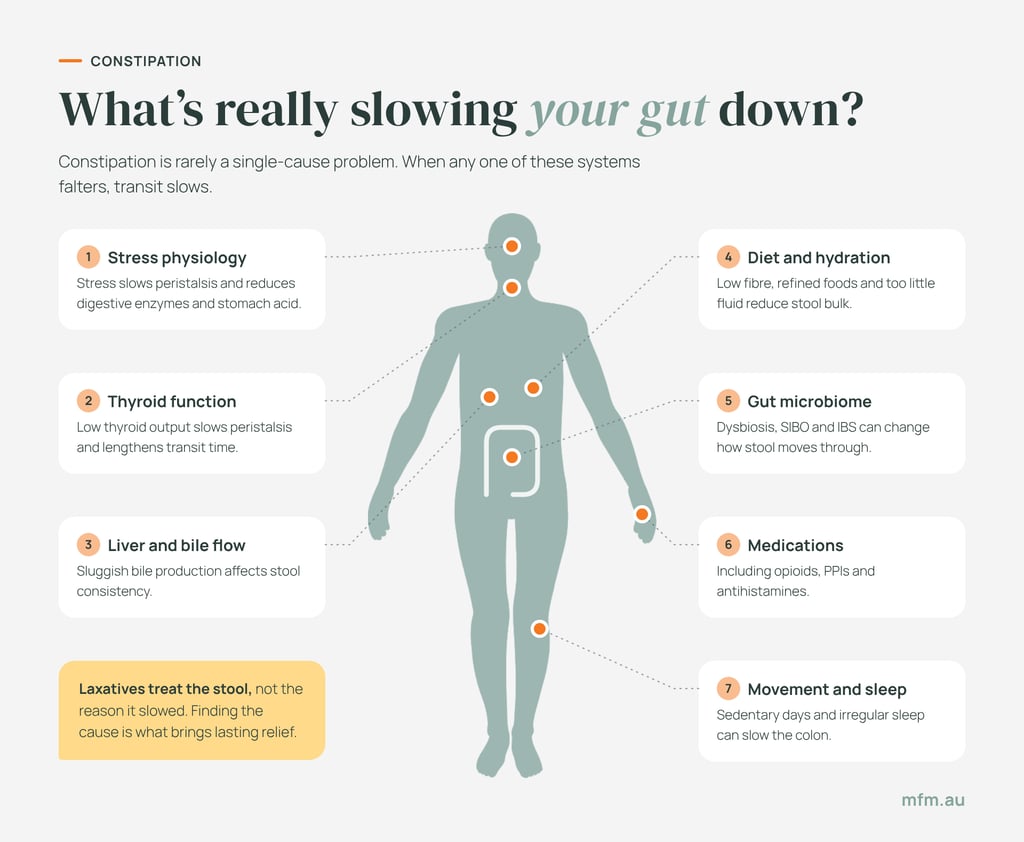
Constipation is rarely a single-cause problem. The bowel depends on several overlapping systems working in coordination, and when any one of them falters, transit slows. For some people, the cause is more straightforward: hydration, diet, or movement. For others, it can involve thyroid function, stress physiology, medication use, or changes in gut microbial composition. Identifying the underlying cause is what should determine treatment; without it, most interventions offer only temporary relief.
Symptoms of constipation
The symptoms of constipation include infrequent bowel movements, hard or difficult-to-pass stools, straining, and a sense of incomplete evacuation. Beyond these primary signs, constipation can also cause symptoms that seem unrelated to digestion, including headaches, brain fog, skin changes, and hormonal changes.
When the gut moves slowly, more water is absorbed back from stool as it sits in the colon, which is why stools become hard and difficult to pass. Slow transit also allows waste products to be reabsorbed into circulation, placing a greater load on the liver. This is one reason constipation can contribute to symptoms that seem unrelated to digestion, such as hormonal imbalances, skin issues, and brain fog.
Primary symptoms:
- Fewer than one bowel movement per day, or full days without any movement at all
- Stools that are hard, dry, lumpy, or require straining to pass
- A sense of incomplete evacuation after going to the toilet
- Rectal pain, bleeding, or haemorrhoids from repeated straining
Associated symptoms:
- Bloating and abdominal distension
- Cramping or lower abdominal discomfort
- Reflux or upper digestive symptoms
- Flatulence
- Headaches
- Brain fog and low mood
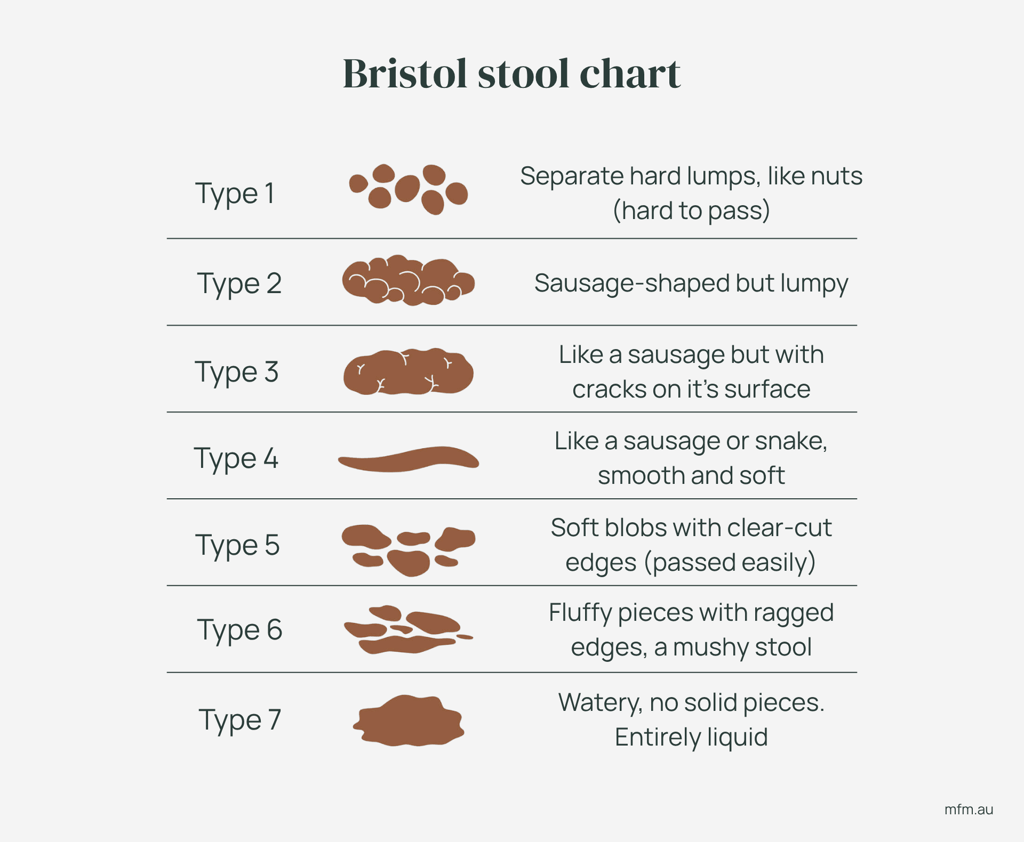
The Bristol Stool Chart is a useful reference for assessing stool form. Types 1 and 2, hard pellets or a firm, lumpy sausage shape, indicate constipation. Type 3, which appears cracked and sausage-like, suggests a tendency in that direction.
Some people with constipation also experience episodes of loose stool, particularly those with IBS or SIBO. This fluctuation can make the underlying constipation less obvious, since it masks what the gut’s default pattern is.
What causes constipation?
Constipation is caused by anything that slows the movement of stool through the bowel. This includes low fibre intake, dehydration, stress, thyroid dysfunction, gut microbiome changes, medication use, and reduced physical activity. In many cases, more than one factor is involved.
How the gut moves food
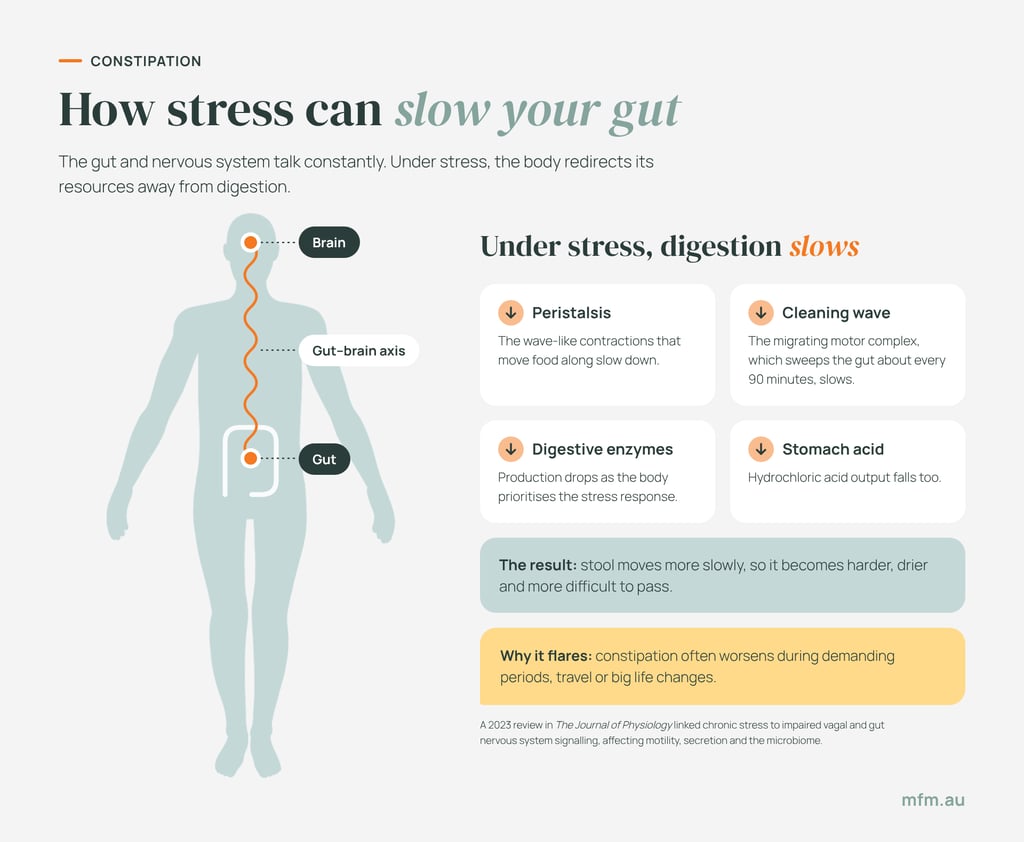
Healthy digestion relies on the whole system working together, from adequate stomach acid and digestive enzyme production to the wave-like muscular contractions of peristalsis moving food through the intestines. Between meals, a separate sweeping contraction called the migrating motor complex (MMC) moves approximately every 90 minutes. The MMC functions as a necessary cleaning cycle, clearing residual food particles from the small intestine into the large intestine while maintaining the integrity of the mucosal lining.
In the large intestine, microbial activity influences how efficiently faecal matter is propelled toward elimination. Changes in which species are present, or in microbial diversity overall, can influence this movement.
This slower transit is what makes stool harder and drier, as explained above.
The stress connection
The gut and nervous system communicate constantly. Under acute or chronic stress, the nervous system slows digestive activity, including peristalsis and the MMC, and reducing production of digestive enzymes and hydrochloric acid. This happens as the body redirects its resources toward responding to a perceived emergency. This slowing of movement and secretion is a common but often overlooked contributor to constipation.
A 2023 review in The Journal of Physiology confirmed that chronic stress impairs vagal signalling and enteric nervous system function, with flow-on effects on gut motility, secretion, and microbiota composition.
Common contributing factors
Lifestyle and dietary:
- Low fibre intake, or high reliance on refined carbohydrates, sugar, and processed foods
- Insufficient fluid intake
- Sedentary lifestyle or laxative overuse
- Food intolerances or sensitivities
- Emerging research has also linked disrupted sleep and irregular circadian patterns to altered gut microbiota composition and impaired colonic motility, a consideration for people whose constipation worsens with shift work, travel, or inconsistent sleep schedules
Gut and digestive:
- Gut microbiome changes, including dysbiosis or overgrowth
- SIBO (small intestinal bacterial overgrowth) or IBS
- Sluggish liver function affecting bile production and stool consistency
Systemic and hormonal:
- Stress, anxiety, or depression
- Hypothyroidism, diabetes, or electrolyte imbalances
- Pregnancy
Medications:
- Including opioids, antihistamines, NSAIDs, antacids, PPIs, calcium channel blockers, antidepressants, and some iron or calcium supplements
Structural and neurological:
- Structural factors such as haemorrhoids, anorectal fissures, or mechanical obstruction
- Neurological conditions, including Parkinson’s disease, spinal injury, or dementia
- Smooth muscle or connective tissue disorders, such as scleroderma
- Congenital conditions, including Hirschsprung’s disease and neuromuscular bowel impairment
Where constipation is persistent or progressive, conditions that affect bowel function should be ruled out, conditions that can affect bowel function, including colorectal cancer, diverticular disease, inflammatory bowel disease, thyroid dysfunction, and heavy metal toxicity. A practitioner can help determine which investigations are appropriate based on your presentation.
How is constipation investigated and assessed?
A good assessment starts with a thorough history. Understanding how long symptoms have been present, what stool looks like day to day, dietary patterns, medication use, stress levels, and any other health concerns gives a much clearer picture than any single test.
Standard tests may include:
- Thyroid profile, including TSH, T3, and T4
- Serum calcium and potassium, which affect smooth muscle function
- Blood glucose and metabolic markers
- Coeliac and inflammatory markers where relevant
Functional tests may include:
- Comprehensive stool analysis to assess gut microbiome composition, inflammation, digestive enzyme adequacy, and mucosal health
- Food sensitivity or intolerance testing
- Cortisol awakening response to assess chronic stress physiology
- Nutrient absorption assessment
Standard testing will not always identify gut microbiome changes, food intolerances, or HPA axis dysregulation, all of which are clinically relevant in many cases of constipation. This is where a more thorough functional assessment adds valuable information.
Why constipation can continue after treatment
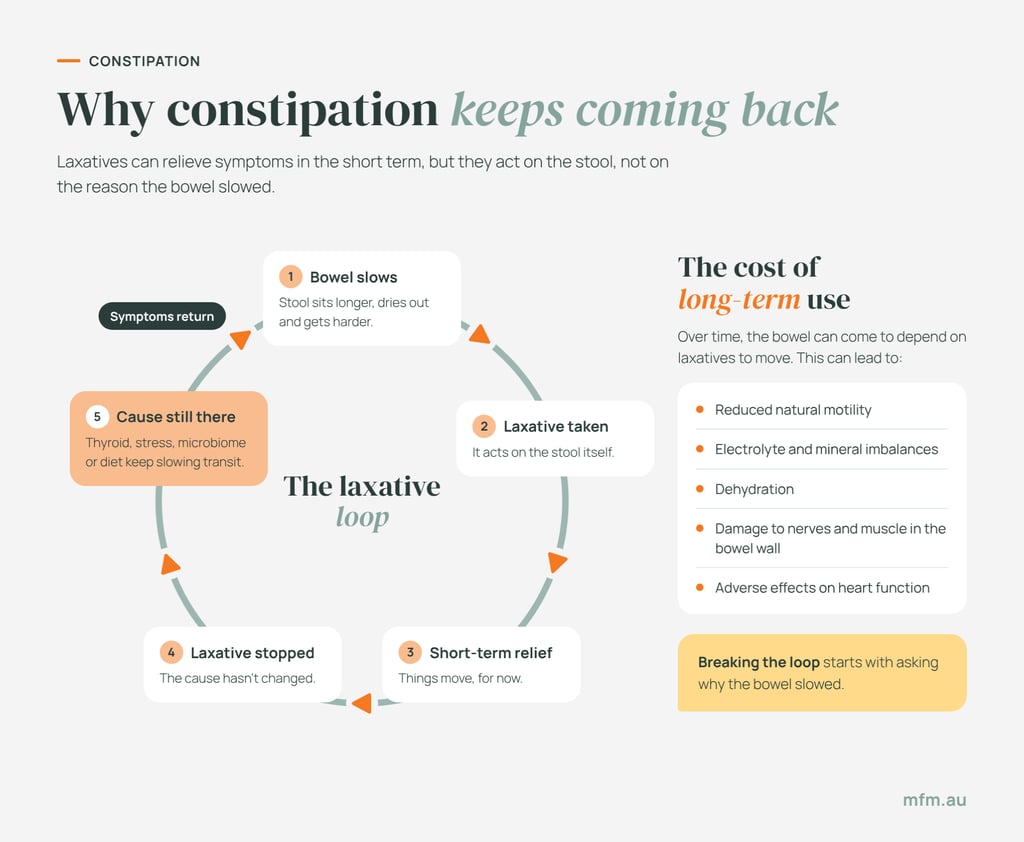
Constipation is a symptom of something else happening in the body and will often persist after treatment because laxatives act on the stool itself, not on the reason the bowel was moving slowly in the first place. Laxatives are still the most commonly recommended treatment, and they can relieve symptoms in the short term.
Different laxative types work in different ways:
- Bulking agents, osmotic laxatives, and stool softeners: draw water into the bowel to soften stool
- Stimulant laxatives: trigger muscular contractions directly
When the laxative is stopped, the original problem remains, and symptoms return.
- Long-term laxative use introduces additional complications: the bowel can become dependent on external stimulation to initiate movement. This laxative dependency can result in:
- Reduced natural motility
- Electrolyte and mineral imbalances
- Dehydration
- Damage to the nerves and muscle tissue of the intestinal wall
- Adverse effects on cardiac function
Treating constipation: a functional medicine approach
A functional medicine approach to constipation begins by asking why the bowel is moving slowly, then building a treatment plan around what is found. This means taking a detailed history, running relevant investigations, and considering how contributing systems interact in each person. Treatment is adapted as the clinical picture develops.
Depending on your presentation, treatment may include:
- Dietary and fibre strategies: adjusting fibre from sources like psyllium husk, PHGG, and slippery elm helps soften and bulk your stool while supporting a healthy gut microbiome, alongside addressing any food intolerances contributing to your symptoms
- Microbial rebalancing: targeted probiotic strains such as Bifidobacterium and Lactobacillus species can help correct dysbiosis and support more regular bowel movements, selected based on your individual results
- Nervous system and stress physiology: because chronically raised cortisol can affect gut motility and digestive secretions, herbs like chamomile, valerian, passionflower, lemon balm, and gotu kola may be used to support the nervous system and support gut-brain axis function
- Bile flow and hepatic detoxification: herbs such as dandelion root, St. Mary’s thistle, black walnut, yellow dock, and turmeric support healthy bile production, helping lubricate and bulk your stool
- Motility and herbal support: from short-term laxatives like rhubarb and aloe vera to motility and antispasmodic herbs like ginger and fennel, and digestive bitters like gentian and barberry, can be used to support bowel motility
- Motility-supporting micronutrients: key nutrients including magnesium, zinc, vitamin C, and vitamin A support the smooth muscle function, nerve signalling, and mucosal health involved in regular bowel movements
- Addressing contributing conditions: underlying issues such as hypothyroidism, elevated cortisol, and blood sugar dysregulation can contribute to constipation by slowing gut motility, so these are identified and treated as part of your care
Supporting people with constipation to find lasting relief
We work with people at every stage of constipation, from occasional bloating and discomfort to long-standing symptoms that laxatives haven’t fixed.
When to seek support
See your healthcare provider if you have:
- Fewer than three bowel movements a week for more than a few weeks
- Ongoing straining, hard stools, or a sense of incomplete evacuation
- Constipation alongside unexplained weight loss, blood in the stool, or severe pain
- Long-term laxative use without lasting improvement
- Constipation alongside fatigue, brain fog, or skin changes without a clear digestive explanation
Frequently asked questions
Is it really constipation if I go to the toilet every day?
Yes, daily bowel movements can still mean constipation, because frequency isn’t the deciding factor. Hard, dry, or pellet-like stools count as constipated even when they happen every day. The Bristol Stool Chart classifies types 1 and 2 as constipation regardless of how often they occur.
Is it normal to go less than once a day?
Going less than once a day isn’t necessarily abnormal, but once or twice daily indicates healthier transit. When stool stays in the colon longer, more water gets absorbed, and it becomes harder and drier to pass. Consistency and ease of passage matter more than frequency alone.
Can constipation cause symptoms beyond the gut?
Yes, slow transit allows waste products to be reabsorbed into circulation, placing extra load on the liver. This can contribute to headaches, brain fog, skin changes, and hormonal symptoms. These effects are often overlooked and only traced back to bowel function once it’s properly investigated.
Is constipation linked to IBS?
Yes, the two conditions frequently overlap, with constipation a primary feature of IBS-C. Altered gut motility, microbiome changes, and stress physiology commonly contribute to both. Some people with IBS also have SIBO, including methane-producing archaea that slow intestinal motility, which is why this type of constipation often responds poorly to laxatives alone.
Can constipation be caused by my thyroid?
Yes, an underactive thyroid can cause constipation because thyroid hormone regulates metabolic rate throughout the gut as well as the rest of the body. When output is low, peristalsis slows and transit time increases. TSH alone doesn’t always capture this, so T3 and T4 levels are also relevant if constipation persists despite dietary changes.
What foods make constipation worse?
Foods low in fibre and high in refined carbohydrates, sugar, and processed ingredients slow bowel transit and reduce the stool bulk needed for regular movement. Dairy and gluten-containing foods are common triggers for people with sensitivity or intolerance, and alcohol and excess caffeine can contribute through their dehydrating effects.
Why does constipation come back after I stop taking laxatives?
Laxatives act on the stool, not on the reason the bowel slowed. Once withdrawn, the original contributing factors, whether thyroid function, stress physiology, microbiome composition, or diet, continue to operate. Repeated or long-term use can also reduce natural bowel motility and affect the nerves and muscle tissue of the intestinal wall, making independent function harder to restore.
Can stress really cause constipation?
Yes. Under stress, the sympathetic nervous system slows peristalsis and the migrating motor complex, the regular sweeping contractions that move food through the gut, and reduces production of digestive enzymes and hydrochloric acid. This is why constipation often worsens during demanding periods, travel, or major life changes, and can become persistent with chronic stress.
How long does it take to resolve constipation?
Most people notice real improvement within two to three months of a well-targeted plan, though the timeline depends on the underlying cause. Simple cases, such as low fibre intake or dehydration, often respond within days to weeks, while thyroid dysfunction or long-term laxative dependence typically take longer to resolve.
Ready to understand what's behind your constipation?
If you’re looking for a clearer picture of what’s contributing to your symptoms, learn more about our approach to constipation testing and care.