

What is low blood pressure?
Hypotension is blood pressure below about 90/60 mmHg. At this level, the force of blood moving through the arteries may be too low to keep the brain and muscles well supplied, particularly when you stand up. The top number is the pressure as the heart beats, and the bottom number is the pressure while it rests between beats.
Each time you stand, gravity pulls between half a litre and a litre of blood down into the legs and abdomen. Within seconds, the nervous system tightens the blood vessels and lifts the heart rate to push that blood back towards the head. When blood volume is low or this reflex is slow, pressure dips and the brain briefly receives less oxygen.
Low blood pressure is not always a problem. Many people, particularly fit adults and younger women, have readings around 90/60 mmHg and feel well. It becomes a concern when it causes symptoms, appears suddenly or points to an underlying condition that needs attention.
Types of hypotension
Hypotension is usually classified by when the drop in pressure happens and what triggers it.
- Orthostatic (postural) hypotension: a fall of at least 20 mmHg in the top number, or 10 mmHg in the bottom number, within three minutes of standing, and the form most likely to cause symptoms, particularly in older adults
- Initial orthostatic hypotension: a brief, sharp drop within the first 15 seconds of standing that recovers quickly, common in both younger and older people and often missed by a standard cuff reading
- Postprandial (after-meal) hypotension: a drop within one to two hours of eating, as blood is directed to the gut for digestion
- Neurally mediated hypotension: a reflex drop triggered by standing for a long time, heat, pain or emotional stress, which can lead to a sudden faint, known as vasovagal fainting
- Chronic low blood pressure: consistently low readings without symptoms, often natural for that person and not harmful
- Severe acute hypotension: a sudden, marked drop from blood loss, serious infection (sepsis) or a severe allergic reaction (anaphylaxis), which is a medical emergency
Symptoms of low blood pressure
The most common symptoms of low blood pressure are light-headedness, blurred or greying vision and a feeling of unsteadiness, often within seconds to a few minutes of standing up, getting out of bed or straightening after bending down.
On standing or changing position:
- A head rush or light-headedness when getting up
- Vision dimming, tunnel vision or seeing spots
- Feeling faint or fainting, particularly after standing still for long periods
- Nausea, pale clammy skin or a pounding heart just before fainting
- An ache across the neck and shoulders while upright
Through the day:
- Tiredness that feels heavy and physical rather than sleepy
- Brain fog or difficulty concentrating, especially when upright for long periods
- Cold hands and feet
- Lower tolerance for exercise
With specific triggers:
- Dizziness within an hour or two of a large or carbohydrate-heavy meal
- Symptoms that worsen in hot weather, hot showers or crowded rooms
- Feeling worse after alcohol or during a bout of gastro
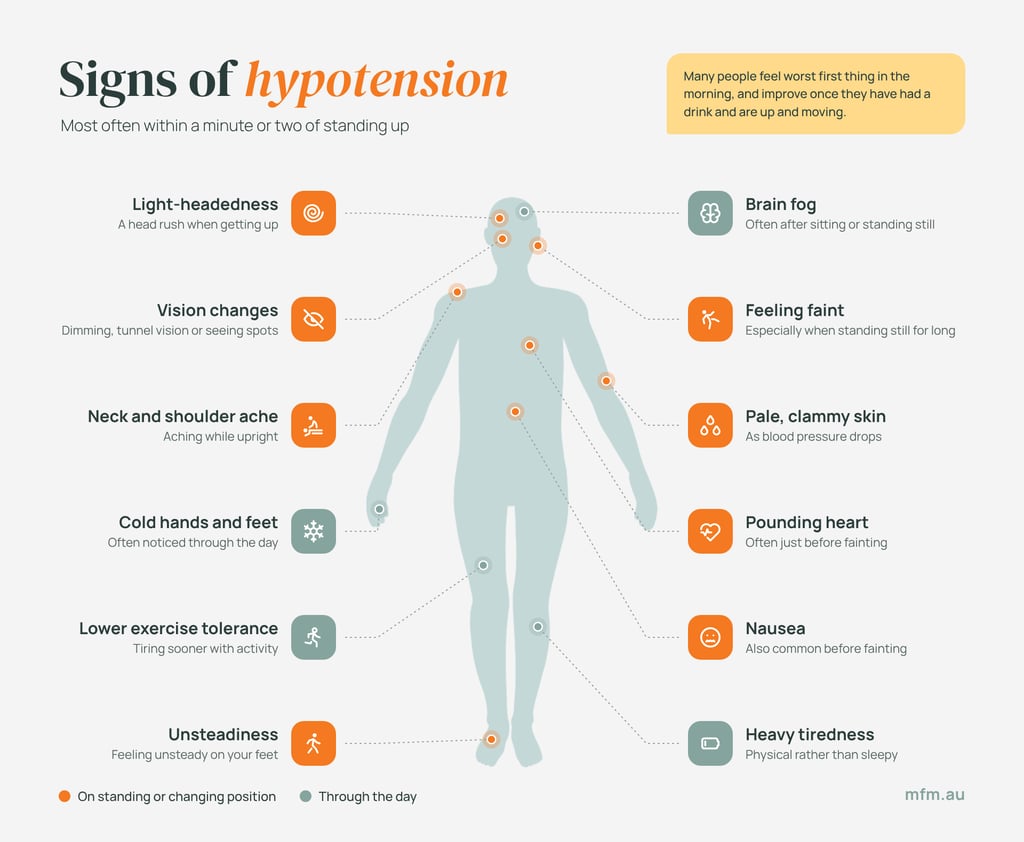
Many people feel worse first thing in the morning and improve once they have had something to drink and are up and moving.
Symptoms are more likely, and carry a higher risk of falls, in people who are:
- Over 65
- Pregnant
- Taking blood pressure, prostate or some antidepressant medications
- Living with diabetes or Parkinson’s disease
- Recovering from a viral illness, including COVID-19
- Recently bed-bound or much less active than usual
What causes low blood pressure?
Low blood pressure most commonly develops when there is too little fluid circulating in the blood vessels, so the heart has less blood to push out with each beat.
This often comes from everyday causes: low fluid intake, a very low-salt diet, heavy sweating, hot weather or a recent bout of gastro. Sodium holds water inside the bloodstream, so someone can drink plenty of water and still run low on fluid in their blood vessels if their salt intake is very low.
The second common cause is a slow reflex on standing. When the blood vessels do not tighten quickly enough, blood pools in the legs and abdomen instead of returning to the heart. This may follow a viral illness or prolonged bed rest, and it is more common with age and with nerve damage from diabetes or some neurological conditions.
Several other contributors are commonly involved:
- Medications: blood pressure tablets, diuretics (fluid tablets), some antidepressants and medicines for erectile dysfunction, prostate enlargement or Parkinson’s disease can lower pressure or slow the standing reflex, as can some herbal and supplement products
- Medication combinations: erectile dysfunction medicines can cause a dangerous drop in pressure when taken with nitrate heart medicines
- Low iron, vitamin B12 or folate: fewer or less effective red blood cells reduce oxygen delivery, which can make light-headedness and fatigue worse, and very low B12 can also damage the nerves that tighten blood vessels. Low iron is common in women with heavy periods
- Gut absorption: coeliac disease, low stomach acid or long-term acid-suppressing medication can reduce how well iron and B12 are absorbed, even with a good diet
- Thyroid function: a severely underactive thyroid can slow the heart rate and reduce the force of each heartbeat, although a mildly underactive thyroid more often raises the bottom number
- Adrenal hormones: low levels of the adrenal hormones cortisol and aldosterone reduce how much sodium and water the kidneys hold onto, with Addison’s disease the most serious, though uncommon, cause
- Blood sugar regulation: long gaps between meals and blood sugar dips can add to light-headedness and shakiness
- Reduced fitness: long stretches of inactivity reduce blood volume and leave the heart less able to adjust when you stand
- Pregnancy: blood vessels widen through the first and second trimesters
- Heart conditions: slow heart rhythms, valve problems or heart failure limit how much blood the heart can pump
- Inflammation: ongoing inflammation throughout the body may make it harder for blood vessels to tighten when you stand
- Stress and fainting: emotional stress, pain or the sight of blood can set off a reflex that slows the heart and widens blood vessels, causing a sudden drop in pressure
- Alcohol: widens blood vessels and increases fluid loss through the kidneys
Someone with heavy periods and low iron, who drinks little water and has recently been unwell, may have several small reasons for low pressure that add up to daily symptoms.
Complications of low blood pressure
The main risk of low blood pressure that causes symptoms is injury from falls and fainting, such as fractures and head injuries, particularly in older adults.
Over the long term, orthostatic hypotension is also linked with a higher risk of heart disease, stroke and dementia.
A sudden, severe fall in blood pressure, known as shock, can deprive organs of oxygen and is a medical emergency. Call 000.
Some people with low blood pressure on standing have high blood pressure when lying down (supine hypertension), particularly overnight. Treatments that raise blood pressure, such as extra salt, liquorice or some medicines, can push it higher, so lying-down readings need checking too.
How is low blood pressure diagnosed and assessed?
Low blood pressure is diagnosed by measuring blood pressure, usually lying down and then standing, to see how it changes when you get up.
A lying and standing test has two steps:
- Rest flat for about five minutes
- Stand while your blood pressure and heart rate are checked several times over at least three minutes, or up to
- 10 minutes if POTS is suspected
The pattern in your readings can show whether you have:
- Orthostatic hypotension: blood pressure drops by at least 20 mmHg in the top number, or at least 10 mmHg in the bottom number, within three minutes of standing
- Nerve-related (neurogenic) orthostatic hypotension: the same drop with only a small rise in heart rate, which can point to a problem with the nerves that control blood vessels
- Postural orthostatic tachycardia syndrome (POTS): heart rate rises by 30 beats per minute or more within 10 minutes of standing, without a significant fall in blood pressure
Initial orthostatic hypotension happens too quickly for a standard cuff to pick up, so it may need continuous beat-to-beat monitoring.
A standard assessment with your GP will typically include:
- A review of your current medications
- Full blood count and iron studies
- Vitamin B12 and folate
- Electrolytes and kidney function
- Fasting glucose and cholesterol
- Thyroid-stimulating hormone (TSH)
- Morning cortisol, where low adrenal hormones are suspected
- An electrocardiogram (ECG) to check heart rate and rhythm
A doctor may also arrange 24-hour ambulatory blood pressure monitoring, the same test used for high blood pressure. You wear a cuff for a full day and night, and it records your pressure at regular intervals. This can show drops after meals and high readings overnight that a single clinic reading would miss.
Depending on your results, an echocardiogram (heart ultrasound), a tilt table test (blood pressure readings taken as a table tilts you upright) or referral to a cardiologist or neurologist may be needed.
A functional assessment adds a detailed history of when your symptoms happen and what triggers them, alongside further testing.
Functional testing may include:
- Ferritin (your stored iron) interpreted against optimal rather than minimum ranges
- Active B12 and homocysteine, a marker that rises when B12 or folate is low
- Magnesium and other nutrient levels where a deficiency is suspected
- A full thyroid panel, including free T3 and thyroid antibodies
- An advanced hormone profile, including cortisol patterns across the day
- Fasting insulin and blood glucose monitoring, to check whether dips in blood sugar are adding to your dizziness
- Urine sodium testing, to check how well your kidneys hold onto salt and water
- Coeliac screening and gut function testing where absorption is a concern
Why low blood pressure can continue after treatment
Hypotension often continues because most treatments raise blood pressure only while you use them. They aren’t designed to change why blood volume is low or why blood vessels respond slowly when you stand.
Conventional treatments include:
- Reviewing or reducing medications that lower blood pressure
- Increasing fluid and salt intake, which can ease symptoms on standing in the short term
- Wearing waist-high compression stockings or abdominal binders, which reduce blood pooling in the legs and abdomen
- Taking fludrocortisone, a medicine that helps the kidneys hold onto sodium and water
- Taking midodrine, which tightens blood vessels for a few hours after each dose and is usually started by a specialist
These treatments can ease symptoms, and they are often essential when symptoms are frequent or falls are a risk. Fluids can help within the hour, but rebuilding iron stores or fitness takes weeks to months.
Until then, symptoms often continue because:
- Iron stores are still low, which can lead to anaemia, so your blood carries less oxygen and tiredness continues
- Fitness and blood volume are still low after a period of inactivity, so the heart has less to pump when you stand
- The nervous system is still slow to respond after a viral illness, so standing up still brings on symptoms
Treating low blood pressure: a functional medicine approach
A functional medicine approach to hypotension begins with understanding why your blood pressure is low and what is stopping your body from raising it when you stand, eat or warm up. Investigation combines a detailed case history with functional testing where relevant. This can include your nutrient levels, thyroid and adrenal hormones, blood sugar control and how your nervous system responds to standing.
Depending on your presentation, care may include:
- Hydration and electrolytes: Spreading fluids across the day and increasing sodium through food or electrolyte drinks can increase the fluid in your blood vessels and ease dizziness on standing. Potassium levels may also need checking, as some treatments for low blood pressure cause potassium loss. If you have heart or kidney disease, or high blood pressure when lying down, check with your GP before adding salt.
- Meal timing and blood sugar: Eating smaller, regular meals with protein can reduce drops in blood pressure after eating. Limiting refined carbohydrates may also help, as they are linked with larger falls in pressure after meals and with the light-headedness of blood sugar dips.
- Nutrient repletion: Correcting low iron, B12, folate and magnesium where testing shows a deficiency may help your blood carry oxygen and support your heart and blood vessels to respond when you stand. Digestive support is added where poor absorption is keeping levels low.
- Adrenal and thyroid function: Where either gland is underactive, care may include herbs such as liquorice root and Rehmannia, nutrients for thyroid hormone production and coordination with your GP or endocrinologist. Adrenal hormones help your body hold onto sodium and water, and thyroid hormone affects the strength and rate of your heartbeat. Diagnosed adrenal insufficiency (Addison’s disease) needs medical hormone replacement.
- Herbal safety: Herbal medicines should be prescribed by a qualified practitioner, as some interact with medications. Liquorice can raise blood pressure and lower potassium, and it can add to the effects of fludrocortisone and diuretics. Your practitioner monitors your blood pressure and potassium while you take it.
- Nervous system regulation: Standing up slowly and in stages, slow belly breathing and regular good-quality sleep can help your body adjust more quickly when you stand. Crossing your legs or tensing your thighs and buttocks when symptoms start can also help push blood back towards your head.
- Graded exercise: Starting with lying or seated exercise such as swimming or recumbent cycling, then progressing to upright and strength work, can gradually increase blood volume and improve how well you cope with standing.
This approach works alongside your GP and any specialist care, and does not replace prescribed medicines such as fludrocortisone or midodrine. Never stop or change these without medical advice.
We support people with hypotension to optimal health
Reclaiming your energy starts with understanding why your blood pressure is low. Start your care journey today.
When to seek support
See your GP if you have:
- Dizziness or fainting that happens more than occasionally
- Dizziness or light-headedness while sitting or lying down, as well as on standing
- New symptoms after starting or changing a medication
- Tiredness most days, even with enough sleep
- A recent fall, or unsteadiness on your feet
- Symptoms alongside heavy periods, weight loss or a recent illness
- Readings that have dropped noticeably from your usual level
Call 000 if you faint and also have chest pain, a racing or irregular heartbeat, shortness of breath, confusion, or black or bloody stools.
Frequently asked questions
Is low blood pressure dangerous?
Low blood pressure is usually not dangerous if you feel well, and naturally low readings carry less long-term risk than high blood pressure. The main danger is injury from fainting or falls, and a sudden, severe drop is a medical emergency.
What blood pressure reading is too low?
Blood pressure below 90/60 mmHg is generally classed as low. Whether a reading is too low for you depends on whether it causes symptoms or has fallen from your usual level. If you usually sit at 130/85, you may feel faint at 100/65, so knowing your own baseline is useful.
How can I raise my blood pressure quickly?
The quickest way to raise blood pressure when you feel faint is to sit or lie down and raise your legs, which returns blood to the brain within seconds. Drinking two large glasses of water (about 500 mL) can lift pressure within half an hour.
Can low blood pressure make you tired all the time?
Yes, low blood pressure can cause ongoing tiredness, usually a heavy, physical fatigue. While you are upright, less blood reaches the brain and muscles, so they receive less oxygen. Low iron, an underactive thyroid and poor sleep cause very similar fatigue, so a practitioner will usually check these before putting tiredness down to blood pressure alone.
Should I stop my blood pressure medication if my readings are low?
No, do not stop or reduce blood pressure medication on your own, even if your readings are low. Stopping some medicines suddenly can cause pressure to rebound or affect heart rhythm. Record your readings, including when you feel dizzy, and take them to your GP, who can adjust the dose or timing safely.
Is low blood pressure common in pregnancy?
Yes, blood pressure normally falls in early and mid pregnancy as hormones relax blood vessels, then rises again in the third trimester. In late pregnancy, lying flat on your back can cause dizziness, as the uterus presses on a large vein returning blood to the heart. Fainting, or dizziness with bleeding, needs prompt review with your GP or midwife.
What is the difference between low blood pressure and POTS?
Low blood pressure involves a fall in the pressure reading, while POTS involves a large rise in heart rate on standing with little change in pressure. In adults, heart rate climbs by 30 beats per minute or more within 10 minutes of standing. Both cause dizziness, fatigue and brain fog, so a lying and standing test checks for both.
Can stress or anxiety cause low blood pressure?
Yes, stress and anxiety can trigger a sudden drop in blood pressure in some people, although they more often raise it. In vasovagal fainting, an emotional trigger slows the heart and relaxes the blood vessels at the same time. Anxiety can also cause light-headedness through fast breathing, which feels similar but is not caused by low pressure.
Ready to understand what's causing your low blood pressure?
If dizziness on standing, fatigue or fainting keep coming back, find out how we investigate why your blood pressure runs low and build a plan around what we find.