


At Melbourne Functional Medicine, we believe proactive care beats reactive care. Australia offers excellent recommended screenings – and there’s plenty you can track at home. Together, they’re the foundations of staying well, not just getting well.
We also recognise how easily women’s health checks slip down the list. With work, family and competing priorities, routine screening is often the thing that waits – until it shouldn’t.
For Jean Hailes Women’s Health Week 2025, we’re outlining seven important checks to prioritise. The theme is “Say Yes to You”– consider this your gentle prompt to book what’s due and take a moment for your future health.
1. Check your numbers
Knowing these numbers and monitoring them over time will be helpful for you and your healthcare provider to assess risk, changes and help you personalise a management plan.
Waist-to-hip ratio
Your waist-to-hip ratio (WHR) is a measure of how fat is distributed in your body, particularly around the abdomen. Higher levels of visceral fat in this area can influence your overall health and metabolic function.
WHR is a more reliable metric than Body Mass Index (BMI). BMI estimates body fat based on height and weight, but does not show how fat is distributed.
For women, this is particularly important because where fat is stored can significantly impact health risks. WHR compares fat stored around the waist to that around the hips. This measurement reflects abdominal fat, which is closely linked to a higher risk of heart disease, type 2 diabetes, and metabolic conditions.
When to check: You can check this ratio at home anytime from your 20s.
How to check: Learn how to calculate at home and see our recommended reference ranges.
Waist circumference ideal
The ideal waist circumference for women is less than 80 cm, with health risks rising above this level. A waist circumference above 88 cm is associated with a substantially increased risk for heart disease, type 2 diabetes, and some cancers.
Blood pressure
Blood pressure refers to the force of blood pressing against the walls of your arteries as your heart pumps. Monitoring it regularly is important, as it is a major risk factor for preventable diseases.
When to check: Once you’re 18 or over, you should have your blood pressure checked by your doctor at least every 2 years.
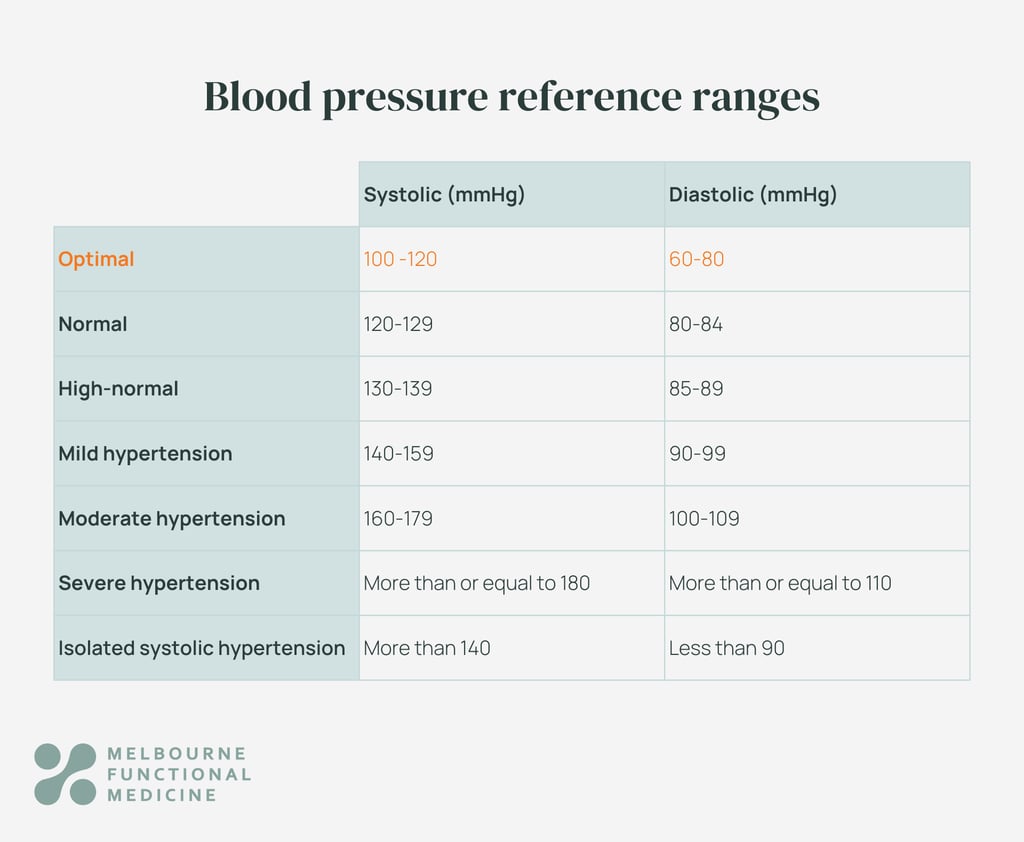
How to check: You can ask your GP, visit us for a Healthspan Physical Assessment, even see your local pharmacist for a free check, or purchase a personal device to use at home. See our reference ranges below:
Cholesterol
Cholesterol plays a vital role in women’s health, supporting the production of steroid and sex hormones (think cortisol and oestrogen), bile acids, and forming part of every cell membrane in the body. While only a small amount is needed for these functions, altered cholesterol levels can increase the risk of cardiovascular disease and other cardiometabolic conditions, risks that rise for many women after menopause due to hormonal changes.
When to check: For most women, cholesterol testing is recommended every 5 years from the age of 45, or from 35 if you are of Aboriginal or Torres Strait Islander heritage. Your doctor may recommend more frequent testing based on your personal health history, family history, or other risk factors.
At Melbourne Functional Medicine, we recommend women begin testing earlier – ideally in your 30s, and include additional markers such as Lipoprotein(a) and Apolipoprotein B. Identifying elevated levels early gives you more opportunity to take effective, preventive steps to protect your long-term cardiovascular health.
How to check: Your GP can arrange a Medicare-covered standard lipid panel. Alternatively, talk to us at Melbourne Functional Medicine about an advanced Cardiovascular Lipid Profile, which provides a more detailed assessment of your lipid health and cardiovascular risk factors.
Blood sugar
Glucose is the main form of sugar in your blood and a key source of energy for your body and brain. Blood glucose tests measure how much glucose is in your blood at a given time. Keeping blood sugar levels stable is essential for health. Persistent highs, lows, or large swings between the two can affect mood, energy, hormonal balance, and increase the risk of long-term health problems.
When to check: At least every 3 years from age 40 (18yo for Aboriginal and Torres Straight Islander peoples), but with nearly one in four adults over 25 living with diabetes or pre-diabetes in Australia, it is worth starting the conversation with your doctor in your 20s.
For women, the risk may be higher if you have a family history of type 2 diabetes, had gestational diabetes during pregnancy, live with PCOS, or carry excess weight around your waist.
If you are at risk, your GP can arrange formal diabetes screening, which may include a fasting glucose or a 2 hour oral glucose tolerance test (GTT).
Fasting insulin testing is also a valuable clinical tool for assessing metabolic health and detecting early insulin resistance – often before fasting glucose or HbA1c becomes abnormal. It plays a critical role in preventive, functional, and integrative medicine
How to check: Your GP can arrange a Medicare-covered blood glucose test, or you can talk to us at Melbourne Functional Medicine about whether a Continuous Glucose Monitor (CGM) could offer deeper insight into your day-to-day blood sugar patterns.
Check your senses
Eye test
Routine eye examinations help protect and maintain clear vision, and they can also detect early signs of health issues such as diabetes, hypertension, glaucoma, and macular degeneration. For women, regular eye checks are particularly important, as hormonal changes during pregnancy and menopause can sometimes affect vision.
When to check: In Australia, Medicare covers a free comprehensive eye test every three years for adults under 65. If you have certain health conditions, notice changes in your vision, or wear corrective lenses, you may be eligible for more frequent testing. From the age of 65, you are eligible for a free annual eye test.
How to check: Book an appointment with any optometrist and bring your Medicare card. For women with higher risk factors, such as a family history of glaucoma or diabetes, your optometrist may recommend additional monitoring.
Hearing test
Hearing health is essential not only for communication but also for maintaining cognitive function, social wellbeing, safety, and overall quality of life. Research shows that untreated hearing loss is associated with an increased risk of cognitive decline and dementia, highlighting the importance of early detection and management.
When to check: If you’re under 50 and have no hearing concerns, aim to test every 2 to 3 years. After age 50, or if you notice any changes in your hearing, annual testing is recommended. Medicare offers rebates for hearing tests when you have a referral from a medical practitioner such as a GP, ENT specialist, or neurologist.
How to check: Book an appointment at a nearby audiology clinic. While a referral is not required to have a hearing test, it is necessary for a Medicare rebate. You can also begin with a free online hearing test through the Lions Hearing Clinic.
Dental check
Your mouth can be a window to your overall wellbeing. Changes in oral health, especially gum health, can signal deeper imbalances in the body, such as inflammation, nutrient deficiencies, or chronic conditions. There is growing evidence linking poor oral hygiene with heart disease, diabetes, and even cognitive decline. Hormonal fluctuations during pregnancy, menstruation, and menopause can also affect oral health, making regular care especially important.
When to check: Most dental professionals in Australia recommend dental check-ups every six months, starting from childhood. While Medicare does not cover dental checks for adults, private health insurance often provides some coverage, so it is worth reviewing your policy.
How to check: Find a dentist you trust. If possible, seek out an integrative or holistic dentist who understands the connection between oral health and overall wellbeing. You may also consider testing your oral microbiome with us at Melbourne Functional Medicine, as oral health can have a significant impact on your systemic health.
Check down under
Health below the belt impacts your comfort, confidence, relationships and daily life. Open conversations, regular check-ups, and preventive care help you stay informed and healthy.
STI screening
Sexually Transmitted Infections (STIs)can often go unnoticed, yet infections such as chlamydia, gonorrhoea, and syphilis are increasing in Australia. For women, early detection is especially important to prevent complications like pelvic inflammatory disease and fertility issues.
When to test: Although STIs are most common in people aged 15 to 29, it’s important to discuss with your doctor how often you should be tested based on your personal circumstances and risk factors.
How it’s tested: Most STI tests are simple and non-invasive, usually involving a urine or blood sample. Testing can be arranged through your GP or at a local sexual health clinic, where testing and treatment may be available free of charge if needed.
Pelvic floor health
The pelvic floor is a group of muscles that support the bladder, uterus, bowel, and rectum. These muscles play a crucial role in bladder and bowel control, sexual function, and pelvic stability. For women, pelvic floor strength and function can be affected by pregnancy, childbirth, menopause, ageing, surgery, and lifestyle factors such as heavy lifting or prolonged sitting.
When to check: It’s a good idea to assess pelvic floor health during and after pregnancy, menopause, or if at any time you experience symptoms such as urinary leakage, urgency, constipation, pelvic pain, or discomfort during sex.
How to check:
Self-assessment: You can try simple exercises to see if you can contract and relax your pelvic floor muscles. However, this can be challenging without guidance.
Professional assessment: A women’s health physiotherapist or pelvic floor specialist can perform a thorough evaluation using internal and external examination techniques to assess muscle strength, coordination, and function.
Regular assessment and appropriate exercises or therapies can help restore pelvic floor health, improving quality of life and preventing complications like incontinence and prolapse.
Genitourinary Syndrome of Menopause (GSM)
GSM refers to the range of symptoms affecting the vaginal and urinary tract tissues due to the decline in oestrogen levels during menopause. These changes can lead to vaginal dryness, irritation, itching, discomfort during sex, increased urinary frequency, urgency, and a higher risk of urinary tract infections.
Why it matters: GSM can significantly impact quality of life, intimate relationships, and emotional wellbeing. Many women do not realise these symptoms are linked to hormone loss and that effective treatments are available to restore comfort and function.
When and how to check: If you notice symptoms such as vaginal dryness, discomfort, or recurrent urinary problems, discuss these with your healthcare provider. Early diagnosis and management can greatly improve symptoms and prevent complications.
Cervical screening
Cervical screening (previously called a pap smear) is a preventive health test that detects changes in the cells of the cervix, which could lead to cervical cancer if untreated. The test looks for the presence of human papillomavirus (HPV), a common virus that can cause these cellular changes. Early detection through screening allows for timely treatment and significantly reduces the risk of cervical cancer.
When to check: For women aged 25 to 74, it’s advised to have a screening test every five years. Your doctor may recommend more frequent testing if you have specific risk factors, such as a history of abnormal results or certain medical conditions.
How to check: Cervical screening is done by your GP or sexual health clinic using a simple and quick sample collection from the cervix. The procedure is usually done during a pelvic exam and takes only a few minutes. DIY collection tests are also now available. Should you wish to do this test at home, speak to your GP or see the self-collection information from the Department of Health Disability and Ageing.
Ovarian cancer
Ovarian cancer is the eighth most common cancer affecting Australian women. Despite being less common, ovarian cancer has a higher mortality rate because it is often diagnosed at a later stage than many other cancers. Unfortunately, there is currently no reliable screening test for ovarian cancer for women at average risk, making awareness of symptoms and risk factors essential.
What we know:
Ovarian cancer symptoms can be subtle and easily mistaken for other common conditions. These may include:
- Persistent bloating
- Pelvic or abdominal pain
- Difficulty eating or feeling full quickly
- Frequent urination
- Post menopausal vaginal bleeding
- Abdominal swelling with weight loss
Women with a strong family history of ovarian or breast cancer, or who carry certain genetic mutations (such as BRCA1 or BRCA2), are at higher risk and may benefit from more intensive monitoring.
When to check: Because there is no routine screening test for ovarian cancer in the general population, it is important to have regular check-ups with your healthcare provider and to report any persistent or unusual symptoms promptly.
How to check: Your GP may recommend pelvic ultrasound scans or a blood test that measures CA-125 levels, but these are not recommended as routine screening tools for all women. Women at high risk, such as those with BRCA mutations or family history, are often referred to genetic counselling or gynaecologic oncology for tailored surveillance and management
Check for cancer
We’ve already covered cervical and ovarian, but let’s cover off screenings for other common cancers.
Breast cancer
Breast cancer is the most common cancer in Australian women. Early detection through regular screening can significantly improve survival rates by identifying cancers before symptoms appear.
When to check: Regularly check your breasts (see how to do a breast self-check), and if you notice any changes in your breasts at any age, such as lumps, pain, or skin changes, consult your GP. If you are aged 50 to 74, you can participate in the BreastScreen Australia program, which offers free mammograms every two years. Women aged 40 to 49 and those over 74 are also eligible and can request a screening by contacting BreastScreen directly.
How to check: To participate in the BreastScreen Australia program, contact your local BreastScreen service to make an appointment. The screening involves a mammogram, a low-dose X-ray of the breast, performed by a female radiographer. Results are sent to you and your doctor.
Bowel cancer
If you’re over 45, please take advantage of the Australian Government’s Bowel Cancer screening kit. See information about the National Bowel Cancer Screening Program on how to access a kit.
Skin cancer
Skin cancer is the most common cancer in Australia with around two in three Australians developing some form of skin cancer during their lifetime. Because of this, regular skin checks are essential.
When to check: Begin getting a full skin check every year starting in your 20s, and keep it up as risk peaks in your 60s. Increase frequency if you have fair skin, a history of sunburns, many moles, or a family history of skin cancer. As a rule of thumb, any new lumps, persistent aches, bleeding, or changes in your skin should be checked by a healthcare professional without delay.
How to check: Visit your GP as all GPs can perform skin checks. You might want to book a longer appointment or find a GP with special training in skin cancer screening. Otherwise, clinics like MoleMap operate nationwide and offer thorough skin examinations. And remember, you know your skin best. Regularly examine your body for new or changing moles, lumps, or spots. If you notice anything unusual or if a partner spots something new, book a GP appointment promptly.
Check your heart
Heart disease is the leading cause of death among Australian women, and the risk increases significantly after menopause due to hormonal changes that affect heart and metabolic health. Cardiometabolic disease, which includes heart disease, stroke, and diabetes, can develop silently, so it’s important not to wait for symptoms like shortness of breath or unusual fatigue before prioritising your heart health.
Women’s symptoms of a heart attack can be different to men’s. While chest pain may be experienced, it is not always present. Symptoms such as nausea, vomiting, sweating, clamminess, fatigue or exhaustion in the days leading up to the event should definitely be followed up with a medical practitioner.
When to check: If you’re over 45, or 30 years and over if you are Aboriginal or Torres Strait Islander, you can ask your GP for a free Heart Health Check through Medicare. This 20-minute assessment includes key measures such as blood pressure, cholesterol, blood sugar, and waist circumference. You can have this check annually to monitor your heart health over time.
How to check: Visit your GP for the standard check. If you’d like deeper insight, we provide advanced biomarker testing (including inflammatory and oxidative stress markers) and share results with your GP for follow-up. This sits alongside your medical care.
If you’re into sport, you might enjoy the Shane Warne Legacy Health Check available for free at major sporting events. In just four minutes, this quick check measures blood pressure, BMI, Heart Age, and more. Find a location that suits you and take a proactive step toward protecting your heart.
Check your mind
Mental wellbeing is important, and we know that certain mental health problems can be more common for Australian women, amplifying across life stages, including hormonal shifts during menstruation, pregnancy, postpartum, and menopause.
Mental health can fluctuate gradually, with unsettled feelings that come and go. When these feelings persist or deepen, it’s important to seek support early.
How to get help: You can start with online mental health screening tools for a private, free way to check for warning signs. Tools like Beyond Blue’s K10 test and Monash University’s Meno-D can help identify symptoms related to menopause. While these assessments are useful, talking to a trusted friend, family member, or your GP can provide more personalised support.
Check your mobility
Bone health
Bone health is crucial for women, especially because women are at a higher risk of osteoporosis and fractures than men. This risk increases significantly after menopause due to the drop in oestrogen levels. Poor bone health can lead to fragile bones, increasing the likelihood of fractures, which can severely impact mobility and quality of life.
When to check: Bone density testing (a DEXA scan) is generally recommended for women aged 65 and older, or earlier for those with risk factors such as a family history of osteoporosis, early menopause, smoking, low body weight, or previous fractures. Women experiencing symptoms like unexplained bone pain or height loss should also seek assessment.
How to check: A DEXA scan(Dual-Energy X-ray Absorptiometry) is a quick, painless imaging test that measures bone mineral density (BMD). Your GP can refer you for this painless and quick scan, which provides a detailed assessment of your bone density and fracture risk. New REMS ( Radiofrequency Echographic Multi-Spectrometry scan) technology enables bone mineral density scores as well as bone strength scores, with less radiation. This service can be accessed without a referral from providers like OsteoSound and Bone Compass.
Falls risk assessment
Falls are a leading cause of injury among older Australians. Women, especially those over 65, are at heightened risk due to factors like osteoporosis, muscle weakness, and balance issues. The Falls Risk Assessment Tool (FRAT), developed in Victoria and increasingly used in other states, helps healthcare providers identify those at higher risk so they can offer timely support to prevent falls and related injuries.
When to ask about it: Speak to your GP or healthcare provider if you are over 65 or have a history of falls or near-falls or if you experience other mobility issues, dizziness, or balance problems. Staying on your feet is important for your quality of life and disease prevention.
And lastly, remember to check your habits
Women who embrace healthy habits often enjoy longer, healthier lives, even when making changes later on in life. This is because lifestyle choices within your control play a powerful role in reducing risks linked to common health issues and premature ageing.
Good sleep, balanced nutrition, regular movement, effective stress management, and meaningful connections are the essential pillars of lasting wellbeing. By focusing on these foundations, you support your body’s natural ability to heal and flourish. Follow our recommendations to build strong, healthy habits that last.
Where to start?
We’ve covered seven important health checks for women, but the ones most relevant to you will depend on your age, lifestyle and family history. If you’re in your 20s and sexually active, STI screening is important. In your 30s, it’s a good time to review habits like food choices and alcohol use.
By 40, a heart health check is worth considering. By 50, bowel, breast, and skin cancer screening becomes a priority. In your 60s, remember your bone health is critical, and by your 70s, monitoring eye and hearing health is recommended.
A simple way to stay on top of things? Choose one month each year to book in with your healthcare providers for any recommended checks. It’s a time investment that pays off, now and well into the future.
Download our printable Health Screenings Checklist to stick on the fridge.
For more helpful resources to highlight women’s health in your community, head over to the Jean Hailes Women’s Health Week web page today.