


What is atrial fibrillation?
Atrial fibrillation (AF) is the most common heart rhythm problem in adults, in which the heart’s two upper chambers, the atria, contract in a fast, disorganised way. Normally, they beat in a steady, coordinated rhythm that moves blood efficiently into the lower chambers.
The result is an irregular, often rapid heartbeat and a heart that works less effectively as a pump. For some people, AF comes and goes. For others, it is continuous.
Because the atria aren’t contracting properly, blood can pool and form clots, which can travel to the brain. This makes AF one of the leading causes of stroke, and why preventing clots is a central part of AF care.
Common contributors to AF include high blood pressure, alcohol, sleep apnoea and an overactive thyroid, and many people have more than one.
Symptoms of atrial fibrillation
The most common symptom of atrial fibrillation is heart palpitations, often described as a fluttering, racing or irregular sensation in the chest, sometimes noticed suddenly and without obvious cause.
Many people with AF have no symptoms at all and only discover the condition during a routine check or after wearing a heart monitor. For others, symptoms affect daily life considerably. For some, a stroke is the first sign that AF is present.
Symptoms associated with atrial fibrillation include:
- palpitations or an awareness of an irregular heartbeat
- shortness of breath, especially during activity
- fatigue or ongoing low energy
- reduced exercise tolerance
- dizziness or light-headedness
- chest pain or discomfort
Call 000 if you have chest pain, fainting, severe shortness of breath, or signs of stroke such as face drooping, arm weakness or slurred speech.
AF presents in three main patterns:
- Paroxysmal AF involves episodes that come and go, stopping on their own within seven days, often within hours
- Persistent AF lasts longer than seven days and does not return to normal rhythm without treatment
- Permanent AF is a long-standing form where, after discussion with your doctor, restoring normal rhythm is no longer the goal and care focuses on keeping the heart rate under control
Some people move between patterns at different points, and paroxysmal AF can become persistent if the conditions contributing to it, such as high blood pressure or sleep apnoea, are not addressed.
What causes atrial fibrillation?
Atrial fibrillation most commonly develops when the walls of the upper chambers become stretched, inflamed or scarred, making them prone to chaotic electrical activity. Risk increases with age, particularly after 60, partly because the heart conditions that make AF more likely become more common as people get older.
AF can sometimes be traced to one specific heart problem, such as a valve disorder, ischaemic heart disease (reduced blood flow to the heart muscle) or an abnormal electrical pathway. For most people, several conditions combine to gradually change the atrial tissue, and AF with no identifiable cause at all makes up only around 2 to 3% of cases.
In the atria, and where the pulmonary veins (which carry blood from the lungs) join the heart, damaged tissue can produce clusters of cells that fire extra electrical signals out of turn. These signals interrupt the heart’s normal, coordinated contraction and set off the chaotic rhythm typical of AF.
Most of the conditions that cause these tissue changes are cardiometabolic, meaning they affect the heart, blood vessels and blood sugar regulation. The more of these conditions someone has, the higher their risk of AF. They include:
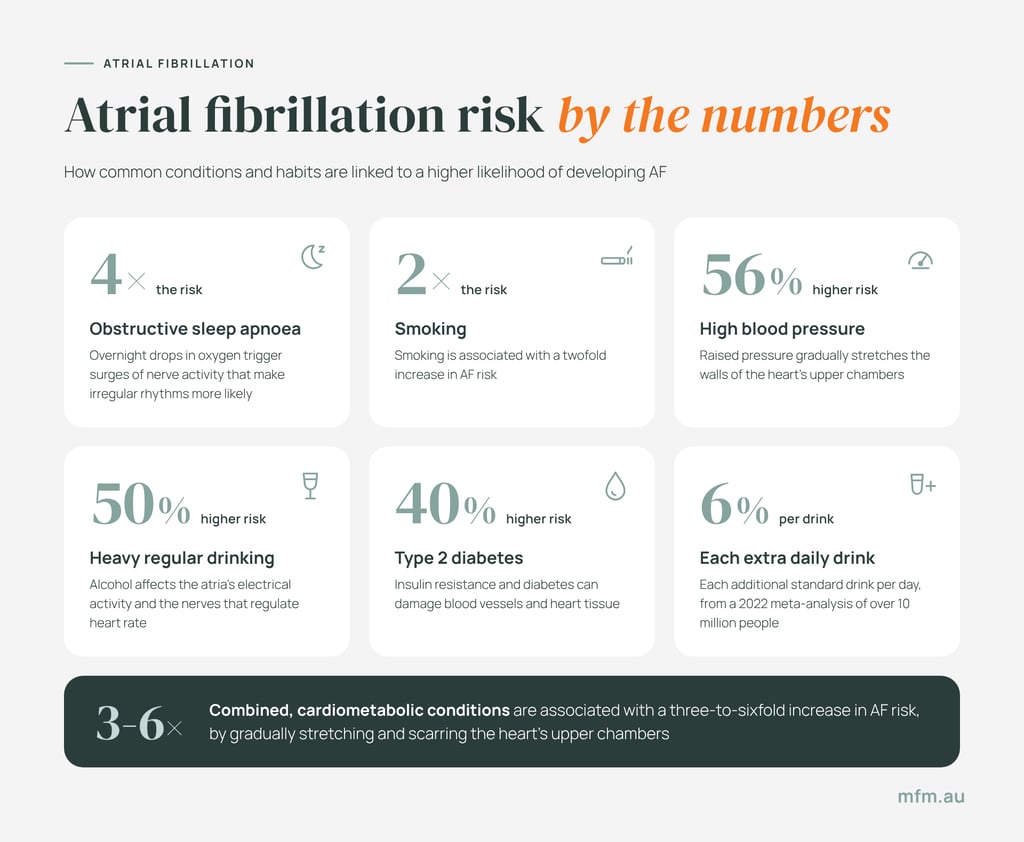
- High blood pressure, which stretches the atrial walls and is associated with a 56% increased risk of AF
Insulin resistance and type 2 diabetes, which can damage blood vessels and heart tissue. Diabetes is associated with around a 40% greater risk of AF - Obesity and a sedentary lifestyle, which add physical strain to the heart and promote low-grade inflammation
- Sleep disturbances, including obstructive sleep apnoea, which on its own is linked to around four times the risk of AF. In sleep apnoea, repeated pauses in breathing cause oxygen levels to drop overnight and trigger surges of nerve activity that make irregular rhythms more likely
- Excess alcohol consumption, which affects the electrical activity of the atria and the nerves that regulate heart rate. Heavy regular drinking is linked to around a 50% higher risk, and a 2022 meta-analysis of over 10 million participants found each additional standard drink per day was associated with a 6% increase in risk
- Chronic psychological stress, which keeps stress hormones such as adrenaline elevated and promotes low-grade inflammation
- A diet high in processed foods and refined sugars, which contributes to high blood pressure, weight gain and insulin resistance
- Smoking, which is associated with a higher risk of AF
- Extreme endurance exercise, where many years of high-intensity training can enlarge the atria and scar their tissue, increasing AF risk
- Thyroid disorders, particularly hyperthyroidism (an overactive thyroid), which speeds up the heart and increases its workload
- Low magnesium and potassium, minerals heart cells need to carry electrical signals normally
- Air pollution, which may trigger irregular rhythms in some people
- Chronic inflammation, which can scar atrial tissue and make it more prone to misfiring
A family history of AF also raises risk, as some people inherit a tendency to develop it.
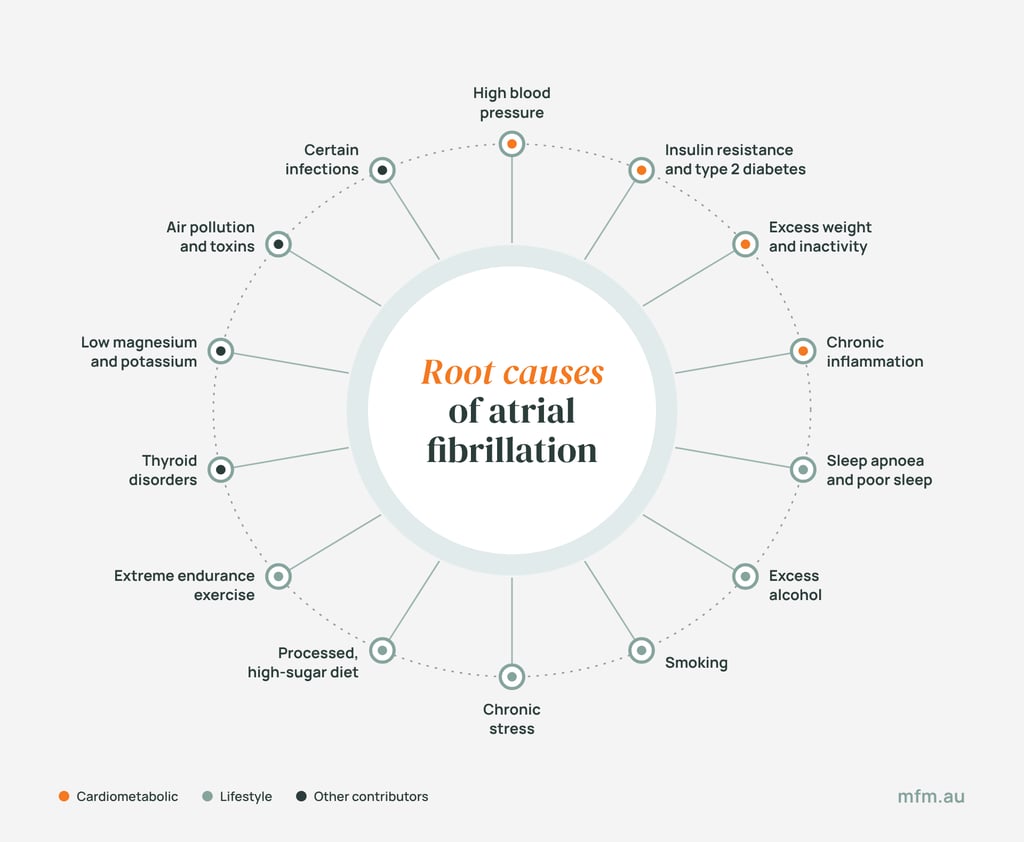
There is also emerging evidence that certain infections, including H. pylori (a stomach bacterium) and Chlamydia pneumoniae (a common respiratory bacterium), may make some people more likely to develop AF. A 2023 population-based study of nearly 7,000 participants found links between the mix of bacteria in the gut and both existing AF and the risk of developing it later.
How is atrial fibrillation investigated and assessed?
Atrial fibrillation is diagnosed by recording the heart’s electrical activity during an episode, usually with a 12-lead ECG (electrocardiogram).
Because paroxysmal AF comes and goes, a single resting ECG may miss it. A Holter monitor (a portable heart monitor) worn for 24 to 48 hours, or a longer-term event recorder, gives a more complete picture of your heart rhythm and how often episodes occur. If a smartwatch or other wearable device has flagged an irregular rhythm, it should be followed up with an ECG.
Standard investigations usually include:
- ECG or extended cardiac monitoring
- echocardiogram (heart ultrasound) to assess heart structure and function
- blood tests covering thyroid function, electrolytes, blood glucose, kidney and liver function and inflammatory markers
- blood pressure assessment
- sleep assessment if obstructive sleep apnoea is suspected
- stroke risk assessment, using a scoring tool such as CHA₂DS₂-VA, to decide whether blood-thinning medicine is needed
A functional medicine assessment builds on this by looking at the cardiometabolic, nutritional and environmental contributors that may be active in your case. This may include:
- detailed cardiometabolic testing, including blood sugar regulation, insulin and blood fats (lipids)
- nutrient status, including magnesium, potassium and vitamin D
- a full thyroid health panel, beyond the standard TSH test
- comprehensive gut health assessment, including testing for H. pylori and other gut pathogens
- a thorough review of diet, alcohol, sleep, lifestyle and stress patterns
Complications of atrial fibrillation
The most serious complication of atrial fibrillation is stroke. When the atria contract chaotically, blood can pool and form clots. If a clot travels to the brain, it can block blood flow and cause a stroke. People with AF have a four- to fivefold greater risk of stroke compared to those without it.
AF is also associated with a higher risk of dementia and of death from any cause. Heart failure is another serious complication. If the heart rate stays fast and uncontrolled for long periods, the heart muscle can gradually weaken and pump less effectively, a condition called tachycardia-mediated cardiomyopathy.
Why atrial fibrillation can continue with medication
Atrial fibrillation can continue while you’re on medication because heart rate and rhythm medicines control the irregular beat but aren’t designed to change the conditions that stretched, inflamed or scarred the atria in the first place.
Beta-blockers, calcium channel blockers and antiarrhythmic drugs slow the heart or suppress abnormal signals, which can reduce episodes, and some also lower blood pressure. They don’t target contributors such as insulin resistance, sleep apnoea, chronic inflammation or low magnesium and potassium.
Anticoagulants (blood-thinning medicines) lower the risk of stroke and are one of the most important parts of AF care. They should not be stopped or changed without medical advice.
Cardioversion uses a controlled electrical shock to return the heart to normal rhythm, and works in most cases. However, AF returns within a year for around 60% of people, often because the conditions that produced it, such as high blood pressure, are still present.
Catheter ablation scars the small areas of tissue that generate abnormal signals so they can no longer fire. It is often effective, but AF can return, particularly over several years, and some people need a repeat procedure. Where other treatments are not effective, a pacemaker may be considered to help regulate the heartbeat.
In the ARREST-AF study, people who managed their weight, blood pressure, blood sugar and cholesterol after ablation had much better long-term results, and the LEGACY study found that sustained weight loss of 10% or more reduced how often AF occurred and how severe symptoms were.
Treating atrial fibrillation: a functional medicine approach
A functional medicine approach to atrial fibrillation starts by asking why your AF developed in the first place. By testing for the contributors specific to you, such as high blood pressure, sleep apnoea or low magnesium, a practitioner can build a treatment plan around what is keeping your AF active.
Depending on your presentation, care may include:
- Blood pressure, weight and blood sugar: lowering blood pressure, managing cholesterol, working toward weight loss and, if you have insulin resistance or type 2 diabetes, improving insulin sensitivity may ease the strain that gradually stretches and scars the left atrium (the upper left chamber)
- Alcohol reduction and quitting smoking: reducing or stopping alcohol, a common trigger in paroxysmal AF, and quitting smoking may lower the inflammation and tissue changes that keep AF going
- Sleep apnoea and sleep quality: screening for sleep apnoea and coordinating treatment may reduce how often episodes occur. A 2022 meta-analysis of 17 studies found that CPAP (a mask worn overnight to keep the airway open) reduced rates of AF. Where apnoea isn’t present, broader sleep strategies can help
- Exercise and movement: regular moderate activity and strength training improve blood pressure, weight and insulin sensitivity. Your practitioner matches your training load to your episode pattern, as very high-volume endurance exercise is linked to higher AF risk
- Anti-inflammatory diet: a Mediterranean-style eating pattern low in processed foods and refined sugars may help reduce the inflammation that contributes to atrial scarring. Your practitioner will review any fish oil dose, as high-dose, prescription-strength omega-3 supplements have been linked to increased AF risk
- Nervous system regulation: mind-body practices, breathwork, stress-reduction strategies and adaptogenic herbs may reduce stress-triggered episodes. If your episodes tend to start at rest, after meals or during sleep (a pattern linked to the vagus nerve, which slows the heart), your practitioner will adjust the approach
- Mineral and heart nutrient support: replenishing magnesium, alongside CoQ10, taurine and carnitine, may help steady the heart’s electrical signals and support its energy production. Potassium is only supplemented where blood tests show it is low, and with monitoring, as too much can be harmful, particularly with kidney problems or some blood pressure medicines
- Thyroid support: where testing shows an overactive thyroid, your practitioner may use nutrients such as selenium, zinc, vitamin D and L-carnitine to support thyroid and immune health, alongside care from your GP or endocrinologist, because excess thyroid hormone makes the atria more prone to misfiring
- Gut health and infection: where testing identifies H. pylori or another relevant infection, your practitioner can coordinate treatment with your GP and support your gut with targeted probiotics during and after antibiotics, which may reduce side effects. Emerging research also links the mix of gut bacteria to AF risk
Your practitioner checks every supplement and herbal medicine against your medications, particularly blood thinners, as some can change how they work.
This approach works alongside your cardiologist and GP, and does not replace heart rate, rhythm or blood-thinning medicines. Never stop or change these without medical advice.
We support people with atrial fibrillation to look beyond rhythm control
We work with people at different stages of atrial fibrillation, from a first episode of palpitations to years of medication, cardioversion or ablation.
When to seek support
See your healthcare provider if you have:
- a new irregular heartbeat, unexplained palpitations, dizziness or chest discomfort that hasn’t been assessed
- episodes continuing or becoming more frequent on medication
- ongoing symptoms after being told your AF is well controlled
- fatigue, poor sleep or breathlessness affecting daily life alongside your diagnosis
- high blood pressure, insulin resistance, sleep apnoea or other cardiometabolic risk factors that haven’t been fully addressed
- a family history of AF or cardiovascular disease without a recent risk assessment
- signs of unusual bleeding while on blood thinners, such as heavy bruising, blood in your urine or stools, or nosebleeds that won’t stop
- sudden chest pain, fainting or stroke symptoms such as facial drooping, arm weakness or slurred speech, which need emergency care (call 000)
Frequently asked questions
What triggers an AF episode?
Common AF triggers include alcohol, poor sleep, psychological stress, dehydration, large meals and intense physical exertion. A trigger sets off an episode in atrial tissue that is already prone to irregular rhythms, which is why the same trigger may cause no problem one month and an episode the next. Triggers often combine, such as alcohol with poor sleep.
Can you live a long life with atrial fibrillation?
Yes, many people with AF live long, active lives when stroke risk is managed and contributing factors are addressed. AF is associated with higher rates of stroke, heart failure and early death, but much of that risk can be reduced with blood-thinning medication where needed, blood pressure control, and treatment of cardiometabolic contributors.
Can stress or anxiety cause atrial fibrillation?
Yes, stress and anxiety can contribute to atrial fibrillation, mainly by setting off episodes in people whose heart is already susceptible. A surge of adrenaline makes atrial cells more likely to misfire, and long-term stress often raises blood pressure, disturbs sleep and increases alcohol intake. Anxiety and AF can also feel similar, so have new palpitations checked with an ECG.
Can atrial fibrillation go away?
Atrial fibrillation episodes can stop on their own, but AF tends to return or progress unless what’s contributing to it is addressed. In some people, weight loss, cutting alcohol and treating sleep apnoea have substantially reduced episodes. Stroke risk remains even when normal rhythm returns, so stroke prevention is based on your overall risk.
Can you drink coffee if you have AF?
Yes, most people with AF can drink coffee in moderation. Large population studies have not found that moderate coffee intake increases AF risk, and some research suggests habitual coffee drinkers may have fewer episodes. Energy drinks are different, as their high caffeine and stimulant content is more likely to provoke episodes in sensitive people.
Can weight loss improve atrial fibrillation?
Yes, weight loss can reduce AF episodes in people carrying excess weight. Research from the University of Adelaide found that losing 10% or more of body weight reduced how often episodes occurred and how long they lasted, and lowered the chance of progressing to persistent AF. Keeping the weight off matters, as weight that fluctuates reduces the benefit.
Should I stop drinking alcohol if I have AF?
If you drink regularly, stopping alcohol is one of the more effective changes for reducing AF episodes. A Melbourne-led trial published in 2020 found that regular drinkers with AF who abstained had fewer recurrences than those who continued drinking. Binge drinking can also trigger AF in people without existing heart disease, a pattern sometimes called holiday heart syndrome.
Can AF be managed without medication?
If your episodes are infrequent and your stroke risk is low, you may be able to manage AF with lifestyle changes alone, in discussion with your cardiologist. Most people will need some medical management, particularly blood-thinning medication where stroke risk is raised. Addressing contributing factors can reduce episode frequency, which may allow rate or rhythm medication to be reviewed with the prescribing doctor.
Ready to understand what's contributing to your AF?
If you’re looking for a clearer picture of what’s keeping your episodes coming back, learn more about our approach to atrial fibrillation testing and care.