

What is thrush?
Thrush is a yeast infection that occurs when Candida, a fungus that normally lives in small numbers on the skin and in the vagina, multiplies and inflames the surrounding tissue. Most cases are caused by Candida albicans, and the vulva and vagina are the most commonly affected areas.
Healthy vaginal tissue stops Candida from causing symptoms in two ways. First, lactobacilli, the vagina’s protective bacteria, produce lactic acid that keeps the vagina acidic, and they crowd out yeast, limiting how much it can grow. Second, the local immune system tolerates small amounts of Candida without becoming inflamed.
Thrush develops when yeast numbers rise, or when the tissue starts reacting strongly to yeast that is already there. This is why thrush can occur even when lactobacilli are plentiful.
Up to three in four women will have thrush at least once, most often during their reproductive years. For most, it is a single episode that clears with treatment. About one in 20 women develop recurrent thrush, usually defined as four or more episodes in a year, although some guidelines now use three.
Thrush can also affect the mouth, digestive tract, skin folds and penis, though this article focuses on vaginal thrush.
Symptoms of thrush
The most common symptoms of vaginal thrush are itching and burning around the vulva and vaginal opening, often with a thick white discharge that has little or no smell. In early or mild overgrowth, symptoms may be minimal, and some women have thrush without any discharge.
Vulval and vaginal changes
- itching, often worse at night
- burning or soreness of the vulva
- redness and swelling around the vaginal opening
- small splits or cracks in the skin
- thick, white, curd-like discharge
Pain and discomfort
- stinging when urine passes over inflamed skin
- pain or rawness during or after sex
- discomfort when sitting, exercising or wearing tight clothing
Many women notice flares in the week before their period, or within a few days of starting antibiotics. Others find symptoms appear after sex, or during stretches of poor sleep and pressure at work.
In recurrent thrush, symptoms may continue between episodes. Some women describe a constant low-level itch or sensitivity that flares up from time to time, rather than separate infections that come and go. Discharge may be absent, replaced by vaginal dryness and a lack of lubrication during sex.
Thrush symptoms can look similar to bacterial vaginosis, some sexually transmitted infections and skin conditions of the vulva. If it’s your first episode, symptoms keep returning, treatment hasn’t helped, or you’re pregnant, it’s best to have it checked rather than self-treating.
What causes thrush?
Thrush most commonly develops when Candida multiplies faster than lactobacilli and the local immune system can contain it, often after a change such as a course of antibiotics or a rise in oestrogen.
Candida albicans lives in two main forms. As a round, single-celled yeast, it sits on vaginal tissue without causing harm. When the vagina’s defences weaken, it can change into hyphae, long thread-like filaments that push into the cells lining the vagina.
Hyphae release a toxin called candidalysin, which damages these cells and triggers the inflammation that causes itching and burning. They also draw zinc and iron from the surrounding tissue to fuel their growth.
Oestrogen raises the amount of glycogen, a sugar stored in the cells lining the vagina, which yeast can use to grow. It also helps Candida attach to these cells and encourages the switch to hyphae. This is why thrush is most common during the reproductive years, and uncommon before puberty and after menopause unless oestrogen is taken as menopausal hormone therapy (MHT).
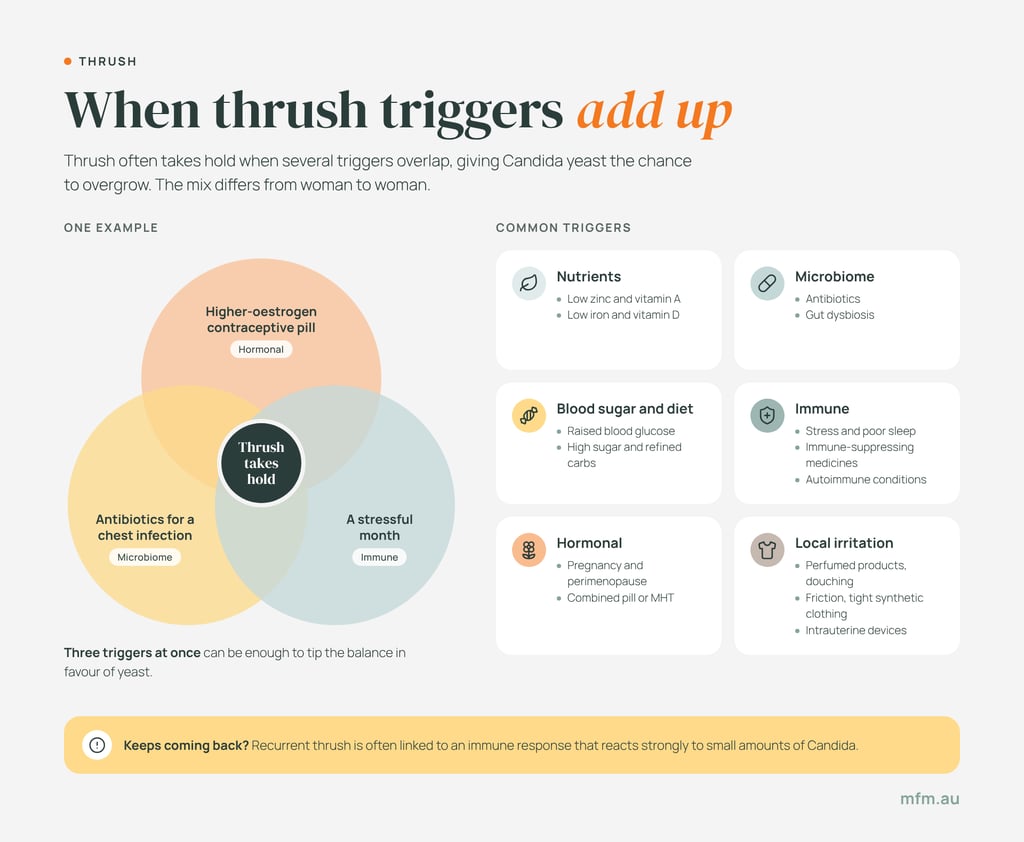
Common triggers include:
- antibiotics, which reduce the lactobacilli that keep yeast numbers low, and can also allow Candida to overgrow in the gut
- higher or fluctuating oestrogen levels, such as during pregnancy and perimenopause, or while taking combined contraceptive pills or MHT
- raised blood glucose, which gives yeast more sugar to feed on, including in poorly controlled type 1 or type 2 diabetes
- a diet high in sugar and refined carbohydrates, which may feed Candida
- stress, which can change levels of cortisol (the main stress hormone), alter gut bacteria and lower secretory IgA, an antibody that helps control Candida at mucosal surfaces
- poor sleep, which may reduce how well the vaginal lining defends itself against yeast
- corticosteroids, chemotherapy and other medicines that suppress the immune system
- conditions that weaken immune defences, such as HIV, glandular fever and COVID-19
- autoimmune conditions such as lupus, thyroid disease and multiple sclerosis, particularly when treated with medicines that suppress the immune system
- low levels of nutrients in the vaginal and gut linings needed to defend against yeast, such as zinc and vitamin A, which support mucosal immune defences
- intrauterine devices, which Candida can attach to and grow on
- friction and skin irritation from sex, spermicides, perfumed products, douching or tight synthetic clothing
- gut dysbiosis (unhealthy changes in the mix of gut bacteria), which can be linked to food allergies or intolerances, poor diet or nutrient deficiencies
- vulval skin conditions such as dermatitis, lichen sclerosus and lichen planus, which can make thrush more likely
These triggers explain many single episodes, but they do not fully explain recurrent thrush. Women with recurrent thrush often have a vaginal immune response that reacts strongly to small numbers of Candida. Research suggests inherited differences in immune genes, particularly those that control inflammation, contribute to this. This may help explain why recurrent thrush can run in families.
Less commonly, thrush is caused by other species such as Candida glabrata, C. tropicalis, C. krusei and C. parapsilosis. These species tend to cause milder symptoms but respond less well to standard antifungal medicines. They are more common after menopause, in women with diabetes, and after repeated antifungal courses.
Candida also lives in the gut as part of the normal mix of microbes, and the gut may act as a reservoir, holding yeast that can travel back to the vagina, although research on this link is mixed. Low iron and low vitamin D may also reduce how well mucosal tissue defends itself against yeast.
Mild Candida overgrowth in the gut can be difficult to detect because it may cause few symptoms between flares, and when it is long-standing, it may add to inflammation in the body. Practitioners consider it when recurrent thrush appears alongside signs of gut dysbiosis such as:
- acne, eczema or fungal infections of the skin or nails
- acid reflux or burping
- anxiety, depression or panic attacks
- bloating, distension or abdominal pain
- brain fog
- diarrhoea or constipation
- frequent infections
Triggers tend to add up. A woman on a higher-oestrogen contraceptive pill who takes antibiotics for a chest infection during a stressful month has three triggers in play at once, which makes thrush much more likely to take hold.
How is thrush diagnosed and assessed?
Thrush is diagnosed by combining a clinical history and vulval examination with a vaginal swab to confirm that Candida is present and to rule out other causes.
The history focuses on timing. The most useful questions are how often your symptoms occur, whether they follow your menstrual cycle, antibiotics or sex, and how previous treatments have worked for you. These answers can reveal more than testing alone.
Standard testing may include:
- a vaginal swab, examined under a microscope and grown in a lab (culture), to confirm Candida
- testing to identify which Candida species is present and which antifungals it responds to, when thrush recurs or does not respond to treatment
- testing for bacterial vaginosis, trichomonas and other sexually transmitted infections
- blood glucose or HbA1c (average blood sugar over the past few months) to check for diabetes
Confirming the diagnosis is important because self-diagnosis is often inaccurate. Many women treating what they believe is recurrent thrush turn out to have bacterial vaginosis, vulval dermatitis, genital herpes, a urinary tract infection or a skin condition such as lichen sclerosus, none of which respond to antifungals.
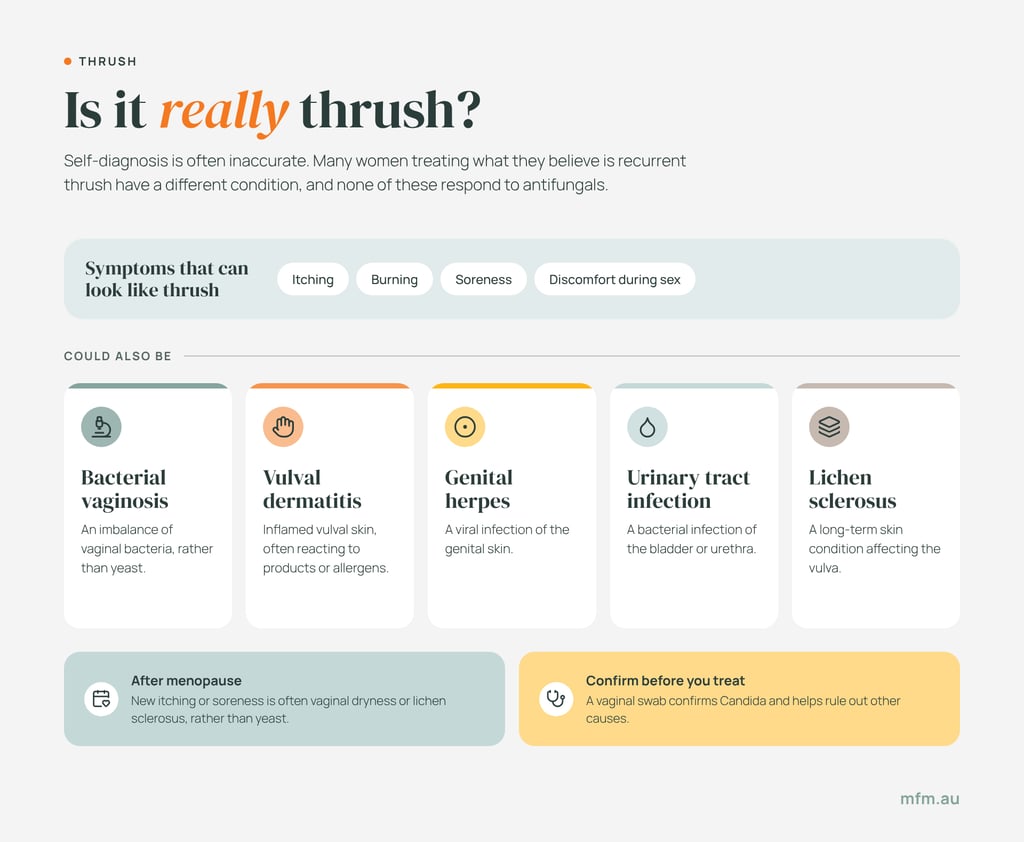
After menopause, new itching or soreness is often caused by vaginal dryness or lichen sclerosus rather than yeast.
Testing also has limits. A swab taken between episodes may be negative, and a positive swab does not always mean Candida is causing symptoms, since many women carry yeast without any problem.
Functional testing builds on this to understand why thrush keeps returning, and may include:
- Comprehensive stool analysis: DNA-based testing to measure Candida and other gut microbes, parasites, and secretory IgA
- Blood sugar regulation: fasting insulin, glucose and HbA1c, since some women with recurrent thrush process sugar less efficiently than normal even when routine diabetes screening is clear
- Nutrient status: iron, zinc and vitamin D, which support how well the vaginal and gut linings defend themselves against yeast
- Organic acids test: urine markers which can suggest yeast and bacterial activity in the gut, alongside markers of how the body produces energy and uses nutrients
Finding Candida in the gut does not confirm it is the source of vaginal symptoms, so stool results are interpreted alongside cycle patterns, antibiotic history and swab findings.
Why thrush can keep coming back after conventional treatment
Thrush often returns because antifungal medicines clear the yeast but leave the vaginal environment unchanged. Oestrogen levels, blood sugar, lactobacilli numbers and the immune response to Candida stay the same, so yeast can multiply again once antifungal treatment stops.
Candida can also join with other microbes to form a biofilm, a protective layer that antifungals struggle to get through.
Antifungals are available on prescription or over the counter as creams, pessaries, tablets and lozenges, and many women self-treat repeat episodes. Two main groups are used, alongside other options:
- Azoles: clotrimazole and miconazole creams or pessaries, and oral fluconazole, taken as a single dose or, for recurrent thrush, once or twice weekly for six months or more
- Polyenes: nystatin cream or pessaries, and amphotericin B for less common Candida species
- Other options: boric acid capsules and flucytosine cream, for species that do not respond to standard antifungals
These treatments clear active infection and relieve symptoms, and for a single episode that is often enough.
In recurrent thrush, around half of women experience symptoms again once a six-month maintenance course ends. Repeated episodes can also leave ongoing vulval discomfort or pain during sex, which is one reason recurrent thrush is best assessed rather than treated one episode at a time.
Long courses of oral antifungals can strain the liver, so liver function is checked during extended treatment, and oral ketoconazole is now rarely used for this reason. Long-term fluconazole can lead to resistant strains of C. albicans, make room for less common species that are harder to treat, and may reduce the variety of bacteria in the gut.
Topical treatments may be preferred over oral tablets, as they act locally rather than throughout the body. None of this makes antifungals the wrong choice. For recurrent thrush, clearing the yeast is usually one part of care, alongside changing the conditions that allow it to return.
Treating thrush: a functional medicine approach
A functional medicine approach to thrush looks at why yeast keeps overgrowing, and works alongside any antifungal treatment prescribed by a GP. While antifungals clear the current flare, the functional approach asks why the yeast continues to multiply, aiming to address the underlying causes and reduce how often thrush returns.
Care starts with a detailed history of the thrush itself, including when it began, how often it returns and whether that has changed, what tends to happen before a flare and how previous treatments have worked. The practitioner also asks about the menstrual cycle, contraception, antibiotic use, blood sugar, digestion, stress and sleep, as each can affect how well the vagina defends itself against yeast. Piecing this together shows what is giving yeast the chance to overgrow, and care is built around those findings.
Depending on your presentation, care may include:
- Rebuilding the vaginal microbiome: probiotic strains selected for vaginal health, such as Lactobacillus crispatus, may help restore the lactobacilli that make it harder for yeast to attach to vaginal cells. Adding them to antifungal treatment may help clear thrush in the short term, with support timed around higher-risk periods such as antibiotic courses
- Protecting vulval skin: switching to plain water or a fragrance-free cleanser, stopping douching and wearing breathable cotton underwear reduces irritation, since irritated vulval skin reacts more strongly to yeast and can keep symptoms going between episodes
- Gut health: where digestive symptoms or stool testing point to the gut as a possible source of Candida, probiotics such as Saccharomyces boulardii, prebiotic fibres and attention to food reactions can help build a more diverse, resilient gut environment
- Blood sugar and diet: reducing refined sugar, refined carbohydrates and alcohol, and building meals around protein, fibre and whole foods, may limit the sugar available to yeast without the long elimination lists of strict anti-candida diets. Coconut oil, a source of caprylic acid, has shown antifungal effects in lab and animal studies
- Nutritional support: correcting low zinc, iron, vitamin D, vitamin A or vitamin C may support the immune defences in your vaginal and gut linings, while NAC and lactoferrin may help break down yeast biofilms and add antifungal activity
- Herbal medicine: antifungal herbs such as garlic and oregano, and immune-regulating herbs such as astragalus and echinacea, may be used, chosen by your practitioner to suit you and any medicines you take
- Hormonal patterns: if your thrush follows your menstrual cycle, or began or worsened after starting a hormonal contraceptive or MHT, the care team may discuss this with your prescribing doctor
- Stress and sleep: regular movement, breathwork and a consistent sleep routine may help reduce how often flares occur, as ongoing stress and poor sleep can weaken immune defences in the vaginal lining
If you’re pregnant, check with your GP or practitioner before using any supplements or herbal medicines for thrush.
We support women with recurrent thrush to understand why it keeps coming back
We work with women at different stages of recurrent thrush, from the first few repeat episodes to years of relying on maintenance antifungals.
When to seek support
See your healthcare provider if you have:
- vaginal itching, burning or discharge for the first time
- three or more episodes of thrush in a year
- symptoms you’re unsure are thrush
- symptoms that don’t improve within a few days of over-the-counter treatment
- symptoms affecting your comfort, sleep or relationships
- symptoms during pregnancy or while breastfeeding
- symptoms before puberty or after menopause
- a strong odour, sores, blisters, pelvic pain or unusual bleeding, which need prompt medical review
Frequently asked questions
How can I tell thrush from bacterial vaginosis?
Thrush usually causes itching and a thick white discharge with little smell, while bacterial vaginosis more often causes a thin grey discharge with a fishy odour and less itching. The two can occur together, and symptoms overlap enough that a swab is the most reliable way to tell them apart.
Is thrush sexually transmitted?
No, thrush is not classed as a sexually transmitted infection, although sex can trigger it, as friction can irritate vaginal tissue. Treating a male partner has not been shown to reduce recurrence in women, though a partner with symptoms should be treated. Some thrush creams can weaken latex condoms, so another form of contraception may be needed during treatment.
Can thrush go away on its own?
Yes, mild thrush can clear on its own within a few days, particularly when the trigger was short-lived, such as a single course of antibiotics. More severe thrush can last several weeks without treatment. If your symptoms linger, keep returning or feel severe, it’s best to have them assessed, as ongoing scratching can leave vulval skin more sensitive.
Is thrush in pregnancy harmful to the baby?
No, thrush during pregnancy is not usually harmful to the baby, although it is about twice as common because oestrogen levels are higher. Topical antifungal creams or pessaries are usually recommended, often as a longer seven-day course, while oral fluconazole is generally avoided. If you notice new vaginal symptoms while pregnant, have them checked by your GP or midwife.
How can I prevent thrush when taking antibiotics?
If you often get thrush after antibiotics, ask your GP about taking an antifungal alongside the course. Starting a vaginal health probiotic during the course, and continuing it for a few weeks after, may help protect your lactobacilli. Taking it a few hours apart from each antibiotic dose may help more of it survive.
Why do I get thrush before my period?
Thrush often flares before a period because progesterone rises in the second half of the cycle, and progesterone may reduce the vaginal lining’s ability to control Candida. Oestrogen is also still raised, keeping glycogen, the sugar yeast feeds on, readily available. Symptoms often ease once bleeding starts and both hormones fall.
Can the contraceptive pill cause thrush?
Some contraceptive pills may increase the risk of thrush, particularly pills with higher doses of oestrogen, as oestrogen raises the sugar available to yeast in vaginal tissue. Evidence is mixed, and many women take the pill without any problem. If thrush started or worsened after beginning a new pill, a GP can discuss whether a lower-oestrogen or oestrogen-free option would suit you.
Can I treat thrush myself from the pharmacy?
Yes, treating thrush yourself is generally safe if you have had it before, treated it successfully and are sure the symptoms are the same. Thrush treatments are sold in pharmacies, and the pharmacist may ask about your symptoms first. If thrush keeps returning, a swab helps confirm the cause, since repeated self-treatment can delay the right diagnosis.
Ready to find out what's causing your recurrent thrush?
If you’re looking for a clearer picture of what is contributing to your symptoms, learn more about our approach to thrush testing and treatment.