


What is hidradenitis suppurativa?
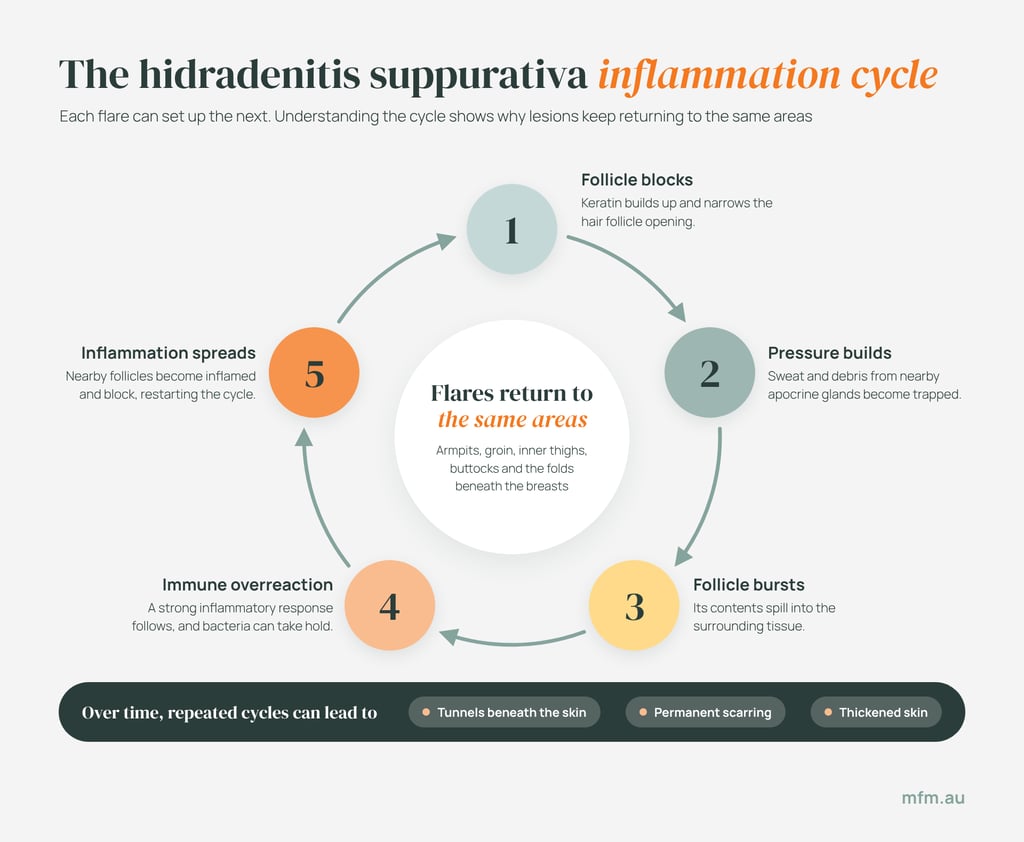
Hidradenitis suppurativa (HS), also known as acne inversa, is a chronic inflammatory skin condition that develops when hair follicles become blocked and inflamed. It causes painful, recurring lumps, abscesses and cysts in areas where skin meets skin, most commonly the armpits, groin, inner thighs, buttocks and the folds beneath the breasts.
It tends to appear after puberty and is more common in women than men. Flares can range from isolated tender lumps that heal slowly to deep, connected abscesses that tunnel under the skin and leave scars. HS is not contagious and is not caused by poor hygiene.
Population studies suggest around 2% of people have HS, but fewer than half of them have a formal diagnosis. On average, it takes around seven years for HS to be diagnosed, partly because early signs are often mistaken for boils or ingrown hairs.
Symptoms of hidradenitis suppurativa
The most common symptoms of hidradenitis suppurativa are painful, deep-seated lumps beneath the skin, often developing in the armpits, groin, or under the breasts and recurring in the same areas despite repeated treatment.
These lesions (the lumps and abscesses HS causes) can feel firm, or softer and fluid-filled when an abscess forms. They may burst and leak fluid, or stay for weeks without healing. As the condition progresses, tunnels can form beneath the skin, connecting multiple lesions.
Other symptoms people commonly report include:
- skin that is red, warm, and tender to touch around active lesions
- fluid with an unpleasant smell when abscesses burst
- scarring and thickened skin in areas of repeated inflammation
- blackheads in and around affected areas, often in pairs or small groups, particularly in earlier stages
- itching around active lesions, with or without pain
- flares that worsen around menstruation
- fatigue, particularly during active flares
- restricted movement when lesions develop in the armpits or groin
Fever, or redness that spreads quickly around a lesion, can signal a skin infection and needs prompt medical attention.
Living with HS affects much more than the skin. Pain, visible lesions and concerns about odour can affect daily activity, clothing choices, intimacy and confidence, and depression and anxiety are more common in people with HS. These effects are part of the condition, and they belong in any assessment alongside the lesions themselves.
What causes hidradenitis suppurativa?
Hidradenitis suppurativa most commonly develops when hair follicles in the armpits, groin, and other skin folds become blocked, triggering a cycle of inflammation, bacterial growth, and tissue damage that spreads beneath the skin.

These areas are rich in apocrine glands, a type of sweat gland that empties into the hair follicle. When the follicle opening becomes narrowed or blocked by a build-up of keratin (the tough protein in the skin’s outer layer), pressure builds, the follicle bursts, and its contents spill into surrounding tissue. The immune system reacts strongly to this, and that inflammation can spread to nearby follicles and keep the cycle going.
Several things can make this more likely to happen, or make the inflammation more severe:
- Genetics: HS runs in families, which suggests inherited differences in follicle structure or how immune cells communicate make some people more susceptible. People of African descent are also more commonly affected, although the reasons aren’t fully understood
- Hormonal activity: the condition commonly appears or worsens at puberty, before menstruation, and during other hormonal changes, pointing to androgens (hormones such as testosterone) as an influence on how follicles behave and how thick the skin becomes
- Overactive immune response: in many people with HS, the immune response in affected skin is far stronger than a blocked follicle alone would cause, similar to what happens in autoimmune conditions
- Smoking: smoking is one of the most consistent risk factors for HS. Studies report that 40% to 89% of people with HS smoke, and the link is strongest in more severe disease. Nicotine increases sweat gland activity and slows the movement of immune cells into affected skin, which may be one reason lesions stay inflamed. Lab studies suggest it may also thicken the skin around follicles until they block. Some toxins in cigarettes also interfere with how the body breaks down oestrogen, adding to the hormonal influences on follicles
- Friction and pressure: skin rubbing against skin, tight clothing and pressure in body folds can irritate follicles and trigger flares
- Sedentary lifestyle: the sites where HS develops sit close to lymph nodes. The lymphatic system clears waste from tissue but has no pump of its own, so it relies on muscle movement to keep fluid moving. Low physical activity may slow lymphatic drainage in exactly the areas where HS lesions form, making it harder for the body to clear local inflammation
- Metabolic health: insulin resistance, obesity, and diabetes are linked to more severe HS, likely because high insulin and related hormones increase skin cell growth and inflammation
- Gut microbiome: eating more sugar and dairy may change gut bacteria in ways that may intensify skin inflammation. Some people with HS have gut bacteria patterns similar to those seen in Crohn’s disease, which may help explain why the two conditions so often overlap
Someone with a genetic susceptibility may have mild or no HS unless hormonal, metabolic, or lifestyle influences intensify the immune response in the skin. This is why the condition varies so much between people.
Complications and associated conditions
The main complications of hidradenitis suppurativa are tunnels beneath the skin and permanent scarring, which develop when repeated inflammation in the same areas damages the surrounding tissue. These tunnels are painful and slow to heal. In rare cases, long-standing lesions have been associated with squamous cell carcinoma, a type of skin cancer.
HS is also linked to several conditions that can develop alongside it or become more common as HS becomes more severe:
- Crohn’s disease and other inflammatory bowel conditions
- psoriasis
- metabolic syndrome, including obesity, diabetes, and high blood pressure
- cardiovascular disease: people with HS have a higher risk of heart disease. Ongoing inflammation throughout the body appears to affect the arteries, so a practitioner may assess heart health in moderate to severe HS, even when there are no other obvious risk factors
- lymphoedema (swelling caused by fluid build-up), where repeated inflammation and scarring block lymphatic drainage in affected areas
- inflammatory arthritis and joint pain
- anaemia, particularly in people with chronic active disease
- chronic pain syndrome
- depression and anxiety
How is hidradenitis suppurativa diagnosed and assessed?
Hidradenitis suppurativa is diagnosed by examining the skin and taking a history, looking at where lesions form, how often they return, and whether there is scarring or tunnelling. There is no blood test or biopsy that confirms it.
A practitioner assessing HS will typically ask about:
- how long lesions have been occurring and whether they recur in the same sites
- family history of similar skin problems
- menstrual patterns and hormonal history in women
- smoking status, diet, and body weight
- any associated conditions such as inflammatory bowel disease, joint pain, or metabolic issues
Your GP or dermatologist may also order blood tests, such as a full blood count, inflammatory markers, blood sugar and cholesterol, to check for associated conditions like anaemia, diabetes and heart disease risk.
Hurley staging is the oldest and most widely used classification for hidradenitis suppurativa. It sorts HS into three levels of severity:
- Stage I: individual abscesses without scarring or tunnelling
- Stage II: recurrent abscesses with tunnels and scarring, as a single lesion or several separated lesions
- Stage III: widespread, interconnected lesions with extensive scarring across a whole area
Staging shows how much damage HS has caused to the skin, but it does not show how often flares are happening, how much pain someone is in, or how much it affects their daily life. Tools such as the IHS4, which scores active nodules, abscesses and draining tunnels, and the Dermatology Life Quality Index, which measures daily impact, help fill this gap.
A functional assessment builds on this by looking at hormonal patterns, metabolic health, gut function, nutrient levels, immune activity and lifestyle, to build a clearer picture of why lesions keep returning. Relevant functional testing may include:
- metabolic testing, including insulin and blood sugar, given the links between HS, weight gain and insulin resistance
- hormone testing where relevant
- blood levels of zinc, vitamin A, vitamin D and vitamin B12, which a 2023 review found are frequently low in
- people with HS and recommended checking at first diagnosis
- comprehensive stool testing for gut health, including markers of inflammation and a leaky gut lining, given the links between HS and Crohn’s disease
- dietary assessment, as reducing foods such as dairy or brewer’s yeast may help some people
Why hidradenitis suppurativa can return after conventional treatment
Hidradenitis suppurativa often returns because standard treatments focus on lesions that have already formed but aren’t designed to address why the follicles keep becoming blocked and why the immune response stays overactive.
Conventional treatment aims to relieve symptoms and control flares, and may include:
- antibiotics, used for both their anti-inflammatory and antibacterial effects
- corticosteroids, usually injected into a painful lesion or taken as a short course during a flare
- hormonal treatments, such as spironolactone or the combined pill, and metformin where insulin resistance is present
- biologic medicines to suppress inflammation in moderate to severe HS
- surgery to treat lesions and tunnels that do not heal
Medicines for HS are often taken long term, which brings its own risks.
Antibiotics calm inflammation and reduce bacteria in and around active lesions. They do not change follicle structure, hormonal patterns, immune sensitivity or gut health, so when the course ends, the conditions that set up the next flare are still there.
Repeated antibiotic courses also reduce the variety of bacteria in the gut. These bacteria help the immune system fight infection and control inflammation, both of which affect how HS develops. Many people with HS on long-term antibiotics report digestive upset, and women are more prone to vaginal thrush.
Corticosteroid injections can settle a painful lesion quickly but do not stop new lesions forming. Repeated injections can thin the skin at the injection site, and long-term oral steroids carry wider risks, including raised blood sugar, weight gain and bone loss.
Biologic medicines (lab-made antibodies that block specific inflammatory signals) can reduce how often flares happen in moderate to severe HS. They work by suppressing parts of the immune system, which raises the risk of infections a healthy immune system would usually fight off. Symptoms also often return when people stop these medicines.
Surgery is used in more advanced HS. De-roofing opens up tunnels and leaves the base to heal, while wide excision removes the affected skin and the tissue around it, with the wound left to heal from the base up or closed with a skin graft. These procedures can involve a long recovery, and they cannot stop new lesions forming in nearby skin that is still susceptible.
None of this makes these treatments the wrong choice, and many people with HS need them. Easing a flare is usually one part of care, alongside addressing what keeps follicles blocked and inflamed.
Treating hidradenitis suppurativa: a functional medicine approach
A functional medicine approach to hidradenitis suppurativa looks at why your skin keeps forming these lesions, with the aim of reducing how often new ones appear.
Your functional medicine practitioner will take a detailed history of your HS and use testing to find what is keeping the inflammation going for you, such as hormonal changes, insulin resistance, gut health or low nutrient levels. Your care plan is then built around those findings and may include:
- Dietary adjustment: an anti-inflammatory diet that removes or reduces dairy, high-GI foods (those that raise blood sugar quickly) and brewer’s yeast (found in beer, bread and yeast spreads) may lower the inflammation that makes your flares worse
- Blood sugar and insulin regulation: a low-GI diet, regular movement, and targeted nutrients and herbs such as chromium, cinnamon and Phellodendron may improve insulin sensitivity. This may reduce inflammation and lower androgen activity in hair follicles, both of which feed new lesions
- Weight management, where relevant: gradual weight loss can reduce friction in skin folds and improve insulin sensitivity, and is linked to fewer flares in many people with HS
- Skin care and reducing friction: loose, breathable clothing, gentle antiseptic washes and avoiding shaving over active lesions can reduce irritation in the areas where HS forms
- Hormone regulation and clearance: where your flares follow your cycle, hormone testing guides care. Foods such as broccoli sprouts and flaxseed, along with support for your liver, gallbladder and bowel, may help your body break down and clear oestrogen and chemicals that interfere with hormones. This may ease the hormonal effects that contribute to blocked follicles
- Gut repair: restoring the variety of your gut bacteria and repairing a leaky gut lining may help calm the overactive immune response that adds to inflammation in your skin, particularly after repeated antibiotic courses
- Nutrient repletion: guided by your test results, zinc, vitamin A, vitamin D and vitamin B12 may be used alongside selenium and bioflavonoids to support skin repair, immune regulation and wound healing. Vitamin A is dosed carefully and avoided at high doses during pregnancy or when planning a pregnancy
- Herbal medicine: herbs such as rosemary and cleavers may be prescribed by your practitioner to suit your presentation and any medicines you take. They may help your body break down oestrogen and clear lymphatic fluid
- Smoking cessation and alcohol reduction: stopping smoking and cutting back on alcohol are among the most important changes you can make for HS, and a health coach can help you stick with them
- Movement and lymphatic drainage: regular movement keeps your lymphatic system draining, which may help clear inflammation from the areas near lymph nodes where HS lesions form. Lower-friction activities such as swimming or walking may be easier on affected skin
- Stress management: pain and visible flares raise stress, and stress hormones make the immune response in your skin more reactive. Calming the nervous system through vagus nerve stimulation, such as breathwork and meditation, along with mental health support, may help break that loop and reduce how often you flare
This approach works alongside conventional treatments such as antibiotics, biologics and surgery, and does not replace them.
A 2024 review in the Journal of the American Academy of Dermatology recommended adding smoking cessation, dietary guidance, exercise and mental health support to conventional HS treatment. The authors noted that these approaches can improve outcomes in ways medicines and surgery do not address on their own.
Supporting people with hidradenitis suppurativa to have fewer, less painful flares
We see people at every stage of HS, from the first lumps that keep coming back to years of antibiotics, biologics or surgery.
When to seek support
See your healthcare provider if you have:
- painful lumps that keep returning in the same skin folds
- lumps that last longer than a few weeks, or flares that are becoming more frequent
- scarring, or tunnels forming under the skin
- flares that return after antibiotics or other treatment
- pain, odour, or flares affecting your work, relationships, or mental health
- ongoing diarrhoea, abdominal pain, or joint pain alongside skin lesions
- a sore in an area of long-standing HS that changes, bleeds, or does not heal
- fever, spreading redness, or a hot, rapidly worsening lump, which can signal a spreading infection and needs prompt medical attention
Frequently asked questions
Is hidradenitis suppurativa contagious?
Hidradenitis suppurativa is not contagious and cannot be passed on through skin contact, sex, shared towels, or clothing. It is also not caused by poor hygiene. Lesions form when hair follicles become blocked and the immune response around them overreacts. Harsh scrubbing does not prevent this and can irritate the skin and make flares worse.
Is hidradenitis suppurativa an autoimmune disease?
No, hidradenitis suppurativa is not a classic autoimmune disease, although it shares some features with autoimmune conditions. It is classed as an immune-mediated inflammatory condition: instead of attacking a specific tissue, the immune system overreacts to blocked follicles and keeps the inflammation going. That shared immune pattern helps explain why HS often appears alongside Crohn’s disease and psoriasis.
How is hidradenitis suppurativa different from a regular boil?
Hidradenitis suppurativa differs from a regular boil because its lumps keep returning in the same skin folds, while a boil is a one-off infection of a single follicle that usually heals completely. HS starts with a blocked follicle rather than infection. Bacteria move in afterwards, and repeated flares can leave scarring and tunnels that a boil does not.
Does diet affect hidradenitis suppurativa?
Diet can affect hidradenitis suppurativa, though trigger foods differ from person to person. Dairy, high-GI foods, and brewer’s yeast are the most commonly reported. Removing suspected foods for several weeks, then reintroducing them one at a time, can show which foods make your own flares worse.
Should you squeeze or pop hidradenitis suppurativa lumps?
You should not squeeze or pop hidradenitis suppurativa lumps. Pressure pushes inflamed material deeper into the skin, which can spread inflammation and make tunnelling and scarring more likely. A warm compress can ease pain and help a lump drain on its own. Lumps that need draining should be assessed by a GP or dermatologist.
Is hidradenitis suppurativa linked to PMOS (formerly PCOS)?
Yes, hidradenitis suppurativa is linked to polyendocrine metabolic ovarian syndrome (PMOS), previously called polycystic ovary syndrome (PCOS). Each condition is more common in women who have the other. Both can involve higher androgen levels and insulin resistance, so your practitioner may check your hormones and insulin even if your periods seem regular.
Does pregnancy affect hidradenitis suppurativa?
Pregnancy affects hidradenitis suppurativa differently from one woman to the next. Some notice fewer flares, others notice more, and flares after birth are common as hormones change again. HS has also been linked with a higher risk of pregnancy complications such as gestational diabetes and high blood pressure, so planning care before conception can help.
Ready to understand what's causing your hidradenitis suppurativa?
If you’re looking for a clearer picture of why your flares keep coming back, learn more about our approach to hidradenitis suppurativa testing and care.